Source Mediterranean Style Wall-Mounted Glass Vase for Home Decor, Gifts, and Collections
Explore 30 listings for the mediterranean style wall-mounted glass vase suitable for home decoration, gifts, and collections. Buyers can compare sizes, shapes, and customization options from verified manufacturers in China.
Key considerations
Products List


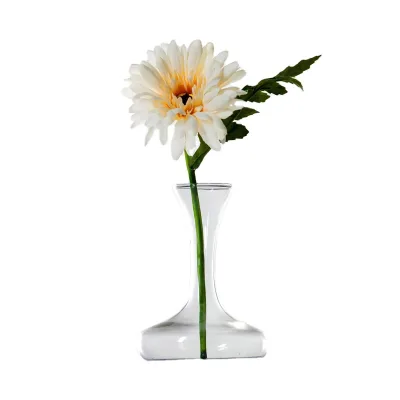
Mediterranean Style Square Embossed Decoration Crystal Glass Flower Vase
$0.40 - $0.60
MOQ: 5000 Pieces

Embossed Grace Mediterranean Style Mini Glass Flower Vase for Decoration
$0.30 - $0.50
MOQ: 5000 Pieces

Mediterranean Style Embossed Clear Crystal Glass Flower Vase for Decoration
$0.40 - $0.60
MOQ: 5000 Pieces




Comprehensive Sourcing Guide
Strategic Sourcing Guide for Mediterranean Style Wall-Mounted Glass Vases
Understanding the Product Category and Design Parameters
When sourcing wall-mounted glass vases with a Mediterranean aesthetic, buyers must first align their technical requirements with the specific attributes observed in the current market. The core product category is defined as a "Vase" with a primary usage of "Decoration," "Gift," and "Collection." While the term "Mediterranean style" implies a specific visual language often characterized by coastal tones, rustic textures, and organic forms, the available data indicates a broader range of styles including "Fashion," "Creative," and "Modern." The material composition is consistently identified as "Glass," with a specific processing method noted as "Blown" or "Casting."
The design versatility is significant. The observed product attributes include various shapes such as "Plants," "Square," and "Irregular." This suggests that while a buyer may seek a traditional Mediterranean look, the supply base offers diverse interpretations ranging from structured square forms to organic, irregular silhouettes that mimic natural coastal elements. The glaze type is frequently "Transparent," which allows the glass to function as a clear vessel, though the "Color: Color" attribute suggests that colored variants are also available. The size spectrum is extensive, ranging from "Small" (e.g., 1015cm H) to "Large" (e.g., 25.528cm H), with "Medium" options also present. This variability is crucial for wall-mounted applications, where the scale must complement the architectural features of the intended space.
Technical Specifications and Dimensional Standards
Precision in technical specifications is paramount for wall-mounted installations, as the physical dimensions directly impact structural integrity and aesthetic balance. The market data reveals a wide array of standard dimensions, indicating that there is no single universal size for this product category. Buyers should expect to encounter specific model numbers such as GA226-30TB, GA434-16TB, 1984-28, BV-282, BV-1011, BV-1167, and BV-1009, each associated with distinct height and width measurements.
For instance, one observed standard dimension is 15826cm H, while another is 12.530cm H. Smaller units may measure 1015cm H or 12*16.5cm H, whereas larger decorative pieces can reach 30x30x45cm. The "Size" attribute is explicitly categorized as Small, Medium, or Large, which serves as a quick reference for procurement teams. When specifying a Mediterranean style, the "Irregular" shape option becomes particularly relevant, as it often aligns with the organic, handcrafted feel associated with the region. However, the "Square" shape is also a documented attribute, offering a more contemporary interpretation of the style.
The processing methods identified are "Blown" and "Casting." Blown glass typically offers a more fluid, organic texture, which may better suit the "Creative" and "Fashion" attributes observed. Casting, on the other hand, allows for more precise geometric forms like the "Square" shape. Buyers must verify which process was used for their specific order, as this affects the weight, thickness, and mounting requirements of the final product. The "prod_packing" varies between "Carton," "Brown Box," and "Carton/Pallet/Customized," which influences how the dimensions are protected during transit and how they are stored in the warehouse.
Compliance, Certification, and Supplier Audits
In the B2B procurement of glassware, compliance and certification are critical for ensuring product safety and supply chain integrity. The observed data highlights several key certifications and audit standards that buyers should verify. The "Factory Audit" section explicitly mentions "BSCI" (Business Social Compliance Initiative) and "FSC" (Forest Stewardship Council). BSCI certification indicates that the manufacturer adheres to social compliance standards regarding labor practices, which is a significant factor for ethical sourcing. FSC certification suggests that any wooden components in the packaging or the supply chain adhere to sustainable forestry practices, which is increasingly important for eco-conscious buyers.
Regarding product safety and quality, the "Certification" attribute lists "ISO" alongside "Color: Color, Transparent." While the specific ISO standard number is not detailed in the provided facts, the presence of an ISO certification implies adherence to international management system standards. Buyers should request the specific ISO certificate number (e.g., ISO 9001 for quality management) to confirm the scope of the certification. It is also essential to verify that the glass material meets relevant safety standards for food contact or general household use, although the primary usage here is "Decorative."
The "Type of Manufacturer" is listed as "OEM" (Original Equipment Manufacturer), and the "Customization" attribute confirms that "Customized" options are available. This means suppliers are equipped to produce goods under the buyer's brand or with specific design modifications. The "Development Tech" is noted as "ODM" (Original Design Manufacturer), indicating that suppliers also have the capability to provide design services. This dual capability allows for flexibility in sourcing, whether the buyer has a specific design in mind or requires the supplier to develop a Mediterranean-style product from scratch.
Cost Drivers and Pricing Dynamics
The pricing structure for wall-mounted glass vases is influenced by several variables, including material quality, processing complexity, customization levels, and order volume. The observed price range in the market is substantial, spanning from $0.20 to $22.55 USD. This wide disparity suggests that cost is heavily dependent on the specific model, size, and finish of the vase. Smaller, simpler models like the 10*15cm H variants likely fall at the lower end of the spectrum, while larger, more complex pieces with irregular shapes or custom finishes command higher prices.
The "MOQ" (Minimum Order Quantity) is another significant cost driver. The observed MOQ range is from 2 units to 5000 units. However, a specific high-volume requirement is noted as "One 20feet Container," which implies that for the most competitive pricing, buyers may need to commit to full container loads. This is a common strategy in the glass industry to maximize shipping efficiency and reduce per-unit costs. The "Sample" availability is confirmed, with a "Sample Time" of 7-10 days. Buyers should factor the cost and time of sampling into their procurement timeline, as this is a necessary step before committing to large orders.
The "Delivery Time" is listed as 20-35 days, which is a standard lead time for manufacturing and shipping from the origin location, identified as "China." This lead time should be considered when planning inventory levels, especially for seasonal decorations or specific design launches. The "prod_packing" options, such as "Carton/Pallet/Customized," also impact the final landed cost, as custom packaging solutions may incur additional fees. Buyers must balance the desire for customization with the cost implications of lower MOQs and specialized packaging.
Typical Applications and Usage Scenarios
The versatility of the observed glass vases allows for a wide range of applications beyond simple wall mounting. The primary usage is categorized as "Decorative," "Gift," and "Collection," indicating that these products are intended to enhance the visual appeal of a space rather than serve a purely functional purpose. The "Suitable for" attribute specifies "Home," suggesting that the primary market is residential, including living rooms, hallways, and entryways. However, the "Modern" and "Everyday" age attributes imply that these vases are suitable for contemporary interiors as well as traditional settings.
The "Mediterranean style" aesthetic, while not explicitly detailed in the provided facts, can be achieved through the combination of "Transparent" glaze, "Blown" or "Casting" processes, and "Irregular" or "Square" shapes. These vases can be used to hold fresh or dried flowers, greenery, or even as standalone sculptural pieces. The "Plants" shape attribute suggests that some models are specifically designed to accommodate plant life, making them ideal for vertical gardens or wall-mounted planters. The "Creative" style attribute further supports their use in artistic or avant-garde interior designs.
For commercial applications, the "Gift" usage category suggests that these vases are also suitable for corporate gifting or promotional items. The "Customized" option allows businesses to brand these vases with logos or specific messages, making them versatile marketing tools. The "Collection" usage indicates that these items may be part of a curated set, appealing to collectors of decorative glassware. The "Large" and "Medium" sizes are particularly well-suited for public spaces, hotels, and restaurants, where they can serve as focal points in lobbies or dining areas.
Supplier Evaluation and Quality Control Protocols
Evaluating suppliers for wall-mounted glass vases requires a rigorous approach to ensure consistency and quality. The presence of "BSCI" and "FSC" certifications provides a baseline for social and environmental responsibility, but buyers must go further to assess manufacturing capabilities. The "Type of Manufacturer" being "OEM" and "ODM" suggests that suppliers have the infrastructure to handle custom orders, but buyers should verify their capacity to meet specific design requirements. The "Development Tech" being ODM indicates that the supplier can assist in the design phase, which is valuable for buyers looking to create a unique Mediterranean-style product.
Quality control should focus on the "Processing" method, whether "Blown" or "Casting." Blown glass requires skilled artisans to ensure uniform thickness and absence of bubbles, while casting requires precise mold control to avoid defects. The "Standard" attributes, such as specific dimensions (e.g., 15826cm H), should be verified against the actual product to ensure dimensional accuracy. The "prod_packing" method is also a critical quality indicator; "Carton/Pallet/Customized" options should be inspected to ensure they provide adequate protection against breakage during transit.
Buyers should request samples to test the "Sample Time" of 7-10 days and evaluate the physical quality of the glass. The "Color: Color, Transparent" attribute should be verified to ensure the glaze matches the desired aesthetic. The "Age" attributes, "Modern" and "Everyday," should be considered in the context of the target market's preferences. Finally, the "Delivery Time" of 20-35 days should be monitored to ensure the supplier can meet project deadlines.
Long-Term Procurement and Supply Chain Considerations
Sourcing wall-mounted glass vases is a long-term endeavor that requires careful planning and relationship management. The "Customization" availability and "OEM" capabilities suggest that buyers can build a unique product line over time. However, the "MOQ" of "One 20feet Container" for optimal pricing requires significant inventory planning. Buyers must balance the need for cost efficiency with the risk of overstocking, especially given the "20-35 days" lead time.
The "Location" of the supplier, identified as "China," is a key factor in logistics and supply chain resilience. Buyers should consider the geopolitical and economic factors that may affect shipping from this region. The "Factory Audit" certifications (BSCI, FSC) provide a layer of risk mitigation regarding labor and environmental standards, which is increasingly important for global brands.
To ensure long-term success, buyers should establish clear communication channels with suppliers regarding the "prod_model" and "prod_standard" specifications. Regular quality audits and sample reviews should be part of the procurement strategy to maintain consistency. The "Sample" availability and "Sample Time" of 7-10 days should be leveraged to test new designs or variations before full-scale production. By focusing on these strategic elements, buyers can build a reliable supply chain for Mediterranean-style wall-mounted glass vases that meets both aesthetic and operational requirements.
FAQs
What certifications do the manufacturers hold?
The factories hold BSCI and FSC certifications for social compliance and sustainable forestry. Some suppliers also list ISO certification, though specific standard numbers require verification. Buyers should request the exact certificate details before ordering.
How long is the delivery time for orders?
The standard delivery time ranges from 20 to 35 days from the factory location in China. This lead time accounts for manufacturing and shipping processes. Buyers must plan inventory accordingly to meet project deadlines.
Can I get custom designs for this product?
Yes, customization is available through OEM and ODM development technologies. Suppliers can produce goods under your brand or modify existing designs. This flexibility supports unique Mediterranean style requirements and specific branding needs.
What is the minimum order quantity required?
The minimum order quantity ranges from 2 units up to 5000 units depending on the supplier. Some vendors require a full 20-foot container for optimal pricing. Buyers should confirm the specific MOQ for their chosen model.
Which shapes are available for these glass vases?
Available shapes include Square, Irregular, and designs suited for Plants. The market also offers Modern and Creative styles with Transparent glaze. These options allow for diverse aesthetic interpretations of the Mediterranean style.
What processing methods are used for the glass?
The glass is produced using Blown and Casting processing methods. Blown glass offers organic textures while casting allows for precise geometric forms like Square shapes. The method affects the weight and mounting requirements of the final product.