Source Medium Voltage Epr Power Cable for Industrial, Power Station, Underground
Compare 30 listings for Medium Voltage Epr Power Cable suitable for industrial facilities, power stations, and underground installations. Buyers can review specifications like voltage ratings, insulation materials, and certifications from verified Chinese manufacturers.
Key considerations
Products List


High Quality Shipboard Medium Voltage Epr Insulated PE Sheath Power Cable
$20.00 - $100.00
MOQ: 500 Meters


Medium Voltage Power Cable Suitable for Industrial Power Distribution XLPE Cable
$0.50 - $15.00
MOQ: 1000 Meters


Comprehensive Sourcing Guide
Strategic Sourcing Guide for Medium Voltage EPR Power Cables
Sourcing medium voltage cables with Ethylene Propylene Rubber (EPR) insulation requires a disciplined approach that balances technical performance with supply chain reliability. EPR insulation is distinct from other materials due to its superior thermal stability and resistance to electrical stress, making it a preferred choice for demanding industrial environments. When evaluating the market, buyers must navigate a landscape where product attributes vary significantly between listings. The following guide outlines the critical factors for procurement, grounded in observed market data and verified technical parameters.
Technical Specifications and Material Composition
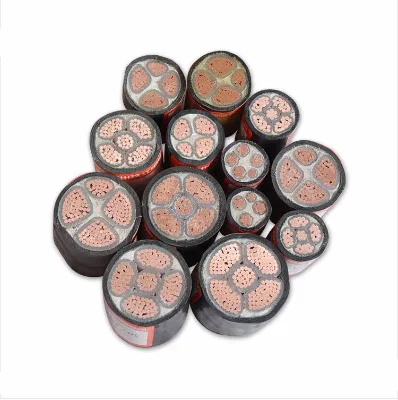
The core of any medium voltage cable procurement is the verification of its material composition and physical construction. In the observed market, EPR insulation is frequently paired with specific sheathing and armor configurations to meet diverse operational needs. A critical observation from current product listings indicates that EPR insulation is often combined with an inner sheath made of Polyolefin (PO) or Polyvinyl Chloride (PVC). The outer sheath material is also a variable; while some listings specify PVC for the sheath, others may offer different polymers depending on the application environment.
Conductor configuration is another vital technical parameter. The market data confirms that stranded conductors are standard, with specific references to Red Copper Wire as the core material. This ensures high conductivity and flexibility, essential for medium voltage applications. The cable's physical dimensions are equally important. Listings show a wide range of cross-sectional areas, with observed standards spanning from 0.5mm² up to 630mm². Buyers must verify the specific cross-section required for their load calculations, as the available range is broad but not universal across all suppliers.
The operating temperature range is a defining characteristic of EPR cables. While some general power cables in the market are rated for working temperatures between -25°C and 70°C, EPR specifically offers enhanced thermal performance. However, specific product data points to a maximum operating temperature of 90°C for certain configurations. This higher thermal rating allows for greater current carrying capacity and resistance to short-circuit conditions. Additionally, the voltage rating is a primary differentiator. Observed products list rated voltages such as 0.6kV and 0.6/1kV, while others are explicitly categorized as Low and Medium Voltage cables. Buyers must ensure the selected cable matches the system voltage to prevent insulation breakdown.
Compliance, Certification, and Standards Verification
Navigating the certification landscape is essential for ensuring that the purchased cables meet international safety and quality benchmarks. The market data reveals a diverse array of certifications held by suppliers, including ISO, CCC, CE, RoHS, and VDE. The presence of these certifications suggests that suppliers are capable of meeting various regional and international requirements. For instance, the CCC (China Compulsory Certification) is critical for domestic sales in China, while CE and RoHS are mandatory for export to the European Union.
Standards compliance is equally rigorous. The observed product data references specific international standards such as IEC 60092, IEC 60332, and IEC 60502-2. These standards govern the construction, testing, and performance of marine and power cables. IEC 60502-2, for example, is a key standard for extruded insulation cables for rated voltages from 1kV up to 30kV. Buyers should verify that the supplier explicitly states compliance with the specific IEC standard relevant to their project's voltage class. Other observed standards include Icea S 60502-2 and various marine standards like CCS, EC, BV, and ABS, which are particularly relevant for shipboard and offshore applications.
It is important to note that while a supplier may list multiple certifications, the specific certification status for a given order must be confirmed. The market shows variations in certification lists, with some products listing VDE and RoHS, while others focus on CCC and ISO. Buyers should not assume that a single listing covers all potential certifications for a specific batch. Verification of the actual test reports and certificate validity is a necessary step before finalizing a purchase, especially for projects requiring strict adherence to local regulatory frameworks.
Cost Drivers and Pricing Dynamics
Understanding the cost structure of medium voltage EPR cables is crucial for budgeting and negotiation. The observed price range in the market spans from $0.01 to $100, but this wide range likely reflects differences in unit pricing, cable length, and cross-sectional area rather than a uniform cost per meter. The price is heavily influenced by the raw material costs, particularly the price of copper, which is the primary conductor material. Fluctuations in global copper prices will directly impact the final cost of the cable.
Another significant cost driver is the customization level. The market data confirms that customization is available, with suppliers offering options for specific lengths, colors, and sheath materials. Custom orders typically incur higher costs due to the setup time and specialized production runs required. The Minimum Order Quantity (MOQ) also plays a role in the unit price. Observed MOQs range from 1 to 3000 units, suggesting that larger orders can leverage economies of scale to reduce the per-unit cost. Buyers should be aware that ordering below the standard MOQ may result in a premium price or additional setup fees.
Packaging and logistics are additional factors affecting the total cost. Listings indicate various packing methods, including standard export packing, drums, wooden reels, and steel wooden drums. The choice of packaging affects the shipping weight and volume, which in turn influences freight costs. For heavy industrial cables, the use of steel wooden drums is common to prevent damage during transit, but this adds to the overall expense. Buyers should factor in the total landed cost, including packaging, insurance, and freight, rather than focusing solely on the base product price.
Typical Applications and Environmental Suitability
Medium voltage EPR cables are versatile and suitable for a wide range of applications, from industrial facilities to power stations and underground installations. The observed market data highlights applications in industrial settings, power stations, and underground environments. The thermal stability of EPR insulation makes it particularly suitable for high-temperature environments where standard PVC cables might fail. This makes EPR cables a preferred choice for power transmission within large industrial complexes where heat generation is a concern.
Marine and shipboard applications are another key sector. The presence of standards like IEC 60092 and certifications from marine classification societies (CCS, BV, ABS) indicates that these cables are designed to withstand the harsh conditions of marine environments, including humidity, salt spray, and mechanical stress. The armor options, such as metal wire braid, provide additional protection against mechanical damage, which is critical for cables laid on ship decks or in underground conduits.
Overhead applications are also supported by the market data, with some listings explicitly mentioning overhead use. In these scenarios, the cable must resist UV exposure and mechanical tension. The availability of different sheath materials, including PVC and potentially others, allows buyers to select the appropriate outer layer for UV resistance and environmental protection. The flexibility of the stranded conductor design further enhances suitability for overhead installations where the cable may be subject to movement and vibration.
Supplier Evaluation and Capacity Assessment
Selecting the right supplier is as important as selecting the right cable. Buyers should evaluate suppliers based on their production capacity, experience, and geographic location. The market data indicates that suppliers are located in various regions of China, including Henan, Hebei, and Tangshan. Proximity to the buyer's location can impact lead times and logistics costs, but the primary focus should be on the supplier's ability to deliver consistent quality.
Production capacity is a critical metric. One observed supplier lists a daily capacity of 100 tons, which suggests a robust manufacturing capability capable of handling large orders. Buyers should inquire about the current production schedule and lead times to ensure the supplier can meet project deadlines. Experience is another key factor, with some suppliers boasting over 20 years of industry experience. This longevity often correlates with a deeper understanding of technical requirements and a proven track record of reliability.
The supplier's ability to provide customization is also a differentiator. The market confirms that customization is available, allowing buyers to tailor the cable specifications to their specific needs. However, buyers should verify the supplier's flexibility and the lead time implications of custom orders. A supplier with a flexible production line can accommodate changes in design or material requirements more efficiently than one with rigid processes.
Quality Control and Long-Term Procurement Considerations
Quality control is paramount when sourcing medium voltage cables. Buyers should request detailed quality assurance documentation, including factory inspection reports and third-party test results. The observed standards, such as IEC 60502-2 and IEC 60332, imply specific testing protocols for fire resistance, electrical performance, and mechanical strength. Buyers must ensure that the supplier conducts these tests regularly and maintains records that can be audited.
Long-term procurement considerations involve the durability and maintenance requirements of the cable. EPR insulation is known for its longevity and resistance to aging, but the quality of the installation and the surrounding environment play a significant role in the cable's lifespan. Buyers should consider the total cost of ownership, including installation costs, maintenance, and potential replacement costs. Selecting a supplier with a strong warranty and after-sales support can mitigate risks associated with long-term performance.
Finally, buyers should establish a clear communication channel with the supplier for ongoing support. This includes technical assistance for installation and troubleshooting, as well as a reliable supply chain for future replacements or expansions. The ability of the supplier to provide consistent quality over time is a key indicator of a successful long-term partnership. By focusing on these factors, buyers can ensure that their medium voltage EPR cable procurement meets both immediate project needs and long-term operational goals.
Summary of Key Procurement Parameters
To facilitate a streamlined evaluation process, the following table summarizes the key parameters observed in the market that buyers should verify during the sourcing process.
| Parameter | Observed Market Data | Verification Requirement |
|---|---|---|
| Insulation Material | EPR, XLPE | Confirm EPR specification for thermal performance |
| Conductor Material | Red Copper Wire, Stranded | Verify purity and stranding configuration |
| Rated Voltage | 0.6kV, 0.6/1kV, Low/Medium | Match to system voltage requirements |
| Operating Temperature | -25°C ~ 70°C, Max 90°C | Confirm max temp for load calculations |
| Standards | IEC 60092, IEC 60332, IEC 60502-2 | Request specific test reports for standards |
| Certifications | ISO, CCC, CE, RoHS, VDE, CCS, BV, ABS | Validate certificate validity and scope |
| Cross-Section | 0.5mm² - 630mm² | Confirm specific size for current capacity |
| Armor/Sheath | Metal Wire Braid, PVC, PO | Select based on mechanical/environmental needs |
| MOQ | 1 - 3000 units | Negotiate based on order volume |
| Origin | China (Henan, Hebei, Tangshan) | Verify location for logistics planning |
By adhering to these guidelines and rigorously verifying the parameters listed above, buyers can effectively navigate the complex market for medium voltage EPR power cables. This structured approach ensures that the selected products meet technical, regulatory, and operational requirements while minimizing procurement risks.
FAQs
What insulation material is used in these medium voltage EPR power cables?
These cables utilize Ethylene Propylene Rubber (EPR) insulation for superior thermal stability. Some listings also specify XLPE as an alternative insulation material depending on the specific model configuration.
Which certifications do these cables typically hold for international compliance?
Products often carry ISO, CCC, CE, RoHS, and VDE certifications to meet global safety standards. Marine applications may additionally require CCS, BV, or ABS approvals for shipboard use.
Can I find these cables with metal wire braid armor for protection?
Yes, metal wire braid armor is available to provide mechanical protection against damage. This feature is common in industrial and underground installation scenarios requiring enhanced durability.
What is the maximum working temperature for these power cables?
The maximum operating temperature can reach 90°C for specific configurations, while general ratings may range from -25°C to 70°C. This thermal capacity supports high current carrying needs.
How are these cables packaged for export and shipping safety?
Standard packaging includes drums, wooden reels, or steel wooden drums to ensure safe transit. Custom export packing is also available to meet specific logistical requirements for large orders.
Which standards govern the construction of these medium voltage cables?
Manufacturing follows standards like IEC 60502-2, IEC 60092, and IEC 60332 for electrical and fire performance. These ensure compliance with international requirements for power and marine applications.
Can suppliers customize the cable specifications for specific projects?
Yes, customization is available for specific lengths, colors, and sheath materials to match project needs. Buyers should confirm lead times as custom orders may require specialized production runs.