Source Medium Support Plaid Sports Bra for fitness cycling running
Compare 30 listings of Medium Support Plaid Sports Bra from verified suppliers. Buyers can evaluate features like quick-drying fabric, breathability, and customization options for women's athletic wear across various sports applications.
Key considerations
Products List


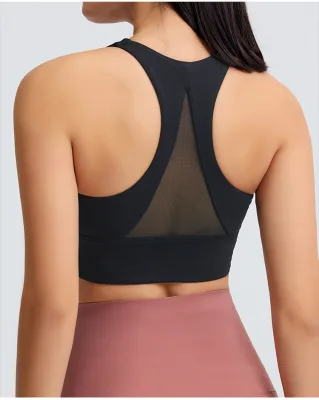
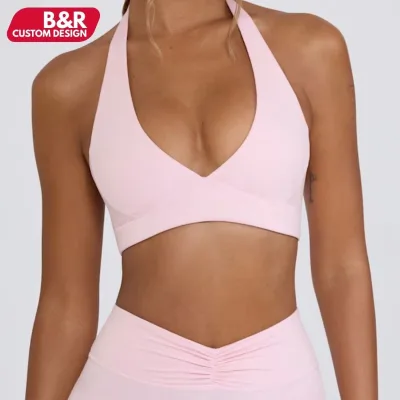
Comprehensive Sourcing Guide
Strategic Sourcing Guide for Medium Support Plaid Sports Bras
The procurement of medium support plaid sports bras requires a nuanced approach that balances aesthetic customization with functional performance requirements. In the current B2B marketplace, buyers often seek specific visual patterns like plaid alongside technical attributes such as breathability and moisture-wicking capabilities. This guide synthesizes available product data and industry standards to provide a framework for sourcing these items effectively. The focus remains on verifying supplier capabilities against the specific needs of the medium support category, ensuring that the final product meets both performance and design expectations without relying on unverified claims.
Understanding Technical Specifications and Material Composition
When sourcing a Medium Support Plaid Sports Bra, the foundation lies in the material composition and structural design. The supplied product data indicates that common materials for this category include blends of Spandex and Nylon. This combination is critical for achieving the necessary elasticity and durability required for medium support activities. The presence of Spandex ensures the garment maintains its shape during movement, while Nylon provides the tensile strength and quick-drying properties essential for active wear.
Buyers must verify that the fabric composition aligns with the intended use case. For instance, the data highlights features such as "Active stretch," "Anti-bacterial," and "Sweat-wicking." These attributes suggest that the fabric is engineered for high-intensity environments. However, the specific percentage of Spandex to Nylon is not universally fixed in the provided context; therefore, procurement teams should request detailed fabric specifications from potential suppliers. The "Medium Support" classification implies a specific level of compression and encapsulation, often achieved through the integration of built-in bras or push-up pads, as noted in the attribute data.
The construction of the garment also dictates its support level. Features like "Built-in bra" and "Push Up Pads" are explicitly mentioned in the product attributes. These elements are crucial for providing the medium support required for activities like cycling, fitness, and track and field. The "Short" clothing length observed in the data suggests a design optimized for layering or specific athletic movements where a cropped silhouette is preferred. Buyers should ensure that the plaid pattern is applied in a way that does not compromise the structural integrity of the fabric or the placement of the support elements.
Compliance, Certification, and Standard Verification
In the B2B apparel sector, compliance is a non-negotiable aspect of the procurement process. While the supplied data mentions that product standards are "According to Your Requirements," this places the onus on the buyer to define and verify these standards before production begins. The origin of the products is listed as China, a major manufacturing hub, which necessitates rigorous due diligence regarding labor practices and environmental regulations.
Buyers should verify that suppliers adhere to international safety and quality standards relevant to the target market. Although specific certification names are not listed in the provided facts, the expectation for "Custom Standard" implies that suppliers must be capable of meeting specific client mandates. This could include testing for colorfastness, shrinkage, and chemical restrictions (such as REACH or CPSIA compliance, depending on the destination). The data mentions "According to Your Requirements" for the product standard, which indicates flexibility but also a need for clear communication of these requirements in the purchase order.
Furthermore, the "Small Orders: Accepted" attribute suggests that suppliers may be willing to work with smaller volumes, but this does not exempt them from quality control protocols. Buyers must ensure that the "Custom Label" and "Custom Tags" options are implemented in a way that meets local labeling laws. The ability to customize the logo via "Printing, Embroidery, Heat Transfer, Sublimation" offers flexibility, but the durability of these application methods must be tested to ensure they do not degrade during washing or wear.
Cost Drivers and Pricing Dynamics
The pricing structure for medium support plaid sports bras is influenced by several variables, including material costs, customization complexity, and order volume. The observed price range in the market data is between 1.2 and 13 USD. This wide variance indicates that factors such as the quality of the Spandex/Nylon blend, the intricacy of the plaid pattern, and the type of support structure significantly impact the final unit cost.
Order volume is a primary cost driver. The observed Minimum Order Quantity (MOQ) ranges from 1 to 3000 units. Suppliers offering an MOQ of 1 are likely catering to sample requests or very small boutique orders, which typically carry a higher per-unit cost due to the lack of economies of scale. Conversely, bulk orders approaching the 3000-unit range will likely benefit from lower per-unit pricing. The "7 Days for Samples and 25 Days for Bulk Production" lead time suggests that the production cycle is relatively efficient, but rush orders may incur additional costs.
Customization is another significant cost factor. The availability of "Any Pantone Color," "Custom Logo," and "Custom Label" allows for high levels of brand differentiation but adds complexity to the manufacturing process. The choice of logo application method—whether printing, embroidery, or sublimation—will also affect the price. Embroidery, for instance, often requires more time and labor than direct printing, potentially increasing the cost per unit. Buyers should balance the desire for unique branding with the budget constraints, ensuring that the cost of customization does not erode profit margins.
Typical Applications and Usage Scenarios
The versatility of medium support plaid sports bras makes them suitable for a wide range of athletic and lifestyle applications. The product data explicitly lists usage scenarios including "Ball Sports," "Cycling," "Fitness," "Ski," and "Track and Field." These activities generally require a medium level of support, which is sufficient to minimize breast movement without the excessive compression found in high-impact bras.
The "Quick-Drying" and "Moisture-Wicking" features are particularly valuable for these applications. In cycling and fitness, where sweat accumulation is common, the ability of the Spandex/Nylon blend to manage moisture is essential for comfort and hygiene. The "Anti-UV" and "Anti-Static" attributes further enhance the suitability of these bras for outdoor activities like skiing or track events. The "Active stretch" feature ensures that the garment moves with the body, providing freedom of motion during dynamic exercises.
Additionally, the "Suitable for: Girls, Women" and "Adults" attributes indicate a broad demographic appeal. The "Short" length and "Sports" style make these bras ideal for layering under jackets or wearing as standalone tops for casual wear or light exercise. The plaid pattern adds a fashion-forward element, allowing the product to transition from the gym to casual settings, thereby expanding its market potential.
Supplier Evaluation and Production Capabilities
Evaluating potential suppliers requires a focus on their production capacity, customization options, and logistical capabilities. The data indicates that suppliers offer "Separate Plastic Bags and 60-80 PCS Per Carton" for bulk packing, as well as "1PC/Polybag" for individual units. This flexibility in packaging is crucial for buyers who need to optimize shipping costs or meet specific retail display requirements.
The "Customization: Available" attribute is a key differentiator. Buyers should assess the supplier's ability to handle complex requests, such as custom colors, logos, and labels. The availability of multiple logo application methods—Printing, Embroidery, Heat Transfer, and Sublimation—suggests a versatile production line. However, buyers must verify the supplier's quality control processes for these customizations to ensure consistency across large batches.
Logistical capabilities are also vital. The listed shipping options include "DHL, FedEx, UPS, TNT, EMS, Air & Sea Shipment," indicating that the supplier has established relationships with major carriers. This allows buyers to choose the most cost-effective and time-efficient shipping method based on their urgency and budget. The "25 Days for Bulk Production" lead time is a standard benchmark, but buyers should confirm if this timeline is consistent and reliable, especially during peak seasons.
Quality Control and Long-Term Procurement Considerations
Maintaining quality over time is essential for building a sustainable supply chain. The "Standard: According to Your Requirements" clause highlights the importance of defining clear quality metrics before production begins. Buyers should establish a detailed quality control plan that includes inspections for fabric defects, stitching integrity, and the durability of custom logos and labels.
Long-term procurement considerations involve building a relationship with suppliers who can scale with demand. The ability to accept "Small Orders" suggests that suppliers are flexible, but buyers should also evaluate their capacity to handle larger volumes without compromising quality. The "S to xxxl" size range indicates a broad sizing strategy, which is beneficial for catering to diverse customer bases. However, buyers should verify the accuracy of the sizing chart to ensure consistency across different production runs.
Sustainability is another growing concern in the apparel industry. The "Sustainable" feature mentioned in the product attributes suggests that some suppliers may be incorporating eco-friendly practices. Buyers should inquire about the specific sustainability measures in place, such as the use of recycled materials or ethical labor practices, to align with corporate social responsibility goals.
Comparative Analysis of Product Attributes
To facilitate decision-making, the following table summarizes key attributes observed in the product data, highlighting the variations and commonalities that buyers should consider.
| Attribute Category | Observed Values | Procurement Implication |
|---|---|---|
| Material | Spandex/Nylon, Nylon/Spandex | Verify blend ratios for stretch and durability. |
| Support Level | Medium (implied by features), Built-in bra, Push Up Pads | Ensure structural design matches intended activity intensity. |
| Customization | Color (Pantone), Logo (Print/Embroidery), Label, Tag | Confirm feasibility and cost of specific custom requests. |
| MOQ | 1 to 3000 | Align order volume with budget and inventory needs. |
| Lead Time | 7 Days (Samples), 25 Days (Bulk) | Plan production schedules accordingly. |
| Packaging | Separate Plastic Bags, 60-80 PCS/Carton, 1PC/Polybag | Optimize for shipping efficiency and retail presentation. |
| Usage | Ball Sports, Cycling, Fitness, Ski, Track | Match product features to target market activities. |
| Origin | China | Consider logistics and potential tariff implications. |
Conclusion
Sourcing medium support plaid sports bras involves a careful balance of technical specifications, customization needs, and logistical planning. The available data points to a robust market with suppliers capable of offering a wide range of materials, styles, and customization options. By focusing on material composition, verifying compliance standards, and evaluating supplier capabilities, buyers can secure high-quality products that meet their specific requirements. The flexibility in packaging, shipping, and order volume further enhances the viability of these products for various B2B applications. Ultimately, success in this procurement category depends on clear communication of requirements and rigorous quality control throughout the production process.
FAQs
What materials are used for medium support plaid sports bras?
These bras typically use a blend of Spandex and Nylon to ensure elasticity and durability. This combination provides the necessary stretch for medium support while maintaining shape during activities like cycling and fitness.
Can I customize the logo and color for this product?
Yes, customization is available for logos, colors, and labels. Buyers can choose from printing, embroidery, heat transfer, or sublimation for logos and select any Pantone color for the fabric design.
What is the lead time for sample and bulk production?
Samples require 7 days for delivery, while bulk production takes 25 days. This timeline applies to standard orders, though rush requests may vary depending on the specific supplier capacity and order volume.
Which activities are suitable for medium support plaid sports bras?
These bras are designed for ball sports, cycling, fitness, skiing, and track and field. The quick-drying and moisture-wicking features make them ideal for high-intensity activities requiring breathability and comfort.
What is the minimum order quantity for these sports bras?
The minimum order quantity ranges from 1 to 3000 units depending on the supplier. Lower MOQs allow for small boutique orders, while larger volumes often secure better pricing and economies of scale.
How are the products packed for shipment?
Products are packed in separate plastic bags with 60 to 80 pieces per carton for bulk orders. Individual units may also be shipped in single polybags, and custom packing options are available upon request.