Source Melamine Resin Particle Board for Furniture, Cabinets, and Shelving
Compare 30 listings of Melamine Resin Particle Board from Chinese manufacturers. Buyers can evaluate specifications like thickness, density, and surface finishes to find suitable options for indoor furniture and cabinetry projects.
Key considerations
Products List


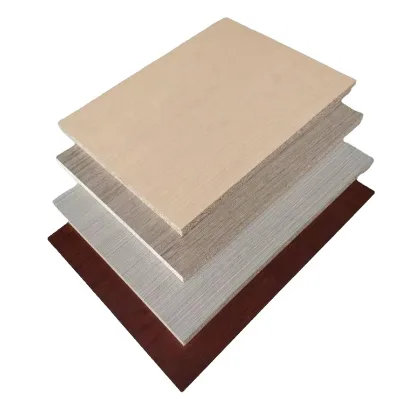
Comprehensive Sourcing Guide
Strategic Sourcing Guide for Melamine Resin Particle Board Procurement
The global market for Melamine Resin Particle Board presents a complex landscape for B2B buyers seeking cost-effective yet durable engineered wood solutions. This material, defined by a particle board core bonded with melamine-impregnated paper, serves as a foundational component in modern furniture manufacturing, interior fit-outs, and cabinetry. Sourcing this product requires a disciplined approach that distinguishes between observed product attributes and generalized market claims. Buyers must navigate a wide array of specifications, from core composition and density to surface finishing and certification status, to ensure the selected materials meet rigorous project requirements. This guide outlines the critical factors for evaluating Melamine Resin Particle Board, focusing on technical verification, compliance checks, and supply chain logistics based on available industry data.
Technical Specifications and Material Composition
Understanding the technical architecture of Melamine Resin Particle Board is the first step in effective procurement. The core material is typically wood-based, often utilizing poplar or other timber species, which provides the structural integrity necessary for various applications. The density of these boards is a critical performance metric; observed data indicates a density range of approximately 650 to 700 kg/m³, with specific instances recorded at 650 kg/m³. This density influences the board's load-bearing capacity and screw-holding strength. The slab structure varies significantly depending on the manufacturer and intended use. While some products utilize a 3-layer structure for balanced stability, others are classified as Oriented Strand Boards (OSB) or veneer boards, indicating different manufacturing processes and performance characteristics.
The surface finish is equally vital, as the melamine resin layer provides the aesthetic and protective qualities. Buyers should verify the specific surface treatment, which can range from matte and textured to glossy and embossed. The color options are extensive, with white being a predominant choice, often achieved through melamine impregnated paper. The thickness of the board is a primary specification, with common offerings including 9mm, 10mm, 11mm, 12mm, 15mm, 18mm, and 25mm. Dimensional standards also vary; while 1220x2440mm (4'x8') is a ubiquitous standard size, other dimensions such as 2135x2745mm (7'x9') or custom cuts like 1220x1220mm and 1220x1525mm are frequently available. The glue types used in the bonding process are another technical differentiator, with options including MR (Moisture Resistant), WBP (Weather and Boil Proof), Melamine, and Phenolic resins. Selecting the correct glue type is essential for determining the board's resistance to humidity and environmental stress.
Compliance, Certification, and Safety Standards
In the B2B sector, compliance with international standards is non-negotiable for ensuring product safety and marketability. When sourcing Melamine Resin Particle Board, buyers must rigorously verify certification status. Common certifications observed in the market include CE and ISO marks, which indicate adherence to specific European and international quality management standards. Some products also carry specific feature certifications, such as fire-proofing or wear-resistant properties, which are critical for commercial and high-traffic applications. However, it is imperative to treat these certifications as observations of specific listings rather than universal guarantees for all products in the category.
Buyers should request valid certification documents from suppliers to confirm that the product meets the claimed standards. The standard size and quality are often referenced against specific national or international benchmarks, such as the CE Standard or ISO standards. While some background knowledge suggests standards like EN 312 for particle boards, procurement decisions should rely on the explicit certification data provided by the supplier. Additionally, the usage classification—whether the board is rated for indoor, outdoor, or dual-purpose application—must be validated against the glue type and surface treatment. For instance, boards utilizing WBP or Phenolic glue are generally suitable for outdoor or high-moisture environments, whereas those with MR glue are typically restricted to indoor use. Verifying these attributes prevents costly installation failures and ensures the material aligns with project safety codes.
Cost Drivers and Pricing Dynamics
The pricing of Melamine Resin Particle Board is influenced by a multitude of factors, including raw material costs, manufacturing complexity, and logistical expenses. The observed price range in the market spans from $1 to $1,500 USD, reflecting the vast diversity in product specifications, thickness, and quality grades. The "First-Class" and "Excellent" grades observed in the market command higher prices due to superior structural integrity and aesthetic consistency. The cost is also driven by the customization level; while standard sizes like 1220x2440mm are generally more economical, custom dimensions or specialized surface finishes like high-gloss or textured patterns incur additional processing costs.
Minimum Order Quantity (MOQ) is another significant cost driver. Market data shows MOQs ranging from 1 unit to 5,000 units, with some suppliers requiring a minimum volume of 20 cubic meters (cbm) for standard shipments. This volume requirement can significantly impact the unit cost, as larger orders often benefit from economies of scale in production and shipping. Buyers must balance their inventory needs against the MOQ to optimize cash flow. Furthermore, the choice of packaging—whether palletized or in standard export packages—can affect the overall landed cost. The origin of the product, predominantly from regions like China, Linyi, or Shandong, also plays a role in pricing, as these hubs offer competitive manufacturing rates but introduce variable shipping costs based on the destination port.
Typical Applications and Usage Scenarios
Melamine Resin Particle Board is versatile, finding application in a wide spectrum of industries. Its primary usage is in indoor environments, including residential and commercial furniture, kitchen cabinets, office desks, and shelving units. The waterproof and soundproof features of certain variants make them suitable for areas requiring moisture resistance or acoustic dampening. For outdoor applications, the selection of boards with WBP glue and appropriate surface finishes is critical to withstand environmental exposure. The "Parquet" pattern and various surface textures allow the material to mimic natural wood or stone, expanding its utility in interior design and flooring solutions.
The structural properties of the board, such as its density and core composition, determine its suitability for specific load-bearing applications. Boards with a 3-layer structure or OSB core offer enhanced stability for large-span furniture components. The availability of customization allows manufacturers to tailor the board to specific design requirements, ensuring a perfect fit for unique architectural projects. Whether used for high-gloss cabinetry or matte-finish office partitions, the material's adaptability makes it a preferred choice for designers and builders seeking a balance between aesthetics and functionality.
Supplier Evaluation and Supply Chain Logistics
Selecting a reliable supplier is paramount to securing a consistent supply of high-quality Melamine Resin Particle Board. Buyers should evaluate suppliers based on their production capabilities, quality control measures, and logistical efficiency. Key indicators of supplier reliability include the clarity of their product specifications, the transparency of their certification documents, and their ability to meet delivery timelines. The observed delivery time for these products is typically within 30 days, though this can vary based on order volume and customization requirements.
Logistics play a crucial role in the procurement process. The loading ports for these products are often located in major Chinese hubs such as Qingdao, Lianyungang, and Rizhao, or any other Chinese port as requested by the buyer. Understanding the shipping terms and the associated costs is essential for accurate budgeting. Payment terms, commonly structured as T/T (Telegraphic Transfer) or L/C (Letter of Credit), provide financial security for both parties. Buyers should also consider the packaging standards, ensuring that products are protected during transit to prevent damage. The origin of the product, whether from Linyi, Shandong, or other regions, can influence the lead time and shipping costs, making it a factor in supplier selection.
Quality Control and Long-Term Procurement Considerations
Implementing a robust quality control (QC) protocol is essential for mitigating risks associated with Melamine Resin Particle Board procurement. Buyers should establish clear acceptance criteria based on the observed technical specifications, including density, thickness tolerance, and surface finish quality. Regular inspections during the production phase and upon arrival at the destination port can help identify defects early. The "First-Class" and "Excellent" grades observed in the market serve as benchmarks for quality, but buyers must verify that the delivered goods match these standards through independent testing or third-party inspection services.
Long-term procurement considerations involve building a sustainable relationship with suppliers who can consistently deliver high-quality products. This includes evaluating the supplier's ability to scale production, their responsiveness to customization requests, and their commitment to continuous improvement. The availability of customization options allows buyers to adapt to changing market trends and design requirements. By focusing on suppliers with proven track records in certification, quality control, and logistics, buyers can ensure a stable supply chain that supports their business growth. The ultimate goal is to secure a partnership that delivers value through consistent quality, competitive pricing, and reliable delivery, thereby minimizing disruptions and maximizing project success.
Comparative Analysis of Product Attributes
To facilitate informed decision-making, buyers should compare the key attributes of different Melamine Resin Particle Board options. The following table summarizes the critical specifications observed in the market, highlighting the variations in material, structure, and finish.
| Attribute | Option A | Option B | Option C |
|---|---|---|---|
| Core Material | Poplar | Wood | Veneer Boards |
| Slab Structure | 3-Layer Structure | Oriented Strand Boards (OSB) | Veneer Boards |
| Surface Finish | Matt, Textured | High Gloss, Embossed | Matt, Glossy |
| Density | 650 kg/m³ | 650-700 kg/m³ | Variable |
| Glue Type | MR, WBP | Phenolic, Melamine | MR, WBP |
| Certification | CE, ISO | CE, ISO | ISO |
| Usage | Indoor | Indoor, Outdoor | Indoor, Outdoor |
| Standard Size | 1220244018MM | 1220x2440mm | 12202440, 12201220 |
| Thickness | 18mm | 9mm to 25mm | As Requested |
This comparison underscores the importance of aligning product specifications with project requirements. Buyers must carefully evaluate each attribute to ensure the selected board meets the necessary performance criteria for their specific application. By leveraging this data-driven approach, buyers can make strategic sourcing decisions that optimize cost, quality, and performance.
FAQs
What certifications do melamine resin particle boards have?
Common certifications include CE and ISO marks, which indicate adherence to international quality standards. Some products also feature specific properties like fire-proofing or wear-resistance, but these vary by listing and require verification from the supplier.
Which surface finishes are available for melamine resin particle boards?
Available surface finishes include matte, textured, glossy, embossed, and high-gloss options. The color is often white, achieved through melamine impregnated paper, and the specific finish depends on the manufacturer and product model selected.
Can I customize the dimensions of melamine resin particle boards?
Yes, customization is available for various dimensions such as 1220x2440mm, 2135x2745mm, or other custom sizes. Buyers should confirm specific requirements with the supplier as standard sizes like 1220x2440mm are common but not universal.
What is the typical delivery time for melamine resin particle boards?
The typical delivery time is within 30 days from the order date. This timeline may vary based on order volume, customization needs, and the specific loading port chosen, such as Qingdao or Lianyungang.
How is the density of melamine resin particle boards defined?
The density typically ranges from 650 to 700 kg/m³, with specific instances recorded at 650 kg/m³. This metric influences the board's structural integrity and load-bearing capacity for furniture and interior applications.
Which glue types are used in melamine resin particle boards?
Glue types include MR, WBP, Melamine, and Phenolic resins. The choice of glue determines moisture resistance, with WBP and Phenolic suitable for outdoor use while MR is generally for indoor applications.