Source Microwave Sensor LED Highbay Light for Factory Warehouse Gymnasium
Compare 30 Microwave Sensor LED Highbay Light options from verified suppliers. Buyers can evaluate specifications like lifespan, IP rating, and customization for factory, warehouse, and gymnasium applications. Detailed data includes power factor, color temperature, and warranty terms for informed sourcing decisions.
Key considerations
Products List


170lm/W 0-10V Dimmming Microwave Motion Sensor LED High Bay Light for Warehouse
$50.63 - $52.73
MOQ: 1 Pieces

LED High Bay Lights 240W with IP65 Microwave Motion Sensor for Warehouse
$85.97 - $89.65
MOQ: 100 Pieces

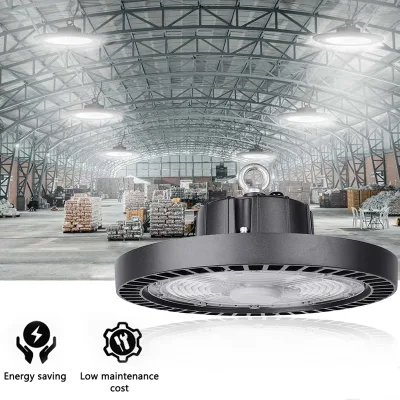


Glarefree 150watt Microwave Daylight Sensor LED Induction High Bay Lamp
$80.00 - $85.00
MOQ: 10 Pieces

$200.00 - $220.00
MOQ: 100 Sets

$200.00 - $220.00
MOQ: 100 Sets
Comprehensive Sourcing Guide
Microwave Sensor LED Highbay Light Sourcing Guide
Sourcing microwave sensor integrated highbay lighting requires a clear understanding of how these components interact within industrial environments. These fixtures combine high-efficiency LED arrays with passive microwave detection to automate illumination in large spaces. The integration reduces manual intervention, ensuring lights activate only when occupancy is detected. This synergy between light source and sensor technology is critical for facilities seeking to optimize energy consumption while maintaining safety standards. Buyers must evaluate how the sensor’s detection range aligns with the fixture’s mounting height to ensure comprehensive coverage.
The procurement process involves selecting units that match specific operational demands, such as warehouse aisles or factory floors. Observed market listings indicate a wide variety of models, with prices ranging from approximately $3.80 to $220.00 USD. This variance reflects differences in build quality, sensor sensitivity, and additional features like dimming capabilities. Understanding these price drivers helps buyers avoid under-specifying their orders, which can lead to premature failure, or over-specifying, which inflates costs unnecessarily. A disciplined approach to matching technical requirements with budget constraints is essential for successful procurement.
Product Scope and Observed Listing Signals
The current market offers a diverse array of highbay lights, with observed product counts indicating robust supplier availability. Listings frequently highlight specific model numbers such as SL and SL-U65BD-60-X(S), which denote distinct form factors and internal configurations. These identifiers are crucial for cross-referencing technical datasheets and ensuring compatibility with existing infrastructure. Buyers should note that while many products share common traits, specific attributes like beam angle or IP rating may vary between models. Verifying the exact model against the intended application prevents mismatches in light distribution and environmental protection.
Observed specifications reveal that many units utilize SMD2835 or SMD3030 LED chips, providing a balance of efficiency and longevity. Lifespans are commonly cited as exceeding 50,000 hours, a key metric for reducing maintenance frequency in hard-to-reach areas. Additionally, some listings include optional microwave sensors with detection distances ranging from 2.5 to 10 meters. These sensors often feature adjustable delay times, allowing facility managers to tailor the lighting response to traffic patterns. Understanding these variable parameters enables buyers to select fixtures that precisely fit their spatial and operational needs.
Technical Specifications to Verify
Verifying electrical compatibility is the first step in technical validation. Buyers must confirm that the AC input voltage matches the local grid, with observed ranges typically spanning 100-277V or 200-240V at 50/60Hz. The power factor is another critical metric, with many high-quality units boasting values greater than 0.95, which minimizes reactive power and improves grid efficiency. Additionally, the Color Rendering Index (CRI) should be greater than 80 to ensure accurate color perception in workspaces. These electrical parameters directly impact energy bills and the visual comfort of employees, making them non-negotiable verification points.
Thermal and optical performance also require close scrutiny. The beam angle is often standardized at 120°, providing wide coverage suitable for high-ceiling installations. However, buyers should verify the specific mounting height recommendations, as some sensors support installation up to 15 meters. The operating temperature range, typically -20°C to +40°C, ensures reliability in unheated warehouses or hot factories. Furthermore, the SDCM (Standard Deviation of Color Matching) should be less than 4 to guarantee consistent color appearance across all installed units. These optical and thermal specs define the quality of the illumination and the durability of the fixture.
Compliance and Safety Documentation
Regulatory compliance is mandatory for importing and installing lighting equipment in most jurisdictions. Buyers must ensure that products carry recognized certifications such as CE and RoHS, which indicate adherence to European safety and environmental standards. These certifications are frequently listed in product attributes and serve as a baseline for legal market entry. Without proper documentation, shipments may be held at customs, causing significant delays and additional costs. Verifying the authenticity of these certificates with the issuing body is a prudent step to avoid fraudulent claims.
Beyond basic certifications, buyers should request detailed test reports for electromagnetic compatibility and photometric performance. While specific test results are not always provided in initial listings, reputable suppliers should be able to furnish this data upon request. The warranty period is another indicator of supplier confidence, with many offering five years for the light engine and two years for sensor components. Clear warranty terms protect the buyer against premature failures and define the recourse for defective units. Understanding the scope of the warranty helps in calculating the total cost of ownership over the fixture's lifecycle.
Cost Drivers and Commercial Terms
Pricing for microwave sensor highbay lights is influenced by several factors, including the quality of the LED driver and the sophistication of the sensor module. The observed MOQ range of 1 to 500 units allows for flexibility, catering to both small pilot projects and large-scale deployments. Buyers should negotiate based on volume, as higher quantities often yield better unit prices. Additionally, customization options are available, which can add value but may increase the cost and lead time. Understanding the cost structure helps in budgeting accurately and avoiding unexpected expenses during the procurement process.
Delivery timelines are another critical commercial consideration. Sample delivery times are often within two days, facilitating quick evaluation of product quality. Bulk order delivery times typically range up to 25 days, depending on production capacity and shipping method. Buyers should factor in these lead times when planning installation schedules to avoid project delays. Packaging is usually standardized in carton boxes, but custom packaging options may be available for branded products. Clear communication regarding delivery terms and packaging requirements ensures a smooth logistics process from factory to site.
Supplier Qualification and Quality Control
Evaluating supplier credibility is essential for mitigating procurement risks. Buyers should prioritize suppliers with a proven track record in manufacturing LED lighting and sensor technology. The origin of the products, often listed as Shenzhen, Guangdong, or Mainland China, indicates a concentration of manufacturing expertise in these regions. However, geographic origin alone does not guarantee quality. Buyers should request factory audits or third-party quality reports to verify production standards. Establishing a strong relationship with a reliable supplier ensures consistent product quality and better after-sales support.
Quality control measures should be integrated into the procurement process. Buyers can specify incoming inspection criteria, such as checking for physical defects and verifying electrical performance. Random sampling of bulk orders can help detect manufacturing variances before full deployment. Additionally, buyers should inquire about the supplier’s defect rate and their process for handling returns or replacements. A transparent quality control system reduces the risk of receiving substandard products. Proactive engagement with the supplier on quality issues fosters a collaborative partnership that benefits both parties.
Long-Term Procurement Checks
Long-term success depends on monitoring product performance and supplier reliability over time. Buyers should track energy savings and maintenance costs to validate the initial investment in high-efficiency fixtures. Regular inspections of the installed units can identify any degradation in light output or sensor sensitivity. Feedback from facility managers regarding user experience and operational efficiency is also valuable for future procurement decisions. Continuous evaluation ensures that the lighting system continues to meet the evolving needs of the facility.
Supplier performance should be reviewed periodically to ensure they remain aligned with the buyer’s requirements. This includes assessing their responsiveness to inquiries, adherence to delivery schedules, and quality of technical support. Building a diversified supplier base can mitigate risks associated with single-source dependency. Buyers should also stay informed about technological advancements in LED and sensor technology to identify opportunities for upgrades. A strategic approach to long-term procurement ensures that the lighting infrastructure remains efficient, reliable, and cost-effective.
FAQs
What is the lifespan of the Microwave Sensor LED Highbay Light?
The product lifespan is at least 50000 hours for reliable long-term operation. This durability ensures reduced maintenance costs in industrial settings like factories and warehouses where continuous lighting is essential for safety and productivity.
Which certifications does the Microwave Sensor LED Highbay Light hold?
The unit holds CE and RoHS certifications for safety and environmental compliance. These standards confirm the product meets strict regulatory requirements for electrical safety and restriction of hazardous substances in global markets.
Can the Microwave Sensor LED Highbay Light be customized for specific needs?
Yes, customization is available to meet unique project requirements. Buyers can request specific configurations to ensure the lighting solution fits their facility layout and operational demands without compromising performance or safety standards.
What is the beam angle of the Microwave Sensor LED Highbay Light?
The beam angle is 120 degrees for wide area illumination coverage. This wide spread ensures uniform light distribution across large spaces like shopping malls and gymnasiums, eliminating dark spots and improving overall visibility.
How long is the warranty period for the Microwave Sensor LED Highbay Light?
The warranty period is five years for most models to guarantee quality. This extended coverage provides buyers with peace of mind regarding product reliability and manufacturer support for potential defects or performance issues.
What is the color temperature range for the Microwave Sensor LED Highbay Light?
The color temperature ranges from 3000K to 6000K including cool white options. This flexibility allows users to select the appropriate light tone for different environments, enhancing visual comfort and task performance in various industrial applications.
What is the waterproof rating of the Microwave Sensor LED Highbay Light?
The waterproof rating is IP65 for protection against dust and water jets. This robust rating ensures the fixture can operate reliably in harsh environments where moisture or dust exposure is a common concern for industrial lighting systems.