Source Mini Horizontal Directional Drilling Machine for Water Wells, Pipe Installation, and Cable Trenching
Compare 30 mini horizontal directional drilling machines from verified Chinese suppliers. This selection features crawler-mounted units with rotary and impactor drilling ways, suitable for trenchless boring and horizontal directional drilling applications across diverse soil conditions.
Key considerations
Products List

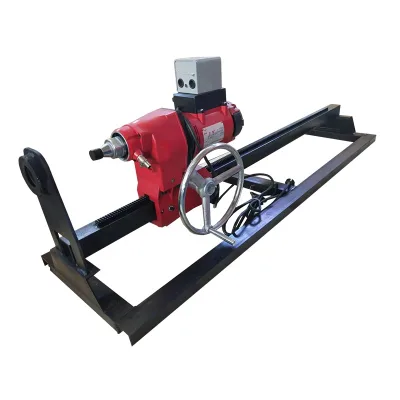
Horizontal Core Drilling Machine Horizontal Directional Drilling Machine
$18000.00 - $21000.00
MOQ: 1 Pieces

New Model Mini Small Portable Horizontal Directional Drilling Machine Supplier for Sale
$18000.00 - $21000.00
MOQ: 1 Pieces


$500.00 - $2000.00
MOQ: 10 pc

Mini Underground Horizontal Directional Drill/Drilling Rig for Short Distance Drilling
$27000.00 - $32000.00
MOQ: 1 Sets

HDD Mini Small Underground Horizontal Directional Drill/Drilling Rig
$27000.00 - $32000.00
MOQ: 1 Sets


China New HDD Machine Gl160 Mini Horizontal Directional Drill/Drilling Rig
$27000.00 - $32000.00
MOQ: 1 Sets


Good Horizontal Directional Drilling Machine Horizontal Rail Drilling Machine
$16800.00 - $26800.00
MOQ: 1 Sets




Comprehensive Sourcing Guide
Strategic Sourcing Guide for Mini Horizontal Directional Drilling Machines
Understanding Technical Specifications and Operational Capabilities
When sourcing a mini horizontal directional drilling (HDD) machine, the primary objective is to align the equipment's physical and operational parameters with the specific constraints of the intended project. The market presents a diverse array of configurations, ranging from compact units designed for utility installation to more robust models capable of deeper boreholes. Buyers must carefully examine the drilling depth capabilities, as observed data indicates a significant variance in this specification. Some units are engineered for shallow applications with a maximum drilling depth of less than 10 meters, while others are built for more demanding infrastructure projects capable of reaching depths between 100 and 150 meters. This distinction is critical; selecting a machine with insufficient depth capacity can lead to project failure, while over-specifying may result in unnecessary capital expenditure and logistical inefficiencies.
The method of drilling is another fundamental technical attribute that dictates the machine's suitability for different soil conditions. The available inventory includes models utilizing a rotary drilling way, which is often preferred for softer soils and general utility work, as well as units employing an impactor system, which may offer advantages in harder or more abrasive strata. The diameter of the drill hole is equally variable, with specifications ranging from 100 to 150 millimeters for smaller applications to greater than 300 millimeters for larger pipeline installations. Buyers should verify the maximum drill pipe diameter, which can extend up to 500 millimeters, to ensure compatibility with the required casing or pipe sizes for the specific job.
Furthermore, the physical dimensions and weight of the machine are vital for site logistics. Observed data shows host weights varying between 2.15 and 2.3 tons, with overall standard dimensions often falling within the range of 3.7 to 3.8 meters in length, 1.5 to 1.8 meters in width, and 1.2 to 1.8 meters in height. The travel system is typically crawler-based, providing necessary traction on uneven terrain, with ground drive speeds generally observed around 2 kilometers per hour. For operators requiring precision, some models feature remote control capabilities for the walking system, enhancing safety and maneuverability in confined spaces. The incidence and departure angles are also key performance metrics; typical units offer an incidence angle between 10 and 22 degrees and a departure angle of approximately 20 degrees, allowing for flexible trajectory planning.
Compliance, Certification, and Safety Standards
In the global B2B procurement landscape, verifying compliance and certification is not merely a formality but a prerequisite for risk mitigation. When evaluating potential suppliers for mini HDD machines, buyers must demand clear documentation regarding international quality and safety standards. The market data indicates that certain units carry certifications such as ISO 9001 and CE. However, it is imperative for the buyer to treat these as observations of specific listings rather than universal guarantees for all products in the category. The presence of a CE mark suggests conformity with health, safety, and environmental protection standards for products sold within the European Economic Area, but the buyer must confirm the validity of the certificate and the specific scope of the assessment.
The origin of the machinery also plays a significant role in the compliance framework. Products listed as originating from regions such as Henan or Beijing, China, are subject to the manufacturing standards and export regulations of that jurisdiction. While the standard export packaging is common, the specific packaging requirements, such as wooden cases or standard export crates, must be explicitly defined in the purchase agreement to ensure the equipment arrives without damage. Buyers should also investigate whether the supplier adheres to the specific product standards listed, such as dimensions of 3800x1500x1600mm or 3700x1800x1200mm, as these often correlate with the internal quality control protocols of the manufacturer.
Safety features are intrinsic to the machine's design and operation. The inclusion of a water injection system, often described as a three-cylinder mud pump, is a critical component for maintaining borehole stability and cooling the drill bit. The type of pump, such as the 160 Type Three-Cylinder Mud Pump, should be verified against the fluid dynamics requirements of the drilling site. Additionally, the condition of the equipment, whether new or refurbished, must be clearly stated. All observed listings in this context refer to "New" condition units, but buyers must ensure that "New" implies factory-fresh status with full warranty coverage, rather than a reconditioned unit with limited life expectancy.
Cost Drivers and Pricing Dynamics
The pricing structure for mini horizontal directional drilling machines is highly variable, influenced by a complex interplay of technical specifications, brand reputation, and supply chain factors. The observed price range in the market is extensive, spanning from approximately 2 USD to over 15 million USD. This vast disparity underscores the importance of defining the exact scope of requirements before engaging in price negotiations. A unit priced at the lower end of the spectrum likely corresponds to a basic model with limited depth capacity, smaller dimensions, and standard features. Conversely, machines at the higher end of the price range typically incorporate advanced engineering, higher horsepower engines, such as the 62kw Thunder Power or 48kw 65HP variants, and specialized components like diamond bits for hard rock drilling.
Beyond the base unit cost, several ancillary factors drive the total cost of ownership. The customization options available, such as specific modifications to the travel system or the transfer case capacity, can significantly alter the final price. The transfer case, with capacities observed up to 8 tons, is a critical component that affects the machine's ability to handle heavy loads and long pull-back distances. Buyers should also consider the cost of consumables and maintenance, including the drill pipe length, which is typically 2 meters per section, and the bit type, which may need replacement depending on the geological conditions.
The minimum order quantity (MOQ) is another financial consideration. While some suppliers may offer an MOQ of just one unit, facilitating the acquisition of a single machine for a small project, others may require a minimum order of up to 200 units. This variation can impact the unit price and the overall budget. Buyers must clarify the MOQ early in the procurement process to avoid unexpected costs or logistical bottlenecks. Additionally, the lead time and shipping costs, which are often dependent on the origin location and the complexity of the export packaging, should be factored into the total cost analysis.
Typical Applications and Industry Use Cases
Mini horizontal directional drilling machines are versatile tools designed for a wide range of applications, primarily in the trenchless boring and horizontal directional drilling sectors. The core keyword "mini" suggests a focus on projects where space is limited, and traditional open-cut trenching is impractical or too disruptive. These machines are particularly effective for installing utilities such as water lines, gas pipes, electrical conduits, and telecommunications cables under obstacles like roads, rivers, and existing infrastructure.
The specific application of the machine depends heavily on its technical capabilities. For instance, a unit with a drilling depth of less than 10 meters and a drill hole diameter of 100-150mm is ideal for residential or light commercial utility installations. These projects often require high maneuverability and a compact footprint, which the 1.6-meter host width and 2.2-ton weight of certain models provide. On the other hand, machines capable of drilling depths between 100 and 150 meters and handling drill pipe diameters up to 500mm are suited for larger municipal projects, such as crossing major highways or installing long-distance pipelines.
The application also extends to the type of terrain and soil conditions. The climbing ability of 35 degrees and the ground drive system speed of 2 km/hour make these machines suitable for sloped or uneven terrain where stability is a concern. The remote control walking system enhances operator safety and precision in difficult environments. Furthermore, the use of diamond bits indicates suitability for drilling through hard rock or abrasive materials, expanding the range of possible applications to include geotechnical investigations and specialized industrial installations. Buyers should match the machine's application profile, such as the "Portable Well Drilling Machine" designation, with their specific project needs to ensure optimal performance.
Supplier Evaluation and Quality Assurance
Evaluating suppliers for mini HDD machines requires a rigorous approach that goes beyond simple price comparison. Buyers must assess the supplier's ability to provide consistent quality, reliable after-sales support, and adherence to the stated specifications. The presence of certifications like ISO 9001 is a positive indicator, but it should be verified through independent audits or direct requests for certification documents. The supplier's origin, whether from Henan, Beijing, or other regions in China, can provide insights into their manufacturing capabilities and logistical networks.
Quality control is a critical component of the supplier evaluation process. Buyers should inquire about the testing procedures used to validate the machine's performance, including the water injection system's efficiency, the engine power output, and the structural integrity of the crawler system. The condition of the product, specifically whether it is new, should be confirmed through detailed inspection reports or third-party verification. The packing method, whether standard export packaging, wooden packages, or nude packing, also reflects the supplier's attention to detail and commitment to protecting the equipment during transit.
When comparing suppliers, buyers should look for transparency in their product listings. The availability of detailed technical specifications, such as the drill hole diameter, depth, and angle capabilities, indicates a professional and knowledgeable supplier. The ability to offer customization, as noted in the product attributes, is another sign of a flexible and customer-oriented partner. However, buyers must be cautious of suppliers who make unverifiable claims or fail to provide clear documentation regarding their certifications and standards. A thorough due diligence process, including reference checks and site visits if possible, is essential to ensure the selected supplier can meet the project's demands.
Long-Term Procurement and Lifecycle Management
Procuring a Mini Horizontal Directional Drilling Machine is a long-term investment that requires careful consideration of the total cost of ownership and lifecycle management. Buyers should evaluate the availability of spare parts, the ease of maintenance, and the technical support provided by the supplier. The engine power, such as the 62kw Thunder Power or 48kw 65HP units, is a critical component that will require regular maintenance and eventual replacement. Ensuring a reliable supply chain for these parts is essential to minimize downtime and maximize the machine's operational life.
The customization options available, such as specific modifications to the water injection system or the drill pipe configuration, can also impact the long-term value of the machine. A supplier that offers robust customization services can help tailor the machine to the evolving needs of the buyer's projects, extending its utility and relevance over time. Additionally, the warranty terms and the supplier's commitment to after-sales service should be clearly defined in the procurement contract.
Buyers should also consider the environmental and regulatory implications of the machine's operation. The water injection system and the type of drilling fluid used must comply with local environmental regulations. The certification status, particularly the CE mark, can facilitate compliance with international standards, but buyers must ensure that the machine meets all local requirements as well. Finally, the resale value and the potential for upgrading the machine with new attachments or components should be factored into the long-term procurement strategy. By taking a holistic view of the machine's lifecycle, buyers can make informed decisions that maximize their return on investment and ensure the successful execution of their drilling projects.
FAQs
What is the maximum drilling depth for these machines?
Maximum drilling depth varies by model, ranging from less than 10 meters to 100-150 meters. Buyers must select a unit based on specific project requirements to ensure the machine can reach the necessary depth without failure.
Which drilling methods are available for these units?
Available drilling methods include rotary and impactor systems. Rotary systems are often preferred for softer soils, while impactor systems may offer advantages in harder or more abrasive strata depending on the geological conditions.
Can these machines be customized for specific needs?
Customization is available for many models to meet specific project requirements. However, some listings indicate non-customized options, so buyers must verify the customization status before finalizing their procurement decision.
What certifications do these machines typically hold?
Certifications such as ISO 9001 and CE are observed on specific listings. Buyers should treat these as observations of individual products rather than universal guarantees and must verify the validity of the certificates for each unit.
How heavy are the host units of these machines?
Host weights vary between 2.15 and 2.3 tons across different models. This weight range impacts site logistics and transport requirements, so buyers should confirm the specific weight for the unit they intend to purchase.
What is the typical price range for these machines?
The observed price range spans from approximately 2 USD to over 15 million USD. This vast disparity depends on technical specifications, engine power, and customization options, requiring buyers to define exact scope before negotiating.