Source Mirror Finish Stainless Steel Coils for Boilers, Containers, and Sheets
Find 30 listings for Mirror Finish Stainless Steel Coils with cold rolled techniques and corrosion resistance. Buyers can compare grades, surface treatments, and certifications from suppliers in Mainland China to match boiler, container, and sheet requirements.
Key considerations
Products List

Factory Supply Stainless Steel AISI 201 304 420 3mm 2b Finished Mirror Coils
$800.00 - $2000.00
MOQ: 1 Tons


24 Gauge Mirror Polished Stainless Steel 0.6mm 1mm Thickness Ss 304 316L Coils
$800.00 - $2000.00
MOQ: 1 Tons


Mirror Finished High Quality Cold Rolled 201 304 Stainless Steel Coil
$1000.00 - $1100.00
MOQ: 25 Tons


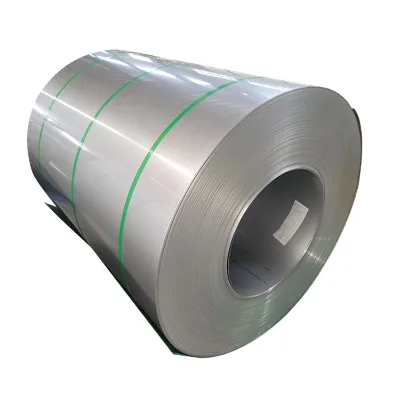


Durable Mirror Finish Stainless Steel Coil - Perfect for Various Applications
$1090.00 - $1290.00
MOQ: 3 Tons


Comprehensive Sourcing Guide
Strategic Sourcing Guide for Mirror Finish Stainless Steel Coils
Navigating the global market for Mirror Finish Stainless Steel Coils requires a disciplined approach that balances aesthetic requirements with rigorous technical performance. Buyers seeking this specific surface finish must understand that "mirror finish" is not merely a visual attribute but a result of precise manufacturing processes, specific grade selections, and stringent quality control protocols. This guide outlines the essential factors for sourcing high-quality stainless steel coils, drawing upon verified industry standards and observed market data to ensure procurement decisions are grounded in factual evidence rather than marketing assertions.
Technical Specifications and Surface Engineering
The foundation of a successful procurement for mirror finish coils lies in understanding the interplay between raw material, processing technique, and surface treatment. The observed product data indicates that the primary raw materials originate from major steel producers such as Tisco, Jisco, Baosteel, Posco, and Lisco. These suppliers provide the base material integrity necessary for high-polish applications. The core product type identified is the Stainless Steel Coil, specifically within the 300 Series, which is renowned for its corrosion resistance and weldability.
The manufacturing technique is predominantly cold rolled, a critical factor for achieving the dimensional stability required for mirror finishes. Cold rolling allows for the precise control of thickness and surface texture. The surface treatment process for achieving a mirror effect typically involves a sequence of grinding and polishing steps. While the observed data lists "Bright" and "Polished" as distinct surface treatments, a true mirror finish represents the highest tier of the polished spectrum. Buyers must verify that the supplier's "Polished" designation aligns with the specific grit sequence required for a reflective surface.
Thickness specifications observed in the market range from 0.3mm to 200mm, though the practical application for mirror finishes often utilizes thinner gauges to ensure flexibility and ease of fabrication. The edge condition is another critical technical variable; options include "Slit edge" or "Mill edge." For mirror finish applications, a slit edge is often preferred to ensure clean, precise dimensions for downstream fabrication, whereas a mill edge may require additional trimming. The shape is consistently flat, and the protection film is available as a requirement, which is essential for preserving the mirror surface during transit and storage.
Compliance and Certification Verification
In the stainless steel industry, compliance is not optional; it is a prerequisite for market access and safety. The observed product attributes list a comprehensive array of international standards, including AISI, ASTM, DIN, GB, JIS, EN, ISO, and RoHS. When sourcing mirror finish coils, buyers must explicitly request documentation proving that the specific batch meets these standards. The presence of multiple standard designations in the data suggests that suppliers often cater to diverse regional requirements, but the buyer must confirm which specific standard applies to their project.
Certification requirements vary by application. The data highlights certifications such as IBR (Indian Boiler Regulation), SGS, and CE. For applications involving pressure vessels or boilers, the IBR certification is mandatory. For general construction or export to Europe, CE marking and ISO certification are critical. The RoHS directive is also frequently cited, ensuring the material is free from specific hazardous substances. Buyers should not assume that a supplier's general certification covers the specific mirror finish product; the certification must be valid for the specific grade and surface treatment being procured.
| Standard Category | Common Standards Observed | Typical Application Context |
|---|---|---|
| Material Grade | AISI, ASTM, GB, JIS, EN | General structural and industrial use |
| Safety & Compliance | IBR, CE, ISO, RoHS | Pressure vessels, construction, electronics |
| Quality Management | SGS, ISO | General supply chain verification |
| Regional Specific | AS1397:2011 | Australian steel standards |
Cost Drivers and Pricing Dynamics
The pricing of Mirror Finish Stainless Steel Coils is influenced by a complex matrix of variables. The observed market price range spans from 700 to 2800 USD, though this wide variance reflects differences in grade, thickness, surface finish quality, and order volume. The primary cost driver is the raw material, specifically the 300 Series stainless steel, which is more expensive than carbon steel or 400 Series alternatives due to its nickel content and superior corrosion resistance.
The surface treatment process is another significant cost factor. Achieving a mirror finish requires additional labor, specialized machinery, and time compared to standard bright or galvanized finishes. The "Customized Processing Ability" noted in the product attributes often implies a premium price, as custom dimensions or specific polish grades require dedicated production runs. Furthermore, the packaging requirements, such as the "Standard Export Package" or specific strapping with steel strips, add to the logistical costs.
Minimum Order Quantity (MOQ) also plays a pivotal role in the unit price. The observed MOQ range is extensive, from 1 unit to 1300 units, with specific instances noting an MOQ of 50 tons. Buyers ordering smaller quantities will likely face a higher per-unit cost due to the setup costs of the polishing line. Conversely, bulk orders may benefit from economies of scale but require significant capital outlay and storage capacity. The "Delivery Time" is noted as dependent on quantity, meaning larger orders may incur longer lead times, which can impact the overall cost of capital for the buyer.
Typical Applications and Performance Requirements
Mirror Finish Stainless Steel Coils are selected for applications where aesthetics and hygiene are paramount. The observed product attributes list "Easy to Weld" and "Corrosion Resistant" as key features, making these coils suitable for environments where both visual appeal and durability are required. The "Tensile Strength" is also a highlighted attribute, indicating that these materials can withstand mechanical stress without compromising the surface finish.
Specific applications identified in the market data include "Boiler Plate" and "Container Plate." In the boiler industry, the mirror finish can facilitate cleaning and inspection, while the corrosion resistance ensures longevity in high-temperature and high-pressure environments. For container applications, the aesthetic appeal of the mirror finish is often utilized for decorative panels or interior linings where hygiene is a concern. The "Customized Processing Ability" allows for the production of coils tailored to specific container dimensions or boiler specifications.
The "Stock" availability mentioned in the data suggests that standard grades and sizes may be readily available for immediate shipment, which is beneficial for urgent projects. However, for custom mirror finishes or specific non-standard sizes, the production lead time must be factored into the project schedule. The "Color" attribute being "Customized" indicates that while the base material is stainless steel, surface treatments or coatings may be applied to achieve specific visual effects, though the core mirror finish remains the primary aesthetic driver.
Supplier Evaluation and Selection Criteria
Selecting the right supplier is critical for ensuring the consistency of the mirror finish. Buyers should evaluate suppliers based on their "Raw Material Advantage," specifically their relationship with major mills like Tisco, Jisco, and Baosteel. These relationships often guarantee the authenticity of the grade and the consistency of the base material. The "Service" attribute, which includes "Customized Processing Ability," is a strong indicator of a supplier's flexibility and technical capability.
The "Surface Finish" and "Protection Film" options are also key evaluation points. A supplier that offers "as Your Requirement" for surface finish and protection film demonstrates a customer-centric approach and the technical capacity to meet specific project needs. Buyers should verify the supplier's ability to provide samples that match the requested mirror finish grade before placing a large order. The "Standard Export Package" and the specific strapping methods mentioned in the data are indicators of the supplier's logistics competence and their ability to protect the product during transit.
When evaluating suppliers, buyers must also consider the "Location" of the manufacturing facility. The observed data points to "Mainland China" and "China" as the primary origins. While this provides access to a vast manufacturing base, buyers should verify the specific factory's quality control systems and export history. The "Delivery Time" being dependent on quantity suggests that suppliers with robust production planning can offer more predictable lead times, which is essential for supply chain stability.
Quality Control and Long-Term Procurement Considerations
Quality control for mirror finish coils must be rigorous, as surface defects are immediately visible and can compromise the entire project. Buyers should implement a multi-stage inspection process, starting with the verification of raw material certificates and ending with a final visual and dimensional inspection upon receipt. The "Standard or Customized Size" attribute highlights the need for precise dimensional checks to ensure the coils meet the project specifications.
Long-term procurement considerations include the consistency of the supply chain and the ability to scale. The "MOQ" of 50 tons for some products suggests that buyers planning for large-scale projects should consolidate orders to optimize costs. The "Stock" availability can be leveraged for immediate needs, but for long-term projects, a contract with a supplier that guarantees production capacity is advisable. The "Custom Size" capability ensures that future design changes or project expansions can be accommodated without significant disruption.
Finally, buyers must consider the environmental and regulatory aspects of the procurement. The presence of RoHS and ISO certifications indicates that the supplier adheres to environmental standards, which is increasingly important for global supply chains. The "Galvanized" and "Coated" options observed in the data, while distinct from mirror finishes, highlight the supplier's versatility. Buyers should ensure that the mirror finish coils are not confused with coated products unless the specific project requires a hybrid solution. By maintaining a focus on verified standards, clear technical specifications, and robust supplier evaluation, buyers can secure high-quality Mirror Finish Stainless Steel Coils that meet their project requirements.
FAQs
What raw materials are used for Mirror Finish Stainless Steel Coils?
The primary raw materials originate from major steel producers such as Tisco, Jisco, Baosteel, Posco, and Lisco. These suppliers provide the base material integrity necessary for high-polish applications and ensure consistent grade quality.
Which surface treatments achieve a mirror finish on stainless steel?
A true mirror finish is achieved through a sequence of grinding and polishing steps, often categorized as polished or bright surface treatments. Buyers must verify that the supplier's polished designation aligns with the specific grit sequence required for a reflective surface.
Can these coils be customized for specific dimensions and packaging?
Yes, customization is available for standard or customized sizes, protection films, and surface finishes as per your requirement. The service includes customized processing ability to tailor the coils to specific project dimensions and packaging needs like steel strapping.
What certifications are required for boiler plate applications?
For pressure vessels or boilers, the IBR certification is mandatory, alongside ISO and RoHS compliance. Buyers must confirm that the specific batch meets these standards, as general certification may not cover the specific mirror finish product.
How does the Minimum Order Quantity affect the unit price?
The observed MOQ ranges from 1 unit to 1300 units, with some specific instances noting an MOQ of 50 tons. Buyers ordering smaller quantities will likely face a higher per-unit cost due to the setup costs of the polishing line.
What are the typical delivery times for these stainless steel coils?
The delivery time depends on the quantity ordered, ranging from immediate stock availability to longer lead times for custom orders. Larger orders may incur longer lead times, which can impact the overall cost of capital for the buyer.