Source Mirror Dashcam with GPS Tracking for Fleet, Taxi, and Delivery
Explore 30 verified Mirror Dashcam with GPS Tracking units featuring Linux-based platforms, 4G connectivity, and night vision capabilities. Buyers can compare models like M518H and M518F with varying storage options and sensor resolutions to find the right solution for automotive tracking needs.
Key considerations
Products List

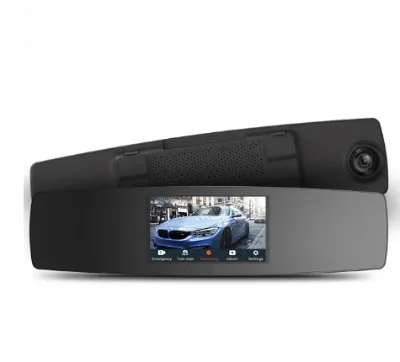
Front and Inside Mirror Dashcam Dual Lens Security Car Camera with GPS Tracking
$125.00 - $130.00
MOQ: 1 Pieces

GPS Dashcam with Lens Camera for Car Real Time Recording with Front View
$55.00 - $60.00
MOQ: 1 Pieces


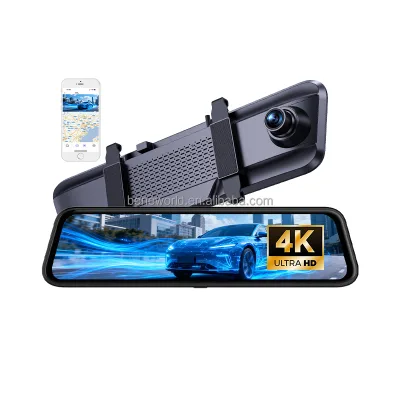
4G Dashcam Front and Rear Camera Real Time GPS Tracking Device Tracker
$126.00 - $130.00
MOQ: 1 Pieces


Comprehensive Sourcing Guide
Strategic Sourcing Guide for Mirror Dashcams with GPS Tracking
The global automotive aftermarket has witnessed a significant surge in demand for advanced vehicle safety and monitoring solutions, with the mirror dashcam equipped with GPS tracking emerging as a dominant category. For B2B procurement professionals, navigating this sector requires a rigorous understanding of the intersection between hardware specifications, connectivity protocols, and regulatory compliance. The following guide synthesizes available market data to provide a disciplined framework for sourcing these devices, ensuring that procurement decisions are grounded in verified product attributes rather than unverified marketing claims.
Technical Architecture and Connectivity Standards
The core functionality of a Mirror Dashcam with GPS Tracking relies on a robust integration of video capture, cellular connectivity, and data processing. Based on observed product specifications, these devices typically operate on a Linux-based operating system, which provides the necessary stability for continuous video recording and real-time data transmission. The control mode is predominantly network-based, allowing for remote management via a web-based platform and a dedicated mobile application. This dual-interface approach is critical for fleet managers who require both desktop analytics and on-the-go monitoring capabilities.
Connectivity is a primary differentiator in this category. High-confidence data indicates that modern units support 2G, 3G, and 4G networks, ensuring compatibility across various global regions. Specific models have been observed to support a comprehensive range of 4G bands, including B1, B2, B3, B4, B5, B7, B8, B20, B28, B66, B34, and B38. This extensive band support is essential for international procurement, as it ensures the device can maintain a connection in diverse geographic locations. The video resolution is a key technical metric, with many units offering 1920x1080 sensor resolution, delivering high-definition footage necessary for evidence collection in accident scenarios.
Storage capacity varies significantly across the product range, directly impacting the duration of video retention. Procurement teams must evaluate whether the device utilizes a 32GB, 128GB, or 512GB TF card, or if it supports SD card memory expansion up to 32GB. The choice of storage media influences the frequency of data overwriting and the total number of hours of footage that can be retained before manual intervention is required. Furthermore, the physical dimensions of the unit are critical for installation compatibility. Observed standard sizes include models measuring approximately 105x32x86mm and others at 99x52x41mm, with weights ranging from 102g to 240g. These variations dictate the mounting requirements and the aesthetic integration with the vehicle's interior.
Regulatory Compliance and Certification Verification
In the automotive electronics sector, compliance with international standards is not merely a formality but a prerequisite for market entry and liability protection. The supplied product data highlights several critical certifications that buyers must verify on a per-unit basis. The most frequently observed certifications include FCC (Federal Communications Commission), CE (Conformité Européenne), and RoHS (Restriction of Hazardous Substances). Some listings also reference ISO standards, though the specific ISO designation should be confirmed with the supplier.
When sourcing these devices, procurement officers must treat these certifications as observations rather than universal guarantees. The presence of an FCC mark implies compliance with electromagnetic interference regulations in North America, while the CE mark indicates adherence to European health, safety, and environmental protection standards. RoHS compliance ensures that the device is manufactured without specific hazardous materials, which is increasingly required by environmental regulations globally.
Buyers should request valid certification documents for the specific batch being purchased. It is essential to verify that the certification covers the exact model number, as different revisions of the same product line may have different internal components that affect compliance. For instance, a model designated as M518H may have different radio frequency characteristics compared to the M518F, necessitating separate certification validation. The absence of a specific certification in the product listing does not necessarily mean the product is non-compliant, but it requires immediate clarification from the supplier before proceeding with an order.
Cost Drivers and Pricing Dynamics
The pricing of mirror dashcams with GPS tracking is influenced by a complex matrix of factors, including hardware complexity, connectivity capabilities, and storage capacity. The observed market price range spans from $5 to $215 USD, a wide variance that reflects the diversity of product tiers available. Lower-priced units often correspond to basic models with limited storage, standard video resolution, or fewer connectivity options. Conversely, the upper end of the price spectrum typically includes devices with advanced features such as higher pixel counts (e.g., 12 million pixels), dual-camera systems, and more robust cellular modules.
Minimum Order Quantity (MOQ) is another significant cost driver. The observed MOQ range extends from 1 unit to 1,000 units. For small-scale buyers or those testing the market, suppliers offering low MOQs provide flexibility, though the unit price may be higher. Large-scale procurement, such as for fleet operations, can leverage economies of scale by ordering in bulk, potentially securing lower unit costs. However, the total cost of ownership must also consider the cost of the SIM cards, data plans, and the subscription fees for the web-based platform and mobile app, which are often listed as "free" but may have underlying service charges.
The packaging specifications also contribute to logistics costs. Standard packaging dimensions, such as 12x10x5.6cm with a weight of 0.4kg per unit and a carton capacity of 20 pieces, must be factored into shipping calculations. Buyers should request detailed packing lists to optimize container loading and minimize freight expenses.
Typical Applications and Functional Capabilities
Mirror dashcams with GPS tracking serve a variety of applications beyond simple video recording. The functional scope of these devices includes self-checking mechanisms, identity recognition, driving data recording, and over-speed warnings. Advanced models offer fatigue driving warnings, accident recording and analysis, and data communication capabilities. These features make them particularly suitable for commercial fleet management, ride-sharing services, and insurance telematics programs.
The device's ability to record driving data and analyze accidents provides valuable insights for risk management. The inclusion of a G-sensor allows for automatic locking of video files during sudden impacts, preserving critical evidence. The shooting angle, observed at 170 degrees in some models, ensures a wide field of view, capturing lane markings and surrounding traffic effectively. The dual-camera configuration, often referred to as a "2-way" camera, allows for simultaneous recording of the front and rear views, which is essential for comprehensive coverage in commercial vehicles.
The operating temperature range of -20°C to +75°C is a critical specification for vehicles operating in extreme climates. This wide range ensures that the device remains functional in both freezing winter conditions and hot summer environments without failure. The voltage requirement of 9-36V indicates compatibility with standard vehicle electrical systems, including both 12V and 24V configurations found in passenger cars and heavy-duty trucks, respectively.
Supplier Evaluation and Quality Assurance
Evaluating suppliers for mirror dashcams requires a multi-faceted approach that goes beyond price comparison. The origin of the products is a key indicator of supply chain maturity. The observed data points to Shenzhen, China, as a primary manufacturing hub for these devices, a region known for its dense electronics ecosystem. However, buyers must verify the specific factory capabilities and quality control processes of the supplier.
Quality assurance should focus on the consistency of the product attributes. For example, the storage capacity must match the specification exactly; a discrepancy between the ordered 128GB card and the delivered 32GB card would indicate a failure in the supply chain. Similarly, the weight and dimensions must align with the provided standards to ensure compatibility with vehicle mounting systems. The warranty period, typically observed as 1 year, should be clearly defined in the contract, including the terms for repairs or replacements.
Buyers should also assess the supplier's ability to provide customization. The availability of customization options suggests a flexible manufacturing process, which can be advantageous for branding or specific feature requirements. However, customization often extends lead times and may increase costs. It is crucial to establish clear timelines and communication protocols with the supplier to manage these variables effectively.
Long-Term Procurement and Operational Considerations
Sourcing mirror dashcams is not a one-time transaction but an ongoing relationship that requires long-term planning. The reliance on a web-based platform and mobile app for data management means that the supplier must provide long-term software support and updates. Buyers should inquire about the longevity of the platform, the frequency of security patches, and the availability of API integrations for third-party fleet management systems.
The SIM card type, observed as Micro-SIM in some models, is another operational consideration. As the industry moves towards eSIM technology, buyers should assess whether the current hardware will become obsolete in the near future. Additionally, the battery backup or power management system should be evaluated to ensure that the device can continue recording during brief power interruptions.
Environmental factors, such as the operating temperature range and the durability of the casing, play a significant role in the lifespan of the device. Buyers should request test reports or performance data regarding the device's resilience to vibration, humidity, and temperature fluctuations. The warranty terms should cover these environmental stresses to protect the buyer from premature failures.
Conclusion
The procurement of mirror dashcams with GPS tracking involves a careful balance of technical requirements, regulatory compliance, and cost management. By focusing on verified product attributes such as the Linux operating system, 4G connectivity, and specific certification marks like FCC and CE, buyers can make informed decisions that mitigate risk. The wide range of specifications, from storage capacity to operating temperature, necessitates a tailored approach for each procurement project. Ultimately, successful sourcing depends on rigorous supplier evaluation, clear contractual terms, and a commitment to long-term operational support.
FAQs
What certifications do mirror dashcams with gps tracking typically have?
These devices typically carry FCC, CE, and RoHS certifications to ensure regulatory compliance. Some listings also reference ISO standards, but buyers must verify specific documents for each model batch before procurement.
How does the operating system support remote control features?
The units operate on a Linux-based system to ensure stability for continuous recording. This architecture enables network and phone app control modes, allowing users to manage devices via a web platform and mobile application.
Which storage capacities are available for video retention?
Storage options vary from 32GB to 512GB TF cards depending on the specific model. Buyers should confirm the exact capacity as it directly impacts how many hours of high-definition footage can be retained before overwriting.
Can these devices operate in extreme temperature environments?
Yes, most models function reliably within a temperature range of -20°C to +75°C. This wide operating range ensures the hardware remains functional in both freezing winter conditions and hot summer climates without failure.
What is the typical warranty period for these units?
The standard warranty period observed for these products is one year. Buyers should ensure this term is clearly defined in the contract, covering repairs or replacements for defects arising during normal use.
How do suppliers handle customization requests for branding?
Customization is available for many models, allowing for specific branding or feature adjustments. However, buyers should note that customization may extend lead times and increase costs compared to standard inventory items.
What voltage range do these dashcams support for vehicles?
The devices support a voltage range of 9 to 36 volts for power input. This specification ensures compatibility with standard 12V passenger cars as well as 24V heavy-duty truck electrical systems.