Source Mobile Food Cart with Non-Slip Aluminum Flooring For Street Vending
Explore 19 Mobile Food Cart with Non-Slip Aluminum Flooring options for street vending, outdoor snack service, and beverage shops. Compare semi-automatic and automatic models from China, featuring galvanized steel construction and customizable dimensions to suit your specific business needs.
Key considerations
Products List




Comprehensive Sourcing Guide
Mobile Food Cart with Non-Slip Aluminum Flooring Sourcing Guide
Procurement professionals seeking mobile food carts with non-slip aluminum flooring must first distinguish between towable trailers and hand-pushed carts, as the supplied data indicates a diverse range of models including the JY-FS220 and YT-FR300WD. While the core keyword emphasizes aluminum flooring, the observed product attributes reveal that many units utilize galvanized steel and stainless steel 201 for structural integrity and working tables. Buyers should verify if the specific vendor offers aluminum flooring as a customization option, as the standard listings often highlight stainless steel surfaces for hygiene and durability in snack food applications.
The application scope for these units extends across various street vending scenarios, including popcorn, chocolate, candy, donut, biscuit, ice cream, and chips production. The observed product fields confirm suitability for beverage shops and outdoor street vending, yet the specific flooring material must be confirmed against the buyer's slip-resistance requirements. Since the data lists "Customized Color" and "Customized Catering Equipments," the flooring texture and material composition are likely adjustable, requiring direct supplier confirmation to ensure the non-slip aluminum specification matches the operational safety needs of the intended mobile kitchen environment.
Product Scope and Observed Listing Signals
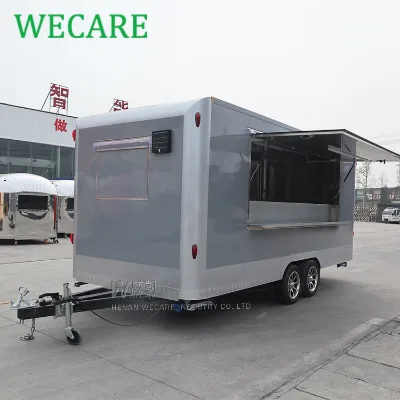
The market listings reveal a clear segmentation between towable food trailers and hand-pushed carts, with models like the YT-FN350 and YT-HPA190 representing distinct operational categories. Buyers must carefully review the product type attribute, as the "Towable Food Trailer" models generally offer larger dimensions, such as the 300200245cm standard, compared to the more compact 19009002200mm hand-pushed variants. This distinction is critical for logistics planning, as the towing capability and required vehicle support differ significantly between the two primary product types found in the current supply pool.
Listing signals indicate that while the core function is multifunctional vending, the specific material composition varies, with many units specifying galvanized steel and stainless steel rather than aluminum flooring. The presence of "Customized Color" and "Customized Catering Equipments" suggests that the flooring material is a negotiable specification rather than a fixed standard across all SKUs. Procurement teams should treat the "Mobile Food Trailer" and "Food Truck Cart" labels as broad categories, requiring explicit confirmation that the non-slip aluminum flooring is included in the specific model configuration being purchased.
Technical Specifications to Verify
Dimensional accuracy is paramount when selecting a mobile unit, as the observed standards range from 220160230 to 365215230cm, with some models offering fully customized dimensions. Buyers must verify the exact length, width, and height to ensure the unit fits within their intended parking zones and complies with local street vending regulations. The working table material is frequently specified as Stainless Steel 201, but the flooring material requires separate validation to confirm it meets the non-slip aluminum requirement, as the standard listings often default to steel or galvanized options.
Electrical and mechanical specifications also demand rigorous verification, particularly regarding voltage and automatic grade. The data shows a mix of semi-automatic and automatic grades, alongside customized voltage options, which impacts the compatibility with local power grids. Additionally, the maintenance requirements highlight "Easy Cleaning" as a key feature, which directly relates to the flooring material's ability to withstand frequent washing without degrading. Buyers should request detailed technical drawings that explicitly label the flooring material to ensure it aligns with the non-slip aluminum specification before finalizing the order.
Compliance and Safety Documentation
Safety compliance is a critical consideration, with observed certifications including CE, DOT, ISO, and CCC, which indicate adherence to various international and regional safety standards. The presence of DOT certification suggests that towable models may meet specific road safety requirements, while CE marks indicate compliance with European safety directives. However, buyers must verify that these certifications explicitly cover the flooring material and its slip-resistance properties, as general vehicle certifications do not automatically guarantee that the specific non-slip aluminum surface meets occupational safety standards for food preparation areas.
Documentation regarding the "Easy Cleaning" maintenance feature should be supported by material safety data sheets or specific cleaning protocol guidelines. The observed "Video Technical Service" for after-warranty support implies that suppliers are equipped to demonstrate proper maintenance procedures, which is essential for preserving the integrity of the non-slip flooring. Procurement teams should request proof of testing for the flooring material to ensure it does not degrade under high-traffic conditions or exposure to food acids, ensuring long-term compliance with health and safety regulations in outdoor street vending environments.
Cost Drivers and Commercial Terms
The observed price range of 1000 to 22000 USD reflects significant variation based on model complexity, size, and customization levels. Larger towable trailers with advanced catering equipment and customized dimensions naturally command higher prices compared to compact hand-pushed carts. The cost of non-slip aluminum flooring, if it is a specialized customization, will likely be a separate line item or a premium over the standard galvanized steel or stainless steel flooring options found in the base models. Buyers should anticipate that the final price will be heavily influenced by the specific combination of dimensions, equipment, and material choices selected.
Commercial terms such as the minimum order quantity (MOQ) appear to be flexible, with observed values ranging from 1 to 1, allowing for single-unit procurement. However, the "Export Wooden Box" and "Wooden Case" packaging requirements suggest that shipping costs and logistics complexity will be significant factors in the total landed cost. Buyers must clarify whether the quoted price includes the customized flooring and specific catering equipment, as the "Customized Catering Equipments" attribute indicates that add-ons can substantially alter the final commercial terms and delivery timeline.
Supplier Qualification and Quality Control
Supplier qualification should focus on their ability to deliver customized specifications, as the data confirms that customization is available for color, equipment, and likely flooring materials. The presence of multiple certifications like ISO/Ts16949 and ISO suggests that suppliers have established quality management systems, but buyers must verify that these systems specifically cover the fabrication of non-slip aluminum flooring. It is essential to request samples or detailed material specifications to ensure the supplier can consistently produce the required flooring texture and durability for high-traffic food service environments.
Quality control processes must address the integration of the flooring with the overall vehicle structure, particularly for towable models where vibration and road conditions are factors. The "Sustainable" key selling point observed in some listings indicates a potential focus on material longevity and environmental impact, which should be leveraged to ensure the flooring is both durable and eco-friendly. Buyers should establish clear acceptance criteria for the flooring material, including slip-resistance testing and corrosion resistance, to ensure the final product meets the rigorous demands of outdoor street vending and mobile food service operations.
Long-Term Procurement Checks
Long-term procurement success depends on verifying the availability of after-sales support, specifically the "Video Technical Service" mentioned in the product attributes. This support mechanism is crucial for troubleshooting issues related to the flooring or other customizations, ensuring that any maintenance problems can be resolved remotely without requiring immediate physical intervention. Buyers should confirm the scope of this service to ensure it covers the specific non-slip aluminum flooring, as wear and tear on specialized surfaces may require unique repair or replacement protocols.
Maintenance requirements highlight "Easy Cleaning" as a primary feature, but the long-term viability of the non-slip aluminum flooring depends on the supplier's provision of appropriate cleaning agents and protocols. Buyers should establish a maintenance schedule that aligns with the supplier's recommendations to prevent premature degradation of the flooring surface. Additionally, verifying the warranty terms for the flooring material is essential, as the "After Warranty Service" capabilities will determine the long-term cost of ownership and the ability to replace damaged sections without incurring prohibitive expenses.
FAQs
What materials are used for mobile food trailers?
Mobile food trailers are constructed using galvanized steel and stainless steel to ensure durability and hygiene. These materials provide resistance against corrosion and weather exposure, making them suitable for outdoor street vending. The stainless steel components often include working tables, which are easy to clean and maintain for food service operations.
Can mobile food carts be customized for specific needs?
Yes, customization is available for mobile food carts and trailers. Buyers can select customized colors and catering equipment to match their brand or operational requirements. The voltage and other technical specifications can also be adjusted to fit local power standards, ensuring the unit functions correctly in various international markets.
What certifications do these food trailers hold?
These food trailers typically hold CE, ISO, DOT, and CCC certifications. These standards ensure compliance with safety and quality regulations in various regions. The ISO/Ts16949 certification further indicates adherence to automotive industry quality management systems, providing assurance regarding the structural integrity and manufacturing quality of the mobile units.
How are mobile food trailers packaged for shipping?
Mobile food trailers are packaged in wooden cases, export wooden boxes, or wooden crate packaging to protect them during transit. This robust packaging method ensures that the units arrive without damage. The specific packing type may vary depending on the model, such as the JY-FS220 or YT-FR300WD, to secure the structure effectively.
What after-sales service is provided for food trucks?
After-sales service includes video technical support to assist with installation and maintenance. This service helps buyers resolve operational issues remotely without requiring immediate on-site visits. The design also emphasizes easy cleaning and maintenance, reducing the long-term operational burden for vendors using these mobile food units for street vending.
What are the standard dimensions for these trailers?
Standard dimensions vary by model, with sizes like 220x160x230 cm or 300x200x245 cm. Some models offer customized dimensions to fit specific parking or operational constraints. The working table and interior layout are designed to maximize efficiency within these standard or custom footprints, ensuring adequate space for food preparation and service.