Source Pneumatic Silicone Lipstick Demoulding Machine for Cosmetics, Oil, Detergent
Find 30 listings for the Pneumatic Silicone Lipstick Demoulding Machine designed for cosmetics, oil, and detergent applications. Buyers can compare models like Kh-Gjtm and Jyzd-TM with features such as AC motors and SUS304 construction to find the right supplier.
Key considerations
Products List


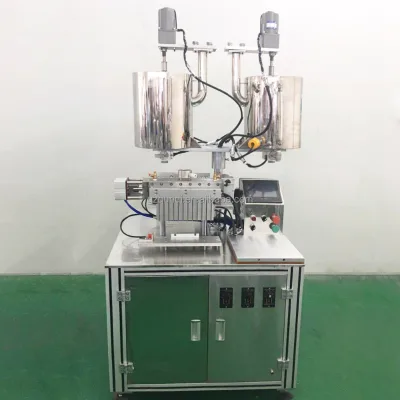
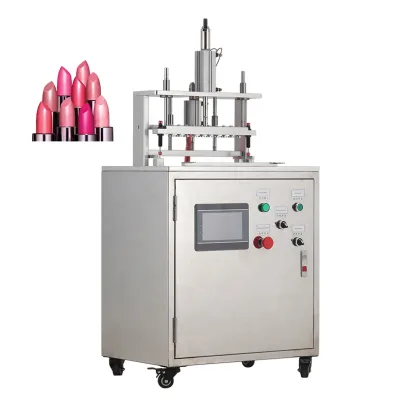
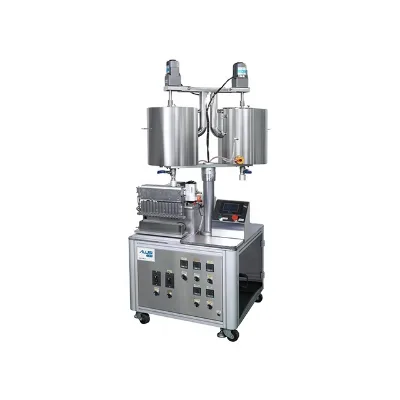
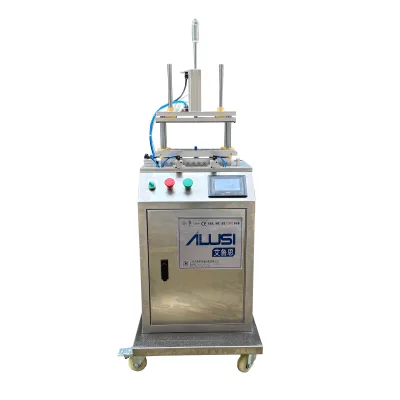
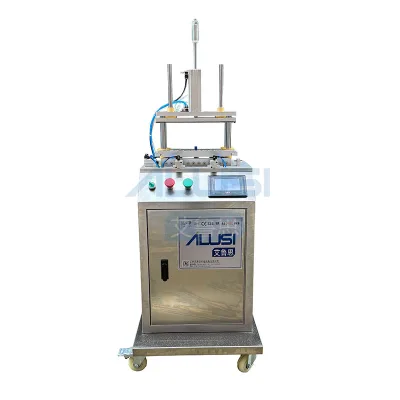
Automatic Servo Motor Silicone Lipsticks Lipbalm Demoulding Machine
$14000.00 - $15200.00
MOQ: 1 Pieces


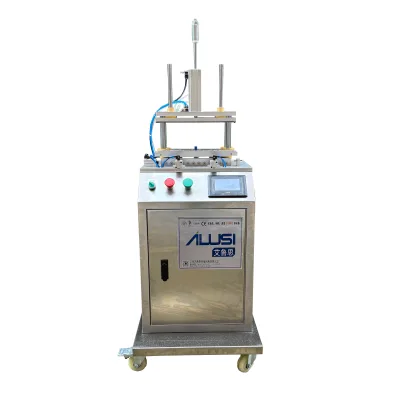
Cosmati Automatic Soft Rubber Lipstick Lipbalm Mould Releasing Machine
$14000.00 - $15200.00
MOQ: 1 Pieces

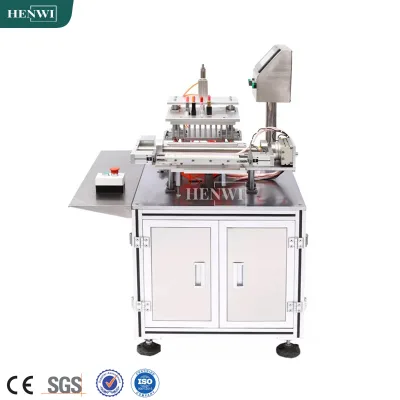
12 Nozzles Silicone Alluminum Mold Dekstop Manual Lipstick Filling Machine
$1100.00 - $1300.00
MOQ: 1 Pieces



Comprehensive Sourcing Guide
Strategic Sourcing Guide for Pneumatic Silicone Lipstick Demoulding Equipment
Procuring specialized machinery for the cosmetics industry requires a meticulous approach, particularly when targeting equipment designed for the delicate handling of silicone-based products like lipstick and lip balm. The core keyword "Pneumatic Silicone Lipstick Demoulding Machine" points to a specific niche of automation where precision, material compatibility, and gentle handling are paramount. Buyers entering this market must navigate a landscape defined by varying automation grades, specific material standards, and distinct functional requirements. This guide provides a structured framework for evaluating potential suppliers and equipment, grounded in observable industry facts and verified product attributes.
Understanding Core Technical Specifications and Automation Grades
The foundation of any successful procurement begins with a clear understanding of the machine's technical specifications. In the current market, equipment for lipstick demoulding is not monolithic; it spans a spectrum from manual operations to fully automated systems. A critical distinction lies in the "Automatic Grade" of the machinery. Buyers will encounter units classified as "Automatic" and others designated as "Semi-automatic." The choice between these grades directly impacts production throughput, labor requirements, and initial capital expenditure.
For high-volume manufacturing, an "Automatic" grade machine is often preferred. These units typically feature advanced control systems, such as PLCs from reputable brands like Inovance, ensuring consistent cycle times and reduced human error. In contrast, "Semi-automatic" models may offer a lower entry cost and greater flexibility for smaller batch runs or prototyping phases. The power consumption for these units varies significantly based on their complexity. Observed data indicates power ratings ranging from 1.5kW to 2.2kW, with voltage requirements generally adhering to AC220V, 1-phase, 50/60Hz standards.
Material construction is equally critical. The industry standard for food and cosmetic contact surfaces is Stainless Steel, specifically grades SUS304 and 316L. These materials ensure corrosion resistance and ease of cleaning, which are non-negotiable for hygiene compliance. The "Material" attribute for many units is explicitly listed as SUS304, while some high-end specifications may include 316L for enhanced durability. The physical footprint of these machines also varies; while some models have outer dimensions that require reference to specific engineering drawings, others provide concrete measurements such as 400 x 460 x 1150 mm (L x W x H). Weight is another factor for facility planning, with units ranging from lightweight 35kg models to heavier 280kg industrial machines.
Functional Capabilities and Application Specificity
The primary function of the equipment is "Demoulding," specifically tailored for "Lipstick" and "Lip Balm" applications. The terminology used in product listings often includes "Lipstick Mould Releasing Machine" or "Demoulding Machine for Lipbalm," which confirms the specialized nature of the tooling. The mechanism for this operation is often pneumatic, utilizing air pressure to gently eject the product from the mould without damaging the soft silicone or wax-based structure.
Beyond simple demoulding, many machines integrate additional functions such as "Remove" operations or are part of a broader "Outpacking" workflow. Some advanced units are designed to handle multiple product categories, including "Drinks, Cosmetics, Oil, Cleaning, Detergent," indicating a versatility that may be beneficial for manufacturers with diverse product lines. However, for a dedicated lipstick production line, the focus remains on the specific "Application" of lipstick and lip balm.
The filling and dosing mechanisms associated with these lines are also worth noting. While the core request is for demoulding, the surrounding ecosystem often includes filling capabilities. Attributes such as "Plunger" or "Rotor" dosing devices are common, paired with filling principles like "Atmospheric Pressure" or "Hot Filling." The filling valve heads can be single-head or multi-head, and the feed cylinder structures may be single-room feeding. Understanding these integrated capabilities helps buyers assess whether a single machine can handle the entire process or if a multi-step line is required.
Compliance, Certification, and Safety Standards
Navigating the regulatory landscape is a vital component of the sourcing process. While specific certification status cannot be universally asserted for every listed product, the presence of "CE" certification is a common background expectation in the global market. Buyers must verify that any machinery intended for export or use in regulated markets carries the necessary compliance marks. This includes electrical safety standards and mechanical safety requirements.
The "Standard" attribute for these machines often references the construction material, such as "Stainless steel SUS304/316L," which serves as a proxy for hygiene standards. However, buyers should not assume that material compliance equates to operational certification. It is essential to request specific documentation regarding electrical safety, noise levels, and operator safety features. The "Packaging Material Mechanical Properties" may also be relevant if the machine includes integrated sealing or packaging functions, requiring verification of "Flexible Container Sealing" capabilities.
Furthermore, the origin of the equipment plays a role in compliance. Most observed data points to "China" as the origin, with specific hubs like "Guangzhou, Guangdong" being prominent. Buyers should ensure that the supplier provides a clear chain of custody and that the equipment meets the specific import regulations of the destination country. This includes verifying that the voltage and frequency (50/60Hz) match the local grid infrastructure to prevent electrical hazards.
Cost Drivers and Pricing Dynamics
The pricing for pneumatic silicone lipstick demoulding machines is influenced by several key factors, including automation level, material quality, and functional complexity. The observed price range in the market spans from $420 to $15,200 USD. This wide disparity reflects the difference between basic manual or semi-automatic units and fully automated, high-precision systems.
The "Model" designation is a primary indicator of cost. Models such as "Kh-Gjtm," "Jyzd-TM," "QC-TM," and "Qgj-8t" represent different configurations, each with unique pricing implications. Similarly, models like "CM-TM-01" and "CM-LF-01" suggest specialized variants that may command higher prices due to added features like advanced PLC control or specialized filling mechanisms.
Material costs are a significant driver, particularly the use of SUS304 versus lower-grade stainless steels. Machines utilizing "SUS304" or "316L" will generally be more expensive but offer superior longevity and compliance. Additionally, the "Packing" method, often a "Wooden Case," adds to the overall cost but is essential for protecting the machinery during international shipping. Buyers should also consider the "MOQ" (Minimum Order Quantity), which is observed to be as low as 1 unit for many suppliers, allowing for flexible procurement strategies without the need for bulk purchasing.
Supplier Evaluation and Operational Reliability
When evaluating potential suppliers, buyers must look beyond the product listing and assess the operational reliability of the manufacturer. The "Product Name" and "Keywords" provide initial insights, but the "Prod Origin" and specific location details are crucial for logistics and support. Suppliers located in "Guangzhou, Guangdong, China" often have established supply chains and expertise in cosmetic machinery, but this does not guarantee quality for every vendor.
Key evaluation criteria should include the supplier's ability to provide detailed "Drawings" for outer dimensions and installation requirements. The "Outer Dimension" of 400 x 460 x 1150 mm is a specific data point that buyers must verify against their factory floor plans. Additionally, the "Weight" of the machine, ranging from 35kg to 280kg, impacts shipping costs and foundation requirements.
Suppliers should also demonstrate proficiency in the "Customization" aspect, which is listed as "Available" for many products. This flexibility allows buyers to tailor the machine to specific mould sizes or production speeds. The "PLC Brand," such as Inovance, is another indicator of quality; reputable suppliers use established brands for control systems to ensure reliability and ease of maintenance. Buyers should request references or case studies to verify the supplier's track record in delivering "Demoulding" solutions that meet the "Application" requirements of lipstick and lip balm production.
Quality Control and Long-Term Procurement Considerations
Implementing a robust quality control (QC) protocol is essential for ensuring the longevity and performance of the demoulding machine. The "Packaging" of the machine, typically in a "Wooden Case," is the first line of defense against transit damage, but internal QC checks are equally important. Buyers should verify the "Packaging Material" used for the machine itself, which may include "Plastic" or "Film" for internal protection.
Long-term procurement considerations involve the availability of spare parts and technical support. The "Filling Nozzle" count, often listed as "1 PCS," and the "Stirring Speed" range of 0-90rpm are specific parameters that may require replacement or adjustment over time. The "Hopper Volume" of 20L is another critical specification that affects production capacity and should be matched to the buyer's output goals.
Maintenance is facilitated by the machine's design, such as the "Feed Cylinder Structure" and "Packaging Container Lifting Structure" (e.g., Chute Lifting). Buyers should ensure that the supplier provides comprehensive manuals and training on these components. The "Type" of machine, such as "Piston Filling Machine" or "Manual Lipstick Filling Machine," dictates the maintenance schedule and the skill level required for operators.
Finally, the "Power Consumption" and "Voltage" requirements must be monitored to ensure energy efficiency and safety. A machine consuming 1.5kW or 2.2kW should be integrated into a facility with adequate power distribution. By focusing on these technical and operational details, buyers can make informed decisions that align with their production goals and ensure a successful implementation of pneumatic silicone lipstick demoulding equipment.
Comparative Analysis of Machine Configurations
To assist in decision-making, the following table summarizes key differences between observed machine configurations based on the provided data points. This comparison highlights the trade-offs between automation, power, and physical dimensions.
| Feature | Configuration A (High Automation) | Configuration B (Semi-Automatic) | Configuration C (Manual/Low Volume) |
|---|---|---|---|
| Model Reference | Kh-Gjtm / CM-TM-01 | Jyzd-TM / QC-TM | CM-LF-01 / Qgj-8t |
| Automatic Grade | Automatic | Semi-Automatic | Manual |
| Power Consumption | 1.5kW - 2.2kW | Variable | Lower (implied) |
| Weight | 280kg | Variable | 35kg |
| Material | SUS304 / 316L | SUS304 | SUS304 |
| PLC Brand | Inovance | Standard | Basic |
| Application | Demoulding, Filling | Demoulding | Lipstick, Lip Balm |
| Packing | Wooden Case | Wooden Case | Box / Film |
This table illustrates that while the core function remains consistent, the level of automation and physical specifications vary significantly. Buyers should align their choice with their production volume, labor availability, and facility constraints. The "Model" and "Automatic Grade" are the primary differentiators, with higher automation levels offering greater consistency but requiring more space and power.
Final Procurement Recommendations
In conclusion, sourcing a Pneumatic Silicone Lipstick Demoulding Machine requires a balanced approach that considers technical specifications, compliance, cost, and supplier reliability. The market offers a diverse range of options, from lightweight manual units to heavy-duty automated systems. Buyers must prioritize material standards like SUS304 and 316L, verify electrical compatibility, and ensure that the supplier offers customization options to meet specific production needs. By adhering to these guidelines and conducting thorough due diligence, buyers can secure equipment that enhances productivity and maintains the high quality standards required in the cosmetics industry. The observed price range of $420 to $15,200 USD reflects the spectrum of capabilities available, allowing for strategic investment based on immediate and long-term production goals.
FAQs
What is the primary function of this machine?
The primary function is demoulding, specifically designed to remove lipstick and lip balm from moulds. This operation utilizes pneumatic pressure to gently eject the product without damaging the soft silicone or wax structure.
Which automatic grades are available for these machines?
Available automatic grades include both Automatic and Semi-automatic configurations. Buyers can select based on their production volume needs, with automatic units offering higher throughput and semi-automatic models suitable for smaller batches.
What material is used for the machine construction?
The construction material is typically Stainless Steel SUS304, with some high-end specifications including 316L. This ensures corrosion resistance and hygiene compliance required for food and cosmetic contact surfaces in manufacturing environments.
Can the machine be customized for specific needs?
Yes, customization is available for these machines to meet specific production requirements. Buyers can request tailored solutions for mould sizes or integration with other filling and packaging workflows within their facility.
What is the power consumption for these units?
Power consumption ranges from 1.5kW to 2.2kW depending on the specific model and configuration. Voltage requirements generally adhere to AC220V, 1-phase, 50/60Hz standards to ensure compatibility with standard industrial power grids.
How is the machine packaged for shipping?
The machine is packaged in a wooden case to ensure protection during international transit. Additional internal packaging may include plastic or film materials to safeguard components from damage while in transit to the destination.
Where are these machines typically manufactured?
These machines are manufactured in China, with specific production hubs located in Guangzhou, Guangdong. Buyers should verify the specific origin details with suppliers to ensure alignment with import regulations and logistics planning.