Source Mobile Endoscope Treatment Trolley for Hospital, Dental Clinic, Beauty Salon
Find 30 Mobile Endoscope Treatment Trolley options from verified manufacturers in Anhui, China. Compare adjustable heights, aluminum alloy construction, and specifications for hospital, dental clinic, and beauty salon applications with prices ranging from $109 to $1763.
Key considerations
Products List
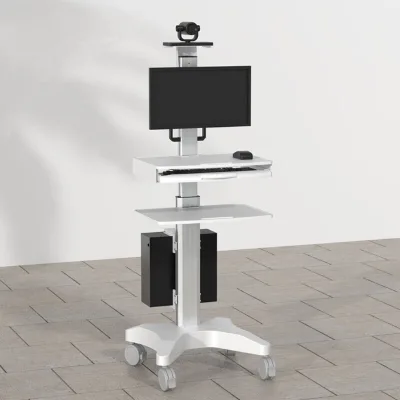
Endoscope System Mobile Wheeled Trolley for Hospital with Adjustable Display Stand
$241.70 - $250.00
MOQ: 1 pieces


Endoscope Trolley Cart Hospital Medical Trolley for Endoscope Equipment
$110.00 - $210.00
MOQ: 1 Pieces

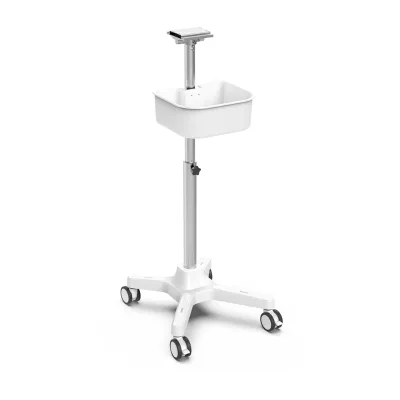


Mobile Light Weight Medical Instrument Cart Hospital Treatment Trolley
$255.00 - $320.00
MOQ: 1 Pieces

Mobile Operation Room Medical Nursing Treatment Trolley with Waste Bins
$206.00 - $330.00
MOQ: 1 Pieces

Medical Mobile Endoscopy Box Cart Lock Difficult Airway Hospital Trolley
$394.00 - $497.00
MOQ: 1 Pieces

Mobile Medical Carts Endoscopy Procedures Trolley for Hospital Clinics
$394.00 - $497.00
MOQ: 1 Pieces


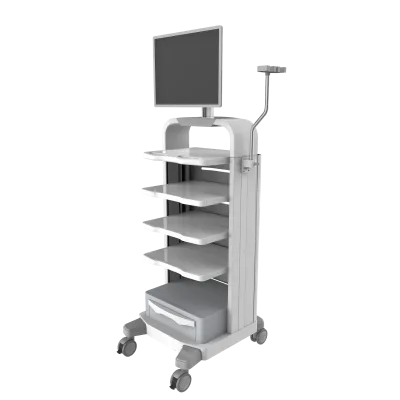


Comprehensive Sourcing Guide
Strategic Sourcing Guide for Mobile Endoscope Treatment Trolleys
Procuring mobile endoscope treatment trolleys requires a disciplined approach that balances clinical functionality with rigorous supply chain verification. These units are not merely furniture; they are critical infrastructure for medical procedures, requiring precise engineering to support sensitive imaging equipment while maintaining a sterile environment. The following guide outlines the essential technical, compliance, and operational factors buyers must evaluate when sourcing these specialized medical carts.
Technical Specifications and Structural Integrity
The foundation of a reliable mobile trolley lies in its physical specifications and material composition. Based on current market observations, high-performance units typically utilize aluminum alloy as the primary construction material. This choice is critical for balancing durability with the need for mobility, as aluminum offers a favorable strength-to-weight ratio compared to steel alternatives. The structural integrity must support the specific weight of endoscope towers and monitors, which often necessitates a load-bearing capacity of up to 100kg.
Dimensions are a primary consideration for integration into existing hospital workflows. Standardized models often feature a total size of approximately 1350mm in height, 610mm in width, and 620mm in depth. A key feature for modern clinical environments is height adjustability, allowing the trolley to be customized for different user heights or specific procedural requirements. Verified specifications indicate an adjustable height range between 110cm and 170cm, ensuring ergonomic compatibility for medical staff of varying statures.
The platform design must accommodate the mounting requirements of display units. The trolley should support a carrying range for displays between 17 and 32 inches, with a maximum weight capacity for the display itself typically capped at 10kg. The mounting interface often adheres to standard VESA-like hole distances, specifically 7575mm or 100100mm, to ensure universal compatibility with various monitor models. The work surface, or plate size, is frequently designed at 503mm in width by 460mm in depth, providing ample space for procedural tools and documentation without overcrowding the workspace.
Mobility and Operational Ergonomics
Mobility is the defining characteristic of this equipment category. The trolley must navigate tight corridors, crowded operating rooms, and emergency response zones with ease. The standard configuration involves four swivel casters, which provide omnidirectional movement. These casters are engineered to be noise-free, a critical feature in environments where silence is required for patient comfort or concentration during delicate procedures.
The locking mechanism of the casters is a vital safety feature. While some models may operate without a central locking system, buyers must verify the stability of the unit during use. In scenarios where the trolley must remain stationary during a procedure, the casters should have individual locking capabilities to prevent unintended movement. The overall weight of the unit, including the frame and components, typically ranges from 30kg to 43kg depending on the specific configuration and the inclusion of additional shelving layers. A four-layer design is common, maximizing vertical storage space for cables, sterile instruments, and consumables while maintaining a low center of gravity.
Compliance, Certification, and Regulatory Standards
In the medical device sector, compliance is not optional; it is a prerequisite for procurement. Buyers must verify that the trolley meets the regulatory standards of the destination market. For international trade, the Harmonized System (H.S.) Code 940290000 is often applicable for medical furniture, but this does not automatically confer medical device status. The trolley may be classified under a specific regulatory type, such as a "Medium" scale medical device, depending on local jurisdiction definitions.
Certification verification is essential. Trusted suppliers often provide documentation indicating compliance with ISO standards, such as ISO9001 for quality management systems, and specific product certifications like CE marking. While specific certification claims in the market data may vary in confidence, buyers should demand valid, up-to-date certificates from the manufacturer. The presence of an ISOCE certification or similar accreditation indicates that the manufacturing process adheres to recognized quality benchmarks. Additionally, buyers should check for compliance with environmental and safety standards, such as ROHS, which restricts the use of hazardous materials in electronic and mechanical components.
Cost Drivers and Procurement Economics
The pricing of mobile endoscope treatment trolleys is influenced by several factors, including material quality, customization options, and the complexity of the mobility system. Market observations indicate a price range between $109 and $1,763.06 USD. This wide variance suggests that costs are driven by specific configurations, such as the inclusion of specialized locking mechanisms, higher-grade aluminum alloys, or custom branding.
Minimum Order Quantity (MOQ) is another significant economic factor. Suppliers typically set an MOQ of 5 pieces, though some may offer flexibility down to 1 unit for sample orders. This threshold affects the total cost of ownership, particularly for smaller clinics or pilot programs. Buyers should also consider the cost of customization, which is often available but may incur additional fees. The packing method, typically a single set packed in one carton with dimensions around 1230630280mm, impacts shipping costs and logistics planning.
Supplier Evaluation and Business Verification
When evaluating potential suppliers, buyers must look beyond the product listing to the business structure of the vendor. The most reliable sources are direct manufacturers rather than trading companies, as this ensures better control over quality and pricing. Verification of the business type as "Manufacturer" is a strong indicator of supply chain stability.
Geographic origin is a critical data point for logistics and regulatory compliance. Products originating from regions like Anhui, China, or other established manufacturing hubs should be scrutinized for their export history. The port of loading, often Guangzhou for this category, provides insight into the logistics network and potential shipping times. Buyers should also verify the supplier's sample availability; a "Yes" response indicates a willingness to validate product quality before committing to a bulk order.
Quality Control and Material Verification
Quality control processes must be rigorous to ensure the longevity and safety of the trolley. The material, specifically aluminum alloy, should be verified for corrosion resistance, a feature explicitly listed in product attributes. This is essential for medical environments where frequent cleaning with harsh disinfectants is standard practice. The finish should be durable and easy to clean, preventing the accumulation of pathogens.
The condition of the product upon delivery must be "New," and the warranty period should be clearly defined. A standard warranty of one year is common, but buyers should negotiate terms that cover structural defects and caster failures. The design style, often modern, should not compromise functionality. Features such as noise-free casters and easy cleaning surfaces are not merely aesthetic but are functional requirements for maintaining a sterile field.
Long-Term Procurement and Lifecycle Management
Sourcing decisions should account for the entire lifecycle of the equipment. Customization options are available, allowing buyers to tailor the trolley to specific departmental needs, such as adding specific shelving configurations or color schemes like white or grey. However, buyers must ensure that customization does not void warranties or compromise structural integrity.
Maintenance is a key consideration for long-term value. The swivel casters and locking mechanisms are high-wear components that require regular inspection. Buyers should inquire about the availability of spare parts, particularly for the wheels and locking mechanisms. The "No Lock" attribute found in some listings suggests that buyers must explicitly request locking casters if their specific clinical protocols require immobilization of the unit during procedures.
Comparative Analysis of Key Attributes
To assist in the decision-making process, the following table summarizes the critical attributes observed in the market for mobile endoscope treatment trolleys. This comparison highlights the variance in specifications that buyers must navigate.
| Attribute | Typical Specification | Verification Requirement |
|---|---|---|
| Material | Aluminum Alloy | Verify alloy grade and corrosion resistance |
| Height Range | 110-170cm | Confirm adjustability mechanism smoothness |
| Load Capacity | 100kg (General) / 10kg (Display) | Test with actual equipment weight |
| Castors | 4 Swivel Casters | Check for noise-free operation and locking |
| Dimensions | 1350(H) x 610(W) x 620(D) mm | Ensure fit within specific room layouts |
| Certification | ISOCE, CE (Market dependent) | Request valid, current certificates |
| Warranty | 1 Year | Clarify coverage for casters and frame |
| MOQ | 5 PCS | Negotiate for sample or smaller batches |
| Origin | Anhui, China (or similar) | Verify port of loading and lead times |
Final Procurement Considerations
The procurement of mobile endoscope treatment trolleys is a complex process that demands attention to detail. Buyers must rigorously verify that the product attributes align with their specific clinical needs. The interplay between technical specifications, such as height adjustability and load capacity, and regulatory compliance, including ISO and CE certifications, determines the suitability of the unit for hospital, dental clinic, or beauty salon environments.
By focusing on verified facts and avoiding assumptions about unlisted attributes, buyers can mitigate risk and ensure the acquisition of high-quality medical furniture. The emphasis on material durability, such as aluminum alloy construction, and operational features like noise-free casters, ensures that the trolley will perform reliably in demanding medical settings. Ultimately, a successful procurement strategy relies on thorough due diligence, clear communication with manufacturers, and a commitment to verifying every specification against the actual needs of the healthcare facility.
FAQs
What materials are used for mobile endoscope treatment trolleys?
High-performance units typically utilize aluminum alloy as the primary construction material. This choice balances durability with mobility, offering a favorable strength-to-weight ratio compared to steel alternatives while ensuring corrosion resistance for frequent cleaning.
How adjustable is the height of these medical trolleys?
Verified specifications indicate an adjustable height range between 110cm and 170cm. This ensures ergonomic compatibility for medical staff of varying statures and allows customization for specific procedural requirements in hospital or dental clinic settings.
Which castor configurations are standard for these units?
The standard configuration involves four swivel casters designed for omnidirectional movement. These casters are engineered to be noise-free, a critical feature in environments where silence is required for patient comfort or concentration during delicate procedures.
Can these trolleys support standard medical display monitors?
Yes, the platform design supports a carrying range for displays between 17 and 32 inches. The maximum weight capacity for the display itself is typically capped at 10kg, with mounting interfaces adhering to standard hole distances like 75*75mm or 100*100mm.
What certifications should buyers verify for these medical devices?
Buyers must verify compliance with standards such as ISOCE and CE marking. Trusted suppliers often provide documentation indicating adherence to ISO9001 for quality management systems, ensuring the manufacturing process meets recognized quality benchmarks for medical furniture.
How does the price range vary for these trolleys?
Market observations indicate a price range between $109 and $1,763.06 USD. This variance is driven by specific configurations, such as the inclusion of specialized locking mechanisms, higher-grade aluminum alloys, or custom branding options available from manufacturers.
What is the typical minimum order quantity for these units?
Suppliers typically set a minimum order quantity of 5 pieces for bulk orders. However, some may offer flexibility down to 1 unit for sample orders, allowing buyers to validate product quality before committing to a larger purchase.