Source Mobile Solar Powered Lighting Tower for Construction, Events, Emergency
Find and compare 30 Mobile Solar Powered Lighting Tower options featuring LED floodlights, aluminum bodies, and IP ratings. Buyers can evaluate specifications like lifting height, power source, and working rates to select the right unit for outdoor applications.
Key considerations
Products List


a Trailer-Mounted Mobile Solar Light Tower for Lighting Construction Sites
$5820.00 - $5850.00
MOQ: 1 Sets


Mobile Solar Lighting Tower Nv1500 Solar Powered Light Tower for Industrial
$5950.00 - $7650.00
MOQ: 2 Pieces


Mobile Portable Illuminated Solar Mobile Light Tower with 5-Year Warranty
$5614.00 - $8020.00
MOQ: 2 Pieces


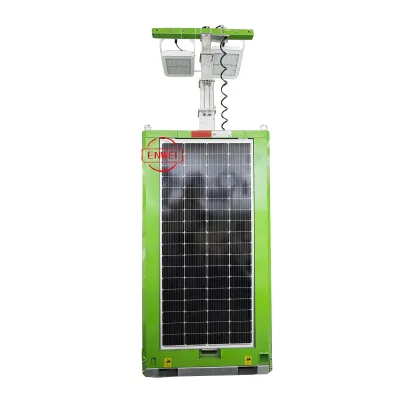
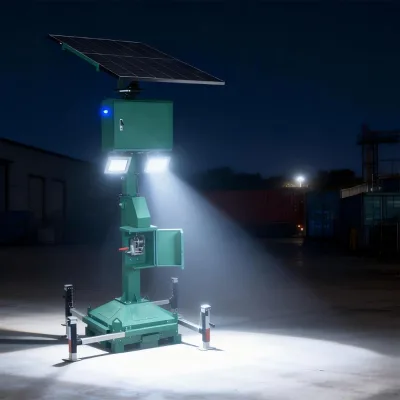
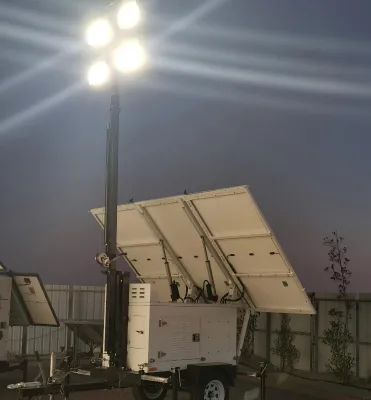


Solar Lighting Tower Lighthouses Solar Mobile Lighthouses Mobile Lighting Tower
$7999.00 - $9999.00
MOQ: 1 Pieces


Comprehensive Sourcing Guide
Strategic Sourcing Guide for Mobile Solar Powered Lighting Towers
Understanding the Technical Architecture of Mobile Solar Lighting Systems
When evaluating mobile solar powered lighting towers, buyers must first dissect the core technical architecture that defines operational efficiency. These units are distinct from grid-tied solutions because they integrate energy generation, storage, and high-intensity illumination into a single mobile chassis. The fundamental design relies on a photovoltaic array to charge a battery bank, which subsequently powers LED floodlights. In the current market, specific configurations often feature a "Work Rate" of 4100W or 4150W, indicating a quad-light setup that provides broad coverage. The light source type is almost exclusively LED, chosen for its high luminous efficiency and longevity.
A critical observation in the technical landscape is the variance in light flux output. Some configurations report a total light flux of 416000lm, while others specify 412000lm. This discrepancy highlights the importance of verifying the specific model's output rather than assuming a standard value. The luminous efficiency is a key metric, with observed values reaching 150lm/W, which suggests a high-performance optical system. The physical structure of these towers often utilizes aluminum profiles for the body material, ensuring a balance between durability and portability. The "Elevation Type" mechanism allows the mast to extend, with observed lifting heights ranging from 5 to 10 meters, significantly increasing the illumination radius.
The power source is a defining characteristic, labeled variously as "Solar" or "Solar Power." However, the operating voltage requirements for the internal systems can vary. While some units operate on a direct 12/24V DC system, others may interface with 220-240V or 110-240V AC systems for auxiliary functions or specific grid-tie capabilities. The battery type is predominantly Lead Acid, which offers a cost-effective solution for energy storage, though buyers should verify the specific chemistry and cycle life against their operational demands. The "Service Life" of the lighting system is often cited as 100,000 hours for the LED components, but the "Average Life" of the unit or specific bulbs may be listed differently, such as 5,500 hours, necessitating a clear distinction between component longevity and system replacement cycles.
Compliance, Certification, and Safety Standards Verification
Navigating the regulatory landscape for mobile lighting towers requires rigorous attention to certification and safety standards. The presence of a CE mark is a common indicator of compliance with European safety, health, and environmental requirements. However, the mere presence of a certification label does not guarantee that every unit in a supplier's catalog meets the same standard. Buyers must verify that the specific model, such as those designated by codes like ANJ6130T or NV1500, carries the relevant documentation.
IP ratings are another critical compliance factor, particularly for equipment intended for outdoor use in varying weather conditions. The observed data includes references to "IP Rating" in the context of lifting height and lighting bulbs, alongside mentions of "IPMaterial:Plastic." This inconsistency suggests that the IP rating might apply to specific components like the control box or the light fixtures rather than the entire tower structure. Buyers should explicitly request the IP rating for the electrical enclosure and the light heads to ensure protection against dust and water ingress suitable for the intended environment.
Standardization is also evident in the physical dimensions and packing requirements. Observed product standards list dimensions such as 2200×1350×2450 mm and 1550mm×1350mm×161mm, which likely correspond to the folded and extended states or specific component sizes. The packing method is frequently described as "Wooden Box," "Wooden Case Packing," or "Wrapping Film/Wooden Box." These packaging standards are not merely logistical details; they are essential for protecting the aluminum profile structure and the delicate solar panels during international transit. The origin of these units is frequently cited as Shanghai or China, which implies a specific supply chain context that buyers should consider when evaluating logistics and import regulations.
Cost Drivers and Pricing Dynamics in the Solar Tower Market
The pricing of mobile solar powered lighting towers is influenced by a complex interplay of technical specifications, material costs, and customization options. The observed price range in the market spans from 1,200 USD to 11,656.5 USD, a variance that reflects the significant differences in power output, battery capacity, and mast height. A unit with a 4100W configuration and a 5-meter lift will naturally be priced lower than a high-end model featuring 4350W lamps, a 10-meter lift, and advanced battery management systems.
Material costs play a substantial role in the final price. The use of aluminum profiles for the body and the inclusion of high-efficiency LED lamps contribute to the base cost. Furthermore, the "Work Rate" and "Light Flux" are direct indicators of the power investment. A unit delivering 72,000 lumens at 150lm/W represents a significant investment in semiconductor technology compared to lower-output models. The battery type, specifically Lead Acid, is a cost driver that balances initial purchase price against replacement frequency. While lead acid batteries are generally cheaper upfront, their shorter cycle life compared to Lithium-ion alternatives can affect the total cost of ownership.
Customization is a major factor that can escalate costs. The availability of customization options allows buyers to tailor the tower to specific site requirements, such as adding extra solar panels, increasing battery capacity, or modifying the lighting angle. However, these customizations often come with a premium. The "MOQ" (Minimum Order Quantity) ranges from 1 to 50 units, indicating that suppliers are flexible with small orders but may offer volume discounts for larger procurement. Buyers should be aware that the "Service Life" and "Average Life" claims directly impact the long-term value proposition; a higher initial price for a unit with a 100,000-hour service life may be justified by reduced maintenance and replacement costs over time.
Typical Applications and Operational Scenarios
Mobile solar powered lighting towers are designed for versatility, making them suitable for a wide array of applications where grid power is unavailable or impractical. The "Application" field frequently lists "Square," "Street," "Garden," and "Emergency Lighting," indicating their adaptability to both public infrastructure and private sites. In emergency scenarios, the "Usage" as emergency lighting is critical, requiring rapid deployment and reliable power sources. The "Projection Distance" of greater than 35 meters ensures that these towers can illuminate large areas effectively, making them ideal for construction sites, disaster relief zones, and temporary event venues.
The "Lighting Range" is another key metric, with observed data suggesting coverage of 1,783.5 square meters at 5 lux. This specific performance metric helps buyers calculate the number of units required for a given site. For instance, a large construction project covering 10,000 square meters would require a strategic deployment of multiple towers to ensure uniform illumination. The "Color Temperature" options, ranging from "Daylight" to "Pure White" and "Warm White," allow buyers to select the appropriate lighting atmosphere. Daylight and Pure White are typically preferred for security and work environments where visibility and color accuracy are paramount, while Warm White might be used for temporary accommodation areas to reduce glare and create a softer ambiance.
The portability of these units is enhanced by features like "Spring Cables" with specific gauges (e.g., 42.5mm2+61.5mm2) and "Tyre and Rim" specifications, such as 14-inch wheels. These details ensure that the towers can be easily towed or moved across uneven terrain. The "Operating Voltage" compatibility with 110-240V systems allows for flexibility in regions with different electrical standards, although the primary power source remains solar. This versatility makes the mobile solar lighting tower an essential asset for industries ranging from mining and construction to event management and military operations.
Supplier Evaluation and Quality Control Protocols
Selecting a reliable supplier for mobile solar lighting towers requires a multi-faceted evaluation process that goes beyond simple price comparison. Buyers should prioritize suppliers who provide transparent technical data and clear documentation regarding their products. The "Product Name" and "Product Model" (e.g., ANJ6130T, NV1500) should be clearly identified to ensure traceability. A reputable supplier will offer detailed specifications for the "Light Source Type," "Battery Type," and "Body Material," allowing buyers to verify the quality of components used.
Quality control is paramount in this sector, as the reliability of the lighting system depends on the integrity of the solar panels, batteries, and LED fixtures. Buyers should inquire about the testing procedures used to validate the "Service Life" and "Light Flux" claims. The "Certification" status, particularly the CE mark, should be verified against the specific model number to ensure compliance. Additionally, the "Packing" standards, such as "Wooden Box" or "Standard Package," should be inspected to ensure that the products are protected during shipping.
The "Origin" of the product, often listed as Shanghai or China, provides insight into the manufacturing base. While this does not inherently dictate quality, it allows buyers to assess the logistical implications of the supply chain. Buyers should also evaluate the supplier's ability to provide "Customization" services, as this indicates a level of flexibility and technical capability. The "Work Rate" and "Light Output" specifications should be cross-referenced with independent test results or third-party certifications to ensure accuracy. Finally, the "MOQ" and lead time expectations should be clearly defined to align with the buyer's project timeline.
Long-Term Procurement and Lifecycle Management
Procuring mobile solar powered lighting towers is not just a one-time transaction but a long-term investment that requires careful lifecycle management. The "Service Life" of 100,000 hours for the LED components suggests a long operational lifespan, but the overall system longevity depends on the maintenance of the battery and solar panels. The "Average Life" of 5,500 hours for certain components indicates that periodic replacement may be necessary, and buyers should factor this into their total cost of ownership calculations.
Maintenance protocols should be established early in the procurement process. This includes regular cleaning of solar panels to ensure maximum efficiency, checking battery health, and inspecting the mechanical components of the lifting mechanism. The "Spring Cables" and "Tyre and Rim" specifications should be monitored for wear and tear, especially if the units are frequently moved. The "Color Temperature" and "Light Flux" should be periodically tested to ensure they remain within the specified parameters.
Buyers should also consider the "Customization" options available for future upgrades. As technology evolves, the ability to retrofit new LED modules or upgrade battery systems can extend the useful life of the tower. The "Packing" and "Standard" documentation should be retained for reference during maintenance and troubleshooting. Finally, the "Application" and "Usage" scenarios should be reviewed periodically to ensure the units continue to meet the evolving needs of the site. By adopting a proactive approach to lifecycle management, buyers can maximize the return on their investment in mobile solar powered lighting towers.
FAQs
What is the typical lifting height for these towers?
The observed lifting height ranges from 5 to 10 meters. This elevation allows the LED floodlights to cover large areas effectively, ensuring sufficient illumination for construction sites or emergency scenarios.
Can the product be customized for specific needs?
Yes, customization is available for these mobile solar lighting towers. Buyers can request modifications to suit specific site requirements, though this may affect the final pricing and lead time depending on the supplier.
What is the expected service life of the LED lights?
The service life of the LED components is cited as 100,000 hours. This high durability ensures long-term operation, although the average life of specific bulbs may vary around 5,500 hours in some configurations.
Which battery type is commonly used in these units?
Lead Acid batteries are the predominant type used for energy storage in these systems. This choice offers a cost-effective solution, though buyers should verify cycle life against their specific operational demands.
What is the price range for mobile solar lighting towers?
The observed price range spans from 1,200 USD to 11,656.5 USD. This variance reflects differences in power output, battery capacity, and mast height, with higher specifications commanding higher prices.
What certifications do these products typically hold?
The CE certification is a common indicator of compliance with European safety standards found on these units. Buyers must verify that the specific model carries the relevant documentation to ensure regulatory adherence.
How is the product packed for international shipping?
Products are typically packed in wooden boxes or wooden cases to ensure protection during transit. Some units may also include wrapping film, which is essential for safeguarding the aluminum profile structure and solar panels.