Source Samsung Red and Blue LED Grow Lights for Leafy, Fruit, and Flowers
Source Samsung Red and Blue LED Grow Lights from 30 verified suppliers offering full spectrum options for leafy greens, fruit crops, and flowers. Compare wattage, certifications, and warranty terms to find the right solution for your cultivation needs; compare the available evidence and request quotations based on your requirements.
Key considerations
Products List


Detachable Grow Light Lamp Factory Price Manufacturer Samsung 800watt LED Grow Lights
$129.00 - $399.00
MOQ: 1 Pieces


Samsung LED Grow Lights Full Spectrum Foldable LED Bar for Veg and Flower
$119.00 - $149.00
MOQ: 1 Pieces




Comprehensive Sourcing Guide
Samsung Red and Blue LED Grow Lights Sourcing Guide
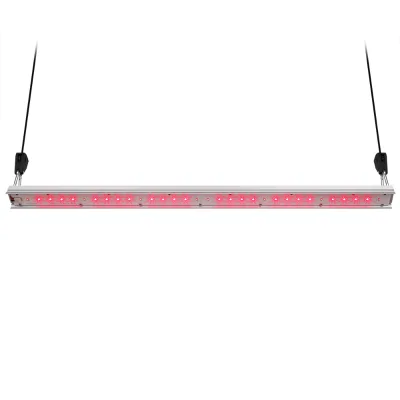
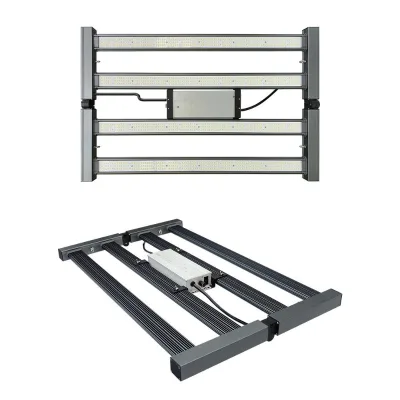
Procurement teams evaluating Samsung Red and Blue LED Grow Lights must first distinguish between square bar configurations and tube-style fixtures, as the observed product data indicates distinct form factors for different cultivation needs. The available listings reveal a mix of high-wattage units, such as 800W and 640W models, alongside specific bar quantities ranging from six to eight bars per unit, which directly influences light distribution patterns across canopy layers. Buyers should verify whether the specific model supports the required mounting height, as some units specify a minimum clearance of 15.2cm above the crop to ensure optimal photosynthetic photon flux density without causing thermal stress.
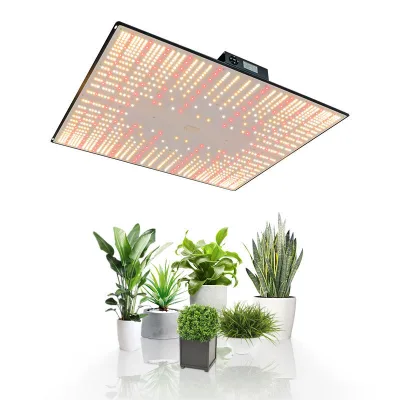
When assessing the spectral output, it is critical to confirm that the "Full Spectrum" designation includes the specific red wavelengths necessary for flowering stages, as some listings explicitly mention a combination of white light and 660nm plant red light. The presence of Samsung LED chips is a primary quality indicator, yet the total LED quantity varies significantly between models, with observed counts ranging from 2,604 to 3,472 chips depending on the wattage and physical dimensions. Sourcing decisions should prioritize units that align the chip count and wattage with the specific crop type, whether it be leafy greens, fruiting vegetables, or specialized seedlings, to avoid under-illuminating high-light crops or wasting energy on low-light varieties.
Product Scope and Observed Listing Signals
The observed market signals for these grow lights indicate a diverse range of applications, specifically targeting leafy greens, fruit and vegetable crops, flowers, and seedlings, which requires buyers to match the light intensity to the growth stage of the plant. Listings show that products are available in various shapes, including square and tube configurations, with some units designed for specific lighting solutions such as Dialux Evo layout planning and circuitry design services. This variability suggests that a single SKU may not suffice for a large-scale facility, necessitating a modular approach where different wattages and bar quantities are selected to create a uniform light map across the grow area.
Buyers must also scrutinize the physical dimensions and packing standards, as observed data includes specific packaging metrics like 10901000131 mm and 240X110X10cm, which impact logistics and warehouse storage planning. The product origin is consistently listed as China, and the standard packing often involves individual cartons or boxes, which influences the cost of freight and the potential for damage during transit. Understanding these logistical constraints is essential for accurate total cost of ownership calculations, as the physical footprint and weight of the units will determine the structural requirements for hanging systems and the efficiency of the supply chain.
Technical Specifications to Verify
Technical verification must begin with the electrical input requirements, as the observed data specifies a wide voltage range of 100-277V AC, with some models supporting 200-480VAC for industrial applications. It is imperative to confirm that the driver compatibility matches the local grid frequency, typically 50-60Hz, to prevent premature failure or flickering issues that can disrupt plant growth cycles. Additionally, the dimming capability is a key feature listed as available, allowing growers to adjust light intensity dynamically, but this function must be tested to ensure it operates smoothly across the full range without causing spectral shifts that could affect plant morphology.
Thermal management and operational lifespan are equally critical, with observed specifications citing a life span of 50,000 hours at 25℃ and a working temperature range of -10 to 40℃ or -40 to +45℃ depending on the model. Buyers should verify the housing material, noting that some units utilize PC sheets while others feature aluminum bodies, as this affects heat dissipation efficiency and the overall durability of the fixture in high-humidity environments. The luminous efficacy, observed at 2.8 µmol/J for some units, serves as a benchmark for energy efficiency, and procurement teams should compare this against the specific light output in µmol/S to determine the true cost per photon for their specific crop requirements.
Compliance and Safety Documentation
Compliance verification requires a thorough review of the certification portfolio, as the observed listings include CE, RoHS, CCC, FCC, EMC, LVD, and GS marks, indicating adherence to various international safety and environmental standards. Buyers must ensure that the specific batch of products being purchased carries the relevant certifications for their target market, as the presence of SAA certification suggests suitability for Australian standards, while FCC is critical for North American deployment. The absence of any single certification in a listing does not necessarily disqualify the product, but it mandates a request for valid test reports to confirm that the electrical safety and electromagnetic compatibility claims are substantiated by third-party testing.
Safety documentation also extends to the warranty terms, which vary between 3 and 5 years in the observed data, reflecting the manufacturer's confidence in the product's longevity. A five-year warranty is a strong indicator of quality, but buyers should carefully read the terms to understand what constitutes a valid claim, particularly regarding thermal failures or driver malfunctions. Additionally, the inclusion of lighting and circuitry design services in the product scope suggests that the supplier may provide technical support for installation, which can be a valuable asset for ensuring that the electrical setup meets all local code requirements and safety protocols.
Cost Drivers and Commercial Terms
The cost structure for these grow lights is heavily influenced by the wattage and the quantity of Samsung LED chips, with observed prices ranging from $2 to $522, reflecting a wide spectrum of product tiers and configurations. High-wattage units with larger bar counts and higher LED densities naturally command a premium, but buyers should analyze the cost per watt and cost per photon to determine the most economical option for their specific application. The minimum order quantity (MOQ) varies from 1 to 1000 units, offering flexibility for small-scale pilots while potentially requiring bulk commitments for large commercial facilities to secure optimal pricing.
Commercial terms must also account for the customization availability, which allows buyers to tailor specifications such as mounting heights or spectral outputs to their unique facility needs. However, customization often introduces lead time extensions and potential cost increases, so procurement teams should balance the desire for specific features against the urgency of project timelines. The packing standard, typically 1pc/ctn, also plays a role in the final landed cost, as inefficient packaging can lead to higher shipping volumes and increased risk of damage, necessitating a detailed review of the supplier's packaging protocols before finalizing the purchase agreement.
Supplier Qualification and Quality Control
Supplier qualification should focus on the manufacturer's ability to provide consistent quality control, evidenced by the standardized production models and the use of trusted components like Samsung SMD LEDs. The presence of multiple product models, such as the K-A6 and GS series, indicates a mature manufacturing process capable of scaling production, but buyers must verify that the specific unit ordered matches the exact specifications listed in the datasheet. It is essential to request sample units for independent testing to confirm the actual LED chip quality, spectral output, and thermal performance before committing to a large-scale order.
Quality control protocols should also include a review of the supplier's testing procedures for critical attributes like the IP rating and the durability of the housing material. While the observed data mentions IP ratings and specific material compositions, these claims must be validated through third-party testing reports to ensure they meet the rigorous demands of a commercial grow environment. Furthermore, the supplier's willingness to provide lighting solutions services, such as Dialux Evo layout planning, demonstrates a commitment to customer success and suggests a higher level of technical support that can mitigate installation risks and optimize system performance.
Long-Term Procurement Checks
Long-term procurement strategies must prioritize the verification of warranty claims and the availability of replacement parts, as the 50,000-hour lifespan is a theoretical maximum that depends heavily on operating conditions. Buyers should establish a clear protocol for handling warranty claims, ensuring that the supplier provides timely support for driver replacements or LED module failures that may occur after the initial installation period. The 3 to 5-year warranty periods observed in the listings provide a baseline for expectation, but the specific terms regarding labor costs and shipping for replacements should be negotiated to protect the buyer's investment over the life of the system.
Continuous monitoring of the product performance is essential to validate the initial specifications against real-world data, particularly regarding the luminous efficacy and light output stability over time. Buyers should implement a system for tracking energy consumption and crop yield to ensure that the selected grow lights continue to deliver the expected return on investment. Regular audits of the supplier's quality control processes and a review of any new certifications or standards updates will help maintain a robust supply chain that can adapt to evolving regulatory requirements and technological advancements in the LED grow light industry.
FAQs
What certifications do these Samsung LED grow lights have?
These Samsung LED grow lights carry CE, RoHS, CCC, FCC, EMC, LVD, and GS certifications. Some models also include SAA certification. These marks ensure compliance with international safety and environmental standards for electrical equipment used in agricultural and horticultural settings.
Can I customize the design of these grow lights?
Yes, customization is available for these Samsung LED grow lights. Buyers can request specific lighting solutions services, including lighting and circuitry design and Dialux Evo layout planning. This allows for tailored configurations to meet unique facility requirements and spatial constraints.
What is the expected lifespan of these LED grow lights?
The expected lifespan of these LED grow lights is 50,000 hours at 25°C. This durability ensures long-term reliability for continuous indoor farming operations. The warranty period varies, with some models offering a 5-year warranty and others a 3-year warranty.
Which applications are suitable for these full spectrum lights?
These full spectrum lights are suitable for leafy greens, fruits, vegetables, flowers, seedlings, and special crops. The Samsung SMD LED chips provide a balanced spectrum including white light and 660nm plant red light, optimizing photosynthesis and growth stages for diverse plant types.
What is the input voltage range for these grow lights?
The input voltage range for these grow lights is 100-277V AC at 50-60Hz. Some models also support 200-480VAC and 150-60Hz. This wide voltage compatibility ensures stable operation across different global power grids and electrical infrastructure standards.