Source Modbus Solar PV Energy Meter for Grid, Home, Industry
Find and compare Modbus Solar PV Energy Meter options from 30 verified listings. Evaluate single and three-phase models with RS485 Modbus-RTU interfaces, digital displays, and CE/RoHS certifications for grid-tied, residential, and industrial applications.
Key considerations
Products List


$25.90 - $35.00
MOQ: 1 Pieces
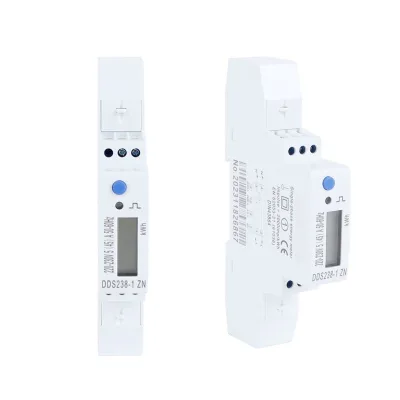


RS485 Modbus-RTU Solar PV System Analyzer DC Smart Energy Power Meter for Battery Monitoring
$82.60 - $114.10
MOQ: 1 Pieces


3 Phase Bidirectional Solar PV Energy Meter Power Monitor with RS485 Modbus-RTU
$133.00 - $154.00
MOQ: 1 Pieces

Single Phase DIN Rail Multifunctional RS485 Modbus Energy Meter Adl200 Solar PV
$20.00 - $30.00
MOQ: 1 Pieces


Digital Circuits Monitoring Power Energy Meter with RS485 Modbus for EV Charging
$45.00 - $65.00
MOQ: 1 Pieces


Solar PV Electricity Meter DIN Rail Modbus TCP Energy Meter Power Analyzer
$200.00 - $300.00
MOQ: 1 Pieces

Comprehensive Sourcing Guide
Modbus Solar PV Energy Meter Sourcing Guide
Procuring a Modbus Solar PV Energy Meter requires a precise alignment between the specific communication protocols of your solar inverter or monitoring system and the meter's native interface capabilities. The observed market data indicates that RS485 interfaces paired with the Modbus-RTU protocol are the dominant standard for these devices, ensuring seamless integration with industrial SCADA systems and home energy management platforms. Buyers must verify that the selected unit supports the specific baud rates and addressing schemes required by their existing infrastructure, as mismatches here can render the hardware useless for data logging and remote control.
Beyond connectivity, the physical and electrical characteristics of the meter must match the installation environment, whether it is a single-phase residential rooftop or a three-phase commercial solar farm. The available product pool includes models designed for both single-phase and three-phase configurations, with some units explicitly supporting three-phase four-wire systems essential for balanced load monitoring in larger installations. Selecting the correct phase configuration is a critical first step, as installing a single-phase meter in a three-phase circuit will result in incomplete data capture and potential safety hazards, while a three-phase unit in a single-phase setup may incur unnecessary cost and complexity.
Product Scope and Observed Listing Signals
The current market listings for modbus solar PV energy meters reveal a diverse range of functional capabilities, from basic watt-hour measurement to advanced multi-functional energy monitoring. Buyers should expect to find devices categorized as static meters that offer continuous wave signal measurement, capable of tracking active energy, reactive energy, and maximum demand simultaneously. These units are often marketed for dual usage in both industrial and home settings, suggesting a design philosophy that prioritizes versatility across different grid environments and load profiles.
Listing signals also highlight specific model identifiers and standard designations that serve as key differentiators for buyers navigating the catalog. Products are frequently identified by model numbers such as SOLAR, ADL10-E, ADL400, and AMC72-DV, each adhering to specific internal or industry standards like ACR10R AGF. The presence of digital displays showing parameters like kWh, Amperes, Volts, Kilowatts, and Power Factor (COS) indicates a high level of user visibility, allowing for immediate on-site verification of system performance without the need for external diagnostic tools.
Technical Specifications to Verify
When evaluating technical specifications, the accuracy class of the meter is a primary determinant of its suitability for billing or high-precision monitoring applications. The observed data points to accuracy grades ranging from 1 Grade for general applications to 0.5s Grade for higher precision requirements, which is critical for solar PV systems where small measurement errors can accumulate significantly over time. Buyers must explicitly confirm the accuracy grade required for their specific use case, as a standard 1 Grade meter may not suffice for financial settlement or detailed performance analysis in large-scale solar farms.
Electrical compatibility and auxiliary power requirements are equally vital to ensure the meter operates reliably within the solar PV system's voltage constraints. The available units support auxiliary power ranges such as AC85V-265V, providing a wide operating window that accommodates fluctuations common in solar generation environments. Additionally, the rated current specifications, such as 5(32)A or 5(30)A, and maximum current limits like 65A, must be matched against the expected load of the solar array to prevent meter saturation or damage during peak generation periods.
Compliance and Safety Documentation
Compliance with international safety and environmental standards is non-negotiable for any electrical equipment deployed in commercial or residential settings. The observed product listings consistently reference CE and RoHS certifications, indicating that the devices meet European safety directives and restrict the use of hazardous substances. For buyers operating in markets with strict regulatory requirements, verifying the presence of ISO certification alongside CE and RoHS is essential to ensure the manufacturer adheres to broader quality management systems and environmental protocols.
Safety documentation must also address the specific installation standards applicable to the region where the meter will be deployed. While the observed data mentions standards like ACR10R AGF and specific model standards, buyers should not assume these cover all local regulatory requirements without verification. It is the buyer's responsibility to cross-reference the manufacturer's declared standards with local grid codes and safety regulations to ensure the meter is legally compliant for connection to the public grid or private solar networks.
Cost Drivers and Commercial Terms
The pricing for modbus solar PV energy meters varies significantly based on the complexity of the features, the accuracy class, and the specific configuration of the device. The observed price range spans from approximately $17.50 to $300, reflecting the difference between basic single-phase units and advanced three-phase meters with comprehensive digital displays and communication capabilities. Buyers should anticipate that higher accuracy grades, such as 0.5s, and specialized features like infrared interfaces alongside RS485 will command a premium price point compared to standard digital-only models.
Commercial terms, including Minimum Order Quantity (MOQ) and packaging, play a crucial role in the total cost of ownership and logistics planning. The market data indicates a flexible MOQ range of 1 to 5 units, allowing for small-scale procurement or pilot testing without the burden of large inventory commitments. Packaging is typically standardized in cartons with dimensions around 10x10x10 cm for individual units, which simplifies shipping calculations and storage requirements, though buyers should confirm if bulk packaging options are available for larger orders to optimize freight costs.
Supplier Qualification and Quality Control
Supplier qualification for energy meters should focus on the manufacturer's ability to provide consistent product quality and reliable after-sales support. The observed data points to manufacturers originating from regions like Zhejiang, China, which is a known hub for electrical equipment production, but buyers must verify the specific factory's track record and production capacity. Customization options are available for many of these products, suggesting that suppliers are capable of adapting standard models to meet specific client requirements, a capability that is often a strong indicator of a mature and flexible manufacturing process.
Quality control processes must be validated through the supplier's adherence to the stated standards and their willingness to provide test reports or batch certifications. Buyers should request evidence that the production line follows the specific standards mentioned, such as ACR10R AGF, and that the final products undergo rigorous testing for parameters like start current and power consumption. Ensuring that the supplier has a robust quality assurance system in place is critical to minimizing the risk of receiving defective units that could compromise the integrity of the entire solar PV monitoring system.
Long-Term Procurement Checks
Long-term procurement success depends on establishing a reliable supply chain that can support the lifecycle of the solar PV installation. Buyers should prioritize suppliers who offer clear documentation on the product's lifespan, maintenance requirements, and the availability of spare parts or replacement units. The digital nature of these meters, with features like RS485 communication and Modbus-RTU protocols, implies a need for ongoing software or firmware support, making it essential to verify that the supplier can provide updates or technical assistance as the system evolves.
Finally, buyers must plan for the scalability of their procurement strategy to accommodate future expansion of their solar energy assets. As the installed capacity grows, the need for additional meters with consistent specifications and communication protocols will increase, making it advantageous to standardize on a single supplier or a limited set of compatible models. Regular reviews of the supplier's performance, including delivery lead times and product consistency, will help ensure that the procurement strategy remains aligned with the long-term operational goals of the solar PV project.
FAQs
What certifications do these modbus solar pv energy meters have?
These meters hold CE, RoHS, and ISO certifications. The product facts confirm CE and RoHS for some models, while others include ISO certification alongside CE and RoHS for compliance.
Can I get customized modbus solar pv energy meters?
Yes, customization is available for these energy meters. The product attributes explicitly state that customization options exist for buyers requiring specific configurations or branding.
Which interface protocols are supported by these meters?
The meters support RS485 interfaces with Modbus-RTU protocols. Some models also include infrared interfaces, ensuring versatile communication options for industrial and home applications.
How accurate are the three-phase energy meters?
Three-phase models offer 0.5s Grade or 0.5grade accuracy. Single-phase variants typically provide 1 Grade accuracy, ensuring precise measurement for various power applications.
What is the working voltage range for these devices?
The working voltage range spans from 0.8 to 1.2 times the rated voltage. Auxiliary power for some models accepts AC85V to 265V, ensuring stable operation across varying conditions.
Where are these modbus solar pv energy meters manufactured?
These meters originate from China, specifically Zhejiang province. The product facts list China as the place of origin for the various models including SOLAR and ADL series.