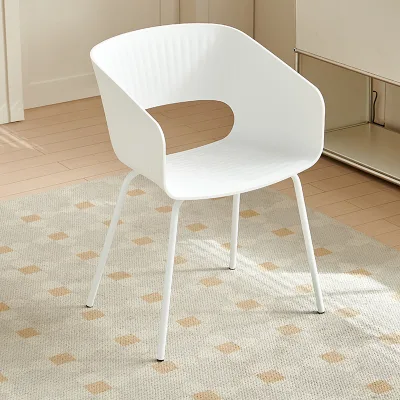
Source Modern Armrest Plastic Chair for Living Room, Dining, Garden
Explore 30 listings for the Modern Armrest Plastic Chair suitable for living rooms, dining areas, and garden spaces. Buyers can compare models like CE-PL-812 and YS-HT57S1, noting variations in dimensions, folding status, and customization options for bulk sourcing.
Key considerations
Products List




Comprehensive Sourcing Guide
Strategic Sourcing Guide for Modern Armrest Plastic Chairs
Understanding Product Specifications and Variability
When sourcing modern armrest plastic chairs, buyers must first navigate the inherent variability in product specifications found within the current market. The term "modern" often implies a specific aesthetic, typically characterized by clean lines and contemporary styling, yet the physical attributes can differ significantly between listings. Based on observed market data, the material composition is consistently identified as plastic, which offers durability and ease of cleaning but requires careful selection regarding the specific polymer type for intended use cases.
A critical observation in the current supply landscape is the divergence in seating configurations. While the core keyword specifies "armrest," the market data reveals a split inventory. Some listings explicitly feature chairs "With Armrest," while others are categorized as "Without Armrest." This distinction is vital for procurement teams to avoid mismatched orders. Furthermore, the structural design varies between "Fixed" rotary mechanisms and potentially foldable options. For instance, specific models in the observed range are listed as "Unfolded" or "Folded," indicating that a "modern" chair may or may not include a folding mechanism depending on the specific model number, such as the CE-PL-2562 or PL-716-H series.
The dimensions of these chairs also present a wide range of specifications that directly impact logistics and spatial planning. Observed standard dimensions vary from compact units measuring approximately 40x40x80 cm to larger configurations reaching 56.5x47x82 cm or even 54.5x51.5x82 cm. The back height is frequently noted as "Medium Back," which suggests a balance between support and the modern, low-profile aesthetic often desired in contemporary settings. Buyers must verify the exact dimensions of the specific model they intend to purchase, as the "standard" listed in product data often refers to packaging dimensions (e.g., 80x40x55 cm) rather than the chair's footprint, leading to potential confusion if not cross-referenced carefully.
Compliance, Certification, and Standard Verification
In the realm of B2B procurement, particularly for furniture originating from major manufacturing hubs, verifying compliance and standards is non-negotiable. The supplied data indicates that products originate from China, a region with a robust manufacturing base but varying levels of regulatory adherence depending on the specific factory. While the product data lists specific model numbers like CE-PL-540 and CE-447-H, the presence of "CE" in a model number does not automatically guarantee compliance with European Conformity standards. Buyers must treat these model identifiers as internal factory codes rather than external certifications.
The market data includes a standard reference of "80X40X55CM" and "56.54782," which appear to be dimensional standards rather than safety certifications. It is a common misconception that a product listing a "CE" prefix in its model name is certified. Procurement teams must explicitly request valid third-party test reports and certification documents from the supplier. The absence of explicit certification data in the general product overview means that the buyer must initiate a verification process. This involves asking for proof of compliance with relevant safety standards for the target market, such as ASTM in the United States or EN standards in Europe, rather than relying on the product name or model number alone.
Additionally, the "Customized" attribute is frequently observed, with options for logo printing and pattern design. While customization is a value-add, it introduces complexity into the compliance chain. Any custom modifications, such as adding a specific logo or altering the color to "Optional" shades, must not compromise the structural integrity or safety of the chair. Buyers should ensure that the customization process does not void existing certifications or introduce new hazards, such as the use of non-compliant inks or adhesives.
Cost Drivers and Pricing Dynamics
The pricing structure for modern armrest plastic chairs is influenced by several tangible factors, with the observed market range spanning from 2 to 40 USD. This wide disparity is not arbitrary but is driven by specific cost drivers that buyers must understand to negotiate effectively. The primary driver is the complexity of the design and the quality of the plastic resin used. A simple, non-folding chair with a basic finish will naturally fall at the lower end of the spectrum, while a chair with ergonomic armrests, high-density plastic, or a specific "Modern" or "Simple" design aesthetic will command a higher price.
Minimum Order Quantity (MOQ) is another significant cost determinant. The observed MOQ range is between 20 and 500 units. Suppliers often offer tiered pricing where the unit cost decreases as the order volume increases. For buyers with lower volume needs, the unit price may be higher due to the fixed costs of setup and production runs. Conversely, buyers aiming for the lower price points must be prepared to meet the higher MOQ thresholds, potentially up to 500 units. This dynamic requires a careful balance between inventory risk and unit cost savings.
Packaging and logistics also play a crucial role in the final landed cost. The product data indicates that items are typically packed in "Carton" boxes. The dimensions of these cartons, which can range from 40x40x80 cm to larger sizes, directly impact shipping efficiency. A chair that packs efficiently, allowing for more units per container, will have a lower shipping cost per unit. Conversely, chairs that are "Folded" or have irregular shapes may require more complex packaging solutions, increasing the overall cost. Buyers should calculate the total cost of ownership, including freight, rather than focusing solely on the ex-factory price.
Typical Applications and Usage Scenarios
The versatility of modern armrest plastic chairs makes them suitable for a diverse array of applications, ranging from residential to commercial and outdoor use. The market data highlights specific usage categories, including "Living room," "Dining Chair," "Garden," "Wedding," "Leisure," "Picnic," "Hotel," and "Banquet." This broad applicability suggests that the design is adaptable, but the specific model chosen must align with the intended environment.
For indoor applications, such as living rooms or dining areas, the "Modern" and "Simple" styles are particularly relevant. These chairs often feature a "Medium Back" and may come with or without armrests, depending on the specific model. The "New" condition and "White" color options observed in the data are common for indoor furniture where aesthetics and cleanliness are paramount. In contrast, for outdoor or event-based uses like "Fishing," "Camping," "Beach," or "Banquet," the durability and portability of the chair become the primary concerns. The "Camping Chair" and "Folding Chair" models listed, with advantages like being "Light" and "Easy to Carry," are specifically designed for these mobile applications.
The "Suitable for: Adult" attribute is a universal constraint across the product range, ensuring that the chairs are designed for standard adult anthropometry. However, the specific "Shape: Oval" or "Style: Modern" may influence the seating capacity and comfort level in high-traffic commercial environments. Buyers should match the chair's specific features, such as the presence of armrests or the folding capability, to the frequency of use and the environment in which the chair will operate.
Supplier Evaluation and Selection Criteria
Evaluating suppliers for modern armrest plastic chairs requires a rigorous approach that goes beyond the basic product listing. Since the data does not provide specific supplier names, buyers must develop their own vetting criteria based on the observable product attributes. The first step is to verify the supplier's ability to meet the "Customization" requirements. Many listings indicate that logos can be printed and patterns can be designed. A capable supplier should demonstrate a robust process for managing these customizations without compromising quality.
The "Condition: New" and "Material: Plastic" attributes are baseline expectations, but the supplier's track record in maintaining these standards is crucial. Buyers should request samples to verify the quality of the plastic, the finish of the armrests, and the stability of the chair. The "Folded" versus "Unfolded" distinction is also a key evaluation point. If the supplier claims a chair is foldable, the sample must be tested for the durability of the folding mechanism over multiple cycles.
Furthermore, the origin of the product, identified as "China," implies a specific supply chain dynamic. Buyers should assess the supplier's logistics capabilities, including their ability to handle the "Carton" packaging efficiently and their experience with international shipping. The "Lead time" is not explicitly stated in the data, so buyers must inquire about production schedules and delivery timelines to ensure they can meet their own project deadlines. A supplier's responsiveness to queries regarding specifications, such as the exact dimensions or color options, is also a strong indicator of their reliability and professionalism.
Quality Control and Long-Term Procurement Considerations
Implementing a robust quality control (QC) strategy is essential for sourcing plastic chairs, as the material properties can vary significantly between batches. The "Material: Plastic" attribute necessitates checks for structural integrity, particularly at the joints and armrest connections. Given the "Modern" design often involves sleek, molded parts, any visible defects such as sink marks, warping, or uneven coloring can significantly impact the product's marketability. Buyers should establish clear acceptance criteria for visual defects and functional tests, such as weight-bearing capacity and stability.
Long-term procurement considerations involve the sustainability and lifecycle of the product. While the data does not explicitly mention eco-friendly materials, buyers should inquire about the recyclability of the plastic used and the supplier's environmental policies. The "Customized" nature of the product also means that future reorders may require consistent color matching and logo placement. Maintaining a relationship with a supplier who can guarantee consistency in the "White" color or other "Optional" shades is vital for brand integrity.
Finally, the "Advantage: Light, Small, Easy to Carry" noted in some listings suggests a focus on portability. For buyers targeting the camping or outdoor market, the long-term durability of the chair under varying weather conditions is a critical factor. Plastic can degrade under UV exposure, so verifying the material's resistance to sunlight and temperature fluctuations is necessary. By focusing on these quality and longevity aspects, buyers can ensure that their procurement of modern armrest plastic chairs results in a product that meets both immediate functional needs and long-term brand standards.
FAQs
Can modern armrest plastic chairs be customized with logos?
Yes, customization is available for these chairs, including logo printing and pattern design. Buyers can request specific colors or designs, but they must verify that custom modifications do not compromise structural integrity or existing safety certifications.
What are the typical dimensions for these plastic chairs?
Dimensions vary significantly by model, ranging from compact units like 40x40x80 cm to larger configurations up to 56.5x47x82 cm. Buyers must verify the exact footprint of the specific model, as listed standards often refer to packaging dimensions rather than the chair itself.
Which models feature armrests and which do not?
The market inventory includes both chairs with armrests and those without armrests. Buyers must explicitly check the product attributes for each model, such as CE-PL-2562 or PL-716-H, to ensure the selected unit matches the required seating configuration.
How does the MOQ affect the unit price?
The minimum order quantity ranges from 20 to 500 units, directly influencing the unit cost. Suppliers typically offer tiered pricing where higher volumes reduce the price, so buyers with lower volume needs should expect higher per-unit costs due to fixed production setup expenses.
Are these chairs suitable for outdoor camping use?
Yes, specific models like the Camping Chair are designed for outdoor activities such as fishing, camping, and picnics. These units are noted for being light, small, and easy to carry, making them ideal for mobile applications compared to stationary indoor dining models.
What is the origin and packaging type for these products?
Products originate from China and are typically packed in carton boxes. The packaging dimensions can vary, affecting shipping efficiency, so buyers should calculate total landed costs including freight rather than focusing solely on the ex-factory price of the individual units.