Source Modern Bamboo Baby Playpen for Living Room, Bedroom, Home Office
Explore 30 listings of Modern Bamboo Baby Playpen options from Chinese manufacturers. Buyers can compare specifications, materials, and pricing for use in living rooms, bedrooms, and home offices.
Key considerations
Products List

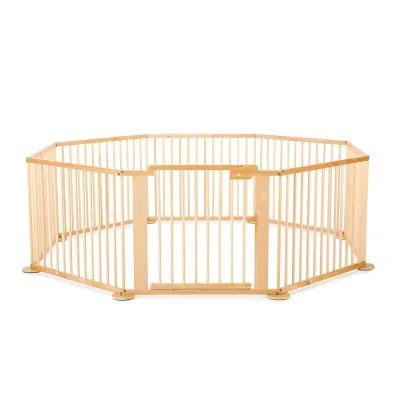


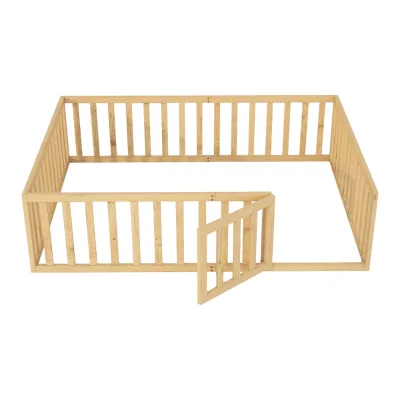
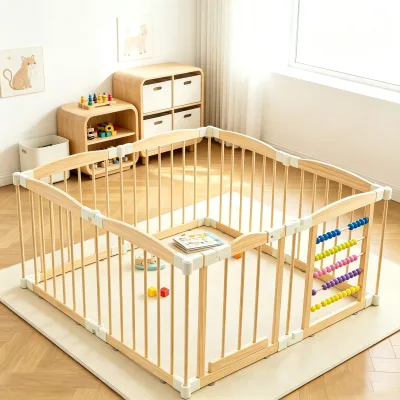
Comprehensive Sourcing Guide
Strategic Sourcing Guide for Modern Bamboo Baby Playpens
Understanding the Modern Bamboo Playpen Market Landscape
The global demand for safe, sustainable, and aesthetically pleasing nursery furniture has elevated the Modern Bamboo Baby Playpen to a significant category within the B2B procurement sector. Unlike traditional metal or plastic enclosures, bamboo offers a unique blend of structural integrity, natural aesthetics, and environmental benefits. However, the term "modern bamboo" often encompasses a spectrum of manufacturing approaches, ranging from solid bamboo construction to bamboo-composite hybrids or bamboo-finished wood products. Buyers must navigate a market where product attributes vary significantly between suppliers. The core keyword implies a specific design language—typically contemporary, minimalist, or eco-friendly—that distinguishes these products from older, bulkier playpen models.
In the current supply chain, the primary origins for these products are concentrated in China, with major manufacturing hubs located in provinces such as Fujian, Shandong, and Zhejiang. These regions possess established infrastructure for wood processing and bamboo cultivation, allowing for a diverse range of product specifications. Procurement professionals should note that while the material is consistently identified as wood or bamboo in many listings, the specific grade of bamboo and the binding agents used in composite structures are critical variables that impact durability and safety. The market is characterized by a high degree of customization, with many suppliers offering OEM and ODM support to align products with specific brand identities and design requirements.
Technical Specifications and Material Composition
When evaluating technical specifications for a modern bamboo playpen, buyers must scrutinize the material composition, dimensions, and structural design. The provided data indicates that materials are frequently listed simply as "Wood," which in the context of bamboo playpens often refers to bamboo strips, bamboo plywood, or bamboo-wood composites. The structural integrity of these units relies heavily on the joinery methods used, as bamboo is a grass with a distinct grain structure that requires specific engineering to prevent splitting under stress.
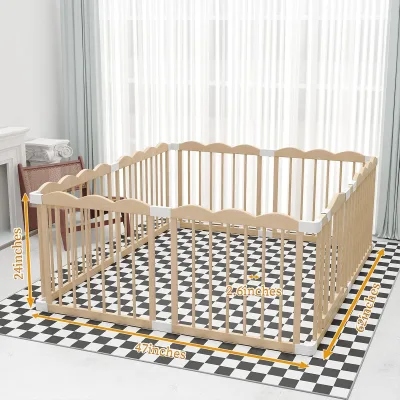
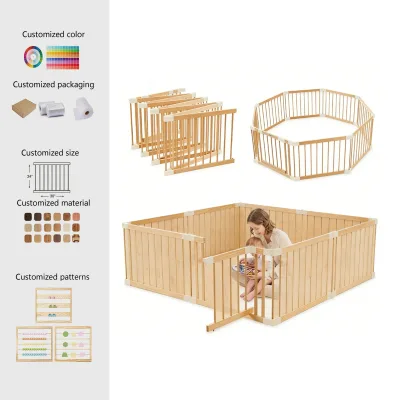
Dimensions vary widely across the market, reflecting different age groups and space requirements. Observed specifications include sizes such as 47x62x24 inches, 120x160x61 cm, and 150x180 cm. These variations dictate the intended application, whether for a compact living room setup or a larger bedroom enclosure. The single package size is another critical logistical metric, with observations ranging from 60x60x60 cm to 88x50x30 cm. These dimensions directly influence shipping costs and warehouse storage efficiency. Buyers should verify the "disassembly" capability of the product, as many modern designs feature knock-down structures for easier transport and storage.
Weight is a significant factor in both shipping and on-site assembly. Gross weights observed in the market range from 0.6 kg to 11.5 kg per unit. A lower weight might indicate a lighter composite or a smaller footprint, while a higher weight suggests a more robust, solid construction. The "Single gross weight" of 11.5 kg, for instance, implies a substantial unit that may require two-person assembly or specialized handling equipment during delivery. Furthermore, the "color" options, such as "Buff," "Natural," and "Yellow," suggest different finishing processes. Buyers must ensure that these finishes are non-toxic and compliant with child safety standards, as the surface treatment is the primary point of contact for infants.
Compliance, Certification, and Safety Verification
Safety is the paramount concern when sourcing baby products. While the provided context mentions "Eco-Friendly" as a feature and lists "FSC" and "EN 12227" in background notes, buyers must treat these as verification targets rather than guaranteed attributes of every listed product. The EN 12227 standard is a European standard for playground equipment, which is often referenced as a benchmark for safety in playpens, though specific compliance must be confirmed on a per-product basis. Similarly, FSC (Forest Stewardship Council) certification is a crucial indicator of sustainable sourcing, but it is not automatically present in all bamboo products.
Buyers should request specific test reports from suppliers to validate claims regarding structural stability, chemical emissions, and edge safety. The "Condition: New" attribute confirms the product state, but it does not guarantee compliance with international safety regulations. Key areas to verify include the absence of sharp edges, the stability of the structure to prevent tipping, and the use of non-toxic paints or finishes. The "Feature: Eco-Friendly" claim should be backed by documentation regarding the sourcing of the bamboo and the adhesives used in the manufacturing process.
Additionally, the "Small Orders: Accepted" attribute suggests flexibility in the supply chain, but it does not negate the need for rigorous quality assurance. Buyers must ensure that the supplier can provide third-party testing results from recognized laboratories. The "Standard: small size" mentioned in the data is ambiguous and likely refers to a specific product line rather than a safety standard. Therefore, procurement teams must explicitly ask for the applicable safety standards (such as ASTM F1169 in the US or EN 716 in Europe) that the specific model number, such as "SA-555" or "BC-202," adheres to.
Cost Drivers and Pricing Dynamics
The pricing of modern bamboo playpens is influenced by a complex interplay of material costs, manufacturing complexity, and logistics. The observed price range of 10 to 100 USD represents a broad spectrum, likely reflecting differences in size, material quality, and finish. A unit priced at the lower end of this range may be a smaller, simpler model with a basic finish, while a unit at the higher end could be a larger, custom-designed enclosure with premium eco-friendly coatings and advanced joinery.
The Minimum Order Quantity (MOQ) is another significant cost driver. The data shows an MOQ range from 1 to 1000 pieces, with specific examples like 50 sets or 100 pieces. Lower MOQs, such as 1 or 50 sets, are ideal for testing the market or for small retailers, but they often come with a higher unit price due to the lack of economies of scale. Conversely, higher MOQs of 1000 pieces can significantly reduce the per-unit cost but require substantial capital investment and storage capacity. Buyers must balance their inventory needs against their cash flow constraints.
Logistics costs are heavily dependent on the "Single package size" and "Single gross weight." A product with dimensions of 88x50x30 cm and a weight of 11.5 kg will incur higher shipping costs compared to a compact 60x60x60 cm unit weighing 0.6 kg. The "mail packing: Y" attribute indicates that some products are suitable for direct mailing, which can reduce packaging costs but may require specific handling to prevent damage. Buyers should calculate the total landed cost, including freight, insurance, and customs duties, rather than focusing solely on the FOB price. The "Packing: 1PC/1CTN" specification suggests individual carton packaging, which is standard but adds to the overall volume of the shipment.
Typical Applications and Target Demographics
Modern bamboo playpens are designed for versatile applications, primarily targeting the residential sector. The "application: Living Room, Bedroom" and "Home Office" attributes highlight the dual nature of these products as both functional safety enclosures and aesthetic furniture pieces. In a living room setting, the "design style: Contemporary" or "Modern" look allows the playpen to blend seamlessly with existing decor, serving as a stylish alternative to traditional plastic playpens. The "color: Buff" or "natural" finishes are particularly popular in this context, as they complement a wide range of interior design palettes.
The target demographic is clearly defined by age, with specific products noting "For Ages: 6-36 months." This age range is critical for safety and usability; the playpen must be large enough to allow for crawling and standing but secure enough to prevent escape. The "Product name: Baby Play Pen" and "Wooden Baby play enclosure" confirm the primary function, but the "Application: Home Office" suggests a secondary use case where parents may need a safe space for their child while working remotely. This versatility adds value to the product, making it an attractive option for modern families.
The "Customization: Available" and "Logo: Accept Customized Logo" attributes indicate that these products are also suitable for branding purposes. Retailers and nurseries may opt for custom branding to differentiate their offerings. The "OEM & ODM: 100% Support" further reinforces the potential for private label manufacturing, allowing buyers to create a unique product line that aligns with their brand identity. This flexibility is a key selling point for B2B buyers looking to establish a distinct market presence.
Supplier Evaluation and Quality Control Protocols
Evaluating suppliers for bamboo playpens requires a rigorous approach that goes beyond basic product listings. The "place of origin" data points to specific Chinese provinces, but buyers should not assume that all suppliers in these regions offer the same quality. The "brand name: LUGUOBAN" and "Babyclever" examples illustrate that established brands exist, but many suppliers operate as OEM manufacturers without a consumer-facing brand. Buyers should verify the supplier's production capacity, quality control processes, and history of compliance.
Quality control should be implemented at multiple stages: incoming material inspection, in-process manufacturing checks, and final pre-shipment inspection. For bamboo products, this includes checking for moisture content, which can affect stability and lead to warping or cracking. The "Disassembly" feature requires careful inspection of the joinery to ensure that the product can be reassembled multiple times without degradation. The "Condition: New" attribute is a baseline requirement, but buyers must also verify that the product is free from defects such as splinters, loose joints, or uneven finishes.
The "Small Orders: Accepted" attribute suggests that some suppliers are flexible, but this should not compromise quality standards. Buyers should request samples before placing large orders to verify the quality of the "material: Wood" and the "design style: Modern." The "Logo: Customized Logo" capability should be tested to ensure that the printing or engraving process does not damage the surface or introduce toxic materials. Additionally, the "Packing: Carton" and "prod_packing: by Sea" specifications indicate that the supplier must have robust packaging protocols to prevent damage during long-distance shipping.
Long-Term Procurement and Supply Chain Resilience
Long-term procurement of modern bamboo playpens requires a strategic approach to supply chain resilience. The "MOQ: 100pcs" and "MOQ: 50 Sets" variations highlight the need for flexible ordering strategies. Buyers should aim to establish long-term relationships with suppliers who can accommodate fluctuating demand without compromising on quality or lead times. The "OEM & ODM: 100% Support" feature is particularly valuable for long-term partnerships, as it allows for continuous product improvement and adaptation to market trends.
Sustainability is a growing concern in the bamboo industry. Buyers should prioritize suppliers who can demonstrate responsible sourcing practices, such as FSC certification, to ensure the longevity of the supply chain. The "Feature: Eco-Friendly" claim should be backed by verifiable data regarding the lifecycle of the product. Furthermore, the "place of origin: FUJIAN," "Shandong," and "Zhejiang" locations suggest a concentrated supply base, which can be both an advantage and a risk. Buyers should diversify their supplier base to mitigate the risk of regional disruptions, such as natural disasters or policy changes.
Finally, the "Selling Units: Single item" attribute indicates that the market supports both bulk and single-unit sales. Buyers should consider the scalability of their procurement strategy, ensuring that they can transition from small test orders to large volume purchases seamlessly. The "Single gross weight" and "Single package size" data should be used to optimize logistics planning, ensuring that the supply chain remains efficient and cost-effective over the long term. By focusing on these strategic elements, buyers can build a resilient and sustainable procurement pipeline for modern bamboo baby playpens.
FAQs
What materials are used for modern bamboo baby playpens?
The primary material is wood, often representing bamboo or bamboo composites in this category. Buyers should verify the specific grade and binding agents used, as listings may simply state wood while containing bamboo strips or plywood for structural integrity.
Can I find suppliers with low minimum order quantities?
Yes, some suppliers accept small orders with MOQs as low as 1 piece, while others require 50 sets or 100 pieces. Buyers must check individual product listings to confirm the specific MOQ, as this varies significantly between manufacturers offering different customization levels.
Which dimensions are available for these playpens?
Available sizes include 47x62x24 inches, 120x160x61 cm, and 150x180 cm depending on the model. These dimensions dictate the intended application, ranging from compact living room setups to larger bedroom enclosures suitable for children aged 6 to 36 months.
How are these products packaged for shipping?
Products are typically packed in cartons, with options like 1PC per carton or specific mail packing configurations. The single package size varies from 60x60x60 cm to 88x50x30 cm, which directly impacts shipping costs and warehouse storage efficiency for the buyer.
Do manufacturers support custom branding and logos?
Most suppliers offer 100% OEM and ODM support with customized logo options available. Buyers can request specific branding to align with their identity, ensuring the customization process does not introduce toxic materials or damage the surface finish of the wood product.
What is the typical price range for these items?
The observed price range is between 10 and 100 USD, reflecting differences in size and material quality. Lower prices often correspond to smaller, simpler models, while higher prices may indicate larger units with premium eco-friendly coatings and advanced joinery methods.
Are these playpens designed for easy disassembly?
Yes, many modern designs feature a disassembly capability for easier transport and storage. Buyers should verify the joinery quality to ensure the product can be reassembled multiple times without degradation, which is critical for long-term durability and logistics.