Source Modern Commercial Restaurant Chair and Table Set for Hotels Restaurants Banquets
Explore 30 listings of Modern Commercial Restaurant Chair and Table Set options tailored for dining, hotel, and cafe environments. Buyers can compare customized designs, materials including wood and metal, and specifications like scratch resistance and warranty periods from suppliers in Guangdong.
Key considerations
Products List


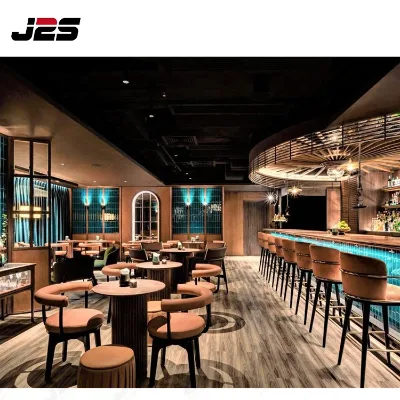
Wholesale Industrial Chairs and Table Restaurant Furniture Table and Chair Set
$120.00 - $200.00
MOQ: 10 pieces


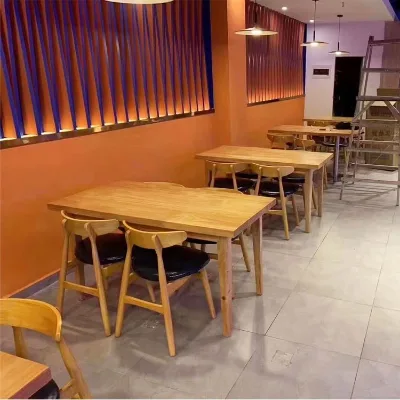
Fashionable Restaurant Chair and Table Set for Contemporary Dining Spaces
$200.00 - $280.00
MOQ: 2 Pieces


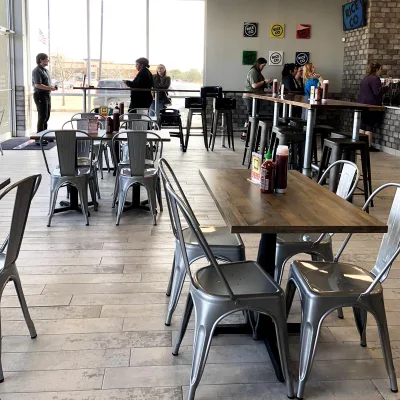
Sleek Restaurant Chair and Table Set for Modern Hospitality Environments
$200.00 - $280.00
MOQ: 2 Pieces


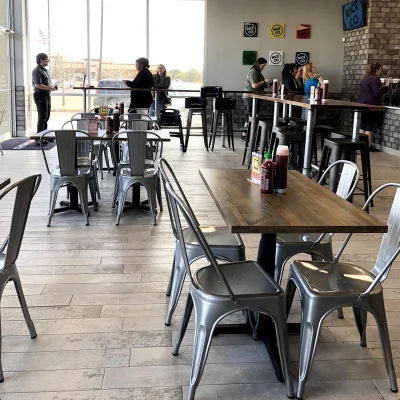
Restaurant Furniture Chairs Modern Cafe Furniture Restaurant Table and Chair Sets
$30.00 - $290.00
MOQ: 15 Pieces






Comprehensive Sourcing Guide
Strategic Sourcing Guide for Modern Commercial Restaurant Chair and Table Sets
Understanding Product Attributes and Material Composition
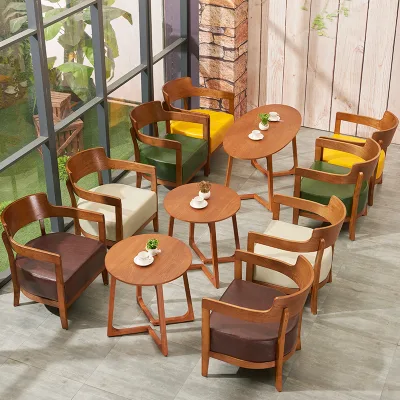
When sourcing modern commercial restaurant chair and table sets, buyers must first distinguish between the specific material compositions observed in the current market. The supply base for these items is diverse, with distinct product lines utilizing either wood or metal as the primary structural material. Observations indicate that some product configurations are explicitly categorized under "Wood" materials, often associated with a "Modern" design style and "Customized Designed" shapes. These wooden sets are frequently marketed for applications in dining, hotels, restaurants, and coffee shops, with a specific focus on "Restaurant Furniture" and "Hotel .Restaurant .Banquet. Coffee" functions.
Conversely, other segments of the market offer sets constructed from "Metal." These metal-based options often feature attributes such as "Fixed" or "Unfixed" configurations, suggesting variability in mobility and stability requirements. A key performance observation for metal variants includes a "Scratch Resistant" feature, which is critical for high-traffic commercial environments. Regardless of the material, the prevailing condition for these products is consistently "New," ensuring that buyers receive fresh inventory rather than refurbished or used goods. The "General Use" classification for these sets broadly encompasses "Commercial Furniture," while specific use cases are often narrowed down to "Cafe/Restaurant/Fast Food/Canteen" or "Restaurant/Cafe/Hotel/Bar."
The customization landscape for these sets is robust. Suppliers frequently offer "Customized" options with "Customization: Available" status, allowing buyers to tailor dimensions, finishes, and configurations. This is supported by service offerings that include "CAD Drawing/3D Design/OEM/ODM," enabling precise alignment with a brand's interior design vision. The "Product Name" often reflects this versatility, appearing as "Restaurant Hotel Cafe Furniture Wooden Sets" or similar variations that highlight the multi-purpose nature of the inventory.
Technical Specifications and Design Standards
Evaluating the technical specifications of modern commercial furniture requires a close examination of model numbers, standards, and structural integrity. The market displays a variety of model identifiers, such as "custom2," "FH-CAM240512," "FOH-RSTA01," "FOH-RST2206," "FH-CAM240509," and "FH-CAM240516." These codes often correspond to specific design iterations or material combinations. For instance, certain models are associated with "MFC" (Medium Density Fiberboard) standards, while others adhere to "SGS" or general "Standard" specifications.
The structural design is a critical factor for commercial longevity. Buyers should verify whether the furniture is "Fixed" or "Unfixed," as this impacts floor protection and rearrangement flexibility. The "Shape" is often described as "Customized Designed," indicating that off-the-shelf geometric constraints may not apply, allowing for unique aesthetic integration. Furthermore, the "Quality" attribute is frequently cited as "High Quality," with some manufacturers claiming a "Lasting" durability of "Over 5 Years." This longevity claim should be cross-referenced with the specific warranty terms provided, which can range significantly in duration.
Packing specifications are equally important for logistics planning. Observed packing methods include "Standard Export Packing," "High Quality Cartons," "Standard Export Carton," and "Kd Packing" (Knock-Down). The presence of "Mail Packing: Y" suggests that certain items may be suitable for direct shipping or smaller parcel logistics, though this is not universal across all models. Understanding these packing standards is essential for calculating shipping costs and ensuring that the furniture arrives without damage, particularly for items with delicate finishes or complex metal assemblies.
Compliance, Certification, and Regulatory Verification
Navigating the compliance landscape for commercial furniture is vital for risk management and market entry. The supply data indicates a mix of certifications, with "CE" and "ISO" family standards being the most prominent. Specific certifications observed include "CE," "ISO," "ISOCCC," and a combination of "ISO9001 & ISO14001." It is crucial for buyers to note that while "CE" and "ISO" appear in the data, the specific status of these certifications for every listed product should be verified directly with the supplier. Some entries list "CE,ISOCondition:New," which implies a bundle of attributes, but buyers must confirm the validity and scope of these certificates for the specific batch being purchased.
The "Brand" identity is another element of compliance and trust. The "Foh" brand is explicitly mentioned in the context of certain models, such as "FOH-RSTA01" and "FOH-RST2206." When sourcing branded items, buyers should ensure that the brand name is correctly associated with the specific model number to avoid counterfeits or mislabeled goods. Additionally, the "Place of Origin" is predominantly listed as "Guangdong, China" or "Guangzhou," which are major manufacturing hubs. While this location provides access to a robust supply chain, buyers should be aware of the specific export standards required for their destination markets.
Buyers must also consider the "Standard" of production. While some products are marked with "MFC" or "SGS," others simply list "Standard." This variance suggests that not all products meet the same rigorous testing protocols. For commercial applications, especially in regions with strict safety codes, verifying that the furniture meets local fire safety, load-bearing, and chemical emission standards is non-negotiable. The presence of "ISO9001" and "ISO14001" in the background data suggests a potential for quality management and environmental compliance, but these should be treated as background context rather than guaranteed attributes for every item unless explicitly confirmed in the supplier's documentation.
Cost Drivers and Procurement Economics
The economic landscape for sourcing modern commercial restaurant sets is defined by a wide range of variables, including material costs, customization levels, and order volume. The observed price range in the market spans from $17.8 to $300 USD. This significant variance is driven by several factors. Lower-priced items typically correspond to simpler designs, standard materials, or smaller unit counts, while higher-priced items often reflect premium materials, complex customization, or advanced features like scratch resistance.
The Minimum Order Quantity (MOQ) is a critical cost driver. The market data shows an MOQ range from 1 to 500 units, with a specific observation of "10 PCS" for certain models. This flexibility allows small businesses to enter the market with lower capital outlay, while larger chains can leverage bulk ordering to negotiate better unit economics. However, buyers must be cautious of the "MOQ" implications on unit pricing; ordering below the optimal threshold may result in higher per-unit costs due to setup and handling fees.
Lead times also impact the total cost of ownership. The observed delivery time is "15-25 days," which is a standard window for manufactured goods from the Guangdong region. This timeline includes production, quality control, and packaging. Buyers should factor in potential delays due to customization requests or shipping logistics, especially for international orders. The "Warranty" period, observed as "5 Years" for some products, acts as a long-term cost mitigator, reducing the risk of premature replacement and associated downtime costs.
Typical Applications and Functional Requirements
The functional requirements of modern commercial furniture are dictated by the specific environment in which they will be deployed. The data highlights a broad spectrum of applications, including "Dining," "Hotel," "Restaurant," "Coffee Shop," "Banquet," "Canteen," and "Bar." Each of these environments imposes unique demands on the furniture. For example, "Banquet" settings may require stackable or easily movable chairs, while "Canteen" environments might prioritize durability and ease of cleaning.
The "Specific Use" attributes provide further granularity. Items are designated for "Restaurant Furniture," "Cafe/Restaurant/Fast Food/Canteen Furniture," and "Restaurant/Cafe/Dining Room." This specificity helps buyers match the product to their operational needs. The "Function" attribute explicitly lists "Hotel .Restaurant .Banquet. Coffee," indicating that the furniture is designed to be versatile enough to serve multiple commercial sectors. This versatility is often achieved through modular designs and neutral aesthetic choices that fit various interior themes.
Furthermore, the "Design Style" is predominantly "Modern," which aligns with current trends in hospitality and commercial dining. Modern designs often emphasize clean lines, minimalism, and functionality. The "Customized Designed" shape attribute allows for further adaptation to specific brand identities, ensuring that the furniture not only serves a functional purpose but also enhances the overall ambiance of the establishment. Buyers should consider the maintenance requirements of different materials; for instance, metal sets with "Scratch Resistant" features may be more suitable for high-traffic areas where durability is paramount.
Supplier Evaluation and Quality Assurance Protocols
Selecting the right supplier is as critical as selecting the product itself. The supply data indicates that suppliers are located in "Guangdong, China" and "Guangzhou," regions known for their manufacturing capabilities. When evaluating potential partners, buyers should verify the supplier's ability to provide "CAD Drawing/3D Design/OEM/ODM" services. This capability ensures that the supplier can translate a buyer's conceptual design into a manufacturable product, reducing the risk of design errors and ensuring the final output meets expectations.
Quality assurance should be a primary focus during the supplier evaluation process. Buyers should request evidence of the "High Quality" claims made by suppliers. This can be done by asking for test reports, material samples, or references from previous clients. The "Quality" attribute is often listed as "High Quality," but this is a subjective claim that requires objective verification. Buyers should also inquire about the "Lasting" durability, specifically looking for data that supports the "Over 5 Years" claim. This may involve reviewing warranty terms, maintenance guidelines, and material stress test results.
The "Packing" method is another indicator of supplier professionalism. Suppliers offering "Standard Export Packing," "High Quality Cartons," or "Kd Packing" demonstrate an understanding of the logistical challenges involved in shipping fragile or large items. Buyers should verify that the packing method is suitable for the specific product dimensions and weight to prevent damage during transit. Additionally, the "Brand" reputation, such as "Foh," can serve as a proxy for reliability, though buyers should still conduct independent due diligence.
Long-Term Procurement and Lifecycle Management
Long-term procurement considerations extend beyond the initial purchase to include maintenance, replacement, and scalability. The "Warranty" period, observed as "5 Years" for some products, is a key indicator of the supplier's confidence in their product's longevity. Buyers should carefully review the terms of this warranty, including what is covered, the claims process, and any exclusions. A robust warranty can significantly reduce the total cost of ownership over the lifecycle of the furniture.
Scalability is another important factor. As businesses grow, they may need to expand their seating capacity or replace damaged items. Suppliers that offer "Customization" and "OEM/ODM" services are better positioned to support this growth, allowing businesses to maintain a consistent aesthetic and functional standard across multiple locations. The "MOQ" flexibility also plays a role here; suppliers with lower MOQs allow for more agile scaling, while those with higher MOQs may offer better pricing for large, simultaneous deployments.
Finally, buyers should consider the environmental and ethical implications of their procurement. While "ISO14001" is mentioned in the background data, buyers should actively seek suppliers who demonstrate a commitment to sustainable practices, such as the use of recycled materials or energy-efficient manufacturing processes. This not only aligns with corporate social responsibility goals but can also enhance the brand image of the hospitality establishment. By focusing on these long-term factors, buyers can ensure that their investment in modern commercial restaurant chair and table sets delivers value and performance for years to come.
FAQs
What materials are used for modern commercial restaurant chair and table sets?
Products are available in wood or metal materials. Wood sets often feature modern designs, while metal variants may include scratch-resistant features for high-traffic environments.
Can I customize the design of these furniture sets?
Yes, customization is available with options for customized shapes and designs. Suppliers offer CAD drawing, 3D design, and OEM/ODM services to align with specific brand visions.
What is the typical delivery time for these commercial sets?
The standard delivery time ranges from 15 to 25 days. This period covers production, quality control, and packaging before the goods are shipped from the Guangdong region.
Which certifications are commonly associated with these products?
Common certifications include CE, ISO, ISOCCC, and combinations like ISO9001 and ISO14001. Buyers should verify the specific validity of these certificates for their required batch.
What is the minimum order quantity for purchasing these sets?
The minimum order quantity ranges from 1 to 500 units, with some models requiring a specific MOQ of 10 pieces. This flexibility allows for both small and bulk orders.
How long is the warranty period for these furniture items?
Some products offer a warranty period of 5 years. This warranty helps mitigate long-term costs by covering potential defects or premature wear in commercial settings.