Source Modern Executive Workstation Desk for Office Hotel School
Compare 30 listings for a Modern Executive Workstation Desk designed for office, hotel, and school environments. These units feature customizable options, various wood styles like MDF and particle board, and thicknesses ranging from 25mm to 50mm to suit different commercial needs.
Key considerations
Products List


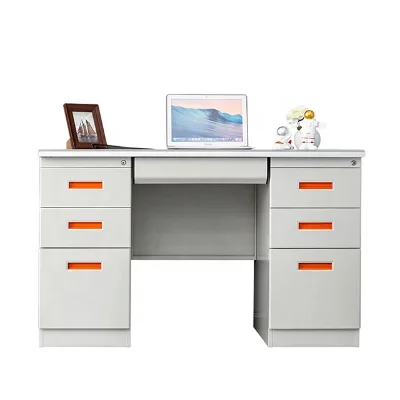


Modern White Office Desk for Executives White Executive Office Table for
$198.00 - $328.00
MOQ: 1 Pieces


Contemporary Executive Office Desk with Customized Modern Workstation Design
$32.00 - $83.36
MOQ: 20 Pieces


Modern Furniture Manager Table Workstation Luxury Wooden Executive Office Desk
$150.00 - $250.00
MOQ: 10 Pieces

Minimalist Executive Desk with Built - in Storage for Organized Workspace
$100.00 - $500.00
MOQ: 1 Pieces


Comprehensive Sourcing Guide
Strategic Sourcing Guide for Modern Executive Workstation Desks
Sourcing a Modern Executive Workstation Desk requires a rigorous approach that balances aesthetic requirements with structural integrity and supply chain reliability. The current market offers a diverse array of options, ranging from compact home office solutions to expansive executive suites designed for high-volume commercial environments. Buyers must navigate a landscape where material composition, dimensional standards, and manufacturer credentials are the primary determinants of value. This guide outlines the critical factors for evaluating modern executive workstations, focusing on the specific attributes observed in current product listings, including the use of Manmade Board, MDF, and Particle Board with Melamine surfaces.
Technical Specifications and Material Composition
The foundation of any executive workstation lies in its material composition and dimensional specifications. In the observed market data, a dominant trend is the utilization of Manmade Board as the primary leg material, often paired with MDF (Medium Density Fiberboard) and Particle Board for the main structure. The surface finish is frequently specified as Melamine Lamination, which provides a durable, scratch-resistant, and easy-to-clean surface suitable for high-traffic office environments.
When evaluating technical specifications, buyers should scrutinize the thickness of the table top, as this directly correlates with perceived quality and stability. Product listings indicate a variance in table top thickness, with specific models offering 48mm, 50mm, and 25mm options. A 50mm thickness is often associated with premium executive desks, providing a substantial feel and reduced vibration, whereas 25mm options may be more common in standard workstations or secondary furniture pieces. The standard dimensions for these units typically follow a modular approach, with lengths ranging from 1600mm to 2600mm and depths varying between 1650mm and 2100mm. Heights are generally standardized at 750mm to accommodate ergonomic seating, though adjustable height features are emerging as a specific attribute in certain product lines.
The structural design often incorporates a "Knock Down" (KD) packing format, which is essential for international logistics. This design allows the desk to be disassembled into flat panels, significantly reducing the volume of the shipment. For instance, specific configurations have been observed with packing details of 0.23cbm or 0.47cbm per unit, with weights ranging from 101kg to 212kg depending on the size and material density. Buyers must verify that the specific model they select aligns with their spatial requirements, as the standard product codes (such as LOGOS-102, BO-105, or ST-104) correspond to distinct dimensional profiles.
Compliance, Certification, and Quality Standards
In the B2B procurement of office furniture, compliance and certification are non-negotiable elements that validate the safety and quality of the product. The observed market data highlights that reputable manufacturers often hold ISO9001 certification, which indicates a commitment to quality management systems. Additionally, third-party verification through SGS (Société Générale de Surveillance) is a common requirement, ensuring that the materials and finished products meet international safety and performance standards.
When sourcing, buyers should verify that the supplier can provide valid certificates for the specific batch of goods. The presence of these certifications suggests that the manufacturer adheres to strict production controls regarding formaldehyde emissions, structural stability, and fire resistance. While the specific emission levels (such as E1 or E0 standards) are not explicitly detailed in the provided data, the presence of SGS and ISO9001 implies a baseline of compliance with environmental and safety regulations.
Furthermore, the warranty period serves as a critical indicator of the manufacturer's confidence in their product. A standard warranty of 3 years is observed in the market, which is a reasonable expectation for furniture utilizing MDF and Particle Board with Melamine surfaces. This warranty typically covers structural defects and finish peeling, provided the furniture is used in accordance with its intended function. Buyers should ensure that the warranty terms are clearly defined in the contract, covering both the table top and the leg assemblies, which are often constructed from different material grades.
Cost Drivers and Pricing Dynamics
The pricing of modern executive workstations is influenced by several key factors, including material thickness, surface finish quality, and the complexity of the design. The observed price range in the market spans from $32 to $1280 USD, reflecting a significant disparity in product positioning. The lower end of the spectrum likely corresponds to smaller, standard-sized units with thinner tops (25mm) and basic Melamine finishes, while the higher end represents large executive desks with substantial thickness (50mm), custom configurations, and premium surface treatments.
Material costs are a primary driver, with the type and grade of Manmade Board, MDF, and Particle Board affecting the final price. The use of high-density boards and thicker laminations increases the cost but also enhances durability and aesthetic appeal. Additionally, the customization options available, such as specific dimensions or color finishes, can impact the price. The Minimum Order Quantity (MOQ) also plays a role in cost efficiency, with observed ranges from 1 to 30 units. Bulk purchasing often allows buyers to negotiate better unit prices, although the specific discount structures vary by supplier.
Buyers should also consider the logistics costs associated with the packing details. The weight and volume of the shipment, such as 212kg in 6 cartons or 101kg in 4 cartons, will influence freight charges. Efficient packing designs that minimize volume while protecting the product are essential for controlling the total landed cost.
Typical Applications and Functional Versatility
Modern executive workstations are designed to serve a wide range of applications, from corporate offices to educational institutions and hospitality venues. The observed product attributes indicate that these desks are suitable for use in office buildings, hotels, schools, hospitals, and even residential home offices. The "Healthy Office Furniture" designation suggests that these units are designed to support ergonomic workflows and well-being, which is a growing priority in modern workplace design.
The functional versatility of these desks is enhanced by their modular nature. For example, the L-shaped configurations observed in the market (such as the ST-104 model with dimensions L1600/1800D1600H750mm) provide ample workspace for dual-monitor setups and collaborative tasks. The inclusion of adjustable height features in certain models further expands their utility, allowing them to adapt to different user preferences and ergonomic requirements.
In commercial settings, the durability of the Melamine surface is crucial for withstanding daily wear and tear. The "New" condition and "Modern" style attributes indicate that these desks are designed to fit contemporary interior design trends, making them suitable for branding-conscious companies and modern office environments. The ability to customize the design allows businesses to align their furniture with their corporate identity and spatial constraints.
Supplier Evaluation and Business Credentials
Selecting the right supplier is as critical as selecting the right product. The market data reveals that many suppliers identify as "Factory, Manufacturer," indicating that they have direct control over the production process. This vertical integration can lead to better quality control and more competitive pricing compared to trading companies. The presence of "Export Years" ranging from 15 to 20 years suggests a level of experience and stability in the global market.
Buyers should verify the supplier's export history, with a specific observation of 90% export business being a common metric. This high percentage indicates that the supplier is well-versed in international shipping regulations, documentation, and logistics. The location of the factory, such as Jilin, China, is another factor to consider, as it may influence lead times and shipping costs.
The business type and factory capabilities should be clearly understood. Suppliers offering "Manufacture, Wholesale, Retail" services may provide more flexibility in order sizes and customization. However, buyers must ensure that the supplier has the capacity to meet their specific volume requirements, as indicated by supply ability metrics like "1000 cartons per Month."
Quality Control and Long-Term Procurement Considerations
Quality control is paramount when sourcing office furniture, particularly for executive workstations that require high durability and aesthetic consistency. The use of "Knock Down Carton Packing" implies that the assembly process is designed for ease of transport, but it also requires careful attention to the quality of the hardware and the precision of the cut panels. Buyers should request samples or detailed photos of the assembly process to ensure that the joints are tight and the finish is uniform.
Long-term procurement considerations include the availability of spare parts and the consistency of the product line. The "OEM or ODM: Yes" attribute suggests that suppliers are willing to customize products, but buyers should ensure that the customization does not compromise the standard quality or lead to long lead times. The payment terms, such as T/T, L/C, and D/P, offer flexibility, but buyers should negotiate terms that protect their interests, such as partial payments upon shipment and final payment upon receipt.
Finally, the environmental impact of the materials used should be considered. The use of Manmade Board and MDF raises questions about formaldehyde emissions and sustainability. Buyers should verify that the materials meet relevant environmental standards and that the supplier has a commitment to sustainable manufacturing practices. By focusing on these long-term considerations, buyers can ensure that their investment in modern executive workstations provides value and reliability for years to come.
Comparative Analysis of Key Product Attributes
To facilitate a clearer understanding of the market offerings, the following table summarizes the key technical and commercial attributes observed in the current product landscape. This comparison highlights the variance in specifications that buyers must navigate when selecting a supplier.
| Attribute Category | Observation Range / Specific Value | Implication for Buyer |
|---|---|---|
| Leg Material | Manmade Board, Particle Board Melamine | Ensure structural stability; check for warping resistance. |
| Table Top Thickness | 25mm, 48mm, 50mm | Thicker tops (50mm) offer premium feel; 25mm is standard. |
| Wooden Type | MDF + PVC Lamination, MDF & Chipboard | Verify surface durability and scratch resistance. |
| Standard Dimensions | L1600-2600mm, W1920-2100mm, H750mm | Match dimensions to office space and ergonomic needs. |
| Packing Volume | 0.23cbm to 0.47cbm per unit | Calculate freight costs based on volume and weight. |
| Warranty Period | 3 Years | Standard coverage for structural and finish defects. |
| Certifications | SGS, ISO9001 | Verify validity for safety and quality compliance. |
| MOQ | 1 to 30 Units | Flexibility for small orders; bulk discounts for larger runs. |
| Export Experience | 15 to 20 Years | Indicates stability and familiarity with international logistics. |
| Payment Terms | T/T, L/C, D/P | Negotiate terms based on trust and order value. |
This comparative analysis underscores the importance of detailed specification checks. While the general attributes are consistent across the market, the specific values for thickness, dimensions, and packing details vary significantly. Buyers must align these specifications with their operational requirements to ensure a successful procurement outcome. By adhering to these guidelines and maintaining a focus on evidence-based evaluation, buyers can secure high-quality modern executive workstations that meet both functional and aesthetic demands.
FAQs
What materials are used for modern executive workstation desks?
These desks typically use Manmade Board, MDF, and Particle Board with Melamine surfaces. The table tops vary in thickness from 25mm to 50mm, while legs often consist of Particle Board Melamine for structural support.
Can buyers customize the dimensions of these office desks?
Yes, customization is available for specific dimensions and styles. Buyers can select from standard lengths like 1600mm to 2600mm and depths up to 2100mm, with options for L-shaped configurations to fit unique office layouts.
Which certifications do these manufacturers usually hold?
Reputable manufacturers often hold ISO9001 and SGS certifications. These credentials verify that the production processes meet international quality management standards and ensure the furniture complies with safety and performance requirements.
How long is the warranty period for these office desks?
The standard warranty period for these desks is typically 3 years. This coverage generally protects against structural defects and finish issues, provided the furniture is used according to its intended function in office or commercial settings.
What is the minimum order quantity for purchasing these desks?
The minimum order quantity ranges from 1 to 30 units depending on the supplier. This flexibility allows buyers to order single units for home offices or larger batches for commercial projects without excessive inventory constraints.
How are these desks packed for international shipping?
The desks are packed in Knock Down Carton Packing to facilitate easy transport. Specific configurations may weigh between 101kg and 212kg with volumes ranging from 0.23cbm to 0.47cbm per unit to optimize shipping costs.