Source Modern Luxury Pendant Light for Restaurant Lobby Hotel
Compare 30 listings of Modern Luxury Pendant Light options featuring aluminum, glass, and iron frames with LED sources. Buyers can evaluate CE and RoHS certified fixtures for restaurants, lobbies, and hotels with customizable designs and 2-year warranties.
Key considerations
Products List




Comprehensive Sourcing Guide
Strategic Sourcing Guide for Modern Luxury Pendant Lighting
Procuring modern luxury pendant lights requires a nuanced approach that balances aesthetic sophistication with rigorous technical verification. The market for these fixtures is characterized by a wide variance in materials, from aluminum and glass to iron frames with crystal accents, and a broad spectrum of voltage requirements. Buyers must navigate a complex landscape where "luxury" is defined not just by visual appeal but by compliance with international standards, durability, and the specific capabilities of the manufacturing facility. This guide outlines the critical factors for sourcing these high-value lighting solutions, ensuring that procurement decisions are grounded in verified data rather than marketing assertions.
Technical Specifications and Material Composition
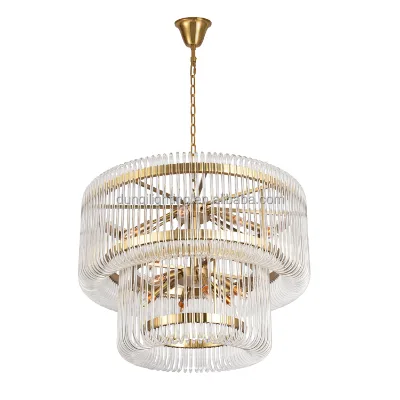
The foundation of any successful lighting procurement lies in understanding the specific technical attributes of the product. In the observed market data, modern luxury pendant lights exhibit significant diversity in their construction. A primary differentiator is the material used for the frame and the light source housing. Common materials identified include aluminum, which offers durability and a contemporary finish, and glass, often utilized for the pendant element itself to create a sense of transparency and elegance. Some high-end configurations feature iron frames with golden finishes, paired with customizable crystal elements to enhance the luxury aesthetic.
Electrical specifications are equally critical. The voltage range for these fixtures typically spans from 90V to 260V, indicating a broad compatibility with international power grids. However, buyers must verify if the specific unit supports customization for voltage requirements, as some suppliers offer tailored electrical solutions. The light source is consistently LED, providing energy efficiency and longevity. Power consumption varies, with specific models noted at 65W, but this is not a universal standard. The irradiated area for standard units is observed to be between 10 and 15 square meters, a crucial metric for determining the number of fixtures required for a specific room size.
Beam angles also play a pivotal role in the lighting design. A 60-degree beaming angle is a common specification, suitable for focused illumination in dining areas or hallways. For broader applications, buyers should inquire about adjustable beam angles or specific optical designs. The physical dimensions are another key consideration; standard models may adhere to specific size profiles such as D60*H45CM, while others offer fully customized dimensions to fit unique architectural constraints.
Compliance, Certification, and Safety Standards
In the B2B lighting sector, compliance is non-negotiable. The safety and marketability of modern luxury pendant lights depend heavily on obtaining recognized certifications. The observed data highlights several key certifications that buyers should prioritize. CE (Conformité Européenne) and RoHS (Restriction of Hazardous Substances) are frequently cited, indicating compliance with European safety and environmental standards. Additionally, CCC (China Compulsory Certification) is a mandatory requirement for products sold within the Chinese market, and its presence often signals a manufacturer's adherence to rigorous domestic safety protocols.
When evaluating a supplier, buyers must request valid certification documents rather than accepting verbal assurances. The presence of multiple certifications, such as both CE and RoHS, suggests a robust quality management system. It is important to note that certification status can vary between product models; a single supplier may offer different certification levels for different SKUs. Therefore, the procurement team must verify the specific certification status for the exact model number being ordered, such as model 6001 or model 8641, to ensure regulatory compliance in the destination market.
Cost Drivers and Pricing Dynamics
The pricing of modern luxury pendant lights is influenced by a complex interplay of factors, including material costs, customization levels, and order volume. The observed price range in the market spans from $18 to $800 USD, reflecting the vast difference between basic aluminum fixtures and elaborate crystal-and-iron designs. The lower end of the spectrum typically corresponds to standard models with minimal customization, while the upper end is driven by the inclusion of premium materials like crystal, complex finishing processes, and bespoke design services.
Order quantity is a significant determinant of unit cost. The Minimum Order Quantity (MOQ) varies widely, ranging from a single piece (1 PCS) to bulk orders of 30 pieces or more. Suppliers offering an MOQ of 1 PCS are ideal for sample testing or small boutique projects, whereas those requiring 30 PCS are better suited for large-scale commercial installations. Buyers should be aware that unit prices often decrease as order volume increases, but the initial investment for bulk orders can be substantial.
Customization is another major cost driver. While many suppliers offer OEM (Original Equipment Manufacturer) and ODM (Original Design Manufacturer) services, these services come at a premium. Customizing the crystal content, frame color, or voltage specifications requires additional engineering and production time, which is reflected in the final price. Furthermore, packaging requirements, such as the use of wooden boxes versus standard paper boxes, can impact the overall cost, especially when factoring in international shipping expenses.
Typical Applications and Design Integration
Modern luxury pendant lights are versatile fixtures designed to enhance specific interior environments. The data indicates that these lights are suitable for a variety of settings, including restaurants, lobbies, living rooms, villas, and hotels. The style of the fixtures, often described as contemporary or modern, aligns well with current interior design trends that favor clean lines and sophisticated materials.
In restaurant settings, the lighting must balance ambiance with functionality. The 10-15 square meter irradiated area suggests these fixtures are effective for illuminating individual dining tables or small zones. In hotel lobbies and villa living rooms, the aesthetic impact is paramount. Fixtures with golden frames and crystal accents can serve as focal points, adding a touch of opulence to the space. The color temperature options, ranging from 3000K to 5000K, allow buyers to tailor the lighting atmosphere; warmer tones (3000K) create a cozy, inviting environment, while cooler tones (5000K) provide a crisp, modern look suitable for commercial spaces.
When selecting fixtures for a specific application, buyers should consider the style compatibility. For instance, a silver aluminum pendant with a 60-degree beam angle might be ideal for a modern restaurant, whereas a gold iron frame with crystal customization would better suit a luxury hotel lobby. The ability to customize the design ensures that the lighting solution integrates seamlessly with the overall architectural and interior design scheme.
Supplier Evaluation and Manufacturing Capabilities
Evaluating a supplier for modern luxury pendant lights requires a deep dive into their manufacturing capabilities and operational transparency. The presence of a "Manufacturer: Yes" attribute indicates that the supplier is a direct producer, which often translates to better quality control and more competitive pricing compared to trading companies. However, buyers must verify the physical location of the factory. The data points to Guzhen Town, Zhongshan City, China, as a known manufacturing hub for lighting products. This region is renowned for its concentration of lighting factories, but buyers should still confirm the specific factory address to ensure legitimacy.
Production capacity and lead times are critical for project planning. Observed production times can be as short as 15 days, but this is contingent on the order size and the level of customization required. Suppliers offering OEM/ODM services should be able to provide a clear timeline for design approval, prototyping, and mass production. Additionally, the shipping terms offered by the supplier, such as DDP (Delivered Duty Paid), CIF (Cost, Insurance, and Freight), or FOB (Free on Board), will influence the logistics strategy and risk allocation.
Buyers should also assess the supplier's commitment to quality through their warranty offerings. A 2-year warranty period is a common standard in the industry, but the specific terms of the guarantee must be clearly defined. This includes coverage for defects in materials and workmanship, as well as the process for handling claims. A supplier that stands behind their product with a solid warranty is more likely to maintain high quality standards throughout the production process.
Quality Control and Long-Term Procurement Strategy
Ensuring the quality of modern luxury pendant lights involves a multi-stage quality control process. Buyers should implement rigorous inspection protocols before shipment. This includes verifying the physical dimensions, checking the finish quality of materials like aluminum and glass, and testing the electrical components for safety and performance. The inclusion of spare parts, such as a 3% crystal spare, is a positive indicator of a supplier's foresight and commitment to after-sales support.
Packaging is another critical aspect of quality control. The data shows that products are shipped in various configurations, including paper boxes, wooden boxes, and cartons with foam and wooden holders. For luxury items, the packaging must be robust enough to prevent damage during transit. The use of standard export packaging is common, but for high-value items, reinforced packaging with custom foam inserts may be necessary.
Long-term procurement strategies should focus on building a sustainable relationship with the supplier. This involves regular communication, clear documentation of specifications, and a mutual understanding of quality expectations. Buyers should also consider the scalability of the supplier's operations. As the demand for modern luxury lighting grows, the supplier must be able to maintain consistent quality and delivery times. Establishing a clear contract that outlines the warranty terms, shipping responsibilities, and quality assurance protocols will help mitigate risks and ensure a successful procurement experience.
Comparative Analysis of Product Attributes
To facilitate decision-making, the following table summarizes key attributes observed across different product models in the market. This comparison highlights the variability in specifications and helps buyers identify the most suitable options for their specific needs.
| Attribute | Model 6001 | Model 8641 | Model 8643 | Model OM82100 |
|---|---|---|---|---|
| Material | Aluminum | Glass | Iron (Golden Frame) | Mixed |
| Style | Contemporary | Modern | Modern | Custom |
| Voltage | 90V-260V | Customizable | Customizable | Standard |
| Certification | CE, RoHS | CE, CCC | RoHS | Standard |
| MOQ | 1 PCS | 30 PCS | Variable | 1 PCS |
| Packing | Paper/Wood Box | Carton+Foam+Wood | Standard Export | Standard Export |
| Application | Restaurant | Lobby | Hotel | General |
| Warranty | 2 Years | 2 Year Guarantee | 2 Year Guarantee | 2 Years |
This table illustrates that while there are commonalities in warranty periods and general styles, the specific material composition, voltage requirements, and MOQs vary significantly. Buyers must align these attributes with their project requirements to ensure a successful procurement outcome. By carefully analyzing these factors, buyers can navigate the complexities of the Modern Luxury Pendant Light market with confidence and precision.
FAQs
What certifications do modern luxury pendant lights typically have?
These fixtures commonly hold CE, RoHS, and CCC certifications to ensure safety and compliance. Buyers must verify the specific certification status for each model number, as some suppliers offer different levels of compliance across their product lines.
How long is the warranty period for these lighting products?
The standard warranty period for modern luxury pendant lights is two years. This guarantee typically covers defects in materials and workmanship, though specific terms should be confirmed with the manufacturer before purchase.
Which materials are used to construct these pendant lights?
Common materials include aluminum, glass, and iron frames, often finished in silver or gold. Some high-end models feature customizable crystal elements to enhance the luxury aesthetic and visual appeal of the fixture.
Can the voltage be customized for specific international requirements?
Yes, many suppliers offer voltage customization ranging from 90V to 260V or tailored to specific requests. Buyers should confirm if the specific model supports these adjustments to ensure compatibility with their local power grid.
What is the minimum order quantity for these fixtures?
Minimum order quantities vary significantly, ranging from a single piece to thirty pieces depending on the supplier. Lower MOQs are ideal for samples, while bulk orders often require higher quantities to meet production thresholds.
Where are these modern luxury pendant lights manufactured?
The primary manufacturing hub for these products is Guzhen Town in Zhongshan City, China. Buyers should verify the specific factory address to ensure legitimacy and assess the supplier's proximity to this known lighting industry center.