Source Modern Melamine Board Hotel Bed for Guest Rooms, Resorts, and Commercial Suites
Compare 30 listings for Modern Melamine Board Hotel Bed options from verified manufacturers. Buyers can evaluate specifications, pricing, and customization features for 3-star to 5-star hotel bedroom sets.
Key considerations
Products List


Modern Hotel Furniture 5 Star Bedroom Set Luxury Bed Guest Room Hotel Furniture
$730.00 - $900.00
MOQ: 2 Pieces

Modern 4 Stars Wood Bedroom Furniture Hotels Hotel Room Furniture Set Bed
$730.00 - $900.00
MOQ: 2 Pieces


Hotel Furniture Supplier Guest Rooms Other Hotel Bedroom Sets Furniture
$730.00 - $900.00
MOQ: 2 Pieces


Luxury 5 Star Standard Hotel Double Bed Wooden Melamine Single Bed Suite
$115.00 - $125.00
MOQ: 10 Pieces

Custom Hotel Double Bed Wooden Melamine Hotel Single Bed with Storage Box
$115.00 - $125.00
MOQ: 10 Pieces

Melamine Hotel Furniture Double Bed Wooden Hotel Single Bed with Nightstand
$105.00 - $120.00
MOQ: 10 Pieces

Custom Wooden Hotel Double Bed Melamine Hotel Furniture Single Bed with Headboard
$98.00 - $118.00
MOQ: 30 Pieces

Modern Hotel Furniture Single Bed High Gloss Finish Wood Melamine Double Bed
$115.00 - $125.00
MOQ: 10 Pieces


New Double Custom Size Home Hotel Simple Bedroom Bed Wall Bed Furniture Melamine Bed
$128.00 - $138.00
MOQ: 20 Pieces


Modern Design Bedroom Wooden Melamine Laminated Bed MDF Hotel Home Furniture
$579.00 - $623.00
MOQ: 10 Sets


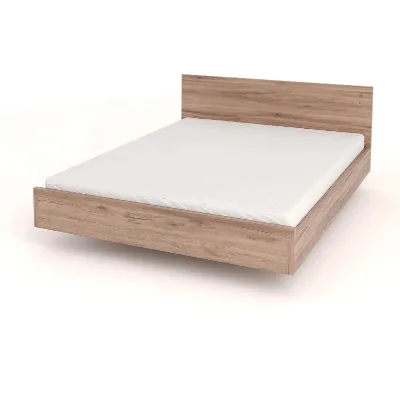

Comprehensive Sourcing Guide
Strategic Sourcing Guide for Modern Melamine Board Hotel Beds
Technical Specifications and Material Composition
When sourcing modern melamine board hotel beds, buyers must first establish a clear understanding of the core material composition and structural specifications. The product landscape for this category is diverse, ranging from units constructed primarily with solid wood frames to those utilizing engineered wood substrates. The supplied data indicates that modern hotel bedroom furniture often employs a hybrid approach, where the structural integrity relies on a base material of MDF (Medium Density Fiberboard) or plywood, while the visible surfaces are finished with melamine, veneer, or lacquer. This combination allows manufacturers to balance cost-efficiency with the aesthetic demands of the hospitality industry.
The finish is a critical technical differentiator. While melamine board is a primary focus, many high-end units listed in the market feature a surface finish that includes wood veneer or high-pressure laminate (HPL) to mimic the look of solid timber. The data notes that surface finishes are often optional, allowing buyers to specify requirements such as Dabao lacquer or other protective coatings that enhance durability against the high-traffic environment of a hotel. The structural design frequently adheres to a "Modern" style, characterized by clean lines and functional simplicity, which aligns with current interior design trends in 3 to 5-star establishments.
Size specifications are rarely one-size-fits-all. The market data reveals that dimensions are often customized to fit specific room layouts, though standard export sizes are also available. Buyers should verify the exact footprint of the bed frame, headboard, and any integrated storage units. The production model numbers, such as MGZ-705 or A200, serve as unique identifiers for specific design iterations, but the physical dimensions must be confirmed against the architectural plans of the hotel project. Furthermore, the condition of the product is consistently listed as "New," ensuring that procurement is focused on fresh inventory rather than refurbished or used units, which is standard for new hotel construction or renovation projects.
Compliance, Certification, and Regulatory Standards
Navigating the compliance landscape is essential for international procurement, particularly when importing furniture into regions with strict safety and environmental regulations. The supplied facts highlight a robust array of certifications that reputable manufacturers in this sector typically hold. Key certifications observed include ISO9001 for quality management systems, ISO14001 for environmental management, and SGS, which provides third-party verification of product quality and safety. Additionally, the presence of FSC (Forest Stewardship Council) certification is a strong indicator of sustainable sourcing practices, ensuring that the wood components, whether solid or engineered, come from responsibly managed forests.
For markets with specific chemical safety requirements, buyers should look for RoHS (Restriction of Hazardous Substances) and CCC (China Compulsory Certification) marks. These certifications confirm that the furniture meets standards regarding hazardous substances and electrical safety, although the latter is less relevant for non-electric bed frames. The data also references standards for hazardous substances testing, which is critical for ensuring that the melamine board, adhesives, and finishes do not emit harmful volatile organic compounds (VOCs) that could affect indoor air quality in guest rooms.
When evaluating a supplier, the verification of these certificates should be a primary step. Buyers must request valid, up-to-date copies of these documents and verify their authenticity with the issuing bodies. The presence of multiple certifications, such as a combination of ISO9001, SGS, and FSC, suggests a mature manufacturing operation with a commitment to global standards. It is important to note that while the data lists these certifications as available attributes, the specific certification status of any individual supplier must be confirmed directly, as not every listed product may satisfy every single standard simultaneously.
Cost Drivers and Pricing Structures
The pricing for modern melamine board hotel beds is influenced by a complex interplay of material costs, customization levels, and order volume. The observed market data indicates a significant price range, spanning from approximately 18 USD to 5000 USD per unit. This wide disparity is not arbitrary but reflects the variance in material quality, design complexity, and the level of customization required. Lower-priced units typically utilize standard MDF or plywood bases with basic melamine finishes and minimal customization. In contrast, higher-priced units often incorporate solid wood elements such as Oak, Beech, Teak, or Walnut, along with premium veneers like Ebony or Mahogany, and specialized surface treatments.
Customization is a primary cost driver. The data explicitly states that customization is available and that the standard can be "Customized." This implies that buyers requesting non-standard dimensions, specific fabric choices for upholstered headboards, or unique color combinations will incur additional costs. The "One Stop Solution" service offered by many manufacturers suggests that integrated pricing for the entire bedroom set (including nightstands, wardrobes, and dressers) may offer economies of scale compared to purchasing individual pieces.
Minimum Order Quantity (MOQ) also plays a pivotal role in the final unit cost. The observed MOQ range is between 1 and 30 units. For smaller boutique hotels or renovation projects with limited budgets, an MOQ of 1 allows for the procurement of a single sample or a small batch, though the unit price will likely be at the higher end of the spectrum. Conversely, large-scale hotel chains or developers ordering in bulk can leverage the lower end of the MOQ range to negotiate more favorable pricing. Buyers should be aware that the "Factory Directly" business model often cited in the market helps eliminate intermediary markups, but the final price remains dependent on the specific material selection and production complexity.
Typical Applications and Design Integration
Modern melamine board hotel beds are predominantly designed for the commercial furniture sector, specifically targeting 3 to 5-star hotels, guest rooms, and similar hospitality environments. The "General Use" classification confirms their suitability for high-traffic commercial applications where durability and aesthetic consistency are paramount. The design language is consistently described as "Modern," which aligns with contemporary interior design trends that favor functionality and sleek profiles over ornate detailing.
The application extends beyond the bed frame itself. These units are often part of a comprehensive "Hotel Bedroom Set" or "Guest Room Furniture" package. The data mentions "3 Star Hotel Bed Furniture" and "3-5 Star Hotel High Quality Freedom Modern Hotel B," indicating that the same design principles apply across different star ratings, with the primary differentiator being the quality of materials and finish. For instance, a 3-star property might opt for a standard melamine finish, while a 5-star property might select a high-density foam mattress with fire-proof properties and a solid wood or premium veneer headboard.
The "Applied" attribute specifies "Hotel Bedroom," but the versatility of these units allows them to be adapted for other commercial settings such as serviced apartments, hostels, or corporate housing. The "Adult" suitability note confirms that the dimensions and load-bearing capacities are designed for standard adult occupancy. When integrating these beds into a room design, buyers should consider the "Service" aspect, where suppliers offering a "One Stop Solution" can ensure that the bed coordinates seamlessly with other furniture pieces in terms of style, finish, and hardware, creating a cohesive guest experience.
Supplier Evaluation and Manufacturing Capabilities
Selecting the right supplier requires a thorough evaluation of their manufacturing capabilities, experience, and business model. The data indicates that the majority of suppliers in this category operate as "Factory" or "Manufacture" entities, often located in key manufacturing hubs such as Foshan, Guangdong, and other parts of China. These regions are renowned for their expertise in wood processing and furniture production. The "Business Type" attribute frequently lists "Factory Directly," which suggests that buyers can engage directly with the production facility, potentially reducing communication barriers and ensuring better quality control.
Experience is a critical metric for supplier evaluation. The supplied facts mention "30 Years Production Experience," which serves as a strong indicator of stability and technical proficiency. Suppliers with such a long track record are likely to have refined their production processes, supply chain management, and quality assurance protocols. Additionally, the acceptance of "OEM & ODM" (Original Equipment Manufacturer and Original Design Manufacturer) services demonstrates the supplier's flexibility in adapting to specific client needs. This is particularly important for hotel chains that require branding consistency or unique design features that differ from standard catalog items.
Buyers should also assess the supplier's logistical capabilities, including packaging and delivery. The data notes various packing methods, such as "Carton/Wooden Frame/Wooden Box" and "Standard Export Carton with Required Shipping Mark." Proper packaging is essential to prevent damage during transit, especially for international shipments. The "Delivery" lead time is observed to be between 35 and 45 days, which buyers must factor into their project timelines. A supplier's ability to meet this lead time consistently is a key performance indicator of their operational efficiency.
Quality Control and Long-Term Procurement Considerations
Ensuring the longevity and performance of hotel furniture requires a rigorous approach to quality control and long-term planning. The warranty period is a significant factor in this assessment, with data showing options for both 1-year and 3-year warranties. A 3-year warranty is generally more indicative of a manufacturer's confidence in the durability of their products, particularly for commercial use where wear and tear are inevitable. Buyers should scrutinize the terms of the warranty to understand what is covered, such as structural integrity, finish peeling, or hardware failure.
Quality control should extend beyond the final product inspection to include the raw materials. The "Base Material" options of MDF/Plywood and "Solid Wood" choices like Oak or Teak must be verified for density and grade. The data mentions "30-50 Density" for foam and the availability of "Fire-Proof Foam," which are critical safety features for hotel compliance. Buyers should request test reports or certificates confirming that the materials meet fire safety standards and that the finishes are resistant to scratches, stains, and moisture.
For long-term procurement, buyers should consider the scalability of the supplier. The "Customized" nature of the product means that future expansions or renovations may require identical or compatible units. Maintaining a relationship with a supplier who can replicate the exact finish, material, and design is crucial for brand consistency. The "One Stop Solution" service can be particularly valuable here, as it ensures that any additional furniture needed for the same project can be sourced with the same quality standards and aesthetic alignment. Finally, buyers should establish clear communication channels for after-sales support to address any issues that may arise post-installation, ensuring that the investment in modern melamine board hotel beds delivers value over its intended lifespan.
FAQs
What certifications do Modern Melamine Board Hotel Bed manufacturers hold?
Manufacturers typically hold ISO9001, SGS, FSC, and RoHS certifications. Some also provide ISO14001, CCC, and BV certificates to verify quality and environmental safety standards for commercial furniture projects.
Can buyers request customized sizes and finishes for these beds?
Yes, customization is available for sizes, surface finishes, and materials. Buyers can specify options like Dabao lacquer, wood veneer, or melamine to match specific hotel room designs and architectural requirements.
What is the typical lead time for delivery of these hotel beds?
The standard delivery lead time ranges from 35 to 45 days. This timeframe accounts for production, quality control, and packaging in wooden frames or export cartons before shipping from China.
Which materials are commonly used for the base and surface of these beds?
Base materials often include MDF, plywood, or solid wood like oak and teak. Surfaces are finished with melamine, wood veneer, or lacquer to ensure durability and aesthetic appeal for hotel environments.
What warranty periods are offered for modern melamine board hotel beds?
Warranty periods vary, with options available for 1 year or 3 years. A longer warranty often indicates higher confidence in the structural integrity and finish durability suitable for commercial hotel use.
How does the minimum order quantity affect the pricing of these beds?
The minimum order quantity ranges from 1 to 30 units. Smaller orders may have higher unit costs, while bulk orders allow buyers to access lower prices and factory-direct pricing structures.
Are these beds suitable for 3 to 5-star hotel applications?
Yes, they are designed specifically for 3 to 5-star hotel bedrooms and commercial furniture use. The modern style and durable materials ensure they meet the aesthetic and functional demands of hospitality settings.