Source Modern Metal Furniture Feet for Sofa, Table, and Chair
Explore 30 listings for Modern Metal Furniture Feet suitable for sofas, tables, and chairs. Buyers can compare specifications like thickness, finish, and dimensions to find the right iron legs for their projects.
Key considerations
Products List


Furniture Cabinet Metal Legs Modern Leg Feet, Kitchen Furniture Sofa Legs
$1.40 - $2.50
MOQ: 500 Pieces


Table Cabinet Foot Metal Gold Couch Feet Slant Living Room Furniture Legs
$1.50 - $2.50
MOQ: 50 Pieces
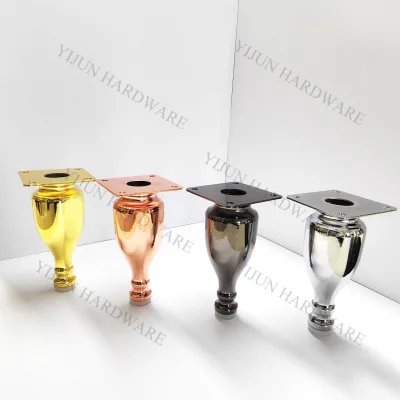


Iron Powder Coated Bronze Furniture Feet Decorative Metal Table Leg Table Base
$15.00 - $20.20
MOQ: 500 Pieces
Comprehensive Sourcing Guide
Strategic Sourcing Guide for Modern Metal Furniture Feet
The global market for Modern Metal Furniture Feet has expanded significantly as manufacturers seek durable, aesthetically pleasing, and cost-effective solutions for residential and commercial applications. For procurement professionals, sourcing these components requires a nuanced understanding of material science, manufacturing processes, and supply chain logistics. This guide synthesizes observed market data and technical attributes to provide a structured approach to acquiring high-quality metal furniture legs, ensuring that buyers can navigate the complexities of B2B transactions with confidence and precision.
Technical Specifications and Material Composition
The foundation of any successful procurement strategy for metal furniture feet lies in a rigorous definition of technical specifications. Based on observed product data, the primary material utilized in this sector is iron, often categorized broadly as metal. The structural integrity of these components is heavily dependent on the thickness of the material used. Buyers should verify that the wall thickness aligns with the intended load-bearing requirements of the furniture piece. Observed listings indicate a standard thickness of 1.0mm, with specific models featuring dimensions such as 1.2mm, which suggests a range of durability options available in the market.
Dimensional consistency is another critical specification. The market offers a variety of standard heights, including 80mm, 100mm, 120mm, 150mm, and 200mm. Specific model numbers, such as YJ-917A, YJ-837B, and YJ-962, correspond to distinct dimensional profiles. For instance, certain models feature a plate size of 60601.0mm or 65651.0mm, while others may have a diameter of 25mm or square cross-sections like D3838H60mm. When evaluating potential suppliers, procurement teams must ensure that the listed "prod_standard" matches the exact design requirements of the furniture being manufactured. Variations in height, such as the H80 or 150mm standards, must be clearly communicated to avoid compatibility issues during assembly.
Surface Finishes and Aesthetic Customization
The visual appeal of modern furniture is often dictated by the finish applied to the metal feet. The observed data highlights a diverse range of surface treatments, including Chrome, Wiredrawing, and Gold finishes. Chrome and wiredrawing are prevalent for their sleek, contemporary look, while gold finishes cater to more luxurious design aesthetics. The customization attribute is a key differentiator in this market; many suppliers offer "Customized" options, allowing buyers to tailor the finish to specific brand identities or design trends.
Buyers should verify the specific application process used to achieve these finishes. For example, a "Chrome" finish may involve electroplating, while "Wiredrawing" suggests a mechanical texturing process. The "Finish" attribute is often listed alongside the model number, indicating that specific models are pre-configured for certain aesthetics. However, the availability of customization implies that buyers are not strictly limited to the observed standard finishes. When requesting samples, it is essential to inspect the finish for uniformity, adhesion, and resistance to scratching, as these factors directly influence the perceived quality of the final furniture product.
Cost Drivers and Pricing Dynamics
Understanding the cost structure of metal furniture feet is essential for budgeting and negotiation. The observed price range in the market spans from 0.2 to 20.2 USD, a wide variance that reflects differences in material weight, finishing complexity, and order volume. The price is not merely a function of the raw material cost but is heavily influenced by the Minimum Order Quantity (MOQ). The observed MOQ range varies significantly, from as low as 50 units to as high as 5000 units.
Several factors drive these costs. First, the weight of the product, such as the observed 131.9g per unit or a single gross weight of 13.69 Kg for a package, directly impacts shipping costs, which are a significant component of the total landed cost. Second, the complexity of the finish plays a role; gold plating or specialized wiredrawing processes typically command a premium over standard chrome or raw metal finishes. Third, the production time, which ranges from 14-20 days depending on quantity, or fixed lead times of 30 days, affects the urgency and potential expedited shipping fees. Buyers must balance the desire for lower unit costs against the requirement for higher MOQs, ensuring that the total inventory investment aligns with their sales forecasts.
Typical Applications and Usage Scenarios
Modern Metal Furniture Feet are versatile components designed for a wide array of applications. The observed usage data indicates that these feet are primarily intended for sofas, tables, cabinets, beds, and chairs. The specific model selection often depends on the furniture type; for example, the YJ-837B is explicitly noted for sofa and table legs, while other models may be optimized for cabinet or bed applications. The "Usage" attribute often lists multiple categories, suggesting that a single design might be adaptable across different furniture lines.
When selecting feet for specific applications, buyers must consider the load-bearing capacity and stability requirements. A sofa leg, for instance, must support significant weight and withstand lateral forces, whereas a cabinet leg might prioritize aesthetic slenderness over extreme load capacity. The "Feature" attribute, such as "Strong," indicates that certain models are engineered for durability in high-traffic environments. Procurement teams should match the technical specifications, such as plate size and thickness, to the specific demands of the furniture category. For instance, a bed frame may require a 200mm height and a robust 1.2mm thickness, while a side table might suffice with a 100mm height and 1.0mm thickness.
Supplier Evaluation and Production Capabilities
Evaluating suppliers requires a deep dive into their production capabilities and logistical readiness. The observed data points to Guangdong, China (Mainland) as a primary production origin, a region known for its extensive manufacturing ecosystem. When assessing potential partners, buyers should verify the supplier's ability to handle customization requests, as the "Customization" and "Customized" attributes suggest flexibility in design.
Key evaluation criteria include the supplier's production time and delivery reliability. While some listings indicate a standard production time of 14-20 days, others specify a 30-day delivery window. Buyers must clarify whether these timelines are consistent or if they fluctuate based on order volume. Additionally, the payment terms observed, such as "Tt 30% Deposit Before Production, 70% Paid Before," are standard in the industry but require careful financial planning. The "Service" attribute, which includes "Sample Offered," is a critical indicator of a supplier's willingness to engage in the pre-production phase. Buyers should leverage this service to validate product quality before committing to large orders.
Quality Control and Packaging Standards
Maintaining product quality throughout the supply chain is paramount. The observed data highlights specific packaging standards, such as 60PCS/CTN, 200PCS/CTN, and 100 PCS/CTN. These variations in packing density can affect shipping efficiency and the risk of damage during transit. Buyers should ensure that the packaging method protects the finish and prevents deformation of the metal legs. The "Single Package Size" of 79.5X31X27 Cm and the associated gross weight are critical for calculating freight costs and optimizing container utilization.
Quality control should extend beyond the final product to the manufacturing process. Buyers must verify that the "Quality" attribute, often described as "High," is backed by consistent manufacturing practices. This includes checking for defects in the plating, ensuring the dimensions match the "prod_standard," and confirming that the material is indeed "Iron" as specified. Regular inspections, particularly for the first production run, are recommended to ensure that the supplier maintains the "High" quality standards observed in the market data.
Long-Term Procurement Considerations
Sourcing metal furniture feet is not a one-time transaction but a long-term partnership that requires strategic planning. The ability to customize products, as indicated by the "Customization" attribute, allows buyers to adapt to changing market trends without switching suppliers. However, this flexibility must be balanced with the need for consistent quality and reliable lead times. Buyers should establish clear communication channels regarding production schedules and quality benchmarks to mitigate risks.
Furthermore, the "Production Time" of 14-20 days or 30 days suggests that inventory management is crucial. Buyers should maintain a buffer stock to account for potential delays, especially if the supplier is located in a region with variable logistics conditions. The "Payment Terms" structure, requiring a deposit and final payment before shipment, necessitates a strong trust relationship and clear contractual agreements. By focusing on suppliers who offer sample services and demonstrate a commitment to high-quality standards, buyers can build a resilient supply chain capable of supporting their furniture manufacturing needs over the long term.
Comparative Analysis of Key Product Attributes
To facilitate decision-making, the following table summarizes the key attributes observed in the market for Modern Metal Furniture Feet. This comparison highlights the diversity in specifications, finishes, and packaging, aiding buyers in selecting the most appropriate components for their specific projects.
| Attribute Category | Observed Values | Relevance to Procurement |
|---|---|---|
| Material | Iron, Metal | Determines weight, durability, and magnetic properties. |
| Thickness | 1.0mm, 1.2mm | Critical for load-bearing capacity and structural integrity. |
| Height Standards | 80mm, 100mm, 120mm, 150mm, 200mm | Must match furniture design requirements. |
| Finish Types | Chrome, Wiredrawing, Gold | Impacts aesthetic appeal and corrosion resistance. |
| MOQ Range | 50 - 5000 PCS | Influences inventory costs and cash flow planning. |
| Production Time | 14-20 days, 30 days | Affects lead time and supply chain responsiveness. |
| Packing Density | 40, 60, 100, 200 PCS/CTN | Impacts shipping volume and freight costs. |
| Origin | Guangdong, China (Mainland) | Indicates manufacturing hub and potential logistics routes. |
| Customization | Available, Customized | Allows for brand-specific design adaptations. |
| Usage | Sofa, Table, Cabinet, Bed, Chair | Defines the target application and load requirements. |
This structured approach ensures that buyers can navigate the complexities of sourcing Modern Metal Furniture Feet with a clear understanding of the technical, financial, and logistical factors involved. By adhering to these guidelines, procurement professionals can secure high-quality components that meet the rigorous demands of the modern furniture industry.
FAQs
What materials are used for Modern Metal Furniture Feet?
The primary material used is iron, categorized broadly as metal. Specific models feature thicknesses of 1.0mm or 1.2mm to ensure structural integrity for various furniture types like sofas and cabinets.
Which surface finishes are available for these metal legs?
Available finishes include Chrome, Wiredrawing, and Gold. Buyers can often request customized finishes to match specific design trends, though standard options like Chrome are common for contemporary aesthetics.
Can I get samples before placing a large order?
Yes, sample services are offered by suppliers in this sector. This allows buyers to verify product quality, finish uniformity, and dimensions before committing to the minimum order quantity requirements.
What is the typical production time for custom orders?
Production time typically ranges from 14 to 20 days depending on the order quantity. Some suppliers may specify a fixed delivery window of 30 days for larger or more complex customization requests.
How does the minimum order quantity affect pricing?
The minimum order quantity ranges from 50 to 5000 pieces, directly influencing the unit price. Higher volumes often reduce the cost per unit, while the price range spans from 0.2 to 20.2 USD based on specifications.
Which furniture types can these metal feet support?
These feet are designed for sofas, tables, cabinets, beds, and chairs. Specific models like YJ-837B are noted for sofa and table applications, while others support heavy-duty uses like beds.
Where are these metal furniture feet manufactured?
The products originate from Guangdong, China (Mainland). This region is a known manufacturing hub for metal components, offering access to established supply chains and diverse production capabilities.