Source Die Cutting Creasing Matrix for Cardboard, Corrugated, and Paper Box Making
Find and compare 30 Die Cutting Creasing Matrix options for cardboard, corrugated, and paper box applications. Evaluate specifications such as model numbers, channel dimensions, and material types to select the right tool for your production needs.
Key considerations
Products List


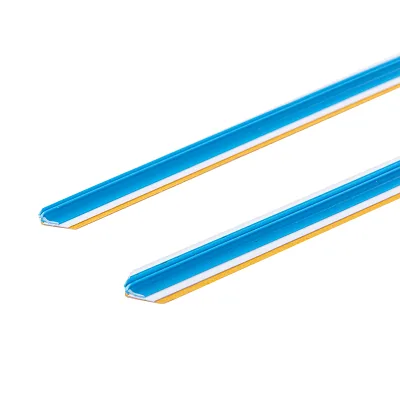
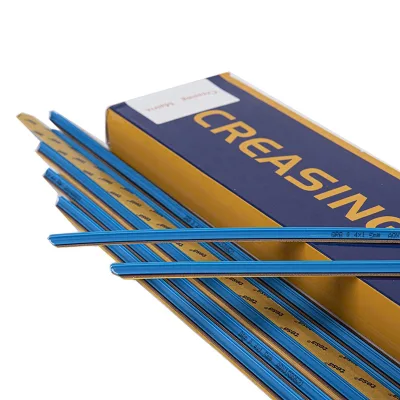


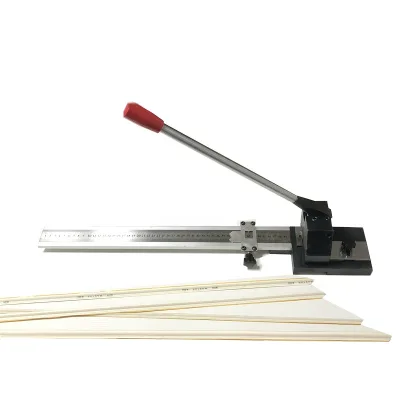
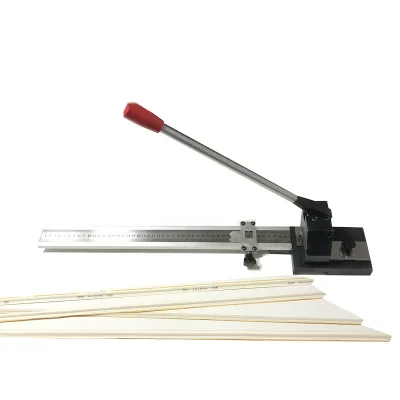
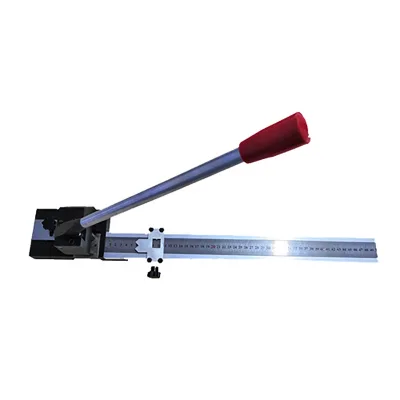
Die Cutting Machine Cutter For Creasing Matrix
$210.00 - $290.00
MOQ: 5 Pieces
Shanghai Denghong Mechanical & Electrical Manufacturing Co., Ltd.



Comprehensive Sourcing Guide
Die Cutting Creasing Matrix Sourcing Guide
Selecting the right Die Cutting Creasing Matrix is a critical decision for packaging manufacturers aiming to balance precision, speed, and material efficiency. These matrices serve as the foundational tooling for creating accurate folds and cuts in cardboard and corrugated paper boxes, directly influencing the structural integrity and aesthetic finish of the final package. Procurement teams must navigate a market characterized by diverse material compositions, varying dimensional specifications, and distinct performance capabilities. Understanding the nuances between resin, PVC, fiber, and paper-based matrices allows buyers to align their tooling choices with specific production line requirements, ensuring minimal downtime and optimal output quality.
The sourcing landscape for these components is defined by a wide range of available models, from standard single-item packages to bulk industrial supplies. Buyers often encounter listings that specify dimensions such as 0.30.8-1.06.0 or specific model numbers like GRB0.5*1.5mm, indicating the need for precise verification of physical attributes before purchase. Furthermore, the availability of customization options, including branded logos and tailored specifications, adds a layer of complexity to the procurement process. Successful sourcing requires a disciplined approach to evaluating supplier claims against observable product facts, ensuring that the selected matrix meets the rigorous demands of high-speed punching operations while adhering to budgetary and logistical constraints.
Product Scope and Observed Listing Signals
The current market for die cutting creasing matrices presents a heterogeneous mix of product types, primarily categorized by their base material and intended application. Listings frequently highlight matrices constructed from PVC, resin, fiber, or paper, each offering distinct advantages in terms of durability and creasing quality. For instance, resin creasing matrices are often marketed for their high-speed capabilities, with some listings suggesting punching times of approximately 300,000 sheets per hour, while other PVC-based options may offer lower throughput but greater flexibility for specific box styles. Buyers should observe that applications are consistently described as suitable for cardboard and corrugated paper box cutting and die cutting, confirming the primary industrial use case without overextending to unrelated materials.
Observed listing signals reveal significant variation in packaging and unit specifications, which can impact logistics and inventory management. Some products are sold as single items with specific package dimensions, such as 73x10x6 cm or 40x40x30 cm, while others are bundled in boxes containing 50 pieces, with cartons holding up to 10 boxes. Weight variations are also notable, with single gross weights ranging from 1.6 kg to 13.0 kg depending on the matrix type and packaging density. These physical attributes are critical for calculating freight costs and warehouse storage requirements, making it essential for buyers to cross-reference the listed single package size and gross weight with their internal logistics planning to avoid unexpected shipping surcharges or handling issues.
Technical Specifications to Verify
Dimensional accuracy and channel geometry are paramount when evaluating die cutting creasing matrices, as these factors directly determine the quality of the crease and the fit within the die-cutting machine. Buyers must verify specific model numbers and dimensions, such as 0.30.8-1.06.0 or Js0310, to ensure compatibility with existing tooling setups. The channel height and width are particularly critical technical parameters; for example, some matrices feature a channel height of 1.2mm and a channel width of 3.5mm, which must match the thickness of the cardboard being processed. Misalignment in these dimensions can lead to poor crease definition, increased material waste, or even damage to the matrix itself during high-speed operation, making precise verification a non-negotiable step in the procurement process.
Material composition and auxiliary components also play a significant role in the performance and longevity of the matrix. Listings often specify the use of imported finger tape and glue, which are essential for securing the matrix to the die board and ensuring consistent alignment during punching. The base color, typically transparent for resin matrices or white for others, can also serve as an indicator of material purity and quality. Additionally, the type of creasing matrix, whether classified as a standard resin, PVC, or fiber variant, dictates its resistance to wear and tear. Buyers should request detailed specifications regarding the adhesive quality and material density to assess whether the product can withstand the intended punching time, which may range from 10,000 to 30,000 sheets per hour for certain models, or significantly higher for specialized resin options.
Compliance and Safety Documentation
While specific certification statuses may not always be explicitly detailed in every listing, buyers must prioritize suppliers who can provide relevant compliance documentation for industrial tooling. In regions with strict manufacturing regulations, certifications such as CE may be required to ensure that the materials used in the matrix do not pose health risks or environmental hazards during production. Procurement teams should verify that the base materials, including PVC and adhesives, meet international safety standards for industrial use, particularly regarding chemical composition and flammability. Requesting material safety data sheets (MSDS) for the finger tape and glue components is advisable to ensure workplace safety and regulatory compliance, especially when handling large volumes of these consumable tooling items.
Documentation should also extend to quality assurance records and testing protocols that validate the matrix's performance claims. Buyers should inquire about the testing methods used to determine punching time and durability, ensuring that claims of 300,000 sheets per hour or similar metrics are backed by empirical data rather than marketing assertions. Clear labeling and packaging instructions, such as the specified packing of 50 bars per carton, should be consistent with industry standards to prevent damage during transit. Ensuring that the supplier provides comprehensive documentation not only mitigates regulatory risks but also facilitates smoother integration into the buyer’s quality management system, allowing for easier traceability and accountability in case of product failures or performance discrepancies.
Cost Drivers and Commercial Terms
The pricing structure for die cutting creasing matrices is influenced by several key factors, including material type, dimensional specifications, and order volume. Observed price ranges in the market can vary significantly, from as low as $0.23 to $1000, reflecting the diversity of products from simple single-item packages to complex, high-performance resin matrices. Minimum order quantities (MOQ) also play a crucial role in cost efficiency, with some suppliers offering MOQs as low as one box, while others may require larger bulk purchases to achieve favorable unit pricing. Buyers should analyze the total cost of ownership, considering not just the unit price but also the potential savings from reduced downtime and material waste associated with higher-quality, more durable matrices.
Commercial terms and payment flexibility are essential considerations for maintaining healthy supplier relationships and managing cash flow. Many suppliers offer a variety of payment methods, including Trade Assurance, L/C, D/A, D/P, T/T, Western Union, and MoneyGram, providing buyers with options to suit their financial strategies. Delivery times are another critical commercial factor, with some listings indicating a standard delivery time of 7 days or 7 working days, which can impact production scheduling. Buyers should negotiate clear terms regarding sample availability, as free samples can be invaluable for testing matrix performance before committing to large orders. Additionally, understanding the return policy and warranty terms for defective products can provide an added layer of protection against financial loss due to manufacturing defects.
Supplier Qualification and Quality Control
Evaluating supplier qualification requires a thorough assessment of their manufacturing capabilities, origin, and reputation in the industry. Many suppliers are located in key manufacturing hubs such as Jinan and Beijing in China, regions known for their expertise in packaging machinery and tooling. Buyers should verify the supplier’s brand name, such as Graphic or Shengtong, and assess their track record in producing consistent, high-quality matrices. Customization capabilities, including the ability to produce customized logos and specific product models, indicate a supplier’s flexibility and commitment to meeting diverse client needs. However, buyers must ensure that customization does not compromise the core quality and specifications of the matrix, such as channel dimensions and material integrity.
Quality control processes should be rigorously scrutinized to ensure that every batch of matrices meets the required standards. Buyers should inquire about the supplier’s internal quality assurance protocols, including inspection procedures for dimensional accuracy, material consistency, and adhesive strength. The availability of free samples is a positive indicator, allowing buyers to physically inspect the product for defects, such as uneven channel heights or poor glue application. Additionally, suppliers should provide clear specifications for single package sizes and gross weights, ensuring that the products are packaged securely to prevent damage during shipping. Establishing a strong quality control framework with the supplier, including regular audits and performance reviews, can help maintain consistent product quality and reduce the risk of supply chain disruptions.
Long-Term Procurement Checks
Establishing long-term procurement relationships with Die Cutting Creasing Matrix suppliers requires ongoing monitoring of product performance and supplier reliability. Buyers should track key performance indicators such as the actual punching time achieved in production versus the claimed specifications, as well as the frequency of matrix replacements due to wear and tear. Consistent performance over time is a strong indicator of product quality and supplier credibility. Additionally, buyers should monitor the supplier’s ability to meet delivery times consistently, as delays can disrupt production schedules and impact overall operational efficiency. Regular communication with the supplier regarding any changes in product specifications or material compositions is essential to ensure continued compatibility with existing production lines.
Strategic sourcing decisions should also consider the potential for future customization and scalability. As packaging requirements evolve, buyers may need matrices with different dimensions, materials, or performance characteristics. Suppliers who offer robust customization options and can scale production to meet increasing demand are valuable partners for long-term procurement. Buyers should also stay informed about industry trends and technological advancements in die cutting matrix technology, such as new materials or improved adhesive formulations, to ensure they remain competitive. By maintaining a proactive approach to supplier management and product evaluation, buyers can secure a reliable supply of high-quality die cutting creasing matrices that support their operational goals and drive continuous improvement in their packaging production processes.
FAQs
What customization options are available for Die Cutting Creasing Matrix?
Customization is available for this product to meet specific buyer needs. The brand name can be customized, and various styles are available to suit different production requirements for cardboard and corrugated paper box cutting.
How fast can the Die Cutting Creasing Matrix process sheets per hour?
Punching time varies by model, ranging from 10,000 to 30,000 sheets per hour for standard units. Some resin creasing matrix models can achieve a higher capacity of about 300,000 sheets per hour depending on the specific configuration.
What is the minimum order quantity for purchasing this matrix?
The minimum order quantity is one box for this product. This low MOQ allows buyers to test the product quality before committing to larger bulk orders for their die cutting operations.
Can I get free samples of the Die Cutting Creasing Matrix?
Free samples are available for this product to help buyers evaluate quality. Buyers can request these samples to verify the imported finger tape and glue performance before placing a formal trade assurance order.
What are the delivery times for orders of this matrix?
The standard delivery time is seven working days for most orders. This quick turnaround ensures that production lines can be set up or maintained with minimal interruption for cardboard box manufacturing needs.
Which base materials are used in the Die Cutting Creasing Matrix?
The product utilizes PVC as a base material, with options including fiber and paper. These materials are selected to ensure durability and precision when cutting and creasing cardboard and corrugated paper boxes.
How is the Die Cutting Creasing Matrix packaged for shipment?
Items are packed in boxes containing 50 pieces, with 10 boxes per carton. The single package size varies, with some units measuring 73 by 10 by 6 cm or 73 by 23 by 22 cm depending on the model.