Source Office Chair Armrest for Office, Gaming, and Wheelchair Use
Find 30 Office Chair Armrest options from Dongguan suppliers. Compare PU and nylon materials, adjustable features, and custom sizes for office, mesh, and gaming chairs. Request samples and bulk quotes for your furniture needs; compare the available evidence and request quotations based on your requirements.
Key considerations
Products List


PU Armrest for Office Chair Computer Chair Foam Parts Customized Armrest
$1.65 - $8.65
MOQ: 200 Pieces


Ergonomic Office Chair Armrest Accessories for Maximum Comfort and Support
$5.40 - $5.70
MOQ: 10 Pieces


High-Quality Adjustable Armrest Bracket for Comfortable Office Chair Support
$1.40 - $1.70
MOQ: 10 Pieces

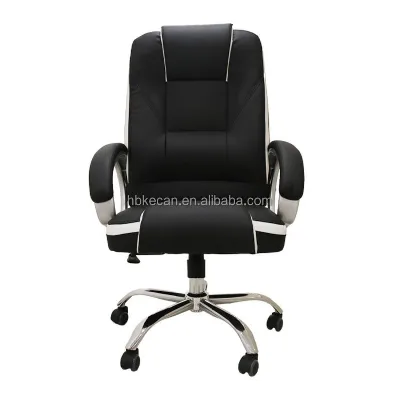


Comprehensive Sourcing Guide
Office Chair Armrest Sourcing Guide
Buyers must first distinguish between fixed and adjustable configurations, as the supplied data reveals a split in product attributes where some units are explicitly fixed while others offer adjustable functionality. This distinction dictates the mechanical design and compatibility with specific chair frames, requiring procurement teams to verify the exact motion mechanism before placing orders. The observed product range includes models labeled as "1D triangle" or "2D triangle," suggesting varying degrees of movement that must be matched to the intended ergonomic requirements of the end-user.
The material composition is another critical initial filter, with the market showing a prevalence of PU foam pads paired with structural materials like Nylon or PP+GF. Sourcing decisions should prioritize the specific combination of armrest material and pad composition to ensure durability and comfort, as the listed options range from standard nylon armrests to customized PU foam solutions. Understanding these material variances helps buyers align their selection with the specific durability and aesthetic needs of their target office or gaming chair applications.
Product Scope and Observed Listing Signals
The observed product listings indicate a diverse scope ranging from simple interior kits to specialized components for mesh chairs, wheelchairs, and gaming chairs. Buyers should note that while the core keyword focuses on office chairs, the actual usage data extends to wheelchairs and gaming environments, necessitating a broader verification of load-bearing capacity and usage context. The product names often highlight "Customized Office Chair Armrest" or "Adjustable PU Material," signaling that the market is heavily oriented toward bespoke solutions rather than generic off-the-shelf inventory.
Listing signals also reveal significant variation in packaging and origin details, with some entries specifying "Carton Packing" while others list "Cartons" or specific package dimensions like 503826. These inconsistencies in packaging descriptions suggest that buyers must explicitly confirm the final packaging format to avoid logistical surprises upon delivery. Furthermore, the origin data points to Dongguan, Guangdong, and general China locations, indicating a concentrated manufacturing hub that buyers should leverage for efficient supply chain coordination.
Technical Specifications to Verify
Verification of size and standard specifications is paramount, as the data shows a mix of "Customized" sizes and specific model numbers like YXA01 or 998. Buyers must confirm whether the armrest dimensions are truly customizable or if they are limited to the specific model numbers listed, as this impacts the ability to retrofit existing furniture. The presence of "Customized" standards alongside "Stander" standards in the data suggests that non-standard requirements are common, requiring clear technical drawings to be exchanged before production begins.
Material specifications further require rigorous checking, particularly regarding the armrest structure which may be Nylon, PP+GF, or a combination of Nylon armrests with PU pads. The listed attributes include "Armrest Material: PP+GF" and "Material: Nylon," indicating that structural integrity depends on the specific polymer blend used. Procurement teams should request material certificates or detailed composition breakdowns to ensure the selected armrest meets the necessary strength and wear-resistance criteria for the intended application.
Compliance and Safety Documentation
While the provided facts do not list specific certification numbers, the "Eco-Friendly" feature mentioned in the product attributes implies a need for environmental compliance verification. Buyers should request documentation proving that the PU foam and structural plastics meet relevant regional safety and environmental standards, as the term "Eco-Friendly" is a claim that requires substantiation through third-party testing reports. Without explicit certification data in the listing, assuming compliance without verification poses a risk to the final product's marketability.
Safety documentation must also address the structural integrity of the armrest, especially for applications involving wheelchairs or high-use gaming chairs. The "New" condition and "Modern" style attributes suggest a focus on current safety norms, but buyers must ensure that the manufacturing process adheres to quality control standards that prevent defects like cracking or delamination. It is essential to verify that the supplier has a documented quality assurance process that covers the specific materials used, such as the PP+GF or Nylon components, to guarantee long-term safety.
Cost Drivers and Commercial Terms
The commercial landscape is defined by a wide MOQ range, with observed values spanning from 200 pieces to as low as 5 pairs, creating significant flexibility for different order volumes. Buyers must carefully evaluate the minimum order quantity against their inventory needs, as the 200-piece MOQ for some models may be prohibitive for small businesses, while the 5-pair option offers a low-risk entry point for testing. The currency is listed as USD, which simplifies financial planning, but the specific pricing tiers relative to these MOQs must be clarified to avoid unexpected cost escalations.
Lead times and payment terms are additional cost drivers that vary across the listings, with lead times ranging from 10 to 30 days and sample times of 3 to 7 days. Payment methods include TT, LC, Western Union, and Paypal, offering flexibility but also requiring careful risk management regarding the chosen method. Buyers should negotiate payment schedules that align with production milestones, ensuring that the 15-30 day lead time is sufficient for their project timeline while mitigating financial exposure through secure payment instruments.
Supplier Qualification and Quality Control
Supplier qualification should focus on the origin location, specifically Dongguan, Guangdong, which is a known manufacturing hub for furniture components. Buyers must verify the supplier's capacity to handle the "Customized" nature of the products, as the data indicates a high degree of personalization in size, color, and material. The presence of OEM capabilities suggests that suppliers are equipped to handle branding and specific design requirements, but this must be confirmed through a detailed review of their past performance and client references.
Quality control processes must be explicitly defined, given the variation in product models and the "Customized" standard attribute. Buyers should implement a pre-shipment inspection protocol that checks for consistency in the PU pad application and the structural integrity of the armrest material. Since the data lists specific package weights like 9.8, verifying the actual weight and dimensions against the supplier's specifications is a practical method to ensure that the product matches the agreed-upon quality standards before final acceptance.
Long-Term Procurement Checks
Long-term procurement success relies on monitoring the consistency of lead times, which currently show a range of 10 to 30 days depending on the specific model and order volume. Buyers should establish a performance baseline with their supplier to ensure that the 15-30 day lead time remains stable over multiple orders, as delays can disrupt production schedules. Regular audits of the supplier's ability to meet the sample time of 3 to 7 days are also crucial for maintaining agility in the supply chain.
Finally, buyers must track the evolution of product attributes, such as the availability of "Optional" colors and the continued supply of "Eco-Friendly" materials. As market demands shift, the supplier's ability to adapt to new customization requests or material changes will be a key indicator of their long-term viability. Establishing a feedback loop for product performance, particularly regarding the comfort and durability of the PU foam and structural materials, will help ensure that the procurement strategy remains aligned with end-user expectations.
FAQs
What materials are used for office chair armrests?
Office chair armrests are primarily constructed from PU foam, nylon, and PP+GF. These materials provide durability and comfort for various chair types. Some models feature a combination of nylon armrests with PU pads to enhance user experience. The choice of material depends on the desired style and functional requirements of the final furniture piece.
Can I customize the size and color of armrests?
Yes, customization is available for both size and color. Buyers can select from optional colors to match their design needs. The size is also customized to fit specific chair models. This flexibility allows for tailored solutions that meet precise aesthetic and functional specifications for office, gaming, or mesh chairs.
What is the typical lead time for production?
The typical lead time ranges from 10 to 30 days after order confirmation. Sample production usually takes 3 to 7 days. These timelines ensure quality control and proper manufacturing processes. Buyers should plan their procurement schedules accordingly to account for these standard production periods and ensure timely delivery of their orders.
What is the minimum order quantity for these parts?
The minimum order quantity varies by product model. Some items require a minimum of 200 pieces, while others may accept orders as low as 5 pairs. This flexibility accommodates different buyer needs, from small trial orders to large-scale production runs. Specific MOQs depend on the selected model and customization requirements.
Where are these armrests manufactured and shipped from?
These armrests are manufactured in Dongguan, Guangdong, China. The products are shipped from China main ports. This location is a known hub for furniture component manufacturing. Buyers can expect efficient logistics and established supply chain routes for international shipping, ensuring reliable delivery to global destinations.
What payment methods are accepted for these orders?
Accepted payment methods include TT, LC, Western Union, and PayPal. These options provide flexibility for international transactions. Buyers can choose the method that best suits their financial processes and risk preferences. The currency used is typically US dollars, facilitating clear pricing and accounting for both suppliers and purchasers.