Source Modern Standing Storage Cart with Armrest for Cosmetics, Snacks, and Makeup
Compare 30 Modern Standing Storage Cart with Armrest options from suppliers in Zhejiang and Foshan. These units feature 3 to 4 layers, metal construction, and customized sizes for cosmetic display, snack storage, and makeup organization.
Key considerations
Products List


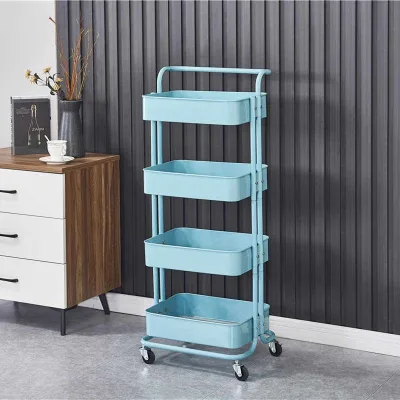


Stylish Multi-Tier Rolling Storage Cart with Side Handles for Easy Mobility
$20.00 - $50.00
MOQ: 100 Pieces

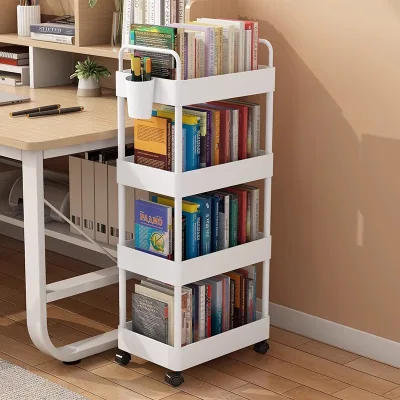
3-Tier Rolling Cart with Handles Mobile Storage Organizer for Living Room Bedroom
$8.88 - $9.09
MOQ: 1000 Pieces


Comprehensive Sourcing Guide
Strategic Sourcing Guide for Modern Standing Storage Carts with Armrest
Understanding Product Architecture and Design Variations
The Modern Standing Storage Cart with Armrest represents a specialized category of furniture designed to bridge the gap between utility and ergonomic comfort. When sourcing this specific item, buyers must first recognize that the market offers a diverse range of structural configurations rather than a single monolithic product. The core definition often hinges on the presence of an armrest, which transforms a standard utility trolley into a piece of furniture suitable for cosmetic displays, snack stations, or personal storage in high-traffic environments.
Based on observed market data, the structural integrity of these units varies significantly. Some models are engineered with a robust three-layer structure, providing a balance between vertical storage capacity and a lower center of gravity. In contrast, other variants utilize a four-layer configuration to maximize volume, often featuring handles for enhanced maneuverability. The physical dimensions are equally critical; standard specifications frequently cite a height around 86cm, with a depth of approximately 37cm and a length of 42cm. However, buyers must be prepared for "Customized" size options, as many suppliers offer bespoke dimensions to fit specific retail or residential layouts. The shape is predominantly rectangular, ensuring efficient floor space utilization, though irregular shapes exist for niche decorative applications.
The material composition is another primary differentiator. The majority of modern standing storage carts with armrests are constructed from metal, offering durability and a sleek aesthetic suitable for both commercial and domestic settings. The finish can range from glossy black to matte black, with options for other colors including blue, pink, white, beige, and various sand tones. This variety in color and finish allows procurement teams to align the product with specific brand identities or interior design themes. The condition of the product is consistently listed as new, and the style is generally categorized as modern or floor-type, emphasizing a clean, contemporary look that integrates seamlessly into modern spaces.
Technical Specifications and Dimensional Analysis
When evaluating technical specifications, precision is paramount to ensure the product meets the intended use case. The dimensional data provided in the market reveals a wide spectrum of options. While a standard unit might measure 42cm in length, 37cm in depth, and 86cm in height, other models deviate significantly. For instance, specific model numbers like TR-1001-JX and TR-1013-HY indicate distinct design iterations with their own unique standard dimensions, such as 280x250x785H MM or 44x27.5x71HCM.
Weight is a critical factor for logistics and end-user handling. Observed weight ranges for these units vary from 2.4kg to 2.8kg, depending on the layer count and material density. A three-layer structure typically aligns with the lighter end of this spectrum, while four-layer variants may approach the higher weight limit. The folding capability is another technical specification that requires careful verification. Some units are sold in an unfolded state, ready for immediate use, while others are designed to be folded for compact storage or shipping. This distinction impacts the packaging volume and the final cost of freight.
The presence or absence of an armrest is a defining technical feature. While the core keyword specifies "with armrest," the market data indicates that many listings also include "without armrest" variants. Buyers must explicitly confirm this attribute during the inquiry phase to avoid receiving a standard trolley that lacks the ergonomic support required for the application. Additionally, the disassembly feature is notable; some units are designed with a knock-down (K/D) structure, allowing them to be packed flat. This is a significant advantage for reducing shipping costs, as it minimizes the cubic volume of the cargo. The packing method is often specified as "Carton with Pallet" or "Color Box," which influences the unboxing experience and the protection of the product during transit.
Compliance, Certification, and Regulatory Standards
Navigating the regulatory landscape for furniture imports requires a clear understanding of the Harmonized System (HS) codes and relevant safety standards. The primary HS code associated with these storage carts is 94037000, which classifies them under furniture and parts thereof, specifically metal furniture. This classification is essential for accurate customs declaration and duty calculation. However, buyers must verify if specific destination markets require additional certifications beyond the standard HS classification.
While the provided data does not list specific third-party certifications (such as ISO or BIFMA) for every product, the mention of "Recycled" as a feature suggests that some manufacturers are adhering to sustainability initiatives. Buyers should explicitly request documentation regarding the recyclability of the metal components and the environmental impact of the manufacturing process. For products intended for cosmetic display or use in food-related environments (such as snack displays), verifying compliance with local food safety and material hygiene standards is crucial.
The standard dimensions listed, such as 423786cm or 280x250x785H MM, serve as reference points for quality control. Buyers should ensure that the supplier's production standards align with these specifications. Any deviation, particularly in the "Customized" category, must be documented in a detailed technical drawing approved by the buyer before mass production begins. The origin of the products is frequently cited as Zhejiang, Foshan, or generally China, regions known for their manufacturing capabilities. However, the specific factory location can impact the ease of auditing and the consistency of quality control.
Cost Drivers and Pricing Dynamics
The pricing of modern standing storage carts with armrests is influenced by a complex interplay of factors, including material costs, customization levels, and order volume. The observed price range in the market spans from $2.5 to $150 USD. This wide disparity is not arbitrary; it reflects the difference between basic, mass-produced units and highly customized, premium models. The lower end of the spectrum typically corresponds to standard, non-customized units with minimal finishing, while the higher end includes complex designs, custom colors, and specialized features like reinforced armrests or multi-layer configurations.
Minimum Order Quantity (MOQ) is a significant cost driver. The observed MOQ range varies from 2 units to 1000 units. Suppliers with a high MOQ, such as 1000, often offer a lower unit price but require a larger capital outlay and storage capacity. Conversely, suppliers with a low MOQ of 2 allow for smaller, more flexible orders but at a higher per-unit cost. Buyers must calculate the total landed cost, including shipping, duties, and handling, to determine the true economic viability of a supplier.
Lead times also play a role in cost management. The market data indicates a sample lead time of 7-14 days and a bulk lead time of 40-50 days. These timelines can fluctuate based on the complexity of the order and the supplier's current production load. Rush orders or expedited shipping will inevitably increase the overall cost. Furthermore, the packing method, whether "Air/Sea" or "Carton with Pallet," affects freight charges. Optimizing the packing to utilize the full container load can significantly reduce the per-unit shipping cost, especially for heavy metal products.
Typical Applications and Usage Environments
The versatility of the Modern Standing Storage Cart with Armrest makes it suitable for a wide array of applications. The primary usage environment is often identified as cosmetic display, where the armrest provides a convenient surface for customers to rest their bags or products while trying on makeup. The glossy or matte finishes complement the aesthetic of beauty counters and retail stores. Similarly, these carts are frequently used for snack displays in hotels, cafes, or event venues, where the mobility and storage capacity are essential for serving guests efficiently.
In a domestic setting, these units serve as storage holders and racks for make-up bags, toiletries, or general household items. The "Floor-type" style ensures stability on various floor surfaces, while the armrest adds a touch of comfort for users who may need to lean on the unit while organizing their belongings. The "Recycled" feature appeals to eco-conscious consumers and businesses aiming to meet sustainability goals. The specific model numbers, such as those with handles or without handles, allow for targeted selection based on the specific needs of the application. For instance, a four-layer model with handles is ideal for heavy-duty storage, while a three-layer model without handles might be preferred for lighter, decorative purposes.
Supplier Evaluation and Quality Control Protocols
Selecting the right supplier requires a rigorous evaluation process that goes beyond price comparisons. Buyers should prioritize suppliers who demonstrate transparency in their production capabilities and quality control measures. The presence of a "Sample Offer" is a positive indicator, allowing buyers to physically inspect the product before committing to a bulk order. The sample lead time of 7-14 days suggests a relatively agile production process, which is beneficial for maintaining project timelines.
Quality control should focus on several key areas: structural integrity, finish quality, and dimensional accuracy. Given that the material is metal, buyers must check for signs of corrosion, welding quality, and the smoothness of the armrest. The disassembly feature, if present, should be tested to ensure that the K/D structure is robust and that the unit can be reassembled without compromising its stability. Dimensional accuracy is critical, especially for customized orders; buyers should verify that the final product matches the approved technical drawings within acceptable tolerances.
Supplier location is another factor to consider. With origins in Zhejiang and Foshan, buyers can expect a high concentration of manufacturing expertise. However, it is essential to verify the specific factory's capacity and reputation. Buyers should request references from previous clients and, if possible, conduct a virtual or on-site audit of the facility. The ability to provide detailed product documentation, including material certificates and test reports, is a strong indicator of a reliable supplier.
Long-Term Procurement and Supply Chain Considerations
For long-term procurement, buyers must consider the scalability and reliability of the supply chain. The ability to customize the product size and color is a significant advantage for brands looking to differentiate their offerings. However, customization introduces complexity into the supply chain, requiring more rigorous communication and quality assurance processes. Buyers should establish clear protocols for handling design changes and ensuring that any modifications are accurately reflected in the production line.
The lead time of 40-50 days for bulk orders necessitates careful inventory planning. Buyers should maintain a safety stock to mitigate the risk of supply chain disruptions. The packing method, such as "Carton with Pallet," should be optimized for the specific shipping route to minimize damage and maximize space utilization. Additionally, the "Recycled" feature should be leveraged as a marketing point, provided that the supplier can substantiate the claim with verifiable data.
Finally, buyers should consider the after-sales support provided by the supplier. In the event of damaged goods or quality issues, a responsive supplier is essential. The availability of spare parts or the ability to repair the K/D structure can extend the lifespan of the product and reduce long-term costs. By focusing on these long-term considerations, buyers can build a sustainable and efficient procurement strategy for modern standing storage carts with armrests.
FAQs
What is the standard size for a Modern Standing Storage Cart with Armrest?
The standard size is typically 42cm in length, 37cm in depth, and 86cm in height. However, many suppliers offer customized dimensions to fit specific retail or residential layouts, so buyers should verify exact measurements before ordering.
Can I find a Modern Standing Storage Cart with Armrest made from recycled metal?
Yes, some models are explicitly listed with a recycled feature, indicating sustainable manufacturing practices. Buyers should request documentation regarding the recyclability of the metal components to ensure compliance with their sustainability goals.
How long does it take to receive samples of a Modern Standing Storage Cart with Armrest?
Sample lead times typically range from 7 to 14 days for production. This allows buyers to physically inspect the product quality, finish, and structural integrity before committing to a larger bulk order.
What is the minimum order quantity for a Modern Standing Storage Cart with Armrest?
The minimum order quantity varies significantly, ranging from 2 units to 1000 units depending on the supplier. Higher MOQs often correlate with lower unit prices, while lower MOQs offer flexibility at a higher per-unit cost.
Which materials are used to construct a Modern Standing Storage Cart with Armrest?
The majority of these units are constructed from metal, offering durability and a sleek aesthetic. The finish can range from glossy black to matte black, with options for various colors including blue, pink, white, and beige.
Can a Modern Standing Storage Cart with Armrest be folded for storage?
Some units are designed to be folded for compact storage or shipping, while others are sold in an unfolded state. Buyers must verify the folded status to ensure the product meets their space-saving requirements.
What is the HS code for importing a Modern Standing Storage Cart with Armrest?
The primary HS code associated with these storage carts is 94037000, classifying them as metal furniture. This classification is essential for accurate customs declaration and duty calculation in international trade.