Source Modern Style Soundproof Acoustic Pod for Offices, Libraries, Warehouses
Compare 30 Modern Style Soundproof Acoustic Pod options featuring aluminum or steel frames, LED lighting, and modular designs. These units suit offices, libraries, and warehouses with customizable sizes and partial privacy levels.
Key considerations
Products List


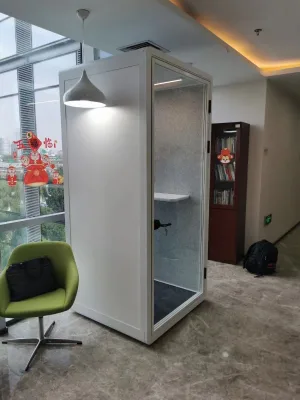


Acoustic Insulation Soundproof Booth Office Meeting Pod Soundproof Office Booth
$2045.00 - $4336.00
MOQ: 10 Pieces


Soundproof Phone Pods Acoustic Pods for Office Interview Room Meeting Booth
$2045.00 - $4336.00
MOQ: 10 Pieces

Soundproof Work Pod with Table Acoustic Silent Booth Office Silent Pod
$2045.00 - $4336.00
MOQ: 10 Pieces


Customized Silence Pod for Ultimate Acoustic Isolation Cabin Soundproof Booth
$1795.00 - $1895.00
MOQ: 1 Sets

Customizable Acoustic Pod Booth for Home Office and Creative Areas Soundproof Booth
$3695.00 - $3795.00
MOQ: 1 Sets

a Soundproof Booth with a Sleep Pod and Sound Booth in a Larger Office Pod
$3695.00 - $3795.00
MOQ: 1 Pieces

a Sound Booth and Acoustic Booth Beside a Work Pod as an Office Pod and Sleeping Pod
$3195.00 - $3295.00
MOQ: 1 Pieces

The Office Pod and Work Pod and The Sleeping Pod Are Next to The Acoustic Booth for Quiet
$2595.00 - $2695.00
MOQ: 1 Pieces

Fully Personalized Acoustic Refuge Quiet Tranquility Pod Soundproof Room
$1606.00 - $3595.00
MOQ: 1 Pieces


Comprehensive Sourcing Guide
Modern Style Soundproof Acoustic Pod Sourcing Guide
Procuring modern style soundproof acoustic pods requires a disciplined approach that balances aesthetic integration with rigorous acoustic performance. These modular structures are increasingly vital for creating private workspaces within open-plan offices, libraries, and temporary facilities. Buyers must navigate a market where "modern" design often implies sleek aluminum or steel frames, while "soundproof" refers to specific decibel reduction capabilities that vary by manufacturer. The following guide outlines the critical verification steps, technical parameters, and commercial considerations necessary to secure units that meet both functional and aesthetic requirements.
The sourcing landscape for these pods is diverse, ranging from small, freestanding booths for individual focus work to larger combination structures suitable for workshops or dormitories. Understanding the specific use case is the first step in filtering suppliers. Whether the need is for a library study carrel, a hospital consultation room, or a warehouse break area, the structural integrity, ventilation, and lighting systems must align with the intended environment. This guide focuses on evidence-based verification to ensure that the selected pods deliver on their promises of privacy, durability, and modern design.
Product Scope and Observed Listing Signals
The observed market for modern style soundproof acoustic pods reveals a wide range of configurations, with prices typically spanning from $940 to $5,880 USD. This variance often reflects differences in size, material quality, and included features such as integrated LED lighting or advanced ventilation systems. Buyers should note that the minimum order quantity (MOQ) generally ranges from 1 to 10 units, indicating that suppliers are flexible enough to accommodate both single-unit pilot projects and larger bulk installations. This flexibility allows organizations to test the product in one department before scaling across the facility.
Listing signals indicate that many suppliers offer customization options, including non-customized standard models and bespoke solutions for specific dimensions. The observed product models, such as H-M, U-S, and SB-V-L, suggest a standardized naming convention that may correlate with size or structural type. For instance, some listings specify a "Half Round" shape, while others describe a "Combination Structure," highlighting the diversity in form factors. Buyers must carefully match these observed attributes to their spatial constraints and aesthetic preferences, ensuring that the chosen pod fits seamlessly into the existing architecture.
Technical Specifications to Verify
Technical verification begins with confirming the physical dimensions and structural materials of the pod. Observed standards include specific measurements such as W858D998H2183mm for certain models and larger dimensions like W1610D2172H2272mm for others. The wall material is frequently cited as aluminum or aluminum alloy, which offers a lightweight yet durable frame suitable for modern interiors. Additionally, some structures utilize steel frames with metal legs, providing enhanced stability for heavier or more frequently used units. Buyers should request detailed dimensional drawings to ensure the pod fits within the designated footprint, accounting for clearance for doors and ventilation.
Acoustic performance and interior features are equally critical to verify. The pods are described as having a "Partially Enclosed" privacy level, which may be sufficient for focused work but requires confirmation if absolute silence is needed. Features such as LED lighting, air vents, and air purifiers are commonly included, enhancing the user experience in enclosed spaces. Buyers should inquire about the specific decibel reduction ratings and the type of insulation used in the walls. Furthermore, the assembly process is often noted as requiring assembly, with package weights ranging from 655kg to 665kg for larger units, which impacts logistics and on-site installation planning.
Compliance and Safety Documentation
Compliance with international standards is a key indicator of product quality and safety. Many suppliers provide CE certification, which is essential for products sold in the European market and often signifies adherence to health, safety, and environmental protection standards. Additionally, ISO certification is frequently mentioned, suggesting that the manufacturing processes meet specific quality management criteria. Buyers should request copies of these certificates and verify their validity with the issuing bodies. This step is crucial for mitigating risk and ensuring that the pods meet the regulatory requirements of the destination country.
Beyond certifications, buyers should verify the safety features integrated into the design. The use of eco-friendly materials is a growing trend, and suppliers may claim compliance with specific environmental standards. It is important to confirm that the materials used in the construction, such as the aluminum alloy or steel frames, are free from harmful substances. Additionally, the electrical components, including LED lighting systems, should comply with relevant electrical safety standards. Buyers should ask for test reports or declarations of conformity for these components to ensure they are safe for continuous use in occupied spaces.
Cost Drivers and Commercial Terms
The cost of modern style soundproof acoustic pods is influenced by several factors, including the size, material quality, and level of customization. Larger units, such as those with dimensions exceeding 2 meters in height and width, tend to be more expensive due to the increased material and manufacturing costs. Customization options, such as specific sizes or branding, can also add to the final price. Buyers should obtain detailed quotes that break down the costs of the base unit, accessories, and any customization fees to avoid hidden charges.
Commercial terms, including payment methods, shipping, and warranty, are critical components of the procurement process. Most suppliers offer a one-year warranty, which provides some protection against manufacturing defects. However, buyers should clarify the scope of the warranty, including what components are covered and the process for claiming repairs or replacements. Shipping terms, such as FOB or CIF, will impact the total landed cost, so buyers should compare these terms across suppliers. Additionally, the packaging method, whether standard or wooden, can affect shipping costs and the risk of damage during transit.
Supplier Qualification and Quality Control
Supplier qualification is a vital step in ensuring the reliability of the product. Buyers should verify the supplier's place of origin, with many listings indicating production in China, particularly in regions like Hebei. This information can help assess the supplier's expertise and supply chain efficiency. Additionally, buyers should check the supplier's track record, including customer reviews and case studies, to gauge their reputation in the market. A supplier with a history of delivering high-quality pods on time is more likely to meet the buyer's expectations.
Quality control measures should be clearly defined before placing an order. Buyers should inquire about the supplier's quality assurance processes, including inspection protocols and testing procedures. It is advisable to request samples or visit the factory if possible to assess the build quality firsthand. For larger orders, third-party inspection services can be employed to verify that the products meet the specified standards before shipment. Establishing a clear quality control plan helps mitigate the risk of receiving defective or non-compliant units.
Long-Term Procurement Checks
Long-term procurement success depends on the supplier's ability to provide consistent quality and support. Buyers should establish a relationship with the supplier that includes regular communication and feedback loops. This helps in addressing any issues promptly and ensures that future orders meet the evolving needs of the organization. Additionally, buyers should monitor the supplier's performance over time, tracking metrics such as delivery times, product quality, and customer service responsiveness.
Sustainability and scalability are also important considerations for long-term procurement. Buyers should assess the supplier's commitment to sustainable practices, such as the use of eco-friendly materials and energy-efficient manufacturing processes. This aligns with broader corporate sustainability goals and can enhance the organization's brand image. Furthermore, buyers should evaluate the supplier's capacity to scale production if the need for additional pods arises in the future. A supplier with robust production capabilities can support the organization's growth without compromising on quality or delivery times.
FAQs
What certifications do these modern style soundproof acoustic pods have?
These pods hold CE and ISO certifications to ensure safety and quality standards. The product specifications confirm compliance with international norms for materials and construction. Buyers can rely on these documented certifications for regulatory approval in various regions.
How is the installation process handled for these acoustic pods?
The pods are designed for freestanding installation, requiring no permanent structural changes. Assembly is required upon delivery, and the units come with standard or wooden packaging for protection. This setup allows for quick module installation in diverse environments like offices or warehouses.
Which materials are used to construct the frame and walls?
The frames are constructed from steel while the walls utilize aluminum or aluminum alloy. This combination ensures durability and a modern aesthetic suitable for various applications. The robust material selection supports the modular and soundproof features of the product.
Can buyers request custom sizes for these modern style soundproof acoustic pods?
Customization is available for specific models, allowing for any size requirements. However, some listings indicate non-customized options are also available. Buyers should verify the specific model's customization status before placing an order to ensure it meets their spatial needs.
What is the typical warranty period for these acoustic pods?
A standard one-year warranty is provided for these products to cover manufacturing defects. This warranty applies to the structural integrity and functional components of the pod. Buyers should retain proof of purchase to validate their warranty claim if issues arise.
How much does the minimum order quantity require for these pods?
The minimum order quantity ranges from one to ten pieces depending on the specific model. Some listings specify a minimum of two pieces for certain configurations. This flexibility allows buyers to start with smaller orders while still accessing the product features.
Where are these modern style soundproof acoustic pods manufactured?
These pods originate from China, specifically from the Hebei region. The manufacturing location ensures access to established supply chains for aluminum and steel components. Buyers can expect standard shipping procedures from this origin point for global distribution.