Source Manual Comb Binding Machine for Office, School, and Print Shop
Find and compare 30 Manual Comb Binding Machine models from China. Evaluate specifications like punching capacity, binding thickness, and hole counts to select the right equipment for your document finishing needs.
Key considerations
Products List


$42.00 - $49.00
MOQ: 4 Pieces




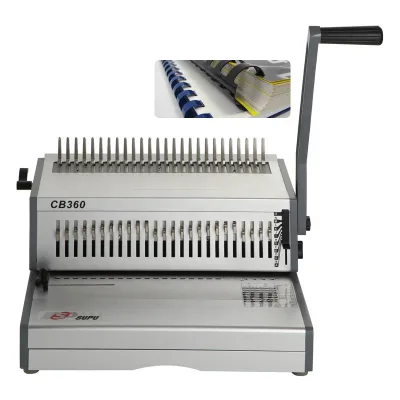


Comprehensive Sourcing Guide
Manual Comb Binding Machine Sourcing Guide
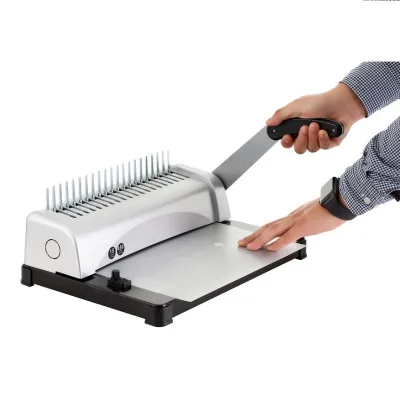
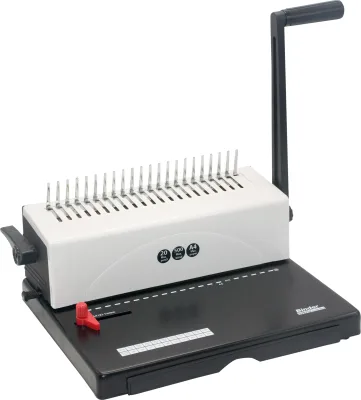
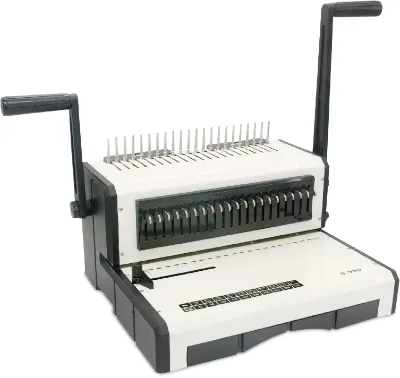
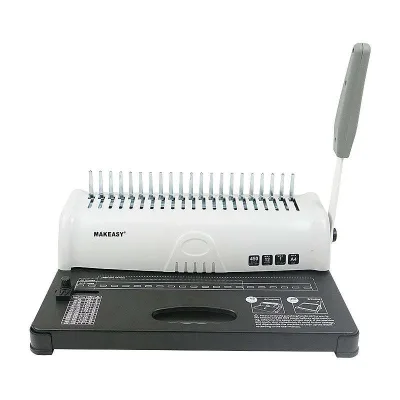
Procuring manual comb binding machines requires a careful balance between operational throughput, document quality, and total cost of ownership. These devices are essential for creating professional-looking reports, proposals, and manuals in office, educational, and light industrial settings. The core mechanism involves punching holes along the edge of paper stacks and inserting a plastic comb spine that expands to hold the pages securely. Buyers must distinguish between basic manual models and those with enhanced punching capacities or specialized hole patterns to ensure the equipment matches their specific volume and format requirements.
The market offers a diverse range of options, from lightweight desktop units to heavier-duty machines capable of handling thicker documents. Key differentiators include the maximum punching thickness, the type of binding material supported, and the precision of the hole alignment. Understanding these technical nuances is critical for avoiding mismatches between machine capabilities and actual workflow demands. This guide provides a structured approach to evaluating listings, verifying technical specifications, and ensuring long-term reliability without relying on unverified marketing claims.
Product Scope and Observed Listing Signals
The current market landscape for manual comb binding machines reveals a wide variance in capabilities and pricing structures. Listings indicate a price range from approximately $19.50 to $9,000 USD, reflecting the spectrum from basic entry-level units to high-capacity industrial-grade equipment. Minimum Order Quantities (MOQs) typically range from 1 to 1,000 units, suggesting that both individual buyers and bulk purchasers can find suitable options. This broad range necessitates a clear definition of internal needs before engaging with suppliers, as the lowest price point often correlates with limited punching capacity or simpler construction materials.
Observed product attributes highlight significant diversity in design and functionality. Models such as the WD-3688H, WD-5018, and S616 represent different tiers of performance, with variations in punching capacity, binding width, and hole configuration. For instance, some machines are rated for punching up to 18 or 20 sheets of 80gsm paper, while others may handle fewer sheets but offer greater binding thickness. Buyers should scrutinize these specific model numbers and associated specifications rather than relying on generic product titles, as the term "Manual Comb Binding Machine" encompasses vastly different operational limits.
Technical Specifications to Verify
Punching capacity is the most critical technical parameter to verify, as it directly impacts workflow efficiency. Listings show punching capacities ranging from 12 sheets to 20 sheets of standard 70-80gsm paper, with some models specifying a maximum punching thickness of 20-50mm for the binding material itself. It is essential to confirm whether the stated capacity refers to the number of sheets or the physical thickness of the stack, as these metrics can differ significantly. Buyers should also check the hole quantity, which typically varies between 21 and 24 holes, ensuring compatibility with the standard comb sizes used in their region.
Binding specifications must align with the intended document thickness and format. Common binding materials include plastic combs and binder strips, with maximum binding widths often listed as below 300mm or 360mm. The maximum binding thickness varies by comb type, with round plastic combs supporting up to 25mm and ellipse combs extending to 50mm. Additionally, hole size and distance are crucial for proper alignment; standard configurations often feature 3x8mm rectangular holes with a pitch of 14.3mm. Verifying these dimensions ensures that the purchased machine will produce secure, professional-looking bindings without tearing or misalignment.
Compliance and Safety Documentation
Safety certifications are a vital indicator of manufacturing quality and regulatory compliance. Several observed models carry GS and CQC certifications, which are recognized standards for product safety and quality in various international markets. The CE mark is also present on some listings, indicating conformity with health, safety, and environmental protection standards for products sold within the European Economic Area. Buyers should request copies of these certificates to verify their validity and ensure they apply to the specific model being purchased, as certifications can sometimes be generic rather than model-specific.
Beyond formal certifications, operational safety features should be evaluated during the selection process. Manual binding machines involve sharp punching mechanisms that require robust safety guards or interlocks to prevent accidental injury. While not always explicitly listed in basic product descriptions, these features are standard in reputable models. Buyers should inquire about the presence of finger guards, stable base designs, and clear operational instructions. Ensuring that the machine meets relevant safety standards reduces liability and promotes a safer working environment for office staff or production workers.
Cost Drivers and Commercial Terms
The cost of a Manual Comb Binding Machine is influenced by several factors, including punching capacity, build quality, and included accessories. Higher-capacity models with reinforced frames and precision punching mechanisms command higher prices, while basic units with lower sheet capacities are more affordable. The inclusion of additional features, such as adjustable paper guides, comb insertion tools, or carrying cases, can also affect the final price. Buyers should compare the total value proposition rather than focusing solely on the unit price, considering the durability and efficiency gains of higher-tier models.
Commercial terms, including packaging and shipping, play a significant role in the total procurement cost. Products are typically packed in cartons, with weights ranging from 4.8kg to 10kg depending on the model. Heavier machines often indicate more robust construction but may incur higher shipping costs. Buyers should clarify whether shipping costs are included in the quoted price and inquire about bulk discounts for larger orders. Understanding the total landed cost, including duties and taxes, is essential for accurate budgeting and avoiding unexpected expenses upon delivery.
Supplier Qualification and Quality Control
Supplier qualification is a critical step in ensuring the reliability of the purchased equipment. Buyers should prioritize suppliers who provide detailed product specifications, clear certification documents, and responsive customer service. The origin of the products, often listed as China or specifically Zhejiang China, should be considered in the context of the supplier’s track record and export experience. Verifying the supplier’s business license and manufacturing capabilities can help mitigate the risk of receiving substandard or counterfeit products.
Quality control measures should be established before placing orders, especially for bulk purchases. Buyers should request sample units to test punching accuracy, binding security, and overall build quality. Inspecting the machine for consistent hole alignment, smooth operation of the punching lever, and durability of the comb insertion mechanism is essential. Establishing clear acceptance criteria and communication channels with the supplier ensures that any defects or discrepancies are addressed promptly, protecting the buyer’s investment and operational continuity.
Long-Term Procurement Checks
Long-term procurement success depends on the availability of spare parts and after-sales support. Buyers should verify the availability of replacement punching blades, combs, and other consumables before finalizing the purchase. Machines with proprietary or hard-to-find parts may become obsolete quickly, leading to increased downtime and replacement costs. Ensuring that the supplier offers a warranty, typically one year as observed in some listings, provides an additional layer of protection against manufacturing defects.
Regular maintenance and proper usage are key to extending the lifespan of manual comb binding machines. Buyers should develop a maintenance schedule that includes cleaning the punching mechanism, lubricating moving parts, and inspecting for wear and tear. Training staff on proper operation techniques can prevent damage to the machine and ensure consistent binding quality. By focusing on these long-term factors, buyers can maximize the return on investment and maintain efficient document production processes over time.
FAQs
What is the maximum punching thickness for this machine?
The maximum punching thickness is 20 pages of 80g paper. This capacity allows for efficient processing of standard document stacks without requiring multiple passes for typical office or industry use cases.
Which certifications do these manual binding machines hold?
These machines hold GS and CQC certifications. These standards indicate compliance with specific safety and quality requirements, ensuring the equipment meets regulatory expectations for industrial and commercial applications.
Can the machine handle A4 paper with specific margins?
Yes, the machine supports A4 paper with paper margins of 2.5, 4.5, or 6.5mm. This flexibility allows users to adjust binding positions to suit different document formatting needs and professional presentation standards.
What is the maximum binding thickness for plastic combs?
The maximum binding thickness reaches 50mm for ellipse plastic combs. This specification enables the binding of thick reports and manuals, accommodating various document volumes within the machine's operational limits.
How many holes does the punching mechanism create?
The punching mechanism creates 21 holes for standard models. Some variants offer 24 holes, ensuring compatibility with different binding ring sizes and providing options for diverse document binding requirements.
What is the origin and packaging of these machines?
The machines originate from Zhejiang, China, and are packed in cartons. This packaging ensures safe transport, while the specific origin indicates the manufacturing region known for producing these industrial binding solutions.