Source Modern Titanium Wall Lamp for Hallways, Bedrooms, and Bathrooms
Find and compare 30 Modern Titanium Wall Lamp options for residential and commercial projects. Evaluate specifications such as LED wattage, color temperature, and certification standards to select the ideal fixture for your design requirements.
Key considerations
Products List


Modern Villa Living Room Wall Lighting Natural Marble Copper Bedside Wall Lamp
$880.99 - $3100.99
MOQ: 5 Pieces

Bedroom Living Room LED Light Iron Body Modern Luxury Crystal Wall Lamp
$880.99 - $3100.99
MOQ: 5 Pieces


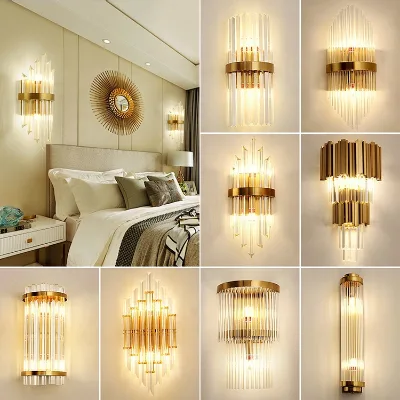


Vintage Modern Wall Lamp - Decorative Living Room and Bedroom Wall Lamp
$100.00 - $1000.00
MOQ: 3 Pieces

Luxury-Style Crystal Wall Lamp for Bedroom Hotel Living Room Creative Wall Lamp
$220.00 - $2000.00
MOQ: 5 Pieces


Comprehensive Sourcing Guide
Modern Titanium Wall Lamp Sourcing Guide
Sourcing modern titanium wall lamps requires a precise understanding of the distinction between the core material and the visual finish often observed in current listings. While the keyword suggests a solid titanium construction, the available product data indicates that many "modern" wall lamps in this category utilize stainless steel or crystal bases with finishes described as matte black, brass, or gold, rather than raw titanium. Buyers must verify whether the "titanium" descriptor refers to a specific alloy coating, a marketing term for a brushed metallic finish, or an actual material composition, as the observed listings frequently cite stainless steel and crystal as primary materials. This distinction is critical for budgeting and durability expectations, as solid titanium components are significantly more expensive and less common than plated or painted steel alternatives in the decorative lighting sector.
The procurement landscape for these fixtures is characterized by a wide variance in customization options and design styles, ranging from decorative crystal sconces to modern stainless steel wall lights. The observed product attributes reveal that suppliers often offer OEM and ODM services, allowing buyers to tailor the shape, such as round or square configurations, and the finish to match specific interior design requirements. However, the presence of "With Light Source" and "Without Light Source" variants in the same category suggests that buyers must explicitly define whether the fixture includes integrated LED modules or requires separate bulb installation. This decision impacts the technical specifications, voltage requirements, and the overall complexity of the supply chain, as integrated LED units often carry different warranty terms and lead times compared to bare fixtures.
Product Scope and Observed Listing Signals
The current market signals for modern wall lamps indicate a strong preference for decorative and modern styles that integrate LED technology directly into the fixture design. Observed listings show a clear segmentation between products with integrated light sources, which often feature LED color temperatures ranging from 3000K to 6000K, and those designed as bare lamp holders or sconces. The "Decorative" style attribute is prevalent, suggesting that these products are primarily intended for aesthetic enhancement in living rooms and similar residential spaces, rather than purely industrial or high-bay applications. Buyers should note that the "Irradiated Area" for these units typically covers 5 to 10 square meters, which aligns with their use as ambient or accent lighting rather than primary task lighting for large commercial areas.
Commercial signals in the listings reveal a flexible but complex MOQ structure, with observed minimum order quantities ranging from a single unit to 3,800 pieces, though a specific high-confidence data point cites a 30-piece MOQ for certain models. This variability suggests that suppliers are willing to accommodate both small boutique orders and larger bulk procurement, but the unit price and lead time will fluctuate significantly based on the volume ordered. The observed price range of $0.30 to over $3,100 USD further underscores the diversity of the product scope, where low-cost decorative items coexist with high-end, custom-engineered fixtures. Buyers must carefully align their order volume with the specific supplier's tiered pricing structure to avoid unexpected cost escalations or delays associated with small-batch production runs.
Technical Specifications to Verify
Voltage compatibility is a primary technical verification point, as the observed data presents conflicting specifications ranging from 90V-260V universal input to fixed 220V requirements. This discrepancy highlights the necessity of confirming the specific voltage rating for the target market, as a fixture designed for 220V will not function correctly in regions with 110V or 120V standards without a transformer. Additionally, the wattage for integrated LED units is observed to fall between 4W and 10W, which is suitable for low-energy ambient lighting but may be insufficient for areas requiring high illumination levels. Buyers should request detailed electrical schematics to ensure the driver and LED components are rated for the specific voltage and frequency of the destination country to prevent premature failure or safety hazards.
The physical construction and finish specifications require rigorous verification, particularly regarding the "Titanium" claim versus the observed materials of stainless steel and crystal. While some listings mention a "White" finish or "Matte Black/Brass/Gold" options, the core material is often listed as stainless steel or crystal, meaning the "titanium" aesthetic may be achieved through plating or anodizing. The switch type is another critical variable, with observed options including touch switches, rotary switches, and button switches, each offering different user experiences and installation requirements. Buyers must confirm the exact switch mechanism and its durability rating, as well as the specific dimensions of the fixture, which vary from compact 25x25x10cm units to larger 35x25x25cm packages, to ensure they fit the intended architectural space.
Compliance and Safety Documentation
Certification requirements for wall lamps vary significantly by region, and the observed product data lists multiple overlapping certifications including CE, RoHS, VDE, GS, and UL. The presence of these certifications in the listings suggests that reputable suppliers in the Guzhen Town, Zhongshan City region are capable of meeting diverse international safety standards, but buyers must verify that the specific batch they order carries the valid documentation for their target market. For instance, the UL certification is essential for the North American market, while VDE and GS are critical for European compliance. Relying on a general statement of certification without requesting the specific test reports for the ordered model can lead to customs clearance issues or liability problems if the product fails to meet local electrical safety codes.
RoHS compliance is a consistent attribute across the observed listings, indicating that the materials used, including the LED components and metal finishes, are restricted from hazardous substances. This is particularly important for modern fixtures that may contain complex electronic drivers and mixed material finishes. Buyers should ensure that the supplier provides a Declaration of Conformity (DoC) that explicitly references the RoHS directive and the specific version of the standard being met. Furthermore, the warranty period of two years observed in the data implies a baseline expectation of product reliability, but this guarantee is only valid if the product has been installed and operated within the specified voltage and environmental parameters. Documentation should also cover the lead time and shipping terms, as delays in production can impact the ability to meet project deadlines and compliance deadlines for building inspections.
Cost Drivers and Commercial Terms
The cost of modern wall lamps is heavily influenced by the customization level, with OEM and ODM services adding a premium to the base unit price. The observed listings indicate that customization is available for crystal elements, finishes, and potentially the LED color temperature, which allows for tailored solutions but increases the complexity of the manufacturing process. Buyers should anticipate that custom orders will incur higher unit costs and longer lead times, with observed production windows ranging from 35 to 50 days. The trade terms offered, including EXW, FOB, CIF, and CFR, provide flexibility in managing logistics costs, but the choice of term will significantly affect the total landed cost and the buyer's responsibility for insurance and freight.
Packaging and shipping methods are additional cost drivers that must be factored into the procurement budget. The observed packaging standards, such as "Standard Export Carton" or "1PCS/CTN," are designed to protect the fragile crystal and delicate finishes during transit, but the weight and dimensions of the cartons, such as the 1.84KG/CTN specification, will impact freight charges. Shipping options include express courier, air freight, and sea freight, each offering a different balance between speed and cost. For urgent projects, air freight may be necessary despite the higher expense, while sea freight is more economical for large bulk orders. Buyers should calculate the total cost of ownership, including packaging waste and potential damage claims, when selecting the most appropriate shipping method for their specific project timeline.
Supplier Qualification and Quality Control
Supplier qualification for modern wall lamps should focus on verifying the manufacturing location and the specific capabilities of the factory, with Guzhen Town, Zhongshan City, China identified as a key production hub. This region is known for its concentration of lighting manufacturers, but buyers must distinguish between trading companies and actual factories to ensure direct communication and quality control. The presence of a two-year warranty and a 35-day lead time suggests a mature production process, but buyers should request evidence of the factory's quality control protocols, including in-line inspection and final testing procedures. Verifying the supplier's ability to handle the specific customization requests, such as the "Crystal Customization" noted in the data, is essential to ensure the final product meets the design intent.
Quality control checks must extend beyond the initial sample approval to include pre-shipment inspections that verify the physical attributes and electrical safety of the bulk order. Buyers should confirm that the "Modern Stainless Steel LED Wall Light" or "Wall Sconce Lamp" models match the approved sample in terms of finish, dimensions, and light output. The observed "Shape: Round" and "Shape: Square" options indicate that dimensional accuracy is a key quality metric, and any deviation could affect the aesthetic consistency of the installation. Additionally, the "Touch Switch" and "Rotary/Button" mechanisms should be tested for responsiveness and durability, as these are common points of failure in modern lighting fixtures. Establishing a clear quality agreement with the supplier that defines acceptable defect rates and remediation procedures is crucial for maintaining product integrity.
Long-Term Procurement Checks
Long-term procurement success for modern wall lamps depends on establishing a robust relationship with the supplier to ensure consistent quality and supply chain stability. The observed warranty period of two years provides a baseline for product reliability, but buyers should negotiate extended support terms for large-scale projects to cover potential post-installation issues. Regular audits of the supplier's production capacity and quality control systems are recommended to ensure that the factory can maintain the required standards as order volumes increase. This proactive approach helps mitigate the risk of supply disruptions and ensures that the "Modern" design aesthetic and technical specifications remain consistent across multiple production batches.
Monitoring the evolution of product standards and certifications is another critical long-term check, as regulatory requirements for lighting products frequently update. Buyers should stay informed about changes in CE, RoHS, and UL standards to ensure continued compliance in their target markets. The observed "Standard Export Carton" and "Standard Export Packaging" suggest that the supplier is familiar with international shipping requirements, but buyers should verify that these packaging standards are updated to meet any new environmental or safety regulations. Finally, maintaining open communication regarding lead times and production schedules is essential for managing inventory levels and avoiding stockouts, especially for custom orders that may have longer production windows. By treating the supplier as a strategic partner rather than a transactional vendor, buyers can secure a reliable supply of high-quality modern wall lamps for years to come.
FAQs
What certifications are available for modern titanium wall lamps?
Modern titanium wall lamps typically carry CE, RoHS, and VDE certifications. Some models also include UL certification for broader market compliance. These standards ensure electrical safety and material restrictions are met. Buyers should verify specific certificates for their target region to ensure regulatory alignment and smooth customs clearance.
Can I customize the crystal and design of these wall lamps?
Yes, customization is available for both crystal elements and overall design. Suppliers offer OEM and ODM services to tailor products to specific requirements. This includes adjusting crystal styles and modifying the lamp's aesthetic to match interior themes. Buyers can request bespoke solutions to create unique lighting fixtures for their projects.
What is the typical lead time for manufacturing these wall lamps?
The typical lead time ranges from 35 to 50 days depending on order volume and customization complexity. Standard orders may be processed faster, while custom designs require additional production time. Buyers should plan their procurement schedule accordingly to ensure timely delivery for installation projects or seasonal inventory needs.
What voltage options are supported for these LED wall lights?
These LED wall lights support a wide voltage range of 90V to 260V. Some specific models are rated for 220V operation. This broad voltage compatibility allows for use in various global markets without requiring additional transformers. Buyers can select models that match their local electrical infrastructure for seamless integration.
What is the minimum order quantity for these decorative wall lamps?
The minimum order quantity is typically 30 pieces for standard orders. However, MOQs can vary up to 3800 pieces depending on the supplier and product configuration. Buyers should confirm the specific MOQ with the manufacturer before placing orders to ensure it aligns with their procurement volume and budget constraints.
Where are these modern wall lamps manufactured?
These modern wall lamps are manufactured in Guzhen Town, Zhongshan City, China. This region is a well-known hub for lighting production with established supply chains. Buyers can expect access to a wide variety of designs and competitive pricing due to the concentration of manufacturing capabilities in this area.