Source Modern Waterproof Melamine Interior Door for Hotels, Homes, and Offices
Find and compare 21 Modern Waterproof Melamine Interior Door options from Chinese manufacturers. Evaluate specifications like swing style, wood veneer finishes, and custom OEM capabilities to select the ideal solution for residential bedrooms, commercial hotels, and office spaces.
Key considerations
Products List


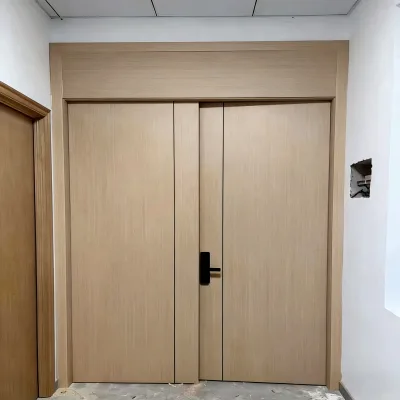
Interior Modern Plywood Door Wood Front Solid Wood Anti-Scratch Melamine Door
$35.00 - $85.00
MOQ: 20 Sets



Comprehensive Sourcing Guide
Modern Waterproof Melamine Interior Door Sourcing Guide
Procuring a Modern Waterproof Melamine Interior Door requires a precise understanding of how surface treatments interact with core materials to resist moisture in high-humidity environments. The term "waterproof" in this context often refers to water-tight functionality and resistance to humidity rather than total submersion, necessitating a verification of the door's core composition and edge sealing. Buyers must distinguish between doors that rely on solid timber cores with melamine lamination and those utilizing MDF or high-density board cores, as the latter requires specific manufacturing controls to prevent swelling when exposed to water.
The sourcing landscape for these products reveals a diverse range of configurations, from solid wood doors with PVC lamination to melamine board constructions designed for bedrooms and offices. While some listings emphasize security functions and modern styling, the critical differentiator for waterproof performance lies in the infilling material and the integrity of the veneer application. Procurement teams should prioritize suppliers who explicitly define their core materials, such as semi-hollow strips, honeycomb, or solid wood, and confirm that the melamine surface is applied to a substrate capable of withstanding the intended environmental stress without delamination.
Product Scope and Observed Listing Signals
The observed market signals indicate a wide spectrum of product models, ranging from ID-1460 to polywood and plywood melamine variants, each serving distinct application needs within residential and commercial sectors. Listings frequently specify the door type as primed or finished, with some models explicitly noting the absence of glass to enhance structural integrity and moisture resistance. Buyers should note that while some products are marketed with "water-tight" functions, others focus on general interior use in bedrooms or hotels, requiring a careful review of the specific model number to ensure the waterproof claim aligns with the intended installation environment.
Material composition is a primary signal for evaluating the suitability of a door for wet areas, with observed options including oak, timber, and high-density board cores. The presence of a wooden inner frame or high-density grid layout often correlates with better dimensional stability, which is essential for maintaining the waterproof seal over time. Procurement teams must verify whether the melamine finish is a lamination over a solid core or a board-based construction, as the latter may require additional edge banding to achieve true water resistance, especially in applications like bathrooms or kitchens where direct water contact is possible.
Technical Specifications to Verify
Verifying the technical specifications of a modern waterproof melamine door begins with a detailed examination of the core material and infilling strategy. Buyers should confirm whether the door utilizes a solid wood core, MDF, or a honeycomb structure, as these choices directly impact the door's ability to resist warping and water absorption. The infilling options observed, such as semi-hollow strips or lead-based materials, must be cross-referenced with safety and performance requirements, ensuring that the chosen core density supports the waterproof claim without compromising the door's acoustic or thermal insulation properties.
Surface finishing and dimensional standards are equally critical, with observed specifications ranging from standard sizes to custom dimensions up to 2300mm in height. The finishing process, often described as "finished" or involving PVC lamination, must be inspected for edge sealing quality, as exposed edges are the primary entry point for moisture in melamine doors. Buyers should request detailed drawings or samples to verify the thickness of the veneer and the quality of the edge banding, ensuring that the product meets the specific size constraints of the installation site while maintaining the structural integrity required for a waterproof application.
Compliance and Safety Documentation
While specific certification statuses like FSC or CE are noted in background data, buyers must treat these as potential attributes rather than guaranteed standards for every listed product. The primary compliance focus for waterproof melamine doors should be on the safety of the materials used, particularly regarding formaldehyde emissions and the toxicity of any infilling materials like lead. Procurement teams should request Material Safety Data Sheets (MSDS) and emission test reports to verify that the melamine resin and core materials meet international safety standards for indoor air quality, ensuring the door is safe for use in bedrooms, offices, and hotels.
Documentation regarding the manufacturing process and origin is essential for validating the quality claims associated with waterproof performance. Buyers should verify the place of origin, such as Jiangsu or Zhejiang in China, and request evidence of the factory's quality control protocols for moisture resistance testing. Although specific test results are not universally provided in listings, suppliers should be able to demonstrate their testing procedures for water absorption and swelling rates, providing a clear audit trail that confirms the door's ability to withstand humid conditions without degradation.
Cost Drivers and Commercial Terms
The cost of a modern waterproof melamine door is heavily influenced by the choice of core material, with solid wood and high-density board options typically commanding higher prices than honeycomb or semi-hollow alternatives. Observed price ranges vary significantly, from low-cost melamine board doors to premium solid wood variants, reflecting the differences in material quality and manufacturing complexity. Buyers must analyze the total cost of ownership, considering that a higher initial investment in a solid core door may result in lower long-term maintenance costs due to superior durability and moisture resistance.
Commercial terms, including Minimum Order Quantity (MOQ) and lead times, play a crucial role in the procurement strategy for these specialized doors. Listings indicate MOQs ranging from single units to 500 sets, with delivery times typically spanning 15 to 30 days or approximately 25 days for larger orders. Procurement teams should negotiate terms that align with project timelines, ensuring that the supplier can meet the required delivery schedule without compromising on quality. Additionally, buyers should clarify whether the quoted price includes the door leaf only or if it encompasses hardware and installation accessories, as this can significantly impact the overall budget.
Supplier Qualification and Quality Control
Selecting a qualified supplier for waterproof melamine doors requires a rigorous assessment of their manufacturing capabilities and quality control systems. Buyers should prioritize suppliers who offer OEM and ODM customization, as this indicates a flexible production line capable of meeting specific design and performance requirements. The ability to customize the door's dimensions, color, and finish is a strong indicator of a supplier's technical proficiency, ensuring that the final product can be tailored to the exact specifications of the project.
Quality control measures must extend beyond the final inspection to include raw material sourcing and in-process monitoring. Suppliers should demonstrate a commitment to consistency by providing samples that match the agreed-upon specifications for core density, veneer thickness, and edge sealing. Buyers should request a detailed quality assurance plan that outlines the steps taken to prevent moisture-related defects, such as delamination or warping, and verify that the supplier has a robust after-sales support system to address any issues that may arise post-delivery.
Long-Term Procurement Checks
Establishing a long-term procurement relationship for waterproof melamine doors involves regular performance audits and feedback loops to ensure consistent quality over time. Buyers should implement a system for tracking door performance in various environmental conditions, noting any instances of swelling, peeling, or structural failure. This data-driven approach allows for the identification of potential issues early, enabling proactive adjustments to the supplier's manufacturing process or the selection of alternative materials to maintain the door's waterproof integrity.
Continuous communication with the supplier regarding updates in material technology and manufacturing standards is essential for maintaining a competitive edge in the market. Buyers should stay informed about new developments in melamine lamination and core materials that could enhance the door's resistance to moisture and improve its overall lifespan. By fostering a collaborative relationship with the supplier, procurement teams can ensure that the doors supplied remain at the forefront of industry standards, providing reliable and durable solutions for modern interior applications.
FAQs
What materials are used in these modern interior doors?
These doors utilize solid wood, MDF, and melamine board constructions. Some models feature oak veneer or high-density board cores. The main material often combines solid wood with MDF and PVC lamination. This ensures durability while maintaining a modern aesthetic suitable for various interior settings.
Can these doors be customized for specific projects?
Yes, customization is available for both OEM and ODM requirements. Buyers can request specific colors, sizes, and styles. The doors support standard or customized specifications. This flexibility allows for tailored solutions that meet unique architectural and design needs for hotels, offices, and residences.
What is the typical delivery time for orders?
The standard delivery time ranges from 15 to 30 days. For larger orders, such as 500 sets, the lead time is approximately 25 days. This timeframe accounts for production and preparation. Buyers should plan their procurement schedules accordingly to ensure timely installation and project completion.
Are these doors suitable for bedroom applications?
Yes, these doors are explicitly designed for bedroom applications. They are also suitable for houses, hotels, offices, and apartments. The modern style and security features make them ideal for private spaces. The primed door type allows for easy finishing to match any bedroom decor scheme.
What packaging is used for shipping these doors?
Doors are packed using PE film, bubble plastic bags, and strong cartons. Some models may use carton or customized packaging options. This robust packaging protects the surface finish during transit. It ensures that the doors arrive in pristine condition, ready for immediate installation without damage.
What after-sale support is provided for these products?
Online technical support is provided for after-sale service. This assistance helps buyers with installation queries or maintenance questions. The support ensures that any technical issues are resolved efficiently. This service adds value to the purchase by providing ongoing assistance throughout the product lifecycle.