Source Modern Wood Dining Table for Home Hotel Restaurant
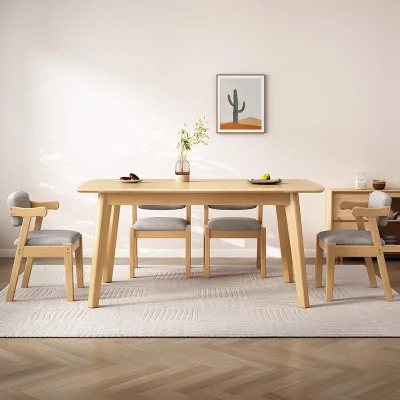
Compare 30 listings of Modern Wood Dining Table options featuring metal legs, sintered stone tops, and customizable designs. Buyers can evaluate specifications like dimensions, warranty periods, and delivery times for home, hotel, or restaurant use.
Key considerations
Products List


$150.00 - $180.00
MOQ: 30 Pieces

$118.00 - $119.90
MOQ: 30 Pieces




Comprehensive Sourcing Guide
Strategic Sourcing Guide for Modern Wood Dining Tables
Understanding Technical Specifications and Material Composition
When sourcing modern wood dining tables, the primary objective is to align the product's physical attributes with the intended application environment. The market presents a diverse array of configurations, ranging from compact units to expansive commercial setups. A critical observation in the current supply landscape is the variation in material composition. While the core keyword specifies "wood," many modern designs integrate mixed materials to enhance durability and aesthetic appeal. Buyers must verify whether the table top is constructed from solid wood, engineered wood, or alternative surfaces such as sintered stone, marble, or slab cladding, which are frequently paired with wooden elements in contemporary designs.
The structural integrity of the table is often defined by the leg and frame composition. In many modern iterations, the legs are fabricated from metal, including iron, stainless steel, aluminum, or steel, often featuring a powder-coated finish to resist corrosion and wear. Specific thickness metrics for these metal components are essential for stability; for instance, a leg thickness of 1.2mm is a documented specification in certain high-quality frames. The overall dimensions vary significantly based on the intended seating capacity and room size. Standardized dimensions observed in the market include specific configurations such as 1200650730mm for smaller units, while larger commercial tables may reach dimensions like 29501500750mm. Buyers should also note that some units are designed with specific height profiles, such as 76cm for the table and 80.5cm for accompanying chairs, ensuring ergonomic compliance.
Shape is another pivotal specification. While the traditional rectangular form is prevalent, particularly for dining rooms and hotels, round configurations are also available, offering a distinct aesthetic for modern interiors. The shape directly influences the spatial planning required for the installation site. Furthermore, the condition of the product is typically listed as "New," but the assembly method is equally important. Many modern tables utilize a Knock Down (KD) design, allowing for efficient shipping and easier on-site assembly. This feature is often highlighted in packing specifications, where the product is shipped in cartons with wood frames to prevent damage during transit.
Compliance, Certification, and Quality Standards
Navigating the compliance landscape is essential for B2B procurement, particularly when importing furniture for commercial use. Buyers must verify that suppliers adhere to recognized international standards. Documentation often cites certifications such as ISO9001, TUV, and SGS, which indicate that the manufacturing process meets specific quality management and safety benchmarks. These certifications are not merely marketing terms but serve as evidence of a supplier's commitment to consistent production quality and material safety.
In addition to general quality certifications, specific product standards define the dimensional and structural expectations. For example, a standard table size might be explicitly defined as 1107076Hcm, with corresponding chair dimensions of 4944.580.5Hcm. When sourcing for international markets, it is crucial to confirm that the product standards align with the destination country's regulations regarding fire safety, formaldehyde emissions, and structural load-bearing capacity. The "High Quality" designation often found in product listings should be substantiated by these third-party test results and certifications rather than accepted as a standalone claim.
The warranty period is another indicator of the manufacturer's confidence in their product. Observed warranty terms in the sector range from 3 years to 5 years. A longer warranty period, such as 5 years, often suggests a more robust construction and a higher tolerance for long-term wear, which is particularly relevant for high-traffic environments like hotels and restaurants. Buyers should ensure that the warranty terms are clearly defined in the contract, covering specific aspects such as structural integrity, finish durability, and hardware functionality.
Cost Drivers and Pricing Dynamics
The pricing of modern wood dining tables is influenced by a complex interplay of factors, including material costs, labor, and logistical expenses. The observed price range in the market spans from $30 to $1500 USD, reflecting the vast diversity in product complexity and material quality. Several key drivers contribute to this variance. The choice of top material is a primary cost factor; tables featuring sintered stone or natural marble tops command higher prices compared to those with standard wood or engineered wood surfaces. Similarly, the type of metal used for the legs—whether standard iron or premium stainless steel—affects the final cost.
Customization is another significant driver. Products offering custom sizes, colors, or finishes typically incur higher costs due to the specialized production requirements and lower economies of scale. The "Customized" attribute is frequently available, allowing buyers to tailor the table to specific design requirements, but this flexibility comes with a price premium. Additionally, the complexity of the design, such as the inclusion of a rotary mechanism or specific folding capabilities, can influence the unit price.
Minimum Order Quantity (MOQ) also plays a role in the effective cost per unit. The market shows an MOQ range from 1 piece to 50 pieces. For buyers seeking to minimize initial investment, suppliers with an MOQ of 1 piece offer a lower barrier to entry, though the unit price may be higher compared to bulk orders. Conversely, larger orders often benefit from volume discounts, reducing the average cost per unit. Buyers should calculate the total landed cost, including shipping, insurance, and potential duties, to determine the true cost efficiency of a specific supplier.
Typical Applications and Usage Scenarios
Modern wood dining tables are versatile and suitable for a wide range of applications, from residential homes to large-scale commercial establishments. The "General Use" classification often includes home furniture, while specific applications extend to dining rooms, restaurants, hotels, and offices. The design style, frequently described as "Modern" or "European," aligns well with contemporary interior aesthetics, making these tables a popular choice for commercial spaces aiming for a sleek, professional look.
In residential settings, the table serves as a central gathering point, requiring durability and aesthetic appeal. The "Home Furniture" classification highlights this primary use case. In commercial environments, such as hotels and restaurants, the table must withstand heavy usage and frequent cleaning. The "Usage" attributes often list "Hotel, Home, Restaurant, Office," indicating the product's adaptability across these sectors. For high-traffic areas, the choice of materials becomes critical; for instance, a sintered stone top offers superior resistance to scratches and heat compared to standard wood, making it ideal for restaurant environments.
The shape and size of the table also dictate its suitability for specific spaces. Rectangular tables are generally preferred for dining rooms and conference rooms due to their space-efficient layout and ability to seat multiple guests. Round tables, while less common in large commercial settings, are often used in smaller dining areas or as accent pieces in modern homes. The "Folded" attribute, typically listed as "Unfolded," suggests that some models may not be collapsible, which is an important consideration for buyers with limited storage space or those requiring flexible furniture arrangements.
Supplier Evaluation and Business Verification
Selecting the right supplier is a critical step in the procurement process. Buyers should prioritize suppliers who identify as "Factory" or "Manufacture," as this often indicates a direct relationship with the production line, potentially offering better pricing and quality control. The "Business Type" attribute frequently lists "Factory," "Wholesale," and "High Quality Factory," signaling a direct source of goods. Verifying the supplier's export experience is also vital; a track record of "15 Years" and "90% Export Business" suggests a robust understanding of international trade regulations and logistics.
Payment terms are another area requiring careful evaluation. Common terms observed in the market include T/T (Telegraphic Transfer), L/C (Letter of Credit), D/P (Documents against Payment), and even digital options like Paypal. The flexibility of these terms can impact cash flow and risk management. For large orders, L/C or D/P may offer better security, while T/T is standard for smaller transactions. Buyers should also assess the supplier's communication channels and responsiveness, as these factors influence the efficiency of the procurement process.
Location is a fundamental aspect of supplier evaluation. Most suppliers in this category are based in China, which is a major hub for furniture manufacturing. The "prod_origin" attribute confirms this location, which can influence lead times and shipping costs. Buyers should consider the logistical implications of sourcing from this region, including potential delays due to port congestion or seasonal fluctuations in production capacity.
Quality Control and Long-Term Procurement Considerations
Implementing a robust quality control (QC) strategy is essential to ensure that the delivered products meet the specified standards. Given the variability in materials and construction, buyers should request pre-shipment inspections to verify dimensions, finish quality, and structural integrity. The "Quality" attribute, often listed as "High Quality," should be validated through third-party testing reports, such as those from SGS or TUV, rather than relying solely on supplier assertions.
Long-term procurement considerations involve assessing the supplier's ability to maintain consistency over time. Factors such as the "Delivery Time," which ranges from 30 to 45 days, must be factored into the supply chain planning. Delays in production or shipping can disrupt inventory levels and affect business operations. Buyers should establish clear communication channels with the supplier to monitor production progress and address any potential issues proactively.
The packaging method is another critical factor for long-term preservation. The "prod_packing" attribute often specifies "Carton" or "Carton with Wood Frame," which provides protection during transit. For fragile items or those with delicate finishes, additional packaging measures may be necessary to prevent damage. Buyers should also consider the environmental impact of the packaging and materials, as sustainability is becoming an increasingly important criterion in modern procurement.
Finally, the "Warranty" period serves as a long-term commitment from the supplier. A warranty of 3 to 5 years indicates confidence in the product's durability. Buyers should ensure that the warranty terms are comprehensive and cover all critical components, including the table top, legs, and hardware. By focusing on these long-term considerations, buyers can build a reliable supply chain that supports their business growth and maintains high standards of quality.
Comparative Analysis of Key Product Attributes
To facilitate decision-making, the following table summarizes the key attributes observed in the Modern Wood Dining Table market, highlighting the variations that buyers should consider during the sourcing process.
| Attribute Category | Observed Variations | Sourcing Implication |
|---|---|---|
| Material (Top) | Wood, Sintered Stone, Marble, Slab Cladding | Stone/Marble offers higher durability for commercial use; Wood offers traditional aesthetics. |
| Material (Leg) | Metal (Iron, Steel, Aluminum), Stainless Steel | Metal legs provide modern aesthetics and strength; verify thickness (e.g., 1.2mm) for stability. |
| Shape | Rectangle, Round | Rectangular suits large dining areas; Round suits smaller or intimate spaces. |
| Dimensions | 1200650730mm to 29501500750mm | Must match room dimensions and seating capacity requirements. |
| Certification | ISO9001, TUV, SGS | Essential for compliance and quality assurance; verify validity and scope. |
| Warranty | 3 Years, 5 Years | Longer warranty suggests higher confidence in product longevity. |
| MOQ | 1 Piece to 50 Pieces | Lower MOQ allows for testing; higher MOQ reduces unit cost. |
| Lead Time | 30-45 Days | Critical for inventory planning and project timelines. |
| Packaging | Carton, Carton with Wood Frame, KD Carton | KD (Knock Down) reduces shipping volume; wood frame adds protection. |
This comparative overview underscores the importance of aligning specific product attributes with the buyer's unique requirements. By carefully evaluating these factors, buyers can make informed decisions that balance cost, quality, and functionality in the Modern Wood Dining Table market.
FAQs
What certifications do modern wood dining tables have?
These tables often carry ISO, TUV, and SGS certifications to verify quality and safety standards. Buyers should request specific test reports to confirm the product meets international compliance requirements for commercial and residential use.
How long is the delivery time for these tables?
The standard delivery time ranges from 30 to 45 days after order confirmation. This lead time accounts for manufacturing, quality control, and packaging in cartons with wood frames to ensure safe transit from the factory.
Can I customize the size and material of the table?
Yes, customization is available for dimensions, colors, and materials like sintered stone or marble tops. Buyers can specify exact requirements, though custom orders may affect the final unit price and production schedule.
What is the minimum order quantity for purchasing?
The minimum order quantity can be as low as one piece for trial orders. However, bulk orders often benefit from volume discounts, and some suppliers may have higher MOQs depending on the specific customization requested.
Which payment terms are accepted by the suppliers?
Suppliers typically accept T/T, L/C, D/P, and sometimes PayPal for transactions. The specific payment method depends on the order value and the trust established between the buyer and the manufacturing factory.
What warranty is provided for the table frame and legs?
Warranty periods typically range from 3 to 5 years depending on the specific model and construction quality. This coverage generally protects against structural defects and ensures the metal legs and wooden tops remain durable.
How are the tables packed for international shipping?
Tables are packed in cartons, often reinforced with a wood frame to prevent damage during transit. Some models use knock-down carton packing to optimize container space and facilitate easier on-site assembly by the buyer.