Source Welding Table with Dust Collector for Sanding Grinding Polishing
Compare 30 industrial units featuring automatic pulse jet cleaning and metal fiber filters. This Welding Table with Dust Collector supports sanding, welding, and grinding applications with air volumes up to 4000m3/H and customizable motor options.
Key considerations
Products List


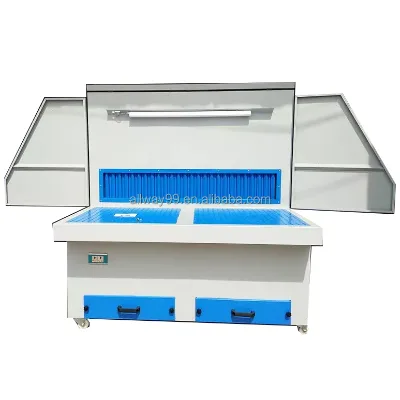
Dust-Free Work Welding Grinding Table with Integrated Suction System
$2300.00 - $2500.00
MOQ: 1 Minimum
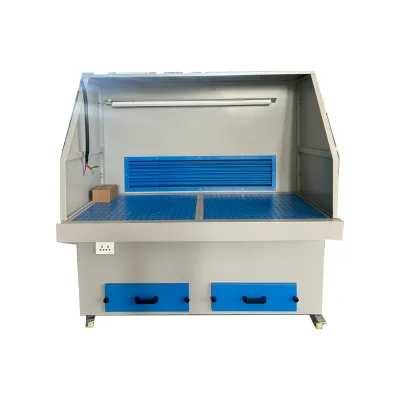


Welding Grinding Table Downdraft Bench Polishing Machine Desk Dust Collector Work
$2000.00 - $5000.00
MOQ: 1 Pieces

Good Selling Downdraft Bench Table for Welding Laser Grinding Polishing
$500.00 - $3500.00
MOQ: 1 Pieces


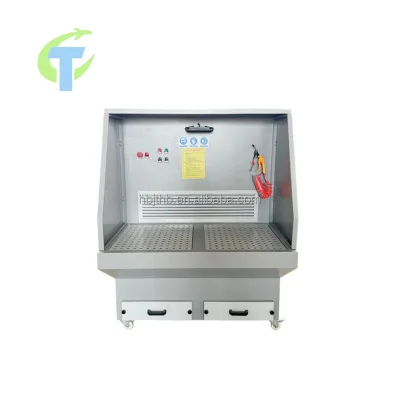

Compact Portable Welding Dust Collector with Advanced Filtration System
$950.00 - $1000.00
MOQ: 1 Pieces


Efficient Downdraft Workbench Dust Collector Work Welding Grinding Workbench
$1000.00 - $5000.00
MOQ: 1 Pieces
Comprehensive Sourcing Guide
Strategic Sourcing Guide for Welding Tables with Integrated Dust Collection Systems
Understanding the Technical Architecture of Integrated Dust Collection Units
When sourcing a welding table with a dust collector, buyers must first distinguish between standalone collection units and integrated systems designed specifically for metalworking environments. The core product category often referred to as "Filter Cartridge Dust Collector" represents a sophisticated approach to particulate control. These units are engineered to handle the specific challenges of welding, grinding, and sanding operations where fine metallic dust poses significant health and fire risks. The technical architecture typically relies on a combination of robust filtration media and high-efficiency airflow dynamics.
The filtration medium is a critical differentiator in performance. Market observations indicate a divergence in material choices, with some units utilizing Metal Fiber for durability and others employing Chemical Synthetic Fiber for fine particulate capture. The choice of medium directly influences the system's ability to handle the specific particle sizes generated during welding and grinding. For instance, effective systems are designed to capture particles as small as 0.3 microns, a threshold essential for preventing respiratory hazards associated with hexavalent chromium and other welding fumes. The physical construction of the unit often involves 2mm cold rolled steel, providing the necessary structural integrity to withstand the vibration and impact inherent in a busy fabrication shop.
Airflow dynamics are equally critical. The system's capacity is generally measured in cubic meters per hour, with observed ranges spanning from 2000m³/h to 4000m³/h. A specific configuration noted in the market operates at an air volume of 3000m³/h, powered by a 2.2kw air exhaust fan. However, buyers must verify that the motor power aligns with their specific workflow demands, as options for 5.5kw motors are also available. The operation type varies between automatic and manual systems. Automatic units often feature pulse air-jet cleaning mechanisms that operate without human intervention, ensuring consistent filtration efficiency. In contrast, manual systems may require operator intervention for cleaning cycles, which can impact uptime and labor costs.
Compliance Verification and Certification Standards
Navigating the regulatory landscape is a non-negotiable aspect of sourcing industrial dust collection equipment. Buyers must rigorously verify that suppliers provide documentation for recognized international standards. The most frequently observed certifications in this sector include ISO and CE marks. The CE certification, in particular, indicates compliance with European health, safety, and environmental protection standards, which is often a prerequisite for exporting to or operating within the European market.
However, the presence of a certification mark on a product listing does not automatically guarantee that every unit in a batch meets the standard. Buyers should treat certification as a baseline requirement and request specific test reports or certificates of conformity for the exact model number being purchased. For example, while the product standard "XF04" or "HXYD" may be listed, these are internal model identifiers rather than universally recognized safety standards. Buyers must ask suppliers to map these model numbers to external regulatory frameworks such as OSHA guidelines in the United States or the EU Machinery Directive.
Furthermore, the electrical components of the dust collector must adhere to local voltage standards. Observed voltage configurations include 220/380V, with provisions for other voltages upon request. It is essential to confirm that the motor and electrical control systems are rated for the specific voltage and frequency of the buyer's facility to prevent equipment failure or safety hazards. The warranty period, typically observed as 1 year, serves as a secondary indicator of the manufacturer's confidence in their product's compliance and durability, but it should not replace the need for independent verification of safety standards.
Cost Drivers and Pricing Structure Analysis
The pricing for welding tables with integrated dust collectors exhibits a wide variance, ranging from approximately $399 to $35,000. This broad spectrum reflects differences in capacity, automation levels, material quality, and customization options. The primary cost drivers include the motor brand and power rating, the filtration medium type, and the complexity of the cleaning mechanism. Units equipped with motors from recognized brands such as Siemens, Dongyuan, or Wannan may command a premium due to their reliability and energy efficiency.
Customization is another significant factor influencing cost. While standard models are available, the ability to customize dimensions, airflow capacity, and filtration media adds value but also increases the price. The observed Minimum Order Quantity (MOQ) is consistently 1 unit, indicating that these systems are often available for single-item procurement, which is favorable for small to medium-sized enterprises. However, buyers should be aware that while the base price might be low, the total cost of ownership includes shipping, installation, and maintenance.
Packaging standards also play a role in logistics costs. Products are typically shipped in plywood packing or wooden cases to prevent damage during transit, especially given the heavy nature of the steel construction. The standard shipping container size is often 1x20'GP, but for larger or custom units, dimensions may vary. Buyers should factor in the "Single package size" and weight, which can be around 300kg, when calculating freight costs and warehouse space requirements.
Typical Applications and Operational Scenarios
The versatility of welding tables with dust collectors makes them suitable for a wide range of industrial applications. The primary use cases include sanding, welding, grinding, buffing, and polishing. These processes generate distinct types of particulate matter, ranging from coarse metal shavings to fine, hazardous fumes. The dust collector's function is to capture these particles at the source, preventing them from dispersing into the workshop environment.
The installation method is a key consideration for operational efficiency. Systems are available in both horizontal and vertical configurations. Horizontal units may be preferred for large, flat welding tables where space is limited on the floor but available above the work surface. Vertical units, conversely, might be better suited for high-ceiling facilities or where floor space is at a premium. The cleaning method, whether automatic pulse jet or manual, dictates the operational workflow. Automatic systems are ideal for high-volume production environments where continuous operation is required, while manual systems might suffice for low-volume, intermittent use.
The efficiency of the system is a critical performance metric, with observed values reaching 99%. This high efficiency ensures that the air quality in the workshop remains within safe limits, protecting the health of workers and reducing the risk of equipment damage from dust accumulation. The specific application dictates the required air volume; for instance, heavy grinding operations may require the upper end of the airflow range (4000m³/h), while lighter welding tasks might be adequately served by lower capacities (2000m³/h).
Supplier Evaluation and Quality Assurance Protocols
Evaluating a supplier for industrial dust collection equipment requires a multi-faceted approach. Buyers should prioritize suppliers who demonstrate transparency in their product specifications and manufacturing processes. The origin of the product is a relevant factor, with many units originating from Shandong, China, a region known for its manufacturing capabilities. However, the location of the supplier does not guarantee quality; it is the specific manufacturing controls and quality assurance protocols that matter.
Buyers should request detailed information regarding the production model, such as "EH-DB" or "XF04," and verify that these models correspond to the specific features required. The condition of the product should be confirmed as "New," and the supplier should provide evidence of their quality control processes. This includes inspection reports for the steel construction, motor testing, and filtration media integrity. The warranty period, typically 1 year, should be clearly defined in the contract, outlining what is covered and the process for claims.
When comparing suppliers, buyers should look for those who offer customization options, as this indicates flexibility and a customer-centric approach. The ability to accept custom orders suggests that the supplier has the technical capacity to adapt their products to specific client needs. Additionally, the supplier's responsiveness to inquiries about technical specifications, such as the minimum particle size or voltage requirements, is a strong indicator of their expertise and reliability.
Long-Term Procurement and Maintenance Considerations
Investing in a welding table with a dust collector is a long-term decision that requires careful consideration of maintenance and lifecycle costs. The cleaning mechanism, whether automatic pulse jet or manual, will require regular attention. Automatic systems reduce labor costs but may have higher initial maintenance requirements for the cleaning nozzles and filters. Buyers should inquire about the availability of replacement parts, such as filter cartridges and motor components, to ensure minimal downtime.
The durability of the materials used is another long-term factor. The use of 2mm cold rolled steel and high-quality filtration media like Metal Fiber or Chemical Synthetic Fiber suggests a design intended for longevity. However, the actual lifespan of the unit depends on the operating environment and the frequency of use. Buyers should establish a maintenance schedule that includes regular inspection of the dust collection system, cleaning of the filters, and checking of the motor and fan components.
The standard export packing and wooden case shipping methods are designed to protect the unit during transit, but they do not address long-term storage or handling. Buyers should plan for proper storage conditions if the unit is not immediately installed, ensuring it is kept in a dry environment to prevent rust or corrosion. Finally, the scalability of the system should be considered; if the workshop expands, the current unit may need to be upgraded or supplemented with additional collection units to maintain air quality standards.
Comparative Analysis of Key Product Attributes
To assist buyers in making informed decisions, the following table summarizes the key attributes observed in the market for welding tables with dust collectors. This comparison highlights the variability in specifications and helps buyers identify the features most relevant to their specific needs.
| Attribute Category | Observed Options | Key Considerations for Buyers |
|---|---|---|
| Filtration Medium | Metal Fiber, Chemical Synthetic Fiber | Select based on particle size and chemical resistance needs. |
| Air Volume Capacity | 2000m³/h to 4000m³/h (e.g., 3000m³/h) | Match capacity to the volume of dust generated by specific tasks. |
| Motor Power | 2.2kw, 5.5kw | Higher power supports larger air volumes and more demanding applications. |
| Motor Brand | Siemens, Dongyuan, Wannan | Recognized brands often imply higher reliability and energy efficiency. |
| Cleaning Method | Automatic Pulse Jet, Manual | Automatic reduces labor; manual may be sufficient for low-volume use. |
| Installation Type | Horizontal, Vertical | Choose based on workshop layout and available space. |
| Filter Cartridge Qty | 2 to 6 units | More cartridges generally increase filtration surface area and efficiency. |
| Warranty Period | 1 Year | Verify coverage details and claim processes. |
| Material Construction | 2mm Cold Rolled Steel | Ensures structural integrity and durability in industrial settings. |
| Efficiency Rating | Up to 99% | Critical for meeting health and safety regulations. |
| Certifications | ISO, CE | Essential for regulatory compliance and market access. |
| Origin | China (e.g., Shandong) | Verify shipping logistics and lead times. |
By carefully analyzing these attributes and understanding the underlying technical and operational requirements, buyers can source welding tables with dust collectors that not only meet their immediate needs but also provide long-term value and safety in their manufacturing operations. The decision should be guided by a thorough evaluation of the specific application, budget constraints, and the supplier's ability to support the product throughout its lifecycle.
FAQs
What filtration materials are used in these units?
Units utilize Metal Fiber or Chemical Synthetic Fiber for filtration. The choice depends on the specific application, with Metal Fiber offering durability and Synthetic Fiber capturing fine particulates effectively.
How is the cleaning process managed on these collectors?
Cleaning is handled via automatic pulse jet cleaning or manual methods. Automatic systems ensure consistent efficiency without intervention, while manual options require operator action for cleaning cycles.
Which certifications do these dust collectors typically hold?
Most units carry ISO and CE certifications. Buyers should verify specific test reports for the exact model to ensure compliance with local safety and environmental regulations.
Can I customize the dimensions and airflow capacity?
Yes, customization is available for dimensions and airflow capacity. Buyers can request specific configurations to match their workshop needs, though this may affect the final pricing.
What is the minimum particle size these systems capture?
These systems are designed to capture particles as small as 0.3 microns. This capability is essential for removing hazardous fumes generated during welding and grinding operations.
How is the product packed for international shipping?
Products are shipped in plywood packing or wooden cases. This robust packaging protects the heavy steel construction during transit and ensures safe delivery to the destination.
What motor brands are used in these units?
Motors from brands like Siemens, Dongyuan, or Wannan are used. These brands are selected for their reliability and energy efficiency in industrial dust collection applications.