Source Monofilament Screen Printing Mesh for Garment, Textile, Glass
Compare 30 listings of Monofilament Screen Printing Mesh with varying mesh counts, widths, and materials. Buyers can evaluate options for garment, textile, and graphic applications from verified suppliers in Hebei, China.
Key considerations
Products List




Comprehensive Sourcing Guide
Strategic Sourcing Guide for Monofilament Screen Printing Mesh
Procuring Monofilament Screen Printing Mesh requires a disciplined approach that balances technical precision with supply chain reliability. This material serves as the foundational substrate for screen printing processes across diverse industries, including garment, textile, graphic, digital, and glass applications. Buyers must navigate a complex landscape of mesh counts, material compositions, and tension characteristics to ensure optimal print quality and operational efficiency. The following guide outlines the critical factors for evaluating suppliers and selecting the appropriate mesh specifications based on verified industry data and observed market parameters.
Technical Specifications and Material Composition
The primary differentiator in Monofilament Screen Printing Mesh is the material composition and the resulting physical properties. The core material observed in high-performance listings is 100% polyester, chosen for its durability and resistance to chemical solvents used in printing inks. While some specialized variants may utilize nylon for specific filtration or structural needs, the standard for screen printing remains polyester due to its superior tensile strength and dimensional stability. The weave type is predominantly plain, creating a uniform grid that ensures consistent ink transfer.
Mesh count is a critical specification that dictates the resolution and ink deposit of the final print. The observed market range for mesh count spans from 15 to 420 mesh per inch, often denoted as 15T to 420T. This wide spectrum allows for versatility; lower counts (15-60T) are suitable for heavy ink deposits and coarse graphics, while higher counts (150-420T) are essential for fine detail work and halftone printing. The mesh size is strictly controlled, with standard ranges falling between 15mesh and 420mesh. Buyers must verify that the supplier can consistently deliver within these specific numerical boundaries, as deviations can lead to print defects.
Width and length specifications also vary based on production requirements. Standard widths observed in the market range from 0.3 meters to 3.9 meters, with some specific models offering widths between 0.6 meters and 3.68 meters. This variability allows for customization to fit different frame sizes and automated printing equipment. Regarding length, rolls are typically available in standard configurations of 30 meters or 50 meters, though suppliers often accommodate custom requests for specific project lengths. The hole shape is consistently square, which is a defining characteristic of monofilament construction, ensuring uniform mesh opening and predictable ink flow.
Compliance, Certification, and Quality Standards
In the B2B procurement of industrial textiles, verifying compliance and certification is non-negotiable. The supply chain for monofilament mesh is heavily influenced by quality management systems. A primary certification observed in the market is ISO9001:2000, which indicates a supplier's adherence to quality management principles. Additionally, broader certifications such as ISO, CE, and SGS are frequently cited, suggesting that the manufacturing processes meet international safety and quality benchmarks. Buyers should treat these certifications as evidence of a supplier's commitment to standardized production rather than as a guarantee of specific product performance for every batch.
Product standards are equally vital. The mesh count standard is often referenced as 15-420/Inch or 6T-165T depending on the specific product model. It is imperative for buyers to confirm that the supplier's stated standard matches the technical requirements of their printing process. For instance, a model designated as "310" or "MAISHIJ088" may have specific standard deviations that differ from the general market range. The origin of the product is predominantly Hebei, China (Mainland), with specific hubs like Anping noted as production centers. While the geographic origin is a factual observation, it does not inherently dictate quality; however, it helps in understanding the logistical and regulatory environment of the supplier.
Cost Drivers and Pricing Dynamics
The pricing of Monofilament Screen Printing Mesh is influenced by several dynamic factors, including mesh count, width, and material thickness. The observed price range in the market is extensive, spanning from 0.1 USD to 1000 USD per unit. This broad spectrum reflects the difference between small, low-count rolls and large, high-tension, high-count specialty meshes. The Minimum Order Quantity (MOQ) is another significant cost driver. While some suppliers offer flexible entry points with an MOQ of 10 meters, others require a minimum of 50 meters, and bulk orders can extend up to 40,000 units.
Buyers must understand that the unit price is often inversely related to the order volume. Lower MOQs, such as 10 meters, may carry a higher per-unit cost due to setup and handling fees, whereas larger orders leverage economies of scale. The packaging method also impacts cost; options range from simple plastic bags to more robust paper cartons and weaving bags. The choice of packaging should align with the shipping method and the fragility of the mesh rolls. Additionally, the lead time, typically observed as 3-5 days for standard orders, can influence the total cost of ownership if expedited shipping is required for urgent production schedules.
Typical Applications and Performance Requirements
Monofilament Screen Printing Mesh is engineered for a wide array of applications, each demanding specific performance characteristics. The primary application areas include garment printing, textile manufacturing, graphic arts, digital printing, and glass decoration. The material's low elongation and high tension capabilities make it particularly suitable for applications requiring precise registration and sharp image definition. These features ensure that the mesh does not stretch excessively under tension, which could otherwise distort the printed image.
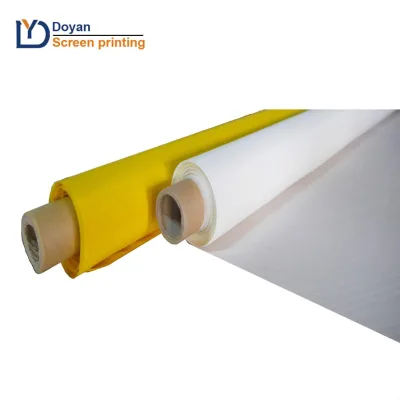
The structure of the mesh is typically a single network, which simplifies the cleaning process and reduces the risk of ink clogging. This single-layer design is ideal for both manual and automated printing setups. The color of the mesh is generally available in white or yellow, with white being the standard for most applications due to its high contrast with various inks. However, yellow variants are also common, often used to enhance the visibility of certain ink colors or to reduce glare in specific lighting conditions. The versatility of the mesh allows it to be used in air, liquid, and solid filtration scenarios, although its primary function remains screen printing.
Supplier Evaluation and Selection Criteria
Selecting a reliable supplier requires a rigorous evaluation process that goes beyond price comparisons. Buyers should prioritize suppliers who demonstrate transparency in their product attributes and specifications. The brand name "Maishi" is observed in the market, but buyers should not rely on brand recognition alone. Instead, they must verify the supplier's ability to meet the specific technical requirements of their project. Key evaluation metrics include the consistency of mesh count, the accuracy of width and length dimensions, and the reliability of the delivery timeline.
The customization availability is a crucial factor for many buyers. Most suppliers offer customization options for mesh count, width, and length, allowing for tailored solutions. However, buyers must confirm the feasibility of these customizations and any associated lead time extensions. The production origin, specifically Hebei China (Mainland), suggests a concentration of manufacturing expertise in this region. Buyers should assess the supplier's logistical capabilities to ensure timely delivery, given the standard lead time of 3-5 days. Additionally, the packaging standards, ranging from paper cartons to weaving bags, should be evaluated to ensure the product arrives in pristine condition.
Quality Control and Long-Term Procurement Strategy
Implementing a robust quality control (QC) strategy is essential for maintaining consistent print quality over time. Buyers should establish clear acceptance criteria based on the observed specifications, such as the square hole shape, plain weave type, and specific mesh count ranges. Regular testing of incoming mesh rolls for tensile strength and elongation is recommended to verify that the material meets the "Low Elongation and High Tensile" claims. While specific test results are not provided in the general market data, buyers should request sample testing reports from suppliers to validate these performance claims.
For long-term procurement, building a strategic relationship with suppliers who offer consistent quality and flexible customization is advisable. The ability to source mesh in various widths, from 0.6 meters to 3.68 meters, and lengths, including custom requests, provides operational flexibility. Buyers should also consider the environmental and regulatory aspects of the supplier's operations, particularly regarding certifications like ISO and SGS. Establishing a clear communication channel for addressing quality issues and managing inventory levels will help mitigate risks associated with supply chain disruptions. By focusing on verified specifications and maintaining a disciplined approach to supplier evaluation, buyers can secure a reliable supply of Monofilament Screen Printing Mesh that supports their production goals.
Summary of Key Specifications
To facilitate quick reference during the sourcing process, the following table summarizes the key technical and commercial parameters observed in the market for Monofilament Screen Printing Mesh.
| Parameter | Observed Range / Value | Notes |
|---|---|---|
| Material | 100% Polyester | Standard; Nylon variants exist for specific uses |
| Mesh Count | 15 - 420 Mesh/Inch | 15T to 420T; critical for print resolution |
| Weave Type | Plain | Ensures uniform ink transfer |
| Hole Shape | Square | Standard for monofilament construction |
| Width | 0.3m - 3.9m | Custom widths available (e.g., 0.6m-3.68m) |
| Length | 30m, 50m, or Custom | Standard rolls or made-to-order |
| Color | White, Yellow | White is standard; Yellow for specific contrast |
| Elongation | Low | Essential for high tension stability |
| Certifications | ISO9001:2000, ISO, CE, SGS | Verify current validity with supplier |
| MOQ | 10m - 50m (up to 40,000) | Varies by supplier and product model |
| Lead Time | 3-5 Days | Standard delivery window |
| Origin | Hebei, China (Mainland) | Specific hubs include Anping |
| Packing | Carton, Plastic Bags, Weaving Bags | Depends on order size and model |
By adhering to these guidelines and leveraging the detailed specifications provided, buyers can make informed decisions that align with their technical requirements and business objectives. The focus on verified data and structured evaluation ensures a procurement process that minimizes risk and maximizes value.
FAQs
What material is used for Monofilament Screen Printing Mesh?
The primary material is 100% polyester, chosen for its durability and chemical resistance. While nylon variants exist for filtration, polyester remains the standard for screen printing due to its superior tensile strength and dimensional stability in plain weave structures.
Which mesh count range is available for this product?
The available mesh count ranges from 15 to 420 mesh per inch. This wide spectrum allows for versatility, with lower counts suitable for heavy ink deposits and higher counts essential for fine detail work and halftone printing applications.
Can buyers request custom dimensions for the mesh rolls?
Yes, customization is available for width, length, and mesh count. Standard widths range from 0.3 to 3.9 meters, and lengths are typically 30 or 50 meters, though suppliers often accommodate specific project requests for custom dimensions.
What certifications do suppliers typically hold for this product?
Suppliers often hold ISO9001:2000, ISO, CE, and SGS certifications. These certifications indicate adherence to quality management principles and international safety benchmarks, though buyers should verify the current validity of these documents with the specific vendor.
How does the lead time affect the procurement process?
The standard delivery time is typically 3 to 5 days for most orders. This short lead time supports urgent production schedules, but buyers should confirm if expedited shipping or custom orders might extend the timeline beyond the standard window.
What is the minimum order quantity for purchasing this mesh?
The minimum order quantity varies by supplier, ranging from 10 meters to 50 meters. Some bulk orders can extend up to 40,000 units, so buyers should check specific model requirements to determine the exact entry point for their purchase.