Source Moveable Divided Serving Dish for Catering, Barbecue, and Dessert
Explore 30 options for the Moveable Divided Serving Dish designed for commercial use. Buyers can compare stainless steel and bagasse materials, sizes, and customization features from verified suppliers in Guangdong, China.
Key considerations
Products List











Comprehensive Sourcing Guide
Strategic Sourcing Guide for Moveable Divided Serving Dishes
The global demand for efficient, hygienic, and aesthetically pleasing food service equipment continues to drive the market for moveable divided serving dishes. These items, often referred to as compartment dishes or divided plates, are critical for modern catering, buffet operations, and institutional dining where portion control and food separation are paramount. For procurement professionals, navigating the supply chain for these specific utensils requires a disciplined approach to verifying material integrity, understanding the nuances between disposable and reusable variants, and ensuring that suppliers meet rigorous commercial standards. This guide synthesizes available market data to provide a structured framework for sourcing these essential dining components without relying on unverified claims or speculative data.
Technical Specifications and Material Integrity
The foundation of any successful procurement strategy for divided serving dishes lies in a precise understanding of technical specifications. The market presents a dichotomy between durable, reusable metal options and eco-conscious, single-use alternatives. Buyers must first distinguish between these categories, as the performance expectations and handling requirements differ significantly.
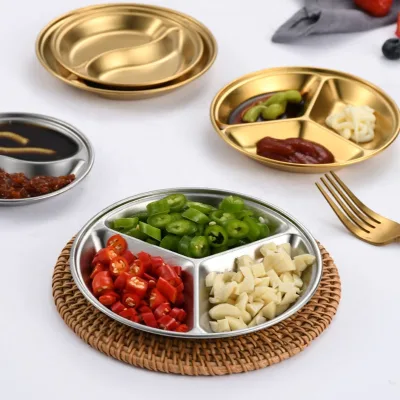
For reusable options, the primary material observed in the market is stainless steel. This material offers superior durability, corrosion resistance, and the ability to withstand high-temperature washing cycles. Key technical attributes for these metal dishes include a polished technique, which ensures a smooth surface that is easy to clean and resistant to food adhesion. The shape is predominantly round, featuring a diameter range that typically accommodates various portion sizes, such as 10 cm, 12 cm, and 14 cm. These dimensions are critical for ensuring the dishes fit standard buffet trays and oven racks. Furthermore, the grid configuration is a vital specification; products are available with either two or three distinct compartments, allowing for the separation of proteins, starches, and vegetables. The finish is generally available in silver or gold, catering to different aesthetic requirements for upscale dining or casual eateries.
In contrast, the disposable segment of the market has shifted toward sustainable materials. A prominent alternative is 100% natural sugarcane bagasse. This material is distinct from traditional plastics or paper, offering a biodegradable solution that maintains structural integrity under heat. The technical profile for these items includes a natural color and specific packaging dimensions, such as outer box measurements of 4221.531.5 cm or 40.52737 cm, depending on the model. These disposable units are designed for single-use efficiency, making them ideal for food trucks, catering services, and large-scale events where washing infrastructure is limited.
| Feature Category | Stainless Steel Variant | Sugarcane Bagasse Variant |
|---|---|---|
| Primary Material | Stainless Steel / Metal | 100% Natural Sugarcane Bagasse |
| Reusability | Reusable / Durable | Disposable / Biodegradable |
| Common Shapes | Round | Round / Square (Model dependent) |
| Diameter/Size | 10 cm, 12 cm, 14 cm | Varies by model (e.g., HS-P303, HS-P201) |
| Compartments | 2 Grid or 3 Grid | Typically single compartment or divided |
| Finish/Color | Silver, Gold | Natural |
| Weight | Approx. 2.0 kg per unit (gross) | Approx. 0.45 kg per unit |
| Packaging | Opp Bag + Box | Carton / 500 Per Box |
Compliance and Certification Verification
When sourcing food contact materials, compliance with international safety standards is non-negotiable. For stainless steel products, the focus is often on the quality of the alloy and the manufacturing process to ensure no heavy metal leaching occurs. However, for the biodegradable sugarcane bagasse variants, specific certifications are frequently cited to validate their safety for food contact. Buyers should explicitly verify the presence of certifications such as CE/EU and LFGB. These standards indicate that the product meets European safety requirements for food contact materials and has undergone rigorous testing for migration limits.
It is crucial to note that certification status is not universal across all listings. While some product models, such as those designated with specific model numbers like HS-P303 or HS-P201, may carry these certifications, others may not. Procurement teams must request current, valid certification documents from the supplier before finalizing an order. Relying on a general claim of "Eco-Friendly" is insufficient; the specific regulatory compliance documents must be reviewed to ensure the product is legal for sale and use in the target market. Additionally, for products intended for specific commercial buyers like caterers and canteens, the supplier should be able to demonstrate that their production process adheres to relevant hygiene and safety protocols.
Cost Drivers and Pricing Dynamics
The pricing of moveable divided serving dishes is influenced by a complex interplay of material costs, manufacturing complexity, and order volume. The observed price range in the market spans from $0.05 to $88.00, a variance that reflects the stark difference between a single-use biodegradable item and a premium, polished stainless steel unit.
For stainless steel dishes, the cost is driven by the grade of the steel, the thickness of the material, and the finishing process. The "polished" technique adds value but also increases production time and cost. Furthermore, customization options, such as adding a customized logo or specific color finishes like gold, will invariably increase the unit price. The Minimum Order Quantity (MOQ) also plays a significant role in the final cost per unit. While some suppliers may list an MOQ of 100 pieces, others may require volumes up to 50,000 pieces to achieve the lower end of the price spectrum. Buyers should be aware that the "Single item" selling unit often implies a retail price, whereas bulk procurement requires negotiating based on the total volume.
Conversely, the cost of sugarcane bagasse products is influenced by the availability of raw agricultural waste and the efficiency of the molding process. These items are generally priced lower than metal counterparts but are subject to fluctuations in agricultural supply chains. The packaging details, such as the "Opp Bag + Box" for metal or "Carton" for bagasse, also contribute to the overall landed cost. Buyers must calculate the total cost of ownership, including shipping and handling, which can be significant given the weight of metal dishes (e.g., a single gross weight of 2.0 kg) versus the volume of disposable items.
Typical Applications and Commercial Use Cases
Understanding the specific applications of divided serving dishes is essential for selecting the right product for the intended environment. The market data indicates that these items are primarily targeted at commercial buyers, including caterers, canteens, and food service providers.
Stainless steel divided dishes are versatile and suitable for a wide range of high-traffic environments. Their robust construction makes them ideal for barbecue, steak, dessert, and fruit service in restaurants and hotels. The ability to separate food items prevents flavor mixing, which is particularly important for buffet settings where customers serve themselves. The "Modern" style and "Round" shape align well with contemporary dining aesthetics, making them a preferred choice for upscale establishments. Additionally, the "Customized" nature of these products allows businesses to brand their service with a logo, enhancing corporate identity.
On the other hand, sugarcane bagasse dishes are tailored for specific use cases where sustainability and convenience are prioritized. Their primary functions include food packaging, meal storage, and serving in temporary or high-volume scenarios. They are commonly applied in restaurants, food trucks, and catering services that serve large groups. The "Biodegradable" nature of these dishes appeals to environmentally conscious consumers and helps businesses meet corporate sustainability goals. However, buyers should note that the "occasion" field for some products is listed as "Not Available," suggesting that certain models may not be suitable for all types of events or may have specific limitations regarding heat resistance or liquid retention.
Supplier Evaluation and Supply Chain Reliability
Evaluating suppliers for moveable divided serving dishes requires a focus on production capacity, geographic location, and logistical capabilities. The supply chain for these items is heavily concentrated in specific manufacturing hubs, with Guangdong, China, being a prominent place of origin. This region is known for its extensive metalworking and food packaging industries.
Buyers should verify the supplier's "Supply Ability," which is often listed as 100,000 pieces per month for established manufacturers. This metric is a strong indicator of the supplier's capacity to handle large orders without significant delays. However, the actual lead time can vary based on the complexity of the order, the customization requirements, and the current demand. The "Port of dispatch" is another critical factor; suppliers operating out of Shantou, Shenzhen, or Guangzhou offer access to major shipping lanes, which can streamline the logistics process.
When assessing a supplier, buyers must look beyond the product listing. The "Customization" availability is a key differentiator. While some products offer "Customized Logo Acceptable," others are listed as "Non-Customized." Buyers seeking branded products must ensure the supplier has the technical capability to apply logos without compromising the material integrity. Additionally, the "Packaging Details" should be scrutinized to ensure that the packaging is robust enough to prevent damage during transit, especially for fragile or heavy items. The "Single package size" and "Single gross weight" are essential for calculating shipping costs and warehouse storage requirements.
Quality Control and Long-Term Procurement Considerations
Implementing a robust quality control (QC) protocol is vital for maintaining the integrity of the supply chain. For stainless steel dishes, QC should focus on the "Polished" finish, checking for scratches, dents, or uneven plating. The "Shape" and "Diameter" must be verified against the specified dimensions (10 cm, 12 cm, 14 cm) to ensure compatibility with existing tableware and serving equipment. For bagasse products, QC should prioritize the structural integrity and the absence of chemical residues, verifying the "100% Natural Sugarcane Bagasse" claim through third-party testing if necessary.
Long-term procurement considerations involve building a relationship with suppliers who can offer consistency and scalability. The "Model Number" (e.g., FH-510, MTCP-22, HS-P303) serves as a unique identifier for tracking product consistency over time. Buyers should establish a preference for specific models that have proven reliable in previous orders. Furthermore, the "Dinnerware Type" classification as "Dishes & Plates" or "Disposable Plate" should be clearly defined in contracts to avoid ambiguity.
Buyers must also consider the environmental impact of their procurement decisions. While stainless steel offers a long lifecycle, the energy cost of production and washing must be weighed against the disposability of bagasse products. The "Eco-Friendly" attribute of bagasse dishes is a significant selling point, but the "Biodegradable" claim should be backed by verifiable data on decomposition rates. Ultimately, the decision between reusable and disposable options should be driven by the specific operational needs of the business, balancing cost, convenience, and sustainability goals.
Final Procurement Strategy
In conclusion, sourcing moveable divided serving dishes requires a meticulous approach that balances technical specifications, compliance, cost, and supplier reliability. By carefully analyzing the material properties, verifying certifications, and understanding the specific applications, buyers can make informed decisions that align with their operational requirements. Whether choosing the durability of stainless steel or the sustainability of sugarcane bagasse, the key lies in thorough due diligence and clear communication with suppliers. As the market continues to evolve, staying informed about the latest product models, standards, and supply chain dynamics will ensure that procurement teams can secure high-quality products that meet the demands of modern food service.
FAQs
What materials are used for moveable divided serving dishes?
These dishes are primarily made from stainless steel or 100% natural sugarcane bagasse. Stainless steel options offer durability and a polished finish, while bagasse variants provide a biodegradable, eco-friendly solution for single-use applications.
Which sizes are available for these divided dishes?
The standard diameter sizes available are 10 cm, 12 cm, and 14 cm. These dimensions accommodate various portion needs and fit standard buffet trays, with grid configurations typically offering two or three compartments.
Can I customize the logo on these serving dishes?
Yes, customized logos are acceptable for many stainless steel models. However, some specific biodegradable bagasse models are listed as non-customized, so buyers must verify the customization status for each specific product model before ordering.
What certifications do the eco-friendly dishes hold?
Certain sugarcane bagasse models carry CE/EU and LFGB certifications for food safety. Buyers should request valid documentation for these standards to ensure compliance with European regulations before purchasing biodegradable serving items.
How much is the minimum order quantity for these items?
The minimum order quantity typically starts at 100 pieces for stainless steel variants. Some suppliers may require higher volumes up to 50,000 pieces to achieve specific pricing tiers or to accommodate large-scale commercial orders.
Where are these products manufactured and shipped from?
The products originate from Guangdong, China, and are dispatched from ports like Shantou, Shenzhen, or Guangzhou. This location is a major hub for metalworking and food packaging, ensuring reliable supply chain access for international buyers.