Source MP3 Motorcycle Alarm for Security, Navigation, and Entertainment
Find reliable MP3 Motorcycle Alarm solutions for enhanced vehicle security and audio playback. Compare 30 available models featuring CE and RoHS certifications, with options for 12V/24V systems and custom packaging. Evaluate specifications like anti-theft features and digital audio output to select the right supplier.
Key considerations
Products List


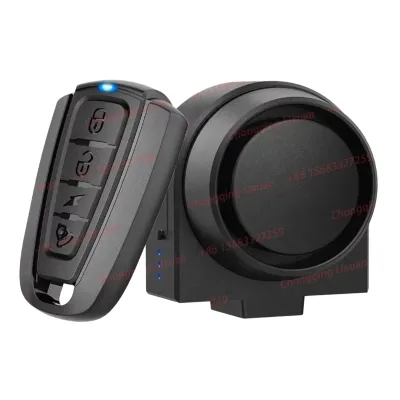


110dB Wireless Vibration Sensor Waterproof Bike Scooter Motorcycle Alarm
$5.90 - $7.90
MOQ: 100 Pieces




Comprehensive Sourcing Guide
MP3 Motorcycle Alarm Sourcing Guide
An MP3 Motorcycle Alarm combines anti-theft protection with onboard audio playback, and sourcing this hybrid product requires verifying both security performance and audio quality in a single qualification process. Buyers sourcing from Chinese manufacturing hubs should treat each listing as a starting point for structured due diligence rather than a finished specification. The product category sits at the intersection of motorcycle accessories, vehicle security systems, and consumer audio, which means quality risks can come from either subsystem.
This guide is written for importers, distributors, and aftermarket retailers who need to evaluate supplier listings critically before committing to sampling or bulk orders. It focuses on what can reasonably be verified from product-page data, what must be confirmed through direct supplier communication, and which documentation requests will filter out unreliable vendors early. All specific attributes referenced here are drawn from observed listing signals and should be treated as claims to validate, not established facts.
Product Scope and Observed Listing Signals
Listings in this category show meaningful variation in form factor and integration approach. Observed signals include headrest-placement formats, MP3 playback capability, and alarm functions positioned as the primary feature, with some listings described as two-way alarm systems offering remote confirmation of the vehicle's status. Model designations such as MS-1011 through MS-1014, MS380, and universal-fit variants suggest families of related products rather than isolated SKUs, so ask suppliers whether multiple models share the same internal platform. Placement type matters operationally: a headrest-mounted unit implies a different installation workflow and mounting hardware set than a concealed alarm module.
Material and finish details in observed listings include ABS and plastic housings, with color options such as golden, orange, and black/white. Packaging is consistently described as gift box plus carton, which signals retail-readiness, and one listing specifies 30 pieces per carton at 58.5x36x33.5CM—useful for calculating container utilization. Origin data points to Jiangmen and Chongqing, both established regions for motorcycle parts and vehicle electronics. When comparing listings, normalize these signals into a comparison sheet so that differences in placement, material, and packing configuration become explicit evaluation criteria rather than incidental details.
Technical Specifications to Verify
Electrical compatibility is the first technical gate. Observed listings reference 12V operation and some units supporting 12/24V, which matters because motorcycles, scooters, and larger two-wheelers do not share a single electrical standard. Confirm the operating voltage range, current draw in armed and standby modes, and behavior under engine-start voltage dips, since low-battery cranking conditions are a common failure trigger for vehicle electronics. Brushless motor claims appear in some listings; if audio output involves moving parts such as speakers or disc mechanisms, verify motor type and expected service life.
Audio and alarm performance require separate verification paths. For the MP3 function, confirm supported audio formats, storage media type, and the Digital Audio Coaxial output noted in one listing, if that matters to your integration scenario. For the security function, one listing specifies a decibel range of 105-125 dB—request the test method and measurement distance behind that figure, because siren loudness claims are frequently quoted without standardized conditions. Also verify remote-control range, two-way feedback behavior, and whether the alarm logic is configurable for sensitivity, since over-sensitive triggers generate false alarms that drive customer returns.
Compliance and Safety Documentation
Certification claims in observed listings include CE, ISO9001, RoHS, and CCC, sometimes bundled in single fields such as "CE,ISO9001" alongside other attributes. Treat these as listing-level claims that require documentary confirmation. For CE, ask which directives the supplier declares conformity against and request the Declaration of conformity document, not just the CE mark image. RoHS compliance matters for any electronic product entering the EU, so request test reports covering restricted substances in the housing plastic, solder, and wiring harness. CCC, where claimed, applies to certain products sold in China and is not a substitute for destination-market certifications.
Quality management claims such as ISO9001 should be verified with a valid certificate number and scope that actually covers the manufacturing site producing your order, since certificates sometimes belong to a parent entity or a different facility. One listing states "100% Tested," which is a process claim; ask what testing covers—functional check, aging, waterproofing, or vibration—and whether test records can be provided per shipment. Buyers importing into regulated markets should also clarify electromagnetic compatibility performance, because alarm transmitters and audio circuits both emit RF and must not interfere with the vehicle's own electronics.
Cost Drivers and Commercial Terms
Observed price ranges span roughly 0.3 to 12.8 USD, and MOQs range from 10 to 1000 pieces, indicating that this category includes both low-cost accessory modules and more complete alarm systems. This spread means your landed cost depends heavily on which feature set you actually need; resist anchoring on the lowest listed price, which typically corresponds to the simplest configuration. Key cost drivers include two-way versus one-way remote architecture, audio hardware quality, housing material, and packaging format, since retail gift boxes add per-unit cost relative to plain cartons.
Observed commercial terms include T/T, L/C, and OA payment options, OEM service availability, customization offers, a quoted 20-day delivery time, and neutral packing options. When negotiating, confirm which terms apply at which order volumes, because flexible payment and low MOQs often come with proportionally higher unit prices. The 20-day lead time figure should be validated against current production schedules, particularly if customization is involved, since tooling, logo printing, or firmware changes extend timelines. Request an itemized quotation separating unit price, packaging, and any customization fees so that future price negotiations have a transparent baseline.
Supplier Qualification and Quality Control
Qualify suppliers by triangulating their claimed capabilities with verifiable evidence. Start with the fundamentals visible in listings: registered brand names such as CQLX, stated OEM service, customization availability, and origin regions like Jiangmen and Chongqing. Then move beyond the listing: request business licenses, confirm the factory address matches the certificate holder, and ask whether the supplier manufactures or trades. Traders are not automatically disqualifying, but they add a communication layer that affects defect resolution speed, so price that risk into your decision.
Quality control should be staged across the order lifecycle. Before production, approve a golden sample covering both alarm function and MP3 playback, documented with photos and signed by both parties. During production, define inspection criteria in writing: function tests for arming, disarming, remote range, siren output, and audio playback, plus cosmetic checks on housing color and finish against approved references. Before shipment, conduct or commission a pre-shipment inspection on an agreed sampling plan, checking carton markings, packing counts such as the stated 30 pcs/carton configuration, and label accuracy. Suppliers offering "100% Tested" claims should be asked to define their test coverage; a written test protocol is worth more than the claim itself.
Long-Term Procurement Checks
Sustainable sourcing in this category depends on repeatable quality across production runs, not just a strong first order. Establish periodic requalification: re-confirm certificates annually, since certifications lapse and scope changes, and re-run sample testing on each new production batch, particularly after any component change. Ask suppliers to notify you of BOM changes in writing; silent substitutions in sirens, remote modules, or audio chips are a common source of field failures and customer complaints in vehicle electronics. Track defect rates by batch and share failure analysis with the supplier to drive corrective actions.
Plan the commercial relationship for scale. If you started with a low MOQ entry order, negotiate volume-based pricing tiers tied to annual commitments rather than single transactions. Confirm consistency of packaging standards—gift box plus carton as observed—and verify that neutral packing or your own branding remains available as volumes grow. Maintain a documented specification sheet for each model in your assortment, including voltage range, placement type, decibel performance, and packing dimensions, so that any supplier transition or model replacement can be benchmarked against an established baseline rather than starting qualification from zero each time.
FAQs
What certifications do mp3 motorcycle alarms typically have?
Most mp3 motorcycle alarms carry CE and RoHS certifications to ensure compliance with international safety and environmental standards. Some models also include ISO9001 certification for quality management. These certifications verify that the product meets rigorous manufacturing requirements and is safe for global distribution and use.
Can I customize the packaging for mp3 motorcycle alarms?
Yes, customization is available for mp3 motorcycle alarms. Suppliers often offer options such as gift boxes combined with carton boxes for retail-ready presentation. You can also request neutral packing or specific branding on the packaging to align with your market requirements and distribution strategy.
What is the typical lead time for mp3 motorcycle alarms?
The typical lead time for mp3 motorcycle alarms is approximately 20 days. This duration allows manufacturers to complete production, quality testing, and packaging processes. Buyers should confirm specific delivery schedules with suppliers, as lead times may vary based on order volume and current production capacity.
Which materials are used in MP3 Motorcycle Alarm construction?
Mp3 motorcycle alarms are commonly constructed from durable plastic or ABS materials. These materials provide robust protection against environmental factors while keeping the device lightweight. The choice of material ensures longevity and reliability for motorcycle applications, resisting vibrations and temperature changes during regular use.
What is the minimum order quantity for mp3 motorcycle alarms?
The minimum order quantity for mp3 motorcycle alarms typically ranges from 10 to 1000 pieces, with some suppliers requiring a specific MOQ of 300 pieces. Buyers should verify the exact MOQ with their chosen supplier, as it depends on the product model and customization requirements.
How loud are mp3 motorcycle alarms?
Mp3 motorcycle alarms generally produce sound levels between 105 and 125 decibels. This high decibel range ensures the alarm is audible in noisy environments, effectively deterring theft. The loudness is a critical feature for security devices, providing a strong auditory warning to potential intruders.