Source Multi-Function Steel Home Gym for Home, Gymnasium, Community
Compare 30 multi-function steel home gym units from verified manufacturers. These strength fitness equipment options feature stainless steel frames, manual power sources, and customizable colors for home, gymnasium, and community applications.
Key considerations
Products List


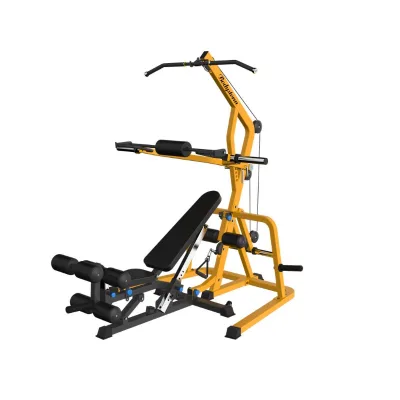


Hot Selling Multi Home Gym Equipment Single Station Multi Function Gym
$189.00 - $219.00
MOQ: 1 Pieces


$688.00
MOQ: 1 Pieces


Multi Strength Fitness Home Gym Equipment, Home Gym Equipment Multi Station Fitness
$110.00 - $170.00
MOQ: 10 Pieces
Comprehensive Sourcing Guide
Strategic Sourcing Guide for Multi-Function Steel Home Gyms
Understanding the Technical Architecture of Multi-Station Equipment
When sourcing multi-function steel home gyms, buyers must first distinguish between the structural integrity of the frame and the functional versatility of the workout stations. The core of these machines relies heavily on the material composition, with stainless steel and general steel being the predominant choices observed in the current market. The frame material is critical for longevity, particularly in home environments where equipment may be subjected to varying humidity levels or frequent use. Stainless steel offers superior corrosion resistance, which is a significant advantage for long-term durability, while standard steel provides a robust foundation often finished with powder coatings to prevent rust.
The mechanical operation of these units is typically manual, relying on gravity and weight stacks rather than electric motors or pneumatic systems. This manual power source simplifies maintenance and reduces the risk of electronic failure, making the equipment suitable for a wide range of users. The primary exercise focus for these multi-function units is often the arm, though the design usually allows for comprehensive body workouts. The structural footprint is substantial, with specific model dimensions varying significantly based on the intended station configuration. For instance, specific models have been observed with dimensions such as L1490mm x W1160mm x H2105mm, while others may measure L1370mm x W1210mm x H2026mm. Larger commercial-grade variants can extend to dimensions like 305cm in length, 231cm in width, and 210cm in height. Buyers must verify that the available floor space in their intended location, whether a residential home or a community gymnasium, can accommodate these specific physical requirements.
Compliance Standards and Certification Verification
In the realm of fitness equipment, compliance is not merely a formality but a prerequisite for market entry and user safety. The supplied data indicates that reputable manufacturers often provide certifications such as CE, ISO, and RoHS. These certifications serve as indicators that the product meets specific safety, environmental, and quality benchmarks. The CE mark, for example, suggests conformity with health, safety, and environmental protection standards for products sold within the European Economic Area. Similarly, RoHS compliance ensures that the equipment is manufactured without specific hazardous materials, which is increasingly important for environmentally conscious buyers and regulatory adherence.
It is crucial for procurement teams to verify the validity of these certifications rather than accepting them as generic marketing claims. The presence of ISO certification, specifically related to quality management, suggests a manufacturer's commitment to consistent production standards. However, buyers should note that while some data points mention ISO 27001, this is primarily an information security standard and may not be directly relevant to the physical safety of gym equipment unless the manufacturer integrates it into their broader quality assurance protocols. Instead, the focus should remain on certifications directly related to product safety and material composition. When evaluating a supplier, request copies of the actual certification documents and verify the scope of the certification to ensure it covers the specific product model being purchased. This due diligence helps mitigate the risk of acquiring equipment that may not meet the safety regulations of the destination market.
Cost Drivers and Pricing Dynamics
The pricing structure for multi-function steel home gyms is influenced by a complex interplay of factors, including material costs, manufacturing complexity, and logistical requirements. The observed price range for these units spans from approximately $90 to $6,850, a wide variance that reflects differences in build quality, feature sets, and brand positioning. Lower-priced units often utilize standard steel with basic finishing and fewer workout stations, while higher-priced models typically incorporate stainless steel frames, advanced ergonomics, and a broader range of exercise capabilities.
Material costs are a primary driver, with stainless steel commanding a premium over standard steel due to its durability and resistance to corrosion. Additionally, the customization options available, such as logo printing, color selection, and specific dimension adjustments, can significantly impact the final cost. Buyers should be aware that customization is generally available but may incur additional fees or require longer lead times. The packaging method also plays a role in the cost structure; units packed with waterproof film, foam, and cartons ensure safe transit but add to the overall weight and volume, influencing shipping expenses.
When analyzing the price, buyers must also consider the Minimum Order Quantity (MOQ). The market data suggests an MOQ range of 1 to 100 units, with specific instances of 50 pieces being a common threshold for certain models. Purchasing below the MOQ may result in higher per-unit costs or require the buyer to pay a setup fee. Conversely, ordering in larger volumes, such as the capacity of a 40HQ container which can hold up to 200 pieces for certain models, can significantly reduce the unit cost. However, this strategy requires careful inventory management to avoid overstocking.
Typical Applications and User Demographics
Multi-function steel home gyms are designed to serve a diverse range of applications, from private residential use to public community centers and professional gymnasiums. The product attributes indicate that these units are suitable for adults and are generally unisex, making them versatile for households with multiple users of varying fitness levels. The maximum user weight capacity is a critical specification, with observed limits reaching up to 150kg. Buyers must ensure that the selected model can safely support the intended user base, particularly in commercial settings where the equipment may be subjected to heavier loads or more frequent use.
The application environment dictates the specific requirements for the equipment. In a home setting, the focus is often on space efficiency and ease of use, with users seeking a compact yet comprehensive workout solution. In contrast, gymnasiums and community centers require equipment that can withstand high traffic and offer a wide variety of exercises to cater to different fitness goals. The "Multi Gym" or "Multi Station Gym" classification implies that these units are designed to replace multiple single-purpose machines, offering a space-saving solution for facilities with limited square footage. The folding status is another consideration; while some models are explicitly noted as "Unfolded" or "Non-foldable," others may offer different configurations. Buyers should verify the assembly requirements and whether the equipment requires a permanent installation or can be moved as needed.
Supplier Evaluation and Manufacturing Capabilities
Selecting the right supplier is a critical step in the procurement process, as it directly impacts product quality, delivery reliability, and after-sales support. The market data identifies the business type as "Manufacturer/Factory," which suggests that the suppliers are directly involved in the production process. This can be advantageous for buyers seeking better pricing and more direct communication regarding product specifications. However, it is essential to verify the manufacturer's capacity and location to ensure they can meet the demand.
The geographic origin of the products is predominantly China, with specific manufacturing hubs noted in Jiangsu and Zhejiang provinces. These regions are known for their robust manufacturing infrastructure and expertise in fitness equipment production. Buyers should evaluate the supplier's logistics capabilities, including their ability to handle international shipping and customs clearance. The lead time for these products is typically 25 to 30 days after the order is confirmed and the deposit is received. This timeline should be factored into the procurement schedule to avoid delays in equipment deployment.
When evaluating a supplier, buyers should look for evidence of a robust quality control system. This includes in-process inspections, final product testing, and adherence to the stated certifications. The supplier's willingness to provide samples or detailed product specifications is also a positive indicator of their transparency and commitment to quality. Additionally, the availability of customization services, such as logo printing and color options, demonstrates the supplier's flexibility and ability to tailor products to specific buyer needs.
Quality Control and Long-Term Procurement Considerations
Ensuring the long-term reliability of multi-function steel home gyms requires a proactive approach to quality control and maintenance planning. The net weight and gross weight of the units, such as 115.5kg and 119.4kg respectively for certain models, provide insight into the density and sturdiness of the construction. Heavier units often indicate a more robust build, which can translate to better stability during use. However, weight alone is not a definitive measure of quality; the design of the frame, the quality of the welds, and the finish of the steel are equally important factors.
Buyers should establish clear quality control protocols before placing an order. This may include requesting third-party inspection reports, conducting pre-shipment inspections, or implementing a phased delivery schedule to test the equipment upon arrival. The packaging details, such as the use of waterproof film and foam, are essential for protecting the equipment during transit, but buyers should also verify that the packaging is sufficient to prevent damage during handling and storage.
Long-term procurement considerations also involve the availability of spare parts and the supplier's after-sales support. A reliable supplier should be able to provide replacement parts, such as cables, pulleys, or weight plates, in the event of wear and tear. The warranty terms should be clearly defined, covering both the frame and the mechanical components. Additionally, buyers should consider the scalability of their procurement strategy. If the initial order is successful, the ability to place repeat orders with consistent quality and pricing is crucial for maintaining a stable inventory of fitness equipment.
Summary of Key Specifications and Comparison
To facilitate a clearer understanding of the variations in multi-function steel home gyms, the following table summarizes the key specifications observed in the market data. This comparison highlights the differences in dimensions, certifications, and packaging across different models, aiding buyers in making informed decisions based on their specific requirements.
| Specification | Model HG01 | Model HG02 | Model ES-4407 | Model ES-424 |
|---|---|---|---|---|
| Dimensions | L1490W1160H2105mm | L1370W1210H2026mm | 305(L)*231(W)*210(H)cm | 130X100X220CM |
| Material | Steel | Stainless Steel | Steel | Steel |
| Certifications | CE, ISO, RoHS | ISO, RoHS | ISO, RoHS | CE, RoHS |
| Origin | Jiangsu, China | China | Zhejiang | Zhejiang |
| Packing | Carton | Carton | Waterproof Film+Foam+Carton | Waterproof Film+Foam+Carton |
| Max User Weight | 150kg | 150kg | 150kg | 150kg |
| Foldable | No | No | No | No |
This table illustrates that while the core material and user weight limits remain consistent across models, the dimensions and specific certifications vary. Buyers should use this data as a starting point for their evaluation, ensuring that the selected model aligns with their spatial constraints and regulatory requirements. By carefully analyzing these specifications and adhering to the sourcing guidelines outlined above, buyers can effectively navigate the complex market of multi-function steel home gyms and secure high-quality equipment that meets their operational needs.
FAQs
What materials are used for the frame of multi-function steel home gyms?
Frames are constructed from steel or stainless steel to ensure durability. Stainless steel offers superior corrosion resistance, while standard steel provides a robust foundation often finished with powder coatings to prevent rust in home environments.
Can I customize the color and logo on these gym units?
Yes, customization is available for both colors and logos. Buyers can select black or customizable colors, and manufacturers often offer logo printing services, though these options may incur additional fees or require longer lead times.
What is the maximum user weight capacity for these multi-gym stations?
The maximum user weight capacity observed is up to 150kg. Buyers must ensure the selected model can safely support the intended user base, particularly in commercial settings where equipment may be subjected to heavier loads.
How long does delivery take after confirming an order?
Delivery typically takes 25 to 30 days after the order is confirmed and the deposit is received. This timeline should be factored into the procurement schedule to avoid delays in equipment deployment for home or gym use.
Which certifications do these fitness equipment models typically hold?
Models often hold CE, ISO, and RoHS certifications to indicate safety and quality. These marks suggest conformity with health, safety, and environmental standards, ensuring the equipment is manufactured without specific hazardous materials.
What is the minimum order quantity for purchasing these gym systems?
The minimum order quantity ranges from 1 to 100 units, with 50 pieces being a common threshold. Purchasing below the MOQ may result in higher per-unit costs or require the buyer to pay a setup fee.
Are these multi-function gyms suitable for home and community use?
Yes, these units are designed for home, gymnasium, and community applications. They are unisex and suitable for adults, offering comprehensive workouts while fitting various space requirements from residential homes to public centers.