Source multi-function tactical vest for Hunting, Training, Protection
Find 30 multi-function tactical vest options for tactical training, outdoor activities, and personal protection. Compare materials like nylon and polyester, customization features, and delivery times from global suppliers.
Key considerations
Products List


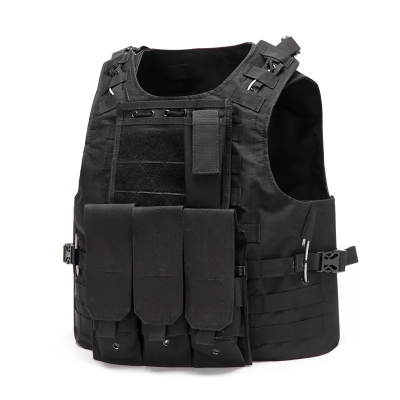
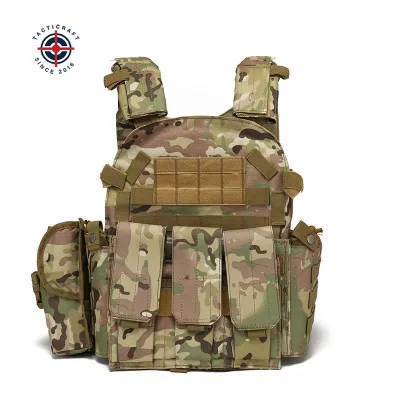
Tactical Vest Multifunctional Outdoor Camouflage Combat Vest Protective Clothing
$10.50 - $13.85
MOQ: 100 Pieces





Comprehensive Sourcing Guide
Strategic Sourcing Guide for Multi-Function Tactical Vests
The global demand for multi-function tactical vests has expanded significantly, driven by the needs of law enforcement, military units, security personnel, and outdoor enthusiasts. For procurement professionals, navigating this market requires a disciplined approach that separates verified product attributes from marketing generalizations. The following guide synthesizes observed market data and technical specifications to provide a robust framework for sourcing these specialized garments. Buyers must prioritize the alignment of material properties, functional requirements, and supplier capabilities to ensure operational readiness and cost efficiency.
Technical Specifications and Material Composition
The foundation of any tactical vest lies in its material composition and structural specifications. In the current market, the primary materials observed are Nylon and Polyester, with specific denier counts indicating durability. Data indicates the presence of 500D and 600D Polyester standards, which are critical for balancing weight and abrasion resistance. A 600D rating typically suggests a heavier, more durable fabric suitable for high-intensity tactical training or hunting, whereas 500D may offer a lighter alternative for extended wear during spring or autumn operations.
Beyond fabric density, the physical dimensions of the vest are a key differentiator. Observed product standards list specific dimensional profiles, such as 1053040 and 554550, which likely refer to the packed or deployed dimensions of the vest and its associated pouches. Another standard dimension noted is 605045 CM, which may pertain to the packaging or the overall footprint of the unit. Procurement teams must verify that these dimensions align with the intended load-bearing requirements and the specific body armor systems they are designed to accommodate.
The hardness profile of the vest is another critical technical variable. Products are described as having a "Soft & Hard" hardness attribute, indicating a modular design capable of accepting rigid ballistic plates or soft armor inserts. This modularity allows the vest to transition between lightweight patrol configurations and heavy-duty combat setups. The color palette is predominantly Camouflage and Black, with Army Green also appearing in specific models, ensuring compatibility with various environmental backdrops.
Functional Applications and Usage Scenarios
Multi-function tactical vests are engineered for a diverse range of applications, ranging from professional tactical training to personal protection and recreational hunting. The observed application spectrum includes Tactical Training, Outdoor Activities, Hunting, and Personal Protection. This versatility suggests that the vests are designed with multiple attachment points, such as MOLLE (Modular Lightweight Load-carrying Equipment) webbing, to accommodate pouches for magazines, medical kits, and communication devices.
The seasonal suitability of these vests varies by model. While some are optimized for Spring and Autumn conditions, others are explicitly rated for Winter usage. This distinction is vital for procurement, as winter-rated vests may include additional insulation or specific ventilation systems to manage body temperature in extreme cold. The target demographic is largely unisex, though specific models are designated for men, requiring buyers to check gender specifications against their user base.
The functional intent is consistently labeled as "Tactical Use" or "Tacticaluse," emphasizing the vest's role in high-stress environments. Whether for law enforcement patrols or private security operations, the vest must provide rapid access to equipment while maintaining a low profile. The inclusion of "Hunting" in the application list further validates the vest's utility in outdoor survival scenarios, where durability and camouflage effectiveness are paramount.
Customization and Branding Capabilities
A significant advantage in the current tactical vest market is the availability of extensive customization options. Suppliers frequently offer customized logos through various methods, including embossing, silkscreen, foil printing, and standard printing. This flexibility allows organizations to brand their gear with unit insignias or corporate logos, fostering team identity and professional appearance.
Customization extends beyond aesthetics to functional modifications. The "Metal" attribute is listed as "as Requested," suggesting that buyers can specify the type of metal hardware used for buckles, zippers, and attachment points. This is crucial for environments where magnetic interference is a concern or where specific corrosion resistance is required. Furthermore, the "Service" attribute confirms that OEM (Original Equipment Manufacturer) and ODM (Original Design Manufacturer) services are welcome, enabling buyers to request unique designs or specific feature integrations that are not available in off-the-shelf models.
The packaging also offers customization potential. Observed packing methods include 1 piece per OPP bag, 1 piece per Poly Bag, and carton packaging. For bulk orders, the carton method (605045 CM) is likely the standard for efficient shipping and storage. Buyers should confirm the exact packaging requirements to ensure compatibility with their logistics infrastructure and to protect the vests during transit.
Cost Drivers and Pricing Dynamics
Understanding the cost structure of tactical vests is essential for budgeting and supplier negotiation. The observed price range in the market spans from $5.59 to $300 USD. This wide variance is driven by several factors, including material quality, the complexity of the design, the inclusion of ballistic plates, and the level of customization requested.
The lower end of the price spectrum likely corresponds to basic vests made from standard Nylon or Polyester with minimal customization and no integrated armor. These are suitable for training exercises or light-duty applications. Conversely, the higher price points reflect vests with premium 600D materials, advanced modular systems, and specialized features like winter insulation or custom branding.
Minimum Order Quantity (MOQ) is another significant cost driver. The observed MOQ range is between 1 and 500 units. An MOQ of 1 allows for sample testing and small-scale procurement, while an MOQ of 500 is typical for large-scale government or corporate contracts. Buyers must balance their immediate needs against the potential for economies of scale. Additionally, the lead time for production varies, with sample days ranging from 3-5 days to 7-15 days, and delivery times mirroring these windows. Faster turnaround times may incur premium costs, so procurement planners should factor in these timelines when scheduling operations.
Supplier Evaluation and Verification Protocols
When evaluating potential suppliers for tactical vests, buyers must adopt a rigorous verification process. The origin of the products is consistently listed as China, a major manufacturing hub for tactical gear. However, the location of the sale region is global, indicating that suppliers are accustomed to international logistics.
Key verification points include the "Shipment Ways," which commonly include DHL, UPS, FedEx, and FOB Guangzhou. Buyers should assess the reliability of these shipping partners and ensure that the Incoterms (e.g., FOB) align with their risk management strategies. The "Sample Day" and "Delivery Time" are critical metrics for supplier reliability. A supplier offering a 3-5 day sample day demonstrates agility, while a 7-15 day lead time suggests a more complex production process.
Buyers should also scrutinize the "Service" capabilities. The acceptance of OEM and ODM services indicates a supplier's willingness to collaborate on product development. However, buyers must verify the supplier's capacity to meet quality standards without compromising on the "Hardness" or "Material" specifications. It is advisable to request physical samples to test the "Soft & Hard" attributes and the durability of the "Metal" components before committing to a large order.
Quality Control and Long-Term Procurement Strategy
Quality control in the tactical vest sector must focus on the integrity of the stitching, the strength of the webbing, and the functionality of the fasteners. The "Application" of the vest in "Tactical Training" and "Personal Protection" necessitates that the product withstands rigorous physical stress. Buyers should verify that the "Material" (Nylon or Polyester) meets the required denier standards (500D or 600D) and that the "Color" (Camouflage, Black, Army Green) is fade-resistant and consistent with the specified model.
Long-term procurement considerations involve establishing a relationship with a supplier who can provide consistent quality over time. The "Customization" feature, while attractive, requires clear documentation to ensure that future orders match the initial prototype. Buyers should maintain a detailed record of the "prod_model" (e.g., VT-013, TV-V002, WJV2510094464) to ensure traceability and consistency in future replenishment orders.
Furthermore, the "Package" specifications must be standardized to prevent damage during storage and transport. Whether using 1PCE/OPP or Carton packaging, the protection of the vest's structural integrity is paramount. Buyers should also consider the environmental impact of the materials and packaging, ensuring that the supplier adheres to any relevant sustainability standards, even if not explicitly listed in the product data.
Comparative Analysis of Product Models
To assist in decision-making, the following table summarizes the key attributes of observed product models. This comparison highlights the diversity in specifications and helps buyers identify the most suitable options for their specific needs.
| Product Model | Material | Standard/Spec | Application | Season | Color | Customization |
|---|---|---|---|---|---|---|
| VT-013 | Nylon | 1053040 | Tactical Training, Outdoor, Hunting | Spring / Autumn | Camouflage | Available |
| TV-V002 | Polyester | 554550 | Tactical Training, Personal Protection | - | Black | Customized Logo |
| WJV2510094464 | - | 500D | - | - | - | - |
| V2022021010 | - | 600D | Tactical Use | - | - | - |
| V2022020915 | - | - | - | Winter | - | - |
| V2022020918 | - | - | Hunting | - | - | - |
| V2022012112 | - | - | - | - | - | - |
| V2022012109 | Polyester Fiber | - | Tactical Training, Personal Protection, Outdoor, Hunting | - | Army Green | Customized, Emboss/Silkscreen |
| YB-021 | - | 605045 CM | - | - | - | Carton Packing |
This table illustrates that while some models are defined by specific materials and dimensions, others are characterized by their application or seasonal suitability. Buyers must cross-reference these attributes with their operational requirements to select the optimal vest.
Conclusion
Sourcing multi-function tactical vests requires a meticulous approach that balances technical specifications, functional needs, and supplier capabilities. By focusing on verified attributes such as material denier, dimensional standards, and customization options, procurement professionals can ensure the acquisition of high-quality gear that meets the demands of tactical operations. The wide range of available models, from basic training vests to specialized winter gear, offers flexibility for diverse user groups. However, the variability in pricing, lead times, and MOQs necessitates careful planning and rigorous supplier evaluation. Ultimately, the success of a procurement strategy depends on the ability to match the specific "prod_model" characteristics with the organization's operational goals, ensuring that every vest delivered provides the reliability and performance required in the field.
FAQs
What materials are used for multi-function tactical vests?
These vests are primarily constructed from Nylon or Polyester, with specific standards like 500D and 600D denier ratings. The material choice determines durability and weight, with 600D offering heavier protection suitable for high-intensity tactical training or hunting scenarios.
Can I customize the logo on these tactical vests?
Yes, customization is available for logos through methods like embossing, silkscreen, foil printing, or standard printing. Buyers can request specific branding to match unit insignias or corporate identities, ensuring a professional appearance for law enforcement or security teams.
Which seasonal conditions are these vests designed for?
The product range includes models optimized for Spring and Autumn, as well as specific variants rated for Winter usage. This seasonal variety ensures that users can select gear appropriate for their specific environmental conditions, balancing ventilation and insulation needs.
How do I find suppliers with specific lead times?
Suppliers offer varying delivery times, with sample days ranging from 3 to 5 days and production lead times up to 15 days. Buyers should verify these timelines during the sourcing process to ensure they align with operational schedules and urgent deployment requirements.
What is the minimum order quantity for these vests?
The minimum order quantity ranges from 1 unit for sample testing to 500 units for large-scale contracts. This flexibility allows buyers to start with small batches for evaluation before committing to bulk procurement for government or corporate contracts.
Are these vests suitable for personal protection and hunting?
Yes, the application scope explicitly includes tactical training, personal protection, outdoor activities, and hunting. The modular design often supports soft and hard armor inserts, making them versatile for both professional security operations and recreational survival scenarios.