Source Multifunctional Bonsai Trimmer Head for Garden, Farm, and Landscaping
Explore 30 listings of Multifunctional Bonsai Trimmer Head options including brush cutter blades and trimmer heads. Compare specifications like blade length, material, and power source to find suitable parts for garden and farm equipment.
Key considerations
Products List

Multifunctional Working Head High Branch Trimmer Head Lengthening Hedge Trimmer
$95.00 - $185.00
MOQ: 2 Pieces


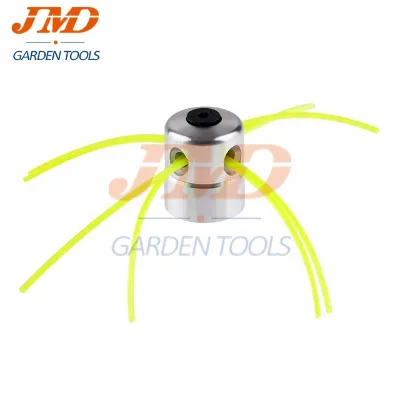
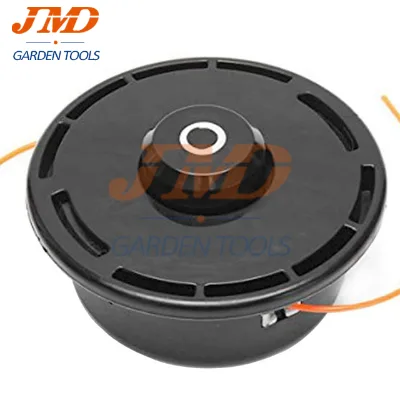
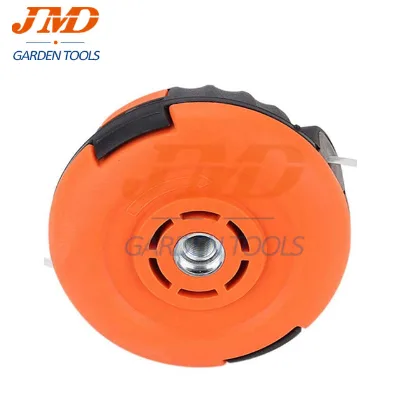
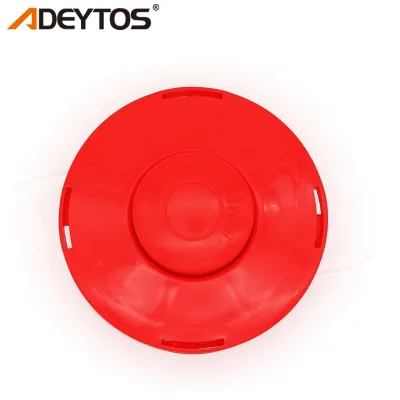


Comprehensive Sourcing Guide
Strategic Sourcing Guide for Multifunctional Bonsai Trimmer Heads
Understanding the Technical Landscape of Trimmer Heads
When sourcing a Multifunctional Bonsai Trimmer Head, buyers must first navigate a complex technical landscape where product attributes often vary significantly between listings. The term "multifunctional" in this context typically refers to the adaptability of the head to different cutting tasks, such as fine trimming for bonsai or broader clearing for garden maintenance. Based on observed market data, the technical specifications for these components are not uniform. For instance, while some listings describe a product with a "Dual" blade type and an engine displacement of 22.5cc, other entries focus on "Grass trimmer head" components made from "nylon" or "Carbon Steel."
A critical observation for the buyer is the divergence in power sources listed for similar product categories. The data indicates a mix of "Gasoline," "Electric," "Electricity," and "Manpower" options. A true Multifunctional Bonsai Trimmer Head intended for precision work often relies on electric or manual power sources to ensure control, whereas gasoline-powered variants with a 22.5cc engine displacement are generally suited for heavy-duty brush cutting rather than delicate bonsai work. The blade length also varies, with observed specifications reaching up to 750mm, which is substantial for a bonsai application. Buyers must verify that the physical dimensions of the trimmer head align with the scale of the intended task, as a 750mm blade is likely too large for fine bonsai styling.
Furthermore, the material composition is a primary determinant of performance. The supply chain offers options ranging from "nylon" lines, which are flexible and safe for delicate foliage, to "Carbon Steel" blades, which offer durability for tougher vegetation. Some listings also mention "Aluminum" as a material, likely referring to the housing or mounting components rather than the cutting element itself. The surface finish, described as "Brushed" in some contexts, may affect the aesthetic quality and corrosion resistance of the unit. When evaluating a potential supplier, the buyer must cross-reference these material and power specifications against the specific requirements of bonsai cultivation to avoid purchasing a heavy-duty tool unsuited for precision horticulture.
Compliance and Certification Verification
In the global B2B market for garden tools, compliance and certification are non-negotiable elements that validate the safety and quality of the product. The provided data explicitly lists "CE" as a certification for certain units, indicating that the product meets the essential health, safety, and environmental protection requirements for the European Economic Area. However, the presence of a CE mark in one listing does not guarantee that every "Multifunctional Bonsai Trimmer Head" from the same supplier or region possesses this certification. Buyers must treat certification as a specific attribute to be verified for each order rather than a universal guarantee.
The origin of the products plays a significant role in the compliance landscape. Many listings identify the place of origin as "Taizhou, Zhejiang, China" or simply "Zhejiang, China." While these regions are major manufacturing hubs for garden tools, the regulatory environment can vary. The "CE" certification mentioned is a strong indicator of adherence to European standards, but buyers should also inquire about other regional standards if the target market is North America or Asia. For example, products intended for the US market may require UL certification or compliance with OSHA standards, which are not explicitly mentioned in the supplied data.
Additionally, the "Customization" attribute is available, suggesting that suppliers can tailor products to meet specific regional compliance needs. This includes modifying the power source or the physical dimensions to align with local safety regulations. The "Customized support" for OEM, OBM, and ODM further implies that buyers can request specific compliance documentation as part of the manufacturing process. However, the buyer must explicitly request proof of these certifications before finalizing the purchase. Relying on the general presence of a CE mark in a product description without verifying the specific batch or model number can lead to customs delays or legal liabilities. The "Outer Dia 150mm" standard mentioned in the data provides a specific dimensional benchmark, but buyers should verify if this standard aligns with the safety regulations of their target market regarding blade clearance and safety guards.
Cost Drivers and Pricing Dynamics
The pricing structure for multifunctional bonsai trimmer heads is influenced by a variety of factors, including material costs, manufacturing complexity, and the level of customization required. The observed price range in the market spans from $0.10 to $185.00 USD, a variance that reflects the diversity of the product offerings. The lower end of this spectrum likely corresponds to simple replacement parts, such as nylon trimmer heads or basic blades, while the higher end may encompass complete units with complex engine systems, advanced safety features, or premium branding.
Material composition is a primary cost driver. Units constructed with "Carbon Steel" or "Aluminum" components generally command a higher price than those made primarily of "nylon" due to the raw material costs and the precision machining required. The inclusion of a "Diaphragm Type" carburetor, as seen in some gasoline-powered listings, also adds to the manufacturing cost compared to simpler electric or manual mechanisms. Furthermore, the "Self-shutdown" brake feature represents an added safety mechanism that increases production costs but adds significant value for professional users.
Packaging and logistics also impact the final cost. The data shows variations in packaging, ranging from "PP Bag" to "Carton" and "Master Carton Package." The "Size of Package" is listed as 1150290230mm for certain units, which affects shipping volume and freight costs. Buyers should consider whether the packaging is designed for bulk shipping or retail display, as this can influence the unit price. The "G/N.Weight" of 6.6kgs/5.5kgs indicates the weight of the product, which directly correlates with shipping expenses.
Minimum Order Quantity (MOQ) is another critical factor in cost management. The observed MOQ range spans from 1 to 1000 units. For buyers seeking to test the market or fulfill small-scale orders, an MOQ of 1 allows for low-risk procurement. However, larger orders typically benefit from economies of scale, potentially lowering the per-unit cost. The "Selling Units" are listed as "Single item" in some contexts, suggesting flexibility in order sizes. Buyers must balance their budget constraints with the need for inventory depth, keeping in mind that higher customization levels, such as OEM branding, may require higher MOQs to be economically viable.
Typical Applications and Operational Versatility
The application of multifunctional bonsai trimmer heads extends beyond simple grass cutting, encompassing a wide range of horticultural and agricultural tasks. The data explicitly categorizes these products for "Garden and Farm" applications, indicating their suitability for both residential landscaping and commercial agricultural use. The "Applicable Equipment" is listed as "Cultivator," suggesting that these trimmer heads can be integrated into larger machinery systems for versatile field work.
For bonsai enthusiasts, the "Multifunction" aspect is particularly relevant. The ability to switch between different blade types, such as "Dual" blades or "nylon" lines, allows for precise trimming of delicate branches and foliage. The "Brush Cutter Blade" and "Trimmer Head" classifications highlight the dual nature of these tools, capable of handling both fine detailing and heavier vegetation removal. The "Operation Mode" being "Multifunction" reinforces this versatility, allowing users to adapt the tool to various tasks without changing the entire machine.
However, the power source must be carefully matched to the application. While "Gasoline" and "Electric" options are available, the "Manpower" or manual option might be preferred for delicate bonsai work to ensure maximum control and minimize the risk of damaging the plant. The "Color" options, including "Orange" and "Customizable," also play a role in application, as certain colors may be preferred for visibility in specific lighting conditions or for brand identification in professional settings.
The "Type" of the product, described as "Hand-held," "Garden Tool Parts," and "Brush cutter parts," further defines its operational context. Hand-held units offer portability and ease of use, making them ideal for intricate bonsai work in confined spaces. The "Length of Blade" of 750mm, while impressive, may be too large for fine bonsai trimming, suggesting that buyers should look for models with adjustable or smaller blade configurations for precision tasks. The "Surface" finish, described as "Brushed," may also be relevant for applications where the tool is exposed to moisture and requires a durable, corrosion-resistant finish.
Supplier Evaluation and Selection Criteria
Selecting the right supplier for multifunctional bonsai trimmer heads requires a rigorous evaluation process that goes beyond simple price comparisons. The data indicates that several suppliers operate out of "Taizhou, Zhejiang, China," a region known for its manufacturing capabilities. However, the presence of multiple brand names, such as "LangYuan" and "MS," suggests a fragmented market with various levels of brand recognition and quality control.
Buyers should prioritize suppliers that offer robust "Customized support" for OEM, OBM, and ODM services. This capability indicates a supplier's willingness to collaborate on product development and adapt to specific buyer requirements. The availability of "Customization" as an attribute is a positive sign, suggesting that the supplier can modify the product to meet unique specifications. However, buyers must verify the supplier's capacity to deliver these customizations consistently and on time.
The "prod_model" numbers, such as "DL," "M06," "LY-138," and various "THTH" series codes, provide a way to track specific product lines. Buyers should request detailed specifications for each model to ensure they match the required technical parameters. The "prod_packing" methods, ranging from "Carton" to "Master Carton Package," should be evaluated for their ability to protect the product during transit. The "Size of Package" and "G/N.Weight" are also critical for logistics planning and cost estimation.
Certification status is another key evaluation criterion. While "CE" is listed, buyers should verify if the supplier can provide additional certifications relevant to their target markets. The "prod_standard" of "Outer Dia 150mm" is a specific technical detail that should be confirmed for each model. Suppliers that can provide clear documentation of their manufacturing processes and quality control measures are preferable. The "place of origin" and "prod_origin" details should be cross-referenced to ensure transparency and to assess the reliability of the supply chain.
Quality Control and Long-Term Procurement Strategies
Maintaining high quality in the procurement of multifunctional bonsai trimmer heads requires a proactive approach to quality control and long-term planning. The observed product attributes, such as "Self-shutdown" brakes and "Dual" blade types, suggest that safety and performance are key considerations. However, the variability in materials, from "nylon" to "Carbon Steel" and "Aluminum," necessitates a robust quality assurance process to ensure that the selected materials meet the required durability and performance standards.
Buyers should implement a multi-stage quality control process that includes pre-production sampling, in-process inspection, and final product testing. The "Surface" finish, described as "Brushed," should be inspected for consistency and resistance to wear and corrosion. The "Power Source" compatibility must be verified to ensure that the trimmer head functions correctly with the intended power unit, whether it is "Gasoline," "Electric," or "Manpower."
Long-term procurement strategies should focus on building strong relationships with suppliers who demonstrate reliability and flexibility. The "customized support" for OEM, OBM, and ODM indicates that suppliers are capable of adapting to changing market needs. Buyers should consider establishing long-term contracts with suppliers who can guarantee consistent quality and timely delivery. The "MOQ" range of 1 to 1000 offers flexibility, allowing buyers to scale their orders based on demand fluctuations.
Additionally, buyers should monitor the "prod_model" updates and new product releases to stay ahead of market trends. The "Color" options, including "Customizable," can be leveraged to differentiate products in the market. The "Application" for "Garden and Farm" suggests a broad market potential, and buyers should ensure that their procurement strategy aligns with the specific needs of their target customers. By focusing on quality control and long-term supplier relationships, buyers can mitigate risks and ensure a steady supply of high-quality multifunctional bonsai trimmer heads.
Comparative Analysis of Product Attributes
To facilitate informed decision-making, the following table summarizes key product attributes observed in the market for multifunctional bonsai trimmer heads. This comparison highlights the diversity of options available and assists buyers in identifying products that best match their specific requirements.
| Attribute | Observed Options | Relevance to Bonsai Trimming |
|---|---|---|
| Power Source | Gasoline, Electric, Electricity, Manpower | Electric/Manpower preferred for precision; Gasoline for heavy duty. |
| Blade Type | Dual, Brush Cutter Blade, Nylon | Nylon for delicate work; Dual/Steel for general clearing. |
| Material | Nylon, Carbon Steel, Aluminum | Nylon for flexibility; Steel for durability; Aluminum for housing. |
| Blade Length | Up to 750mm | 750mm is large; smaller lengths better for fine bonsai work. |
| Certification | CE | Essential for European markets; verify for other regions. |
| Packaging | PP Bag, Carton, Master Carton | Master Carton for bulk; PP Bag for single units. |
| Origin | Taizhou, Zhejiang, China | Major manufacturing hub; verify specific factory standards. |
| Customization | OEM, OBM, ODM, Customizable Color | High value for branding and specific technical needs. |
This table underscores the importance of careful selection based on the specific application. While the market offers a wide range of options, the buyer must prioritize attributes that align with the delicate nature of bonsai trimming. By leveraging this comparative analysis, buyers can make more informed decisions and select products that offer the best balance of performance, safety, and cost-effectiveness.
FAQs
What power sources are available for multifunctional bonsai trimmer heads?
Available power sources include gasoline, electric, electricity, and manpower options. Buyers must verify the specific power source for each model, as gasoline units with 22.5cc engines are suited for heavy-duty work rather than delicate bonsai tasks.
Which certifications should I look for when sourcing these trimmer heads?
Some listings explicitly show CE certification, indicating compliance with European safety standards. However, this certification is not universal across all models, so buyers must verify the specific batch or model number before finalizing any purchase.
How does the blade material affect the suitability for bonsai work?
Materials range from flexible nylon lines to durable carbon steel blades and aluminum components. Nylon is safer for delicate foliage, while carbon steel offers durability for tougher vegetation, requiring careful selection based on the specific horticultural task.
Can I find suppliers offering customization for OEM or ODM services?
Yes, customized support for OEM, OBM, and ODM is available for these products. This allows buyers to tailor specifications, but they must explicitly request proof of these capabilities and confirm the minimum order quantities required for custom runs.
What is the typical price range for multifunctional bonsai trimmer heads?
The observed price range spans from 0.10 to 185 USD depending on the product type. Lower prices typically cover simple replacement parts like nylon heads, while higher prices reflect complete units with complex engines or advanced safety features.
Which blade specifications are suitable for precision bonsai trimming?
Blade lengths can reach up to 750mm, which may be too large for fine bonsai styling. Buyers should verify dimensions and look for models with adjustable or smaller configurations to ensure the tool aligns with the scale of delicate horticultural tasks.
Where are the primary manufacturing locations for these garden tool parts?
Most products originate from Taizhou, Zhejiang, China, or generally Zhejiang, China. These regions are major manufacturing hubs, but buyers should cross-reference specific origin details to ensure transparency and assess the reliability of the supply chain.