Source Mustard Seed Silver Plated Necklace for decoration, health, and religious use
Explore 30 listings for the Mustard Seed Silver Plated Necklace, featuring options in stainless steel, 925 sterling silver, and alloy. Buyers can compare plating styles, pendant shapes, and customization availability to find the right fit for decoration, health, or religious occasions.
Key considerations
Products List


925 Sterling Silver Linked Ring Pendant Necklace with Green Chalcedony Gemstone
$8.30 - $8.70
MOQ: 40 Pieces

Stainless Steel Silver Round Hill Mustard Seed Necklace for Fashion Accessories
$1.58 - $1.92
MOQ: 100 Pieces


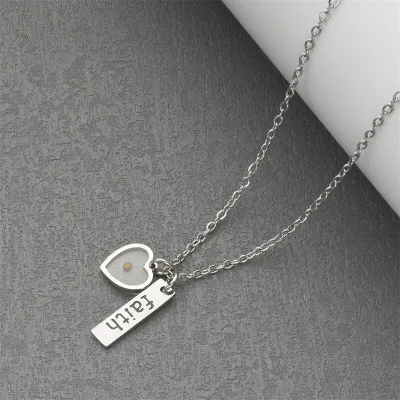


Comprehensive Sourcing Guide
Strategic Sourcing Guide for Mustard Seed Silver Plated Necklace Procurement
Understanding Product Specifications and Material Composition
When sourcing a Mustard Seed Silver Plated Necklace, buyers must first establish a clear understanding of the technical specifications that define the product's physical and aesthetic characteristics. The core keyword implies a specific design motif—the mustard seed—which typically translates to small, round, or slightly irregular circular pendants. Based on observed market data, the pendant shape is frequently categorized as "Circle" or "Charm," aligning with the geometric simplicity often associated with this style. The material composition is a critical differentiator in this category. While some listings specify "925 Sterling Silver" as the base metal, others utilize "Stainless Steel" or "Alloy" as the substrate. The plating process is consistently identified as "Silver" or "Gold," with "Electroplate" being the standard treatment technology employed to achieve the desired finish.
The physical dimensions and weight are equally vital for procurement planning. Observed specifications indicate a standard length of 45cm, often accompanied by an extension chain of 5cm to allow for adjustable sizing, resulting in a total standard of 45cm+5cm. Weight variations are significant across different material grades; listings have recorded weights ranging from 5.8g to 15g. A product weighing 15g likely indicates a heavier alloy or a substantial silver component, whereas a 5.8g item suggests a lighter alloy construction. Buyers should verify the exact weight and length against their target specifications, as these metrics directly influence the perceived value and shipping costs. The style is generally described as "Simple" or "Fashion," with popular elements including tassels and chains, which contribute to the overall aesthetic appeal.
Compliance, Certification, and Material Verification
In the realm of jewelry procurement, particularly for items involving silver plating and various metal alloys, compliance and material verification are paramount. While the provided data does not explicitly list specific third-party certifications such as ISO or REACH compliance for every item, the presence of "High Quality" as a feature suggests that suppliers adhere to certain internal standards. However, buyers cannot assume certification status without direct verification. The distinction between "925 Sterling Silver" and "Alloy" or "Stainless Steel" is a regulatory and quality matter that requires strict attention. Sterling silver must meet a specific purity standard, typically 92.5% silver content, whereas alloy products may contain varying percentages of copper, zinc, or other metals.
Buyers must verify the origin of the materials and the plating thickness. The "Place of Origin" is frequently cited as Guangdong, China, or Yiwu, Zhejiang, which are major manufacturing hubs for jewelry. While these locations indicate established supply chains, they do not guarantee specific quality standards without further due diligence. The "Condition" is universally listed as "100% Brand New," but this is a baseline expectation rather than a quality guarantee. To ensure compliance, procurement teams should request material test reports (MTRs) or plating thickness certificates, especially for products marketed as sterling silver. Without these documents, the claim of "High Quality" remains an observation rather than a verified fact. Furthermore, the "Customized Logo" feature implies that suppliers can modify the product, but buyers must ensure that any added branding does not compromise the structural integrity or the plating adhesion of the necklace.
Cost Drivers and Pricing Dynamics
The pricing of mustard seed silver plated necklaces is influenced by a complex interplay of material costs, manufacturing complexity, and order volume. The observed price range in the market spans from $0.50 to $25.25 USD. This wide variance is primarily driven by the base material. A necklace made of "Alloy" with a simple electroplated finish will naturally fall at the lower end of this spectrum, whereas a piece crafted from "925 Sterling Silver" with a higher grade of plating will command a premium price. The weight of the item is another significant cost driver; a 15g necklace will inherently cost more than a 5.8g version due to the increased material usage, regardless of the metal type.
Order Volume and Minimum Order Quantity (MOQ) are critical factors in determining the unit cost. The observed MOQ ranges from 1 to 200 pieces, with specific listings citing MOQs of 50 pieces or 100 pieces. Suppliers often offer tiered pricing structures where the unit cost decreases as the order quantity increases. For buyers seeking the "Mustard Seed" design, understanding the MOQ is essential for budget planning. A single-item purchase at $25.25 is feasible for sampling, but bulk procurement requires navigating the MOQ thresholds to achieve cost efficiency. Additionally, customization costs, such as adding a "Customized Logo," may incur additional fees that are not reflected in the base price range. The "Selling Units" are typically listed as "Single Item," but this refers to the retail packaging rather than the wholesale transaction structure. Buyers must clarify whether the price includes packaging costs, as some listings specify "OPP Box" or "Carton" packing, which can add to the overall landed cost.
Typical Applications and Market Segmentation
The versatility of the Mustard Seed Silver Plated Necklace makes it suitable for a diverse range of applications and market segments. The "Usage" attributes identified in the market data include "Decoration," "Health," and "Religious" purposes. This indicates that the product is not merely a fashion accessory but may also serve functional or symbolic roles. For instance, the "Religious" usage suggests that the mustard seed design, often associated with faith and spirituality, is marketed to consumers seeking meaningful jewelry. The "Occasion" tags of "Home," "Party," and "Outdoor" further expand the potential use cases, positioning the necklace as a versatile accessory for daily wear and special events.
The target demographic is broad, with "Gender" listed as "Unisex" and "Suitable for: Female." This suggests that while the design may be primarily marketed towards women, the simple and fashion-forward style appeals to a wider audience. The "Style" being described as "Simple" and "Fashion" aligns with current trends that favor minimalist yet meaningful jewelry. The "Popular Element Classification" of "Shape/Pattern" highlights that the mustard seed motif is a key selling point. Buyers should consider these applications when selecting suppliers, as those specializing in religious or health-oriented jewelry may offer different quality standards or packaging options compared to those focusing purely on fashion accessories. The "Factory: Yes" attribute indicates that many suppliers are direct manufacturers, which can be advantageous for customizing the product to meet specific application requirements, such as adding specific religious symbols or adjusting the chain length for different occasions.
Supplier Evaluation and Sourcing Strategy
Evaluating suppliers for mustard seed silver plated necklaces requires a focus on their manufacturing capabilities and customization options. The data confirms that "Customization: Available" and "Customized Logo" are standard features, suggesting that most suppliers are equipped to handle bespoke orders. However, the "Factory: Yes" attribute is a crucial indicator of a supplier's ability to control the production process. Direct factory suppliers often provide better pricing and more flexibility in terms of design modifications compared to trading companies. Buyers should verify the "Place of Origin" to ensure the supplier is located in a recognized manufacturing hub like Guangdong or Yiwu, which are known for their jewelry production ecosystems.
When evaluating potential partners, buyers should assess the "Product Name" consistency and the "prod_model" identifiers. Models such as AVA101883, AVA1361, and NKL-11283 suggest a structured inventory system, which is a positive sign of a professional supplier. The "prod_packing" options, ranging from "OPP" to "Carton," indicate that suppliers can accommodate different packaging needs, which is vital for branding and logistics. Buyers should also inquire about the "Treatment Technology" to ensure the electroplating process is robust enough to prevent tarnishing, a common issue with silver-plated items. Since the "Feature" is listed as "High Quality," buyers must demand evidence of this claim, such as photos of the plating process or samples of finished products. The "Condition" being "100% Brand New" is a basic requirement, but buyers should also check for any defects in the "Moulding" or "Geometric Form" of the mustard seed pendant.
Quality Control and Long-Term Procurement Considerations
Maintaining consistent quality in the procurement of mustard seed silver plated necklaces requires a robust quality control (QC) framework. The "Standard" attributes, such as "45cm+5cm" for length and specific weights like "5.8g" or "10g," serve as benchmarks for QC inspections. Buyers should establish clear acceptance criteria based on these specifications. For example, any necklace deviating significantly from the 45cm length or the specified weight range should be flagged for review. The "Plating" quality is particularly sensitive; buyers must verify that the silver or gold plating is uniform and free from peeling or discoloration. Since the "Popular Element" includes chains and tassels, the integrity of these components must also be tested for durability.
Long-term procurement considerations involve building a sustainable relationship with suppliers who can maintain quality over time. The "Customization" aspect allows for product evolution, but buyers must ensure that changes in design or material do not compromise the core quality. The "MOQ" of 50 or 100 pieces provides a baseline for production runs, but buyers should negotiate flexible terms for reorders to manage inventory effectively. The "prod_model" codes should be used to track specific product iterations, ensuring that future orders match the quality of the initial samples. Additionally, buyers should consider the "Origin" of the materials, as sourcing from reputable regions can mitigate risks associated with substandard alloys. Finally, the "Usage" in religious or health contexts may require specific compliance checks, so buyers should stay informed about any regulatory changes that could impact the import or sale of these items. By focusing on these technical and strategic aspects, buyers can ensure a reliable supply chain for mustard seed silver plated necklaces.
FAQs
What materials are used for mustard seed silver plated necklaces?
These necklaces are crafted from stainless steel, 925 sterling silver, or alloy substrates. The surface finish is achieved through electroplating with either silver or gold to ensure durability and aesthetic appeal.
Can I customize the logo on these silver plated necklaces?
Yes, customization is available for adding a customized logo to the product. Buyers should verify specific design requirements and potential additional costs with the factory before placing a bulk order.
What is the standard length and weight for this necklace?
The standard length is typically 45cm with an additional 5cm extension chain for adjustability. Weight varies significantly by material, ranging from approximately 5.8 grams for lighter alloys to 15 grams for heavier constructions.
Which packaging options are available for bulk orders?
Packaging options include individual OPP boxes, standard OPP bags, or larger cartons for shipping. The specific packing method depends on the supplier's standard procedure and the buyer's branding requirements.
What is the minimum order quantity for these necklaces?
Minimum order quantities vary by supplier, with observed thresholds of 50 pieces or 100 pieces. Some vendors may accept lower quantities for sampling, but bulk pricing usually requires meeting the specific MOQ.
Where are these necklaces typically manufactured?
Production is concentrated in major Chinese manufacturing hubs such as Guangdong and Yiwu, Zhejiang. These locations offer established supply chains for jewelry components and plating services.
How is the quality of the plating verified?
Quality is often described as high with features like 100% brand new condition. Buyers should request material test reports to verify plating thickness and ensure the silver or gold finish meets durability standards.