Source Nickel Plated Metal Spoon for Ceremonies, Gifts, and Tours
Explore 30 listings for Nickel Plated Metal Spoon options suitable for ceremonies, business gifts, and tours. Buyers can compare customization, plating finishes, and packaging details across various models from Guangdong suppliers.
Key considerations
Products List


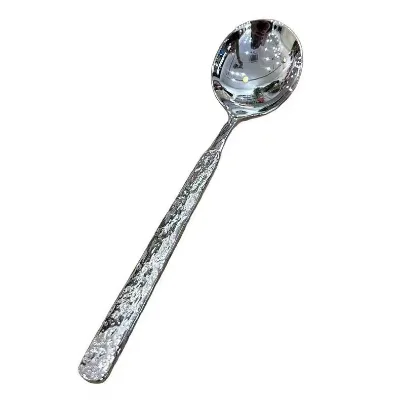
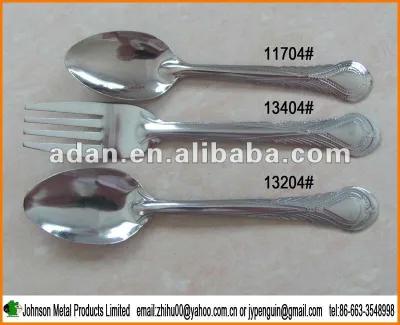


New Style Spoon Cheap Changed Color Stainless Steel Spoon and Fork Price
$1.00 - $2.00
MOQ: 1200 Pieces


Comprehensive Sourcing Guide
Sourcing Strategy for Nickel Plated Metal Spoons
The global market for nickel-plated metal spoons presents a distinct opportunity for B2B buyers seeking durable, aesthetically versatile, and cost-effective cutlery solutions. These items are not merely functional utensils but often serve as promotional assets, ceremonial objects, or high-end collection pieces. The core product category encompasses a wide array of specifications, ranging from standard geometric shapes to intricate human figures, all unified by a metal substrate and a protective or decorative nickel finish. Sourcing this category requires a disciplined approach to verifying material integrity, understanding the nuances of plating processes, and aligning supplier capabilities with specific application needs such as business gifts, holiday collections, or ceremonial events.
Technical Specifications and Material Integrity
The foundation of a reliable nickel-plated spoon lies in its material composition and dimensional consistency. The primary substrate for these products is explicitly identified as metal, providing the necessary structural rigidity and weight. The finishing process, specifically nickel plating, is a critical technical attribute that enhances corrosion resistance and imparts a shiny silver or gold appearance depending on the underlying plating color and subsequent treatments. Buyers must verify that the "Finish" attribute aligns with the desired aesthetic, noting that common finishes include plating, polishing, and oil-filling to ensure a lustrous surface.
Dimensional precision is equally vital. Observed specifications indicate a standard length range of 123mm to 125mm, with specific models like SP115B and SP141 adhering to the 125mm benchmark. Other variations exist, such as the SP0007 model with a size of 120*30mm, and the SP127 model which may differ in proportion. The shape of the spoon is not monolithic; while "Geometry" and "Round" are common descriptors, the market also offers specialized "Human" shaped spoons, particularly in the context of folk style or creative designs. When evaluating a supplier, procurement teams should request a technical data sheet that confirms the exact length, width, and weight, ensuring that the "Standard" attribute of "length 123~~125mm" is met or that a custom request is clearly documented. The "OEM" size specification suggests that many suppliers are capable of producing non-standard dimensions, but this requires explicit definition in the purchase order to avoid discrepancies.
Plating Processes and Surface Finishes
The term "nickel plated" implies a specific electrochemical process, yet the visual outcome can vary significantly based on additional layers and treatments. The observed product attributes list "Plating Color" options such as Gold, alongside a general "Color" attribute of Red or Shiny Silver. This indicates that the nickel layer may serve as a base for further plating or that the nickel itself is treated to achieve specific hues. The "Craft" attribute further elaborates on the surface treatment, listing "Plated," "Polish," and "Oil-Filled" as standard procedures.
For buyers, the distinction between these finishes is crucial for longevity and appearance. A polished finish ensures a high-gloss reflection, suitable for ceremonial or wedding contexts, while an oil-filled finish might be intended to prevent tarnishing or to enhance the depth of the color. The "Standard" attribute often cited as "High" or "as per client's request" suggests that quality control regarding the plating thickness and uniformity is a variable factor. Buyers should verify that the plating adheres to industry standards for adhesion and corrosion resistance, particularly if the spoons are intended for repeated use in business gift scenarios or collection items. The presence of a "Customized Design" attribute confirms that the plating process can be adapted to unique mold shapes, such as the human figure or specific geometric forms, without compromising the integrity of the metal core.
Compliance, Certification, and Origin Verification
In the B2B sector, the origin of the product is a primary compliance and risk management factor. The supplied data consistently identifies the production location as "China," with specific manufacturing hubs noted in "Guangdong" and "Guangdong, China." Major ports for export include Zhongshan, Guangzhou, and Shenzhen, which are critical for logistics planning. While the provided facts do not list specific third-party certifications (such as FDA, LFGB, or ISO), the "Standard" attribute of "High" implies a baseline of quality that should be validated through independent testing.
Buyers must treat the "Customized" and "Customized Design" attributes as indicators of a flexible supply chain rather than a guarantee of specific regulatory compliance. When sourcing from Guangdong, it is essential to request proof of compliance with the destination market's regulations regarding heavy metals, particularly nickel, which can be a concern in food-contact applications. The "prod_standard" field often defaults to "as per client's request," which places the onus on the buyer to define the required safety and quality standards explicitly in the contract. Without specific certification data in the source material, procurement teams should mandate that suppliers provide batch-specific test reports for nickel migration and material safety before finalizing large orders.
Cost Drivers and Economic Factors
The pricing and minimum order quantity (MOQ) for nickel-plated metal spoons are influenced by several dynamic factors. The observed price range in the market is between $0.01 and $5.00 USD, a wide spectrum that reflects the variance in material quality, plating thickness, and customization complexity. A spoon priced at the lower end of this range is likely a mass-produced item with standard dimensions and minimal customization, whereas items at the higher end may feature intricate designs, such as the "Human" shape or "Folk Style" finishes, and custom packaging.
The MOQ range is equally variable, spanning from 1 unit to 120,000 units. This flexibility allows buyers to test the market with small batches or secure bulk inventory for large-scale distribution. However, the "Customization" attribute often drives up the MOQ. If a buyer requests a "Customized Design" or a specific "Logo" customization, the supplier may require a higher minimum order to amortize the costs of mold creation and setup. The "Fob Port" locations (Zhongshan, Guangzhou, Shenzhen) also impact the landed cost, as freight rates vary by port and destination. Buyers should analyze the total cost of ownership, including the cost of the unit, the MOQ barrier, and the logistics from the specific Chinese port, rather than focusing solely on the per-unit price.
Typical Applications and Usage Scenarios
The versatility of nickel-plated metal spoons is evident in their diverse usage profiles. The "Usage" attribute lists a comprehensive array of applications, including "Tour," "Ceremonies," "Business Gift," "Holiday Gifts," "Collection," "Wedding," and "Sport." This breadth indicates that the product is not limited to culinary use but serves as a promotional tool or a commemorative item.
For "Business Gift" and "Holiday Gifts," the "Style" attributes of "Fashion" and "Creative" are particularly relevant. These spoons often feature custom logos and unique shapes to serve as memorable branding tools. The "Collection" usage suggests a market for high-end, artistic pieces, where the "Folk Style" or "Human" shape adds significant value. In "Ceremonies" and "Wedding" contexts, the "Shiny Silver / Gold" finish and "Packed in Box" or "Gift Box" packaging are essential to convey a sense of occasion. The "Tour" application implies that these items may be sold as souvenirs, where durability and portability are key. Understanding the specific end-use is critical for selecting the right supplier, as a vendor specializing in bulk promotional items may not have the capacity for the delicate handling required for wedding collections.
Supplier Evaluation and Quality Control Protocols
Evaluating a supplier for nickel-plated metal spoons requires a rigorous assessment of their production capabilities and quality control measures. The "Customization" and "Customized" attributes suggest that many suppliers are OEM-focused, capable of producing to specific client requests. However, buyers must verify the supplier's ability to maintain consistency across large batches. The "prod_packing" attributes vary from "OPP Bag + Head Card" to "Packed in Box" and "OPP Bag or Gift Box," indicating that packaging is a customizable service.
Quality control should focus on the plating integrity and dimensional accuracy. Buyers should request samples that match the "Standard" of "length 123~~125mm" and verify the "Finish" quality against the "Craft" description. Since the "Standard" is often "as per client's request," the buyer must define the acceptance criteria for plating defects, such as peeling, discoloration, or uneven thickness. The "Logo" customization attribute requires a separate verification step to ensure the branding is crisp and durable. For suppliers based in Guangdong, buyers should conduct on-site audits or third-party inspections to confirm that the "High" standard mentioned in the product data is consistently met in the production line.
Long-Term Procurement and Strategic Sourcing
Sourcing nickel-plated metal spoons is a strategic decision that extends beyond the initial transaction. The "Customized Design" and "Customized" attributes imply a long-term partnership potential, where the supplier can evolve with the buyer's brand needs. However, the variability in "prod_model" numbers (e.g., SP115G, SP0001, UNQ-Sp-05) highlights the need for robust inventory management and clear product coding to avoid confusion in future reorders.
Buyers should consider the supply chain resilience offered by the multiple Fob Ports (Zhongshan, Guangzhou, Shenzhen). This geographic diversity within the Guangdong region can mitigate risks related to port congestion or local disruptions. Furthermore, the wide MOQ range allows for a flexible procurement strategy, enabling buyers to start with small orders to test market response before committing to the 120,000-unit scale. Long-term success in this category depends on maintaining clear communication regarding the "Standard" requirements and ensuring that the "Customization" process remains consistent over time. By focusing on the technical specifications, verifying the origin, and aligning with the specific usage scenarios, buyers can secure a reliable supply of high-quality nickel-plated metal spoons that meet their B2B objectives.
FAQs
What materials are used for nickel plated metal spoons?
The primary material is metal, providing structural rigidity and weight. The surface undergoes a nickel plating process to enhance corrosion resistance and achieve a shiny silver or gold appearance depending on the specific treatment applied.
Which customization options are available for these spoons?
Customization is available for design, logo, and dimensions. Buyers can request specific shapes like human figures or geometry, custom logos, and OEM sizes, with packaging options ranging from OPP bags to gift boxes.
How long are the standard nickel plated metal spoons?
Standard lengths typically range from 123mm to 125mm. Specific models like SP115B and SP141 adhere to the 125mm benchmark, while other variations may differ in proportion or require custom sizing requests.
Can I get these spoons with custom logos and designs?
Yes, custom logos and designs are supported. The production process allows for customized designs including plating, polishing, and oil-filled finishes, making them suitable for business gifts, ceremonies, and collection items.
Where are these metal spoons manufactured and shipped from?
Products originate from China, specifically Guangdong province. Major export ports include Zhongshan, Guangzhou, and Shenzhen, facilitating logistics for international buyers seeking bulk orders or customized batches.
What are the typical price ranges and MOQ values?
Prices range from 0.01 to 5 USD per unit. Minimum order quantities vary widely from 1 to 120,000 units, allowing flexibility for testing small batches or securing large-scale inventory for promotional or ceremonial use.