Source Nickel Plated Magnetic Carabiner for Industrial, Motor, and Jewelry Uses
Find 30 Nickel Plated Magnetic Carabiner options suitable for industrial, motor, and jewelry applications. Compare specifications, customization, and pricing from verified Chinese manufacturers to identify the best fit for your sourcing needs.
Key considerations
Products List




Comprehensive Sourcing Guide
Sourcing Guide for Nickel Plated Magnetic Carabiners
Understanding Product Specifications and Material Composition
When sourcing nickel plated magnetic carabiners, buyers must first distinguish between the base material and the surface treatment, as these factors dictate the final performance and durability of the component. The core material for high-performance magnetic carabiners is typically Neodymium, often classified under specific grades such as N35, which offers a strong magnetic field suitable for heavy-duty applications. The product description indicates that the material composition is explicitly identified as Neodymium Magnets, ensuring the magnetic strength required for industrial and promotional uses.
The surface treatment is a critical differentiator in this category. The specific keyword "nickel plated" refers to a process where a thin layer of nickel is applied to the neodymium core. This electroplating process serves two primary functions: it prevents the neodymium from rusting or corroding, which is a common vulnerability of rare-earth magnets, and it provides a smooth, aesthetically pleasing finish. The supplied data confirms that electroplating is a standard surface treatment for these items, with specific mentions of nickel coating. This is essential for products intended for environments where moisture or humidity is present, such as outdoor promotional events or industrial settings.
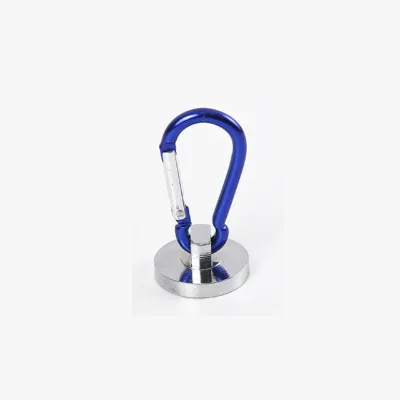
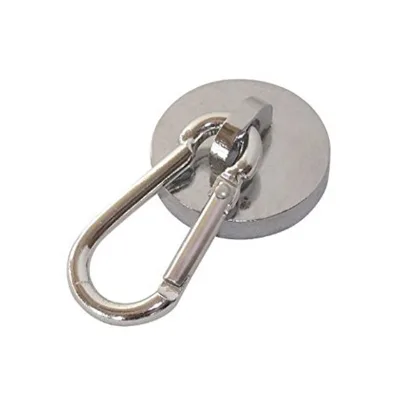
The physical form of the carabiner is another key specification. While the general category includes various shapes, the specific product observations highlight a "Cup Shape" or "Pot Magnet" design integrated into a carabiner structure. This design often features a swivel mechanism, allowing the attached item to rotate freely without twisting the connecting cable or strap. The standard dimensions for these units can vary, with observed specifications including sizes like D32 and D25, though buyers should verify the exact diameter and height against their specific load requirements. The tolerance for these dimensions is typically tight, with observed standards indicating a tolerance of +/-0.05mm, ensuring consistent fit and function across batches.
Compliance, Certification, and Safety Standards
In the B2B procurement of magnetic components, verifying compliance with international safety and quality standards is non-negotiable. The supply chain for neodymium magnets is heavily regulated due to the chemical composition of the raw materials and the environmental impact of the manufacturing process. Buyers should prioritize suppliers who can demonstrate adherence to quality management systems. The available data points to ISO9001:2008 certification as a verified attribute for certain suppliers in this sector. This certification indicates that the manufacturer has established processes for consistent quality control, from raw material sourcing to final packaging.
While the provided facts list ISO9001:2008 as a confirmed certification, buyers must remain vigilant regarding environmental compliance. Background knowledge suggests that certifications such as RoHS (Restriction of Hazardous Substances) and REACH (Registration, Evaluation, Authorisation and Restriction of Chemicals) are highly relevant for products entering the European and North American markets. Although the specific status of these certifications is not explicitly confirmed in the provided product facts, they are standard expectations for nickel-plated products. The nickel plating process itself must not exceed allowable limits for heavy metals, and the final product must be free of restricted substances.
Buyers should request current test reports or certificates of conformity that explicitly state compliance with RoHS and REACH regulations before finalizing any order. Relying on general claims without documented proof can lead to customs delays or product recalls. Additionally, the manufacturing location, often cited as Zhejiang, China, implies a need for thorough due diligence regarding local environmental regulations and export compliance. The supplier's ability to provide documentation for these standards is a primary indicator of their reliability and the safety of the product for end-users.
Cost Drivers and Pricing Variables
The pricing of nickel plated magnetic carabiners is influenced by a complex interplay of material costs, manufacturing complexity, and order volume. The primary cost driver is the grade of the neodymium magnet used. Higher grades, which offer stronger magnetic force, are significantly more expensive than lower grades. The observed data mentions a specific grade of N35, but buyers should be aware that grades ranging from N30 to N52 are common, with price increasing exponentially with the grade number. The thickness of the nickel plating is another variable; a thicker plating provides better corrosion resistance but increases the cost of the electroplating process.
Order volume plays a decisive role in the final unit price. The observed Minimum Order Quantity (MOQ) ranges widely, from as low as 1 unit to as high as 10,000 units. This variance suggests that suppliers offer tiered pricing structures. Small orders, often used for prototyping or immediate promotional needs, will carry a higher per-unit cost due to the setup time for tooling and the inefficiency of small-batch production. Conversely, bulk orders allow the supplier to amortize setup costs over a larger number of units, significantly reducing the price. The observed price range in the market spans from $0.01 to $10, reflecting the vast difference between a single promotional item and a specialized industrial component.
Customization is a significant factor that can alter the cost structure. The data confirms that customization is available, including custom shapes, sizes, and magnetic strength requirements. Custom molds or tooling fees are typically one-time costs that are absorbed by the first order or amortized over subsequent production runs. Furthermore, the packaging requirements can impact the final price. While some products are shipped in bulk, others require complex packaging involving small cartons, foam, and big cartons to prevent damage during transit. The choice between standard export packaging and custom branded packaging will directly influence the total landed cost.
Typical Applications and Usage Scenarios
Nickel plated magnetic carabiners are versatile tools utilized across a diverse range of industries, from industrial manufacturing to consumer promotions. The primary application identified in the data is for "Electronic Products," where these carabiners serve as secure attachment points for cables, sensors, or small components within electronic assemblies. The strong magnetic hold provided by the neodymium core ensures that components remain in place even under vibration, a common condition in industrial machinery.
Another major application area is "Industrial Magnet" usage, specifically for "Magnetic Garage Storage Tool" systems. In this context, the carabiner is used to hang heavy tools, equipment, or parts on magnetic racks or walls, maximizing space efficiency in workshops and garages. The swivel feature mentioned in the product descriptions is particularly valuable here, allowing users to access tools without the carabiner becoming tangled or twisted. The "Heavy Duty" designation suggests that these products are engineered to withstand significant tensile loads, making them suitable for securing safety gear or heavy equipment.
The "Promotion Gifts" category represents a significant market segment for these items. Companies often use nickel plated magnetic carabiners as branded giveaways for festivals or business events. The "Business" style and "Green" color options observed in the data indicate that these products are often customized with corporate logos and specific colors to align with brand identity. The "Novelty Product" classification further supports their use in marketing campaigns where a unique, functional item is preferred over standard promotional swag. Additionally, the application for "Jewelry Magnet" and "Motor Magnet" suggests niche uses in the jewelry and automotive sectors, where magnetic retention is required for specific functional or decorative purposes.
Supplier Evaluation and Verification Process
Selecting the right supplier for nickel plated magnetic carabiners requires a rigorous evaluation process that goes beyond price comparison. Buyers should prioritize suppliers who demonstrate transparency in their manufacturing capabilities and quality assurance protocols. The location of the supplier, often in Zhejiang, China, is a common hub for magnet manufacturing, but the specific province and factory capabilities must be verified. Buyers should request detailed information about the factory's production lines, specifically looking for evidence of the "Sintered Neodymium" process, which is the standard method for creating high-strength magnets.
The production timeline is a critical metric for supplier evaluation. The observed data indicates a production time of 15-20 days for customized orders. Buyers must confirm if this timeline includes the time required for tooling, plating, and quality inspection. A supplier that consistently meets these deadlines is more likely to be reliable for larger orders. Additionally, the shipping options provided by the supplier, such as Express, Air, or Sea, should align with the buyer's logistics needs. The mention of major shipping companies like UPS, TNT, and DHL suggests that the supplier has established relationships with reliable logistics partners, which is a positive indicator of their operational maturity.
Quality control is another essential aspect of supplier evaluation. Buyers should inquire about the supplier's internal testing procedures, including checks for magnetic strength, coating adhesion, and dimensional accuracy. The ability to provide a certificate of analysis for each batch is a strong sign of a quality-focused supplier. Furthermore, the supplier's willingness to accept OEM (Original Equipment Manufacturer) designs indicates flexibility and a commitment to meeting specific customer requirements. Buyers should also verify the supplier's capacity to handle the required MOQ, ensuring they can scale production up or down as needed without compromising quality.
Quality Control and Long-Term Procurement Strategy
Implementing a robust quality control (QC) strategy is essential for maintaining the integrity of nickel plated magnetic carabiners throughout the supply chain. The first line of defense is the incoming inspection of raw materials, specifically the neodymium magnet grade and the nickel plating solution. Buyers should ensure that the supplier adheres to the specified tolerance of +/-0.05mm for dimensions, as deviations can affect the fit and function of the carabiner in its intended application. Regular sampling and testing of the magnetic strength are necessary to verify that the product meets the required performance standards, especially for applications involving heavy loads or critical safety functions.
The durability of the nickel plating is a long-term concern that must be addressed in the procurement strategy. While the "Anti Rust" feature is a key selling point, the longevity of this protection depends on the thickness and quality of the plating. Buyers should request salt spray test results or other corrosion resistance data to validate the supplier's claims. In environments with high humidity or exposure to chemicals, the plating may degrade over time, leading to magnet failure. Establishing a long-term relationship with a supplier who guarantees consistent plating quality is crucial for minimizing downtime and replacement costs.
For long-term procurement, buyers should consider the scalability of the supplier's operations. The ability to handle orders ranging from 1 to 10,000 units suggests flexibility, but the supplier must also have the capacity to ramp up production quickly in response to market demand. Establishing clear communication channels and regular quality audits can help maintain consistency over time. Additionally, buyers should monitor the supplier's adherence to their stated production time of 15-20 days and their shipping capabilities. A reliable supplier will provide accurate lead times and maintain a consistent track record of on-time delivery, ensuring that the buyer's supply chain remains uninterrupted.
Strategic Sourcing Considerations and Final Recommendations
When finalizing the procurement of nickel plated magnetic carabiners, buyers must balance technical specifications, cost efficiency, and supplier reliability. The observed data highlights a wide range of product attributes, from specific grades like N35 to various packaging options, which underscores the importance of defining clear requirements before engaging with suppliers. Buyers should avoid making assumptions about the capabilities of all listed products and instead verify each attribute against their specific needs. The customization options available, including shape, size, and branding, offer significant value but require careful planning to ensure they align with the intended application.
The decision to source from a specific region, such as Zhejiang, China, should be based on a thorough assessment of the local supplier ecosystem. While this region is known for its magnet manufacturing expertise, buyers must conduct their own due diligence to verify the specific factory's certifications, quality control measures, and financial stability. The presence of ISO9001:2008 certification is a positive indicator, but it should be complemented by checks for environmental compliance and safety standards.
Ultimately, successful sourcing of nickel plated magnetic carabiners relies on a partnership approach. Buyers should work closely with suppliers to establish clear quality benchmarks, define realistic lead times, and ensure that all customization requests are accurately communicated. By focusing on these strategic elements, buyers can secure a reliable supply of high-quality magnetic carabiners that meet their operational and promotional needs while mitigating the risks associated with international procurement.
FAQs
What material is used for nickel plated magnetic carabiners?
The core material is Neodymium Magnets, often graded as N35 for strong magnetic force. This base is coated with nickel via electroplating to prevent rust and ensure a smooth finish suitable for industrial and promotional uses.
Can these carabiners be customized for specific business needs?
Yes, customization is available for shapes, sizes, and magnetic strength requirements. Buyers can request OEM designs with specific dimensions like D32 or D25, and the supplier accepts custom requests for packaging and branding.
Which certifications should I verify for quality assurance?
ISO9001:2008 is a verified certification indicating consistent quality control processes. While not explicitly confirmed in all data, buyers should also request documentation for RoHS and REACH compliance to ensure safety for international markets.
How long is the typical production time for orders?
The standard production time is 15-20 days for customized orders. This timeline covers the sintering of neodymium, electroplating, and final quality inspection before the product is packed for shipping via express, air, or sea.
What are the standard dimensions and tolerances for these products?
Standard sizes include D32 and D25 with a tight tolerance of +/-0.05mm. Dimensions can also be customized to meet specific application needs, ensuring a consistent fit for electronic products or industrial storage systems.
Where are these magnetic carabiners typically manufactured?
Products are primarily manufactured in Zhejiang, China, a known hub for magnet production. The origin is explicitly listed as Zhejiang, ensuring buyers can verify the specific factory location and its export capabilities.
What is the minimum order quantity for these items?
The minimum order quantity ranges from 1 to 10,000 units depending on the supplier and customization level. Small orders are suitable for prototypes, while bulk orders allow for lower per-unit costs due to amortized setup fees.