Source non-slip middle baby cotton socks for winter, spring, and summer
Compare 30 listings for non-slip middle baby cotton socks featuring cotton material, anti-slip soles, and sizes suitable for babies and children. Options include winter, spring, autumn, and summer styles with customization available.
Key considerations
Products List




Comprehensive Sourcing Guide
Strategic Sourcing Guide for Non-Slip Middle Baby Cotton Socks
Defining the Product Category and Core Specifications
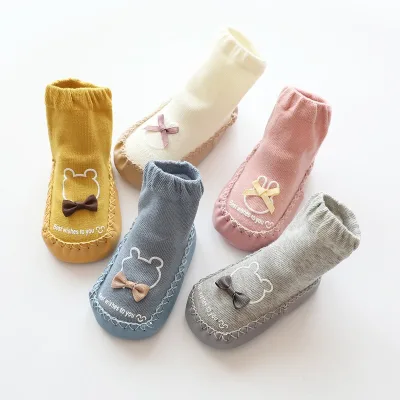
When sourcing non-slip middle baby cotton socks, buyers must first establish a precise definition of the product attributes to ensure alignment between procurement needs and supplier capabilities. The core keyword implies a specific demographic (babies), a material composition (cotton), a functional feature (anti-slip), and a length specification (middle or ankle). Based on available market data, the product is frequently categorized under "Baby Socks" with a gender designation of "Unisex" or specifically for "Babies." The material is consistently identified as "Cotton," which is a primary driver for comfort and breathability in infant wear.
The "middle" designation in this context often correlates with "Ankle" style specifications observed in the market. While some listings specify "S" size, others utilize "Free Size" or "Unisex" sizing, indicating a need for buyers to verify exact dimensions rather than relying solely on generic size labels. The functional requirement for "Anti-Slip" is a critical safety feature for babies who are learning to walk or crawl. This feature is often paired with other performance attributes such as "Breathable," "Eco-Friendly," "Anti-Odour," and "Anti-Chafing." The weight of these products varies, with observed data points ranging from 20g to 30g per pair, suggesting that thickness and density are variable parameters that must be confirmed during the sampling phase.
Technical Specifications and Material Composition
Understanding the technical build of non-slip middle baby cotton socks is essential for quality assurance. The primary material is cotton, which offers natural breathability and softness suitable for sensitive baby skin. However, the "Anti-Slip" functionality is not inherent to the cotton fiber itself but is achieved through specific manufacturing techniques. Buyers should verify the type of silicone or rubberized grip used on the sole, as this is the mechanism that prevents slipping on smooth surfaces.
The construction details often include "Normal" thickness, which balances warmth and flexibility. The elasticity is noted as "Medium Elasticity," ensuring the socks stay on without constricting the baby's circulation. Packaging specifications vary significantly; some suppliers use "Poly Bag" or "OPP" bags, while others opt for "Paper Box" or "Carton" packaging, often with a specific count such as "10 Pairs Per Poly Bag." The product models observed in the market, such as BAT-B04, BAT-B03, and SNJJ21052901, indicate that different manufacturers may have unique internal coding systems. Buyers must ensure that the technical specifications of the ordered model match the physical sample, particularly regarding the "Pattern Type," which often features "Cartoon" designs or "Christmas" themes for seasonal products.
Compliance, Certification, and Safety Standards
Safety is the paramount concern when sourcing products for infants. While the provided data mentions potential certifications like GOTS (Global Organic Textile Standard) and Oeko-Tex, these are listed as low-confidence background information. Consequently, buyers cannot assume a supplier possesses these certifications without direct verification. Instead, procurement teams must treat these as verification targets. The buyer should request valid, current certificates from the supplier that confirm the absence of harmful substances and adherence to organic standards if such claims are made.
The product standard "483018CM" observed in the data likely refers to carton dimensions rather than a textile safety standard. Buyers must distinguish between packaging dimensions and product safety standards. In the absence of explicit safety standard numbers in the source data, the buyer should verify compliance with the specific regulations of the target market, such as the European EN 14682 for children's clothing or the US CPSC regulations. The "Custom" standard mentioned in the data suggests that some suppliers may offer bespoke specifications, but these must be rigorously tested against the legal requirements of the destination country. The "Eco-Friendly" feature claims should be substantiated with third-party testing reports to ensure they are not merely marketing terms.
Cost Drivers and Pricing Dynamics
The pricing for non-slip middle baby cotton socks is influenced by several variable factors. The observed price range in the market is between $0.21 and $4.50 USD per unit. This wide disparity indicates that price is not a linear function of the product type but is heavily dependent on customization, order volume, and material quality. The "MOQ" (Minimum Order Quantity) ranges from 5 to 2000 units, with specific listings showing an MOQ of 120 pairs. Higher MOQs generally correlate with lower unit costs, but the initial investment risk is higher.
Customization is a significant cost driver. The availability of "Screen Printing" and "Embroider" options for logos, along with the ability to add custom logos on the package, adds to the production complexity and cost. The "Custom Sample" lead time of 3-7 days and the "Lead Time" for bulk production ranging from 20-25 days or 3-7 days (depending on the specific supplier) also impact the overall cost structure. Suppliers with shorter lead times may charge a premium for expedited production. Additionally, the "Weight" of the product (20g vs. 30g) can influence material costs, with heavier cotton socks generally costing more due to increased fiber usage. Buyers should analyze the total landed cost, including shipping and potential tariffs, rather than focusing solely on the unit price.
Supplier Evaluation and Verification Protocols
Evaluating suppliers for baby socks requires a multi-faceted approach that goes beyond price comparison. The "prod_origin" is listed as "China" and "Zhejiang China," indicating a concentration of manufacturing in this region. Buyers should verify the specific factory location within these regions to assess logistics capabilities. The "Delivery Time" of 3-7 days for some items and 20-25 days for others suggests a need to clarify whether these figures refer to sample production or bulk manufacturing.
Payment terms are another critical evaluation point. The data indicates "Tt/ Paypal" as accepted payment methods. Buyers should assess the security of these payment channels and negotiate terms that protect their interests, such as partial payments upon shipment or inspection. The "Customization" availability is a strong indicator of a supplier's flexibility, but it also requires a robust communication channel to ensure design specifications are met. Suppliers offering "Screen Printing" and "Embroider" capabilities should be evaluated on their ability to maintain color consistency and print durability, which are crucial for baby products that undergo frequent washing.
Quality Control and Performance Verification
Quality control for non-slip baby socks must focus on both the material integrity and the functional safety of the anti-slip feature. Since the "Anti-Slip" feature is a key selling point, buyers must verify the durability of the grip. This involves testing the socks after multiple wash cycles to ensure the silicone or rubber grips do not peel or degrade. The "Breathable" and "Anti-Chafing" claims should be validated through physical testing to ensure the fabric does not cause irritation to baby skin.
The "Elasticity" being "Medium" is a specific attribute that should be measured to ensure the socks fit securely without leaving marks on the baby's ankles. The "Thickness" of "Normal" should be consistent across the batch to prevent variations in warmth and comfort. Buyers should implement a strict inspection protocol that includes checking for loose threads, uneven dyeing, and defects in the "Cartoon" or "Christmas" patterns. The packaging, whether "Poly Bag" or "Paper Box," must be inspected for damage and proper labeling, as this affects the product's presentation and protection during transit.
Long-Term Procurement and Market Considerations
Sourcing non-slip middle baby cotton socks is not a one-time transaction but part of a long-term supply chain strategy. The "Market" data indicates a focus on "Europe" and "USA," which have stringent regulatory environments. Buyers must ensure that their suppliers are capable of adapting to changing regulations in these regions. The "Season" attributes, including "Winter," "Spring / Autumn," and "Summer," suggest that the product line may need to be diversified to meet seasonal demand fluctuations.
The ability to add "Custom Logo" on the package and the availability of various "prod_model" codes (e.g., BAT-B04, SN-20210316) indicate that suppliers can support brand differentiation. However, maintaining consistency in quality across different models and seasons is challenging. Buyers should establish a long-term relationship with suppliers who demonstrate reliability in meeting lead times and maintaining quality standards. The "Payymeng" (Payment) flexibility and the range of "MOQ" options allow for scalable procurement strategies, enabling buyers to start with smaller orders and scale up as demand grows. Ultimately, successful procurement relies on a deep understanding of the product's technical specifications, a rigorous approach to compliance, and a strategic partnership with suppliers who prioritize safety and quality.
FAQs
Can I add a custom logo to these socks?
Yes, you can add a custom logo on the package or via screen printing and embroidery. This customization is available for models like BAT-B04 and SNJJ21052901, allowing brand differentiation while maintaining the cotton material and anti-slip features required for baby safety.
What is the typical lead time for bulk orders?
Lead times vary between 3 to 7 days for some items and 20 to 25 days for others depending on the supplier. Custom samples typically take 3 to 7 days, while bulk production requires checking specific factory capacity and current order volume to confirm exact delivery dates.
Which materials are used for the anti-slip feature?
The socks are made of cotton with a normal thickness and medium elasticity. The anti-slip functionality is achieved through specific manufacturing techniques on the sole, often paired with breathable and eco-friendly properties to ensure comfort and safety for babies learning to walk.
What is the minimum order quantity for these socks?
The minimum order quantity ranges from 5 to 2000 units, with specific listings showing an MOQ of 120 pairs. Buyers should verify the exact MOQ for their chosen model, as it impacts the unit price and customization options like screen printing or embroidery.
Are these socks suitable for different seasons?
Yes, these socks are available for winter, spring, autumn, and summer seasons. The cotton material provides breathability and sweat absorption, making them versatile for various weather conditions while maintaining the necessary anti-slip and anti-chafing features for infant wear.
How are the socks packaged for shipment?
Packaging options include poly bags, paper boxes, or cartons, often with 10 pairs per poly bag. Each pair may also be packed individually in a polybag. The packaging standard can be customized, and carton dimensions like 48*30*18CM are used for bulk shipping.
What payment methods are accepted by suppliers?
Suppliers typically accept payment via TT or PayPal. Buyers should confirm specific payment terms with the vendor before placing an order, as these methods ensure secure transactions while allowing for the flexibility needed in international trade for baby products.