Source non-slip metal fitness strength equipment for Gyms, Parks, and Homes
Find and compare 30 listings of non-slip metal fitness strength equipment designed for commercial gyms, community parks, and home use. Buyers can evaluate models with steel construction, various certifications, and customizable options to match specific facility needs.
Key considerations
Products List




Comprehensive Sourcing Guide
Strategic Sourcing Guide for Non-Slip Metal Fitness Strength Equipment
Procuring non-slip metal fitness strength equipment requires a rigorous approach that balances technical performance, regulatory compliance, and long-term operational viability. For B2B buyers targeting commercial gyms, community centers, and public parks, the selection process must move beyond superficial aesthetics to evaluate the structural integrity of steel components, the reliability of safety certifications, and the specific application environments. The market offers a diverse array of strength machines, from indoor Hammer Strength and Lat Pulldown units to outdoor anaerobic leverage systems. This guide outlines the critical factors for sourcing these assets effectively, ensuring that the final procurement aligns with safety standards and durability expectations.
Technical Specifications and Material Integrity
The foundation of any reliable strength training apparatus lies in its material composition and dimensional specifications. The core keyword "non-slip metal" implies a primary construction of steel, a material consistently observed in the current market data. Steel provides the necessary tensile strength to withstand high-impact, repetitive loading typical of strength training. Buyers must verify that the steel used meets specific grade requirements for the intended load, particularly for equipment targeting major muscle groups like the chest, arms, and shoulders.
Dimensional accuracy is another critical technical parameter. The market data indicates that product standards vary significantly based on the model and intended use. For instance, specific indoor strength machines are documented with dimensions such as 135.3 cm by 191.4 cm by 114.2 cm, while other heavy-duty units may reach 178 cm by 156.1 cm by 189.2 cm. Outdoor equipment often features customizable dimensions to fit specific park layouts, with some models requiring ground-fixed installation. When evaluating suppliers, procurement teams should request detailed engineering drawings that confirm these dimensions. The "non-slip" aspect of the equipment is often achieved through specific surface treatments or the design of the user interface, which must be verified against the "Weather-Resistant" finish observed in outdoor models. This finish is essential for preventing corrosion and maintaining grip in varying environmental conditions.
Compliance and Certification Verification
In the B2B fitness sector, certification is not merely a formality but a prerequisite for liability management and user safety. The supplied data highlights a range of certifications, including CE, ISO, and RoHS. Specifically, the presence of CE and ISO markings suggests adherence to European safety and quality management standards. For international procurement, verifying the specific ISO standard is vital; while general ISO references appear, buyers should confirm if the equipment meets specific machinery safety directives or ISO 9001:2015 for quality management systems.
The data also notes certifications such as "En/ISO" and "ISORoHS," indicating that the equipment likely complies with environmental restrictions on hazardous substances. However, buyers must exercise caution. The presence of a certification label on a product listing does not guarantee that every unit in a shipment holds that status. It is the buyer's responsibility to request valid, third-party test reports that correspond to the specific batch of equipment being purchased. For outdoor strength equipment intended for public parks, compliance with local safety standards regarding public use is equally important. The "Commercial Use" standard mentioned in the data suggests a higher durability threshold, but this must be validated against the specific regulatory environment of the destination country.
Cost Drivers and Pricing Structures
Understanding the cost structure of fitness strength equipment is essential for budgeting and negotiation. The observed price range in the market spans from 130 USD to 5500 USD, a wide variance that reflects differences in complexity, material quality, and customization levels. The lower end of the spectrum likely corresponds to simpler, manual resistance machines or basic outdoor leverage units, while the higher end encompasses complex commercial-grade strength machines with advanced upholstery and custom engineering.
Several factors drive these costs. First, the "Customization" attribute is a significant cost variable. Equipment that allows for selectable upholstery in brown or black, or fully customizable colors and dimensions, incurs higher manufacturing and logistics expenses. Second, the packaging method impacts the final price. While standard carton boxes are common, specialized packaging such as "Plywood Boxes, No Timber" is often required for international shipping to meet phytosanitary regulations, adding to the unit cost. Third, the "Service Life" of 5-8 years observed in the data suggests that higher initial investment often correlates with longer operational longevity. Buyers should analyze the total cost of ownership rather than just the unit price, considering maintenance needs and the potential for equipment failure in high-traffic environments.
Typical Applications and Usage Environments
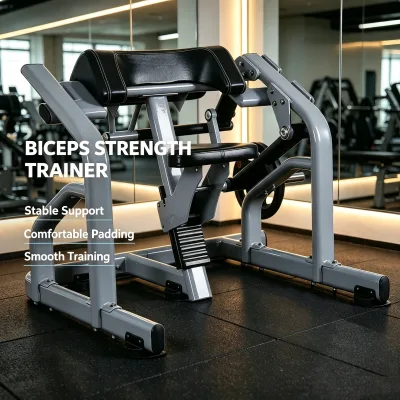
The versatility of non-slip metal fitness strength equipment allows it to serve diverse applications, from private home gyms to large-scale public parks. The data indicates that these machines are suitable for "Home," "Gymnasium," "Community," and "Park" settings. The specific application dictates the required specifications. For instance, indoor gymnasium equipment often focuses on targeted muscle groups like the chest and arms, utilizing mechanisms such as "Lat Pulldown" or "Hammer Strength" systems. These units are typically designed for "Anaerobic" exercise and are built for high-frequency use by adults.
Conversely, outdoor fitness park equipment presents different challenges. These units are designed for "Outdoor Fitness Parks" and must withstand exposure to the elements. The data highlights "Weather-Resistant" finishes and "Ground-Fixed" installation requirements for these models. The resistance type for outdoor equipment is often "Body-Weight Leverage," which eliminates the need for complex mechanical parts that could fail due to weather exposure. Furthermore, the "Target Population" for outdoor units is often "Normal Person" and "Suitable for All Fitness Levels," requiring a design that is intuitive and safe for a broad demographic. Understanding these distinctions is crucial for selecting the right equipment for a specific site, as indoor machines may degrade rapidly if placed outdoors without appropriate weatherproofing.
Supplier Evaluation and Operational Capabilities
Evaluating a supplier requires a deep dive into their operational capabilities and track record. The data indicates that the origin of these products is China, a major manufacturing hub for fitness equipment. Buyers should verify the supplier's ability to handle "Customized" orders, as many commercial clients require specific branding or dimensional adjustments. The "Available" customization status suggests flexibility, but the buyer must confirm the supplier's capacity to manage these variations without compromising quality.
Lead times and inventory status are also critical evaluation points. The data notes that products are "In Stock," which can be advantageous for urgent procurement needs. However, for customized orders, lead times may vary significantly. Buyers should inquire about the "Service Life" guarantees provided by the supplier, as the observed range of 5-8 years sets a benchmark for durability expectations. Additionally, the "User Capacity" being suitable for all fitness levels implies that the supplier designs for universal accessibility, a key factor for public installations. When assessing suppliers, request references from previous projects in similar environments, such as community centers or commercial gyms, to validate their claims regarding installation and long-term performance.
Quality Control and Long-Term Procurement Considerations
Implementing a robust quality control (QC) process is essential to mitigate risks associated with importing fitness equipment. Given the wide range of specifications and the potential for customization, a standardized QC protocol is necessary. Buyers should verify that the "Condition" of the equipment is "New" and that all components, including the "Carton Box" or "Plywood Boxes" packaging, are intact upon arrival. Inspection should focus on the "Finish" to ensure the "Weather-Resistant" coating is applied evenly and without defects, particularly for outdoor units.
Long-term procurement considerations extend beyond the initial purchase. The "Folded" versus "Unfolded" status of the equipment affects storage and space planning. While some models are designed to be unfolded for permanent installation, others may offer folding capabilities for space-constrained environments. Buyers must also consider the maintenance requirements of the "Manual" power source systems versus more complex mechanical systems. The "Type" of machine, whether "Strength Machine," "Lat Pulldown," or "Power," dictates the specific maintenance schedule and spare parts availability. Establishing a relationship with a supplier who can provide long-term support and spare parts is crucial for maintaining the 5-8 year service life observed in the market.
Comparative Analysis of Equipment Types
To assist in decision-making, the following table summarizes the key differences between the observed equipment categories based on the provided data. This comparison highlights the trade-offs between indoor and outdoor applications, as well as the varying levels of customization and certification.
| Feature | Indoor Strength Machines | Outdoor Fitness Park Equipment |
|---|---|---|
| Primary Material | Steel | Steel (Weather-Resistant Finish) |
| Typical Models | T03, T02, DH10, DH04 | Customizable Dimensions |
| Resistance Type | Mechanical / Body-Weight | Body-Weight Leverage |
| Installation | Floor-mounted (varies) | Ground-Fixed |
| Certifications | CE, ISO, RoHS | CE, En/ISO |
| Target Audience | Adults, Gym Members | All Fitness Levels, General Public |
| Service Life | 5-8 Years (Commercial Use) | 5-8 Years (Outdoor Conditions) |
| Customization | Available (Color, Upholstery) | Available (Dimensions, Color) |
| Packaging | Carton Box | Plywood Boxes (No Timber) |
This table illustrates that while both categories utilize steel and aim for a similar service life, the environmental requirements and installation methods differ significantly. Indoor units prioritize aesthetic customization and specific muscle targeting, whereas outdoor units focus on durability and universal accessibility.
Final Procurement Recommendations
Sourcing non-slip metal fitness strength equipment is a complex process that demands attention to detail across technical, regulatory, and operational domains. Buyers must prioritize verifying certifications like CE and ISO, ensuring that the steel construction meets the specific demands of the intended environment, whether it be a high-traffic commercial gym or a public park. The wide price range and customization options require a clear understanding of the total cost of ownership, including packaging and long-term maintenance. By rigorously evaluating suppliers based on their ability to deliver customized, certified, and durable equipment, buyers can secure assets that provide value and safety for years. The data suggests that a focus on "Commercial Use" standards and "Weather-Resistant" finishes will yield the most reliable results, ensuring that the investment aligns with the high expectations of modern fitness facilities.
FAQs
What certifications do non-slip metal fitness strength equipment models have?
The equipment carries CE, ISO, and RoHS certifications to ensure safety and compliance. Specific models may also display En/ISO markings, but buyers should request third-party test reports for each batch to verify these standards before purchase.
Which material is used for the non-slip metal fitness strength equipment?
Steel is the primary material used for constructing these strength machines to ensure structural integrity. This material choice supports high-impact loading and provides the necessary durability for both indoor gymnasium and outdoor park applications.
Can buyers customize the dimensions and color of the fitness equipment?
Yes, customization is available for dimensions, colors, and upholstery options like brown or black. Buyers should note that outdoor units often require ground-fixed installation and weather-resistant finishes, while indoor models may have specific standard dimensions.
How long is the expected service life of the strength equipment?
The observed service life for this equipment ranges from 5 to 8 years under normal usage conditions. This longevity applies to both commercial indoor units and outdoor fitness park systems designed for all fitness levels.
What is the price range for sourcing non-slip metal fitness strength equipment?
The market price range spans from 130 to 5500 USD depending on complexity and customization. Lower costs typically cover manual resistance units, while higher prices reflect commercial-grade machines with advanced upholstery and custom engineering specifications.
Which models are available for indoor gymnasium use?
Available indoor models include T03, T02, DH10, and DH04, designed for chest, arm, and shoulder exercises. These units often feature Hammer Strength or Lat Pulldown types and are suitable for adults in home, gymnasium, or community settings.