Source Non-Toxic PP Educational Brick Toy for Kids, Schools, and Homes
Find 30 verified options for the Non-Toxic PP Educational Brick Toy designed for creativity and hand training. Compare specifications, certifications, and pricing from suppliers in China to select the right building blocks for children aged 3 and above.
Key considerations
Products List


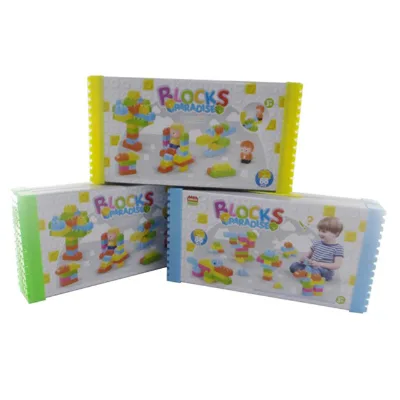
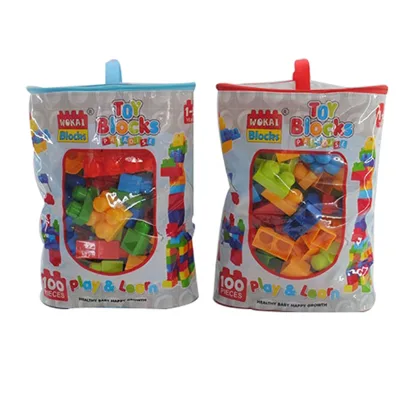


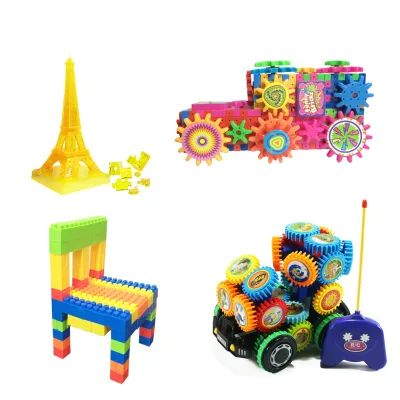
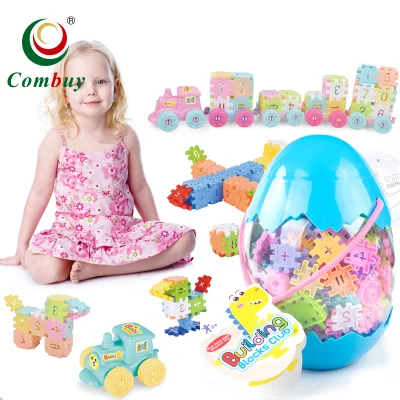

Comprehensive Sourcing Guide
Sourcing Guide for Non-Toxic PP Educational Brick Toys
Understanding Material Composition and Safety Claims
When sourcing educational brick toys, the primary distinction lies in the polymer type used. While the core keyword often references "non-toxic PP" (polypropylene), the actual market data for high-volume educational building blocks frequently highlights ABS (Acrylonitrile Butadiene Styrene) as the dominant material. ABS is preferred for its superior impact resistance, dimensional stability, and the ability to hold precise tolerances required for interlocking brick mechanisms. However, the presence of PP in specific product lines is not uncommon, particularly for softer, more flexible educational components. Buyers must verify the specific material declaration on the product datasheet. The term "non-toxic" is a critical safety attribute, implying the absence of heavy metals and harmful phthalates. In the observed product data, safety is explicitly rated as "100% Safe for Children," which aligns with the rigorous testing required for the 3+ age group.
The material selection directly influences the tactile experience and durability of the toy. ABS bricks typically offer a firm, click-like connection that supports complex structural builds, whereas PP bricks may offer a slightly softer feel. Regardless of whether the material is PP or ABS, the non-toxic claim must be substantiated by third-party testing. The observed product attributes confirm that the material is consistently listed as Plastic, with specific mentions of ABS types. Buyers should not assume that all "educational brick toys" are made of PP; rather, they must request material safety data sheets (MSDS) to confirm the polymer type and ensure it meets the non-toxic criteria required for the target demographic.
Compliance and Certification Verification
Compliance is the most critical filter in the procurement of children's educational toys. The market data reveals a robust set of certifications that serve as the baseline for safety verification. Products in this category frequently carry CE, EN71, and ASTM F963-96a certifications. The EN71 standard, specifically the EN71-3 migration test, is essential for verifying that the toy does not release harmful substances through ingestion or skin contact. Similarly, the ASTM F963-96a standard represents the U.S. consumer safety specification for toy safety, covering mechanical hazards and chemical safety.
The observed data also lists CPC (Children's Product Certificate) and CCC (China Compulsory Certification), indicating that suppliers are often preparing for both international and domestic Chinese markets. For buyers targeting the European Union, the CE mark combined with EN71 compliance is mandatory. For the United States, the CPC is required, which is based on testing against ASTM F963. It is vital to note that while "EN 71" appears in background notes, the specific sub-standards like EN71-3 are the ones that address chemical safety. Buyers must request valid test reports from accredited laboratories that explicitly reference these standards. A supplier claiming "non-toxic" without a corresponding test report for heavy metals (lead, cadmium) and phthalates is insufficient for a B2B procurement contract. The presence of these certifications in the product listings suggests a mature supply chain, but verification of the specific test batch is necessary to ensure the current production run matches the certified samples.
Technical Specifications and Functional Attributes
The technical specifications of educational brick toys extend beyond simple material composition to include dimensions, quantity, and functional design. The observed product models, such as DQJ170815-06 and THY-A6303-1, indicate a wide variety of SKUs available in the market. A key functional attribute is the "Creativity & Hand Training" capability, which is the primary educational value proposition. The toys are designed to enhance fine motor skills and spatial reasoning in children aged 3 and above.
Packaging and dimensions are also critical logistical factors. The data shows a range of packaging types, from "Color Box" for individual retail units to "Standard Carton" for bulk shipping. One specific entry lists a carton size of 80.00 x 42.00 x 82.00 CM with a quantity of 36 pieces per carton, highlighting the importance of optimizing container load for cost efficiency. Another product lists a standard size of 38.75 x 26.56 x 5.14 cm, likely referring to the dimensions of the packaging or the assembled set. Buyers must pay close attention to the "Quantity of Items in Set," which varies from 40 pieces to 100 pieces or more. The "Selling Units" often require a multiple of 300, which is a common MOQ (Minimum Order Quantity) structure for custom or semi-custom orders.
Furthermore, the design style is categorized as "Building Blocks" or "Magnetic Building Block," with some sets featuring themes like "Animals & Nature." The "Colorful" attribute is standard, ensuring visual engagement. The "Place" is consistently listed as "Indoor & Table," confirming that these are not outdoor toys and should be stored accordingly. The "Style" is further defined as "Construction Toy, DIY TOY, Educational Toy," which helps in categorizing the product for retail shelving and marketing.
Cost Drivers and Pricing Dynamics
The pricing for educational brick toys is influenced by several variables, including material costs, certification fees, packaging complexity, and order volume. The observed price range in the market spans from 1 to 99,999 USD, which reflects the vast difference between a single sample unit and a large-scale container order. For a typical B2B buyer, the unit price will be heavily dependent on the MOQ. The data indicates an MOQ range of 1 to 2000 units, suggesting that suppliers are flexible for small trial orders but offer better margins for bulk purchases.
The "Selling Units" requirement of a multiple of 300 is a significant cost driver. Ordering in smaller increments may result in a higher per-unit cost due to the fixed costs of production setup and packaging. Additionally, the type of packaging plays a role; "Color Box" packaging is more expensive than plain brown cartons but is necessary for retail-ready products. The inclusion of custom branding or specific color schemes can also increase costs. While the keyword mentions "non-toxic PP," the prevalence of ABS in the data suggests that material substitution or the use of higher-grade, non-toxic ABS may be a cost factor. Buyers should also consider the "Guide" attribute, which is described as a "Completely System." This implies that some products include instructional guides or digital resources, which adds value but may also increase the overall unit cost.
Supplier Evaluation and Customization Capabilities
Evaluating a supplier for educational brick toys requires a focus on their ability to meet safety standards and their flexibility in customization. The product data explicitly states that "Customization" is available, which is a crucial feature for B2B buyers looking to create private-label products. This could involve customizing the brick colors, adding specific logos, or altering the set composition to match a specific educational curriculum. The "Sole Agent" attribute being "Welcome" suggests that some suppliers are open to exclusive distribution agreements, which can be beneficial for buyers seeking market protection.
Geographic location is another factor in supplier evaluation. The observed data lists origins in Lishui, Zhejiang, and Guangdong, China. These regions are known for their mature toy manufacturing ecosystems, offering a wide range of suppliers with varying levels of capability. Buyers should verify the supplier's history with the specific certifications mentioned (CE, ASTM, EN71). A supplier that can provide a "Completely System" guide indicates a higher level of product development capability, suggesting they can support the educational aspect of the toy beyond just the physical bricks.
When evaluating suppliers, buyers should look for those who are transparent about their "Toy Department" and "Gender" classifications. The data shows a focus on "Children" and "Unisex" products, which broadens the market appeal. The "Brand Name" field, such as "Denko Toys," indicates that some suppliers operate their own brands, while others may be OEM manufacturers. For a buyer seeking a private label, it is essential to confirm that the supplier is willing to remove their branding and apply the buyer's logo, a process often covered under the "Customization" attribute.
Quality Control and Long-Term Procurement Strategy
Implementing a robust quality control (QC) strategy is essential for maintaining the integrity of the "100% Safe for Children" claim. QC should begin at the raw material stage, verifying that the plastic (whether PP or ABS) is free from contaminants. During production, random sampling should be conducted to check for color consistency, structural integrity, and the accuracy of the interlocking mechanism. The "Test" attribute, listing CE and EN71-3, should be validated through third-party laboratory testing for every production batch, not just the initial sample.
Long-term procurement considerations involve building a relationship with suppliers who can scale with demand. The "Pcs/Ctn" and "Ctn Size" data are vital for logistics planning. Buyers should calculate the total volume and weight to optimize shipping costs. The "Lead Time" is not explicitly provided in the data, but buyers should negotiate this based on the order volume and customization requirements. For ongoing orders, establishing a quality assurance protocol that includes periodic re-testing of the product is recommended to ensure that the "non-toxic" status remains consistent over time.
Additionally, the "Theme" of the toys, such as "Animals & Nature," should be aligned with current market trends and educational standards. Buyers should consider the lifecycle of the product; educational toys often have a long shelf life, but trends in educational content can shift. Therefore, maintaining a flexible supply chain that can adapt to new themes or designs is advantageous. The "Function" of "block" and "Creativity" ensures that the product remains relevant, but the supplier's ability to innovate and update the product line is a key differentiator.
Summary of Key Procurement Parameters
To summarize the critical parameters for sourcing non-toxic PP educational brick toys, buyers must navigate a landscape defined by strict safety standards and diverse product configurations. The following table outlines the key attributes observed in the market that should be included in a Request for Quotation (RFQ):
| Attribute Category | Key Parameters to Verify | Observed Market Data Examples |
|---|---|---|
| Material | Non-toxic PP or ABS; Heavy metal free | Plastic, ABS, Non-toxic |
| Safety Certs | CE, EN71-3, ASTM F963-96a, CPC | CE, EN71, ASTM F963-96a, CPC, CCC |
| Age Group | 3+ years; Unisex | 3+, 3 & above, Unisex |
| Function | Creativity, Hand Training, Building | Creativity&Hand Training, Block |
| Packaging | Color Box or Standard Carton; Ctn Size | Color Box, Standard Carton, 80x42x82 CM |
| Customization | Logo, Colors, Set Composition | Customization Available, Sole Agent Welcome |
| Origin | Verified Manufacturing Location | Lishui, Zhejiang; Guangdong, China |
By adhering to these parameters and maintaining a rigorous verification process, buyers can ensure the procurement of high-quality, safe, and educational brick toys that meet the demands of the global market. The focus must remain on the evidence provided by certifications and the specific technical attributes of the product, rather than on unverified marketing claims.
FAQs
What materials are used for non toxic pp educational brick toys?
Most products use ABS plastic rather than PP, as it offers superior impact resistance and precise interlocking. The observed data lists ABS as the primary material type for these educational bricks, ensuring durability and safety for children aged 3 and above.
Which safety certifications are required for these educational toys?
Products typically carry CE, EN71, and ASTM F963-96a certifications to ensure chemical and mechanical safety. Some listings also include CPC and CCC marks, verifying compliance for both international and domestic Chinese markets for children's products.
How can I customize the design of these building blocks?
Customization is available for buyers seeking private-label options or specific educational themes. Suppliers offer flexible options to adjust colors, logos, or set compositions, provided the order meets the minimum quantity requirements for production setup.
What is the typical minimum order quantity for these toys?
The minimum order quantity ranges from 1 to 2000 units depending on the supplier and customization level. Many sellers require orders in multiples of 300 to optimize production costs and packaging efficiency for bulk shipments.
Can these toys be used for indoor and table activities?
Yes, the products are designed specifically for indoor and table use to ensure safety and organization. They are categorized as construction and DIY toys suitable for enhancing creativity and hand training in a controlled environment.
Where are these educational brick toys manufactured?
Manufacturing origins include Lishui, Zhejiang, and Guangdong, China, which are known for mature toy ecosystems. These locations support a wide range of suppliers capable of meeting various certification standards and production volumes.
What packaging options are available for bulk orders?
Packaging varies from individual color boxes for retail to standard cartons for bulk shipping. Specific carton dimensions and piece counts are provided to help buyers optimize container load and reduce shipping costs effectively.