Source Nonskid TPR Caster Wheel for Medical, Industrial, and Office Use
Find and compare 30 Nonskid TPR Caster Wheel options featuring ball and roller bearings, zinc-plated finishes, and various load heights. Evaluate specifications like swivel radius and wheel diameter to select the right caster for your equipment needs.
Key considerations
Products List


$1.46 - $1.50
MOQ: 5000 Pieces


Globe Caster Cost-Effective Threaded Stem Wheels Castors W/Side Brake TPR Caster
$2.53 - $2.66
MOQ: 1000 Pieces
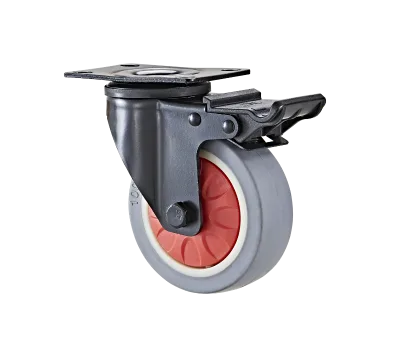


Round Green TPR Caster Wheel Industrial Caster Could Customized Any Size
$0.58 - $0.68
MOQ: 1000 pieces


Comprehensive Sourcing Guide
Nonskid TPR Caster Wheel Sourcing Guide
The Nonskid TPR Caster Wheel represents a critical component for modern material handling, offering a balance of durability and floor protection that is essential for diverse industrial and commercial environments. Based on observed market listings, these wheels are frequently engineered with specific load-bearing capacities ranging from light-duty applications to heavy-duty scenarios, with models explicitly designated for 1-15 ton capacities. The material composition, often a blend of TPR and PP, provides the necessary elasticity to absorb shock while maintaining a firm grip on various surfaces, making them suitable for environments where noise reduction and floor preservation are paramount.
Procurement strategies for these components must account for the significant variation in design features available in the current supply chain. Buyers will encounter options ranging from rotating wheels with swivel radii of 37 mm to larger units with a 79.5 mm radius, alongside fixed wheel configurations that prioritize stability over maneuverability. The presence of braking mechanisms, available in both "With Brake" and "Without Brake" variants, allows for precise customization based on the specific operational requirements of the equipment, ensuring that the selected caster aligns perfectly with the safety and mobility needs of the end-user.
Product Scope and Observed Listing Signals
The market for nonskid TPR caster wheels displays a wide spectrum of product specifications, with observed listing signals indicating a strong focus on dimensional versatility and material resilience. Listings frequently highlight wheel diameters spanning from 2.5 inches to 5 inches, with specific models offering standardized sizes such as 125mm or 50mm to accommodate different axle requirements. The physical footprint of these casters is often defined by precise loading heights, which can vary significantly from 53 mm for compact applications to 120 mm for heavy-duty industrial carts, requiring buyers to verify clearance dimensions before finalizing a purchase order.
Packaging and origin data serve as key indicators of the product's intended logistics and quality tier. Suppliers typically utilize paper cartons, PE bags combined with cartons, or robust wooden cases depending on the weight and fragility of the unit, with origins ranging from Dongguang, Guangdong, to Zhejiang, Jiaxing, and other regions in China. These logistical details are not merely administrative; they influence the total landed cost and the risk profile of the shipment, as the choice of packaging directly correlates with the protection level provided during transit and the ease of integration into existing warehouse workflows.
Technical Specifications to Verify
When evaluating technical specifications, the bearing type is a primary determinant of the caster's longevity and smoothness of operation under load. The supply chain offers distinct options including ball bearings and roller bearings, each suited for different speed and load profiles. Buyers must cross-reference the bearing specification with the intended application; for instance, high-speed movement may benefit from ball bearings, while heavy, slow-moving loads might require the stability of roller bearings to prevent premature wear and ensure consistent performance over time.
Surface treatment and material composition are equally critical factors that define the environmental resistance and aesthetic finish of the product. Observed listings indicate that zinc plating is a common surface treatment, providing corrosion resistance for casters used in humid or chemically active environments. Furthermore, the wheel material is often specified as high-temperature resistance material or a TPR compound, which ensures the wheel maintains its structural integrity and nonskid properties even under thermal stress. Verifying the thickness of the wheel, which ranges from 30mm to 32mm in observed models, is essential to confirm that the product can withstand the specific pressure points of the intended equipment.
Compliance and Safety Documentation
Safety and compliance in the caster wheel sector rely heavily on the verification of standard dimensions and load ratings rather than generic certifications. While specific certification documents are not universally listed in the provided data, buyers should demand evidence that the product meets the stated standard dimensions, such as the 12525mm or 12550mm configurations observed in heavy-duty models. Ensuring that the product standard aligns with the physical dimensions listed in the datasheet is a fundamental step in verifying that the caster will fit the mounting points of the equipment without requiring costly modifications.
Documentation regarding the condition and customization capabilities of the product is also vital for risk management. Most observed listings specify the condition as "New" and highlight the availability of customization, which allows buyers to tailor the product to specific regulatory or operational needs. However, buyers must ensure that any customizations, such as specific color requirements like grey or unique model numbers like 1-15T01S-301H-1, are clearly documented in the purchase agreement to prevent discrepancies between the ordered specifications and the delivered goods.
Cost Drivers and Commercial Terms
The commercial landscape for nonskid TPR caster wheels is influenced by a complex interplay of material costs, manufacturing complexity, and order volume. The observed price range of 0.1 to 100 USD reflects the vast difference between single-unit purchases and bulk industrial orders, with the Minimum Order Quantity (MOQ) varying from 1 to 5000 units. Buyers must carefully analyze their volume requirements against the MOQ to optimize unit costs, as ordering below the optimal threshold can significantly inflate the per-unit price and negate the economic benefits of bulk purchasing.
Lead times and shipping terms are additional cost drivers that can impact the total cost of ownership. While specific lead times are not universally standardized in the provided facts, the origin locations in Guangdong and Zhejiang suggest varying logistical timelines depending on the supplier's capacity and current production load. Buyers should negotiate clear terms regarding the delivery schedule and packaging requirements, as the choice between paper cartons and wooden cases can affect both the shipping weight and the insurance costs associated with the transit of heavy-duty casters.
Supplier Qualification and Quality Control
Supplier qualification for caster wheels requires a rigorous assessment of their production capabilities and quality control processes. The diversity of models, from the 31SPL40TPR430 to the 81SPL50TPR, indicates that suppliers must maintain flexible manufacturing lines capable of producing various wheel sizes and bearing types. Buyers should verify that the supplier has a proven track record of maintaining consistent quality across different product lines, particularly when dealing with specialized materials like high-temperature resistance compounds or specific surface treatments like zinc plating.
Quality control measures should extend beyond the final inspection to include raw material verification and process monitoring. Given that the material composition often involves TPR and PP blends, suppliers must demonstrate their ability to source consistent raw materials that meet the specified performance criteria. Buyers should request evidence of in-process quality checks, such as dimensional accuracy for the 32.7x25x30cm standard or the 4-inch PA caster wheel specifications, to ensure that every unit produced adheres to the strict tolerances required for safe and reliable operation.
Long-Term Procurement Checks
Establishing a long-term procurement strategy for nonskid TPR caster wheels involves regular performance audits and supply chain resilience planning. Buyers should implement a schedule for periodic testing of delivered casters to verify that the nonskid properties and load-bearing capacities remain consistent over time. This is particularly important for applications in instrumental equipment or heavy-duty environments where a failure in the caster could lead to significant operational downtime or safety hazards.
Supply chain diversification is another critical component of long-term procurement checks. Given the concentration of suppliers in specific regions like Dongguang and Zhejiang, buyers should consider maintaining relationships with multiple suppliers to mitigate the risk of supply disruptions. Regular reviews of supplier performance, including their ability to meet customization requests and maintain the specified product standards, will ensure that the procurement strategy remains robust and adaptable to changing market conditions and operational needs.
FAQs
What bearing types are available for these caster wheels?
Ball bearings and roller bearings are available options for these caster wheels. The specific type depends on the model selected, such as the 1-15T01S-301H-1 which uses ball bearings, while other models like the 24RPL50TPR utilize roller bearings for different load requirements.
Can I find these wheels with a brake mechanism?
Yes, you can find these wheels with or without a brake mechanism. Some models are equipped with a brake for stability, while others are designed without a brake to allow for free movement, giving you flexibility based on your equipment needs.
Which wheel sizes are offered for the TPR caster wheels?
Wheel sizes range from 2.5 inches to 5 inches, including 3, 3.5, 4, and 4.5 inches. Specific models may also be defined by diameter in millimeters, such as 50mm, 75mm, 100mm, or 125mm, depending on the specific product standard.
How are these caster wheels typically packed for shipping?
Packaging varies by model and includes paper cartons, PE bags with cartons, or wooden cases. Some items are shipped in standard cartons, while heavier duty options may require wooden cases to ensure safe transport and protection during international shipping.
What is the loading height for the rotating wheel models?
The loading height varies by model, with options available at 53 mm or 120 mm. The specific height depends on the design of the caster, such as the rotating wheel type which may have a 120 mm height or a 53 mm variant.
Are these caster wheels available with surface treatments like zinc plating?
Yes, many of these caster wheels feature zinc plating as a surface treatment process. This finish is applied to enhance durability and corrosion resistance, ensuring the metal components remain protected during use in various industrial or commercial environments.
Can I request custom specifications for these caster wheels?
Customization is available for these caster wheels to meet specific requirements. Buyers can request tailored specifications, and the products are often marked as customized or available for custom orders to fit unique equipment or application needs.