Source Oil Immersed Ferrosilicon Furnace Transformer for Power, Lighting, and Rectifier
Compare 30 listings for Oil Immersed Ferrosilicon Furnace Transformer with capacities from 6300kVA to 180000kVA. Buyers can review specifications including copper windings, oil-immersed cooling, and various tapping methods for power and lighting applications.
Key considerations
Products List


Furnace Transformer with Three Phase Oil-Immersed Electric Arc Transformer
$8000.00 - $2800000.00
MOQ: 1 Pieces

ISO IEC IEEE 3500kVA Oil Immersed Electric Arc Furnace Transformer
$20000.00 - $1000000.00
MOQ: 1 Sets
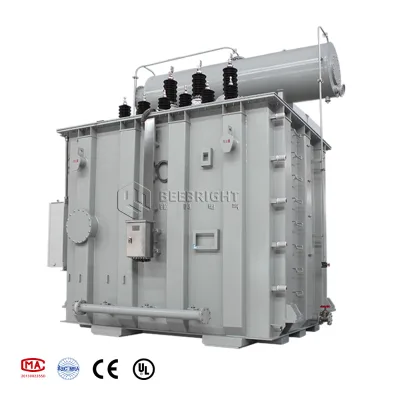


Factory Supply Oil-Immersed Distribution Electric Furnace Transformer
$800.00 - $1000.00
MOQ: 2 Pieces

Oil Immersed Transformer Silicon Steel Sheet Toroidal Transformer Iron Core
$500.00 - $800.00
MOQ: 10 Pieces


Furnace Transformer Heavy Duty Oil Immersed for Industrial Steel Plants
$1000.00 - $3200.00
MOQ: 1 Pieces

Htsfpz-25000/66kv 66kv Ferroalloy Furnace Transformer for Steel Melting Industry
$20000.00 - $400000.00
MOQ: 1 Pieces

250kVA Three Phase Oil Immersed Transformer with Silicon Steel Sheet
$1299.00 - $1999.00
MOQ: 1 Pieces


Comprehensive Sourcing Guide
Oil Immersed Ferrosilicon Furnace Transformer Sourcing Guide
Procuring an oil-immersed transformer for a ferrosilicon furnace requires a rigorous alignment between electrical parameters and the harsh operational environment of ferroalloy production. These transformers are critical components that step down high-voltage grid power to the low-voltage, high-current levels necessary for the electric arc furnace process. The sourcing strategy must prioritize robust construction, precise voltage regulation, and thermal management capabilities to withstand the extreme thermal cycling and electrical stresses inherent in ferrosilicon smelting. Buyers must recognize that while general-purpose distribution transformers share some architectural similarities, furnace transformers are engineered specifically for continuous duty under fluctuating load conditions, making generic specifications insufficient for this application.
The market landscape for these specialized units is dominated by manufacturers in China, particularly within the Zhejiang province, which serves as a major hub for electrical equipment manufacturing. Listings indicate a wide variance in capacity, ranging from smaller distribution units up to massive 180,000 kVA configurations, suggesting that suppliers often offer modular or scalable solutions for different furnace sizes. However, the specific requirements for ferrosilicon furnaces typically demand high short-circuit impedance to limit fault currents and maintain arc stability, as well as specialized cooling methods to manage the intense heat generated during operation. Sourcing guides must therefore focus on verifying the transformer’s ability to handle the specific reactive power demands and harmonic distortions associated with ferroalloy production, rather than simply comparing nominal power ratings.
Product Scope and Observed Listing Signals
The observed product listings reveal a diverse range of transformer types, including oil-immersed, dry-type, and various winding configurations such as two-winding and multi-winding designs. While many listings advertise general applications like power distribution, lighting, and electronic instrumentation, the specific mention of "Rectifier Transformer" and "Power Transformer" categories is highly relevant to ferrosilicon furnace operations, which often involve rectification systems to control the DC current supplied to the furnace electrodes. Buyers should carefully distinguish between standard distribution transformers and those explicitly designed for industrial arc furnace duties, as the latter typically feature reinforced windings and specialized tap changers to manage the dynamic load profiles of the smelting process. The presence of models with capacities ranging from 6,300 kVA to 180,000 kVA indicates that suppliers cater to both small-scale alloy production and large industrial complexes, requiring buyers to match their furnace’s specific MVA requirements with the appropriate unit size.
Further analysis of the listing signals shows a mix of core structures, including ring, U-shaped, and toroidal cores, with materials ranging from silicon steel sheets to copper conductors. For ferrosilicon furnace transformers, the core material and construction directly impact efficiency, noise levels, and short-circuit withstand capability. The observation of "Low Loss" attributes and specific cooling methods like "Ofwf/Onan" (Oil Forced Water Forced / Oil Natural Air Natural) suggests that thermal management is a key differentiator among suppliers. Buyers must verify that the cooling system is adequate for the continuous high-load operation of a ferrosilicon furnace, as inadequate cooling can lead to rapid insulation degradation and premature failure. Additionally, the availability of customization options and OEM services indicates that many manufacturers are willing to tailor voltage ratios, impedance values, and physical dimensions to fit specific furnace designs, which is a critical advantage for integrating new equipment into existing plant infrastructure.
Technical Specifications to Verify
Voltage regulation and tap changing mechanisms are paramount for maintaining stable arc conditions in a ferrosilicon furnace. Listings indicate the availability of both off-load and on-load tap changers (OLTC), with specific references to OLTC functionality. For furnace applications, an on-load tap changer is often preferred to allow for real-time voltage adjustments without interrupting the smelting process, thereby ensuring consistent product quality and energy efficiency. Buyers must verify the number of tap positions, the switching mechanism’s reliability, and its compatibility with the furnace’s control system. The high voltage range observed in some listings, such as 110 kV, suggests that these transformers are designed for direct connection to high-voltage transmission networks, which is typical for large-scale ferrosilicon plants. It is essential to confirm that the transformer’s insulation level and creepage distances are suitable for the specific grid voltage and environmental conditions of the installation site.
The connection vector and phase configuration also require strict verification to ensure compatibility with the plant’s electrical infrastructure. Listings show various connection symbols, including Ynyn0 and Zyn0yn6, which dictate the phase shift and zero-sequence impedance characteristics of the transformer. For ferrosilicon furnaces, which often use three-phase transformers with a zigzag or delta-wye configuration to mitigate harmonic currents and provide a neutral point for grounding, the correct vector group is critical. Buyers must ensure that the selected transformer’s connection symbol matches the furnace’s electrical design to prevent circulating currents and ensure proper grounding. Furthermore, the frequency characteristics, typically 50Hz or 60Hz, must align with the local grid standard, and the conductor material, often copper for its superior conductivity and thermal stability, should be confirmed to guarantee optimal performance and longevity under high-current conditions.
Compliance and Safety Documentation
Certification and compliance documentation serve as the primary indicators of a transformer’s adherence to international safety and quality standards. The observed listings include references to CCC, ISO9001, CE, IEC, GB, ANSI, and RoHS certifications, which collectively demonstrate a manufacturer’s commitment to quality management and environmental safety. For ferrosilicon furnace transformers, compliance with IEC and ANSI standards is particularly important, as these standards define the rigorous testing requirements for insulation coordination, thermal performance, and short-circuit withstand capability. Buyers should request detailed test reports, such as type test reports, which provide empirical evidence of the transformer’s performance under extreme conditions. These reports should cover routine tests, type tests, and special tests relevant to furnace applications, ensuring that the equipment meets the specific operational demands of the ferroalloy industry.
In addition to product certifications, buyers must verify the manufacturer’s quality management system certifications, such as ISO9001 and ISO14001, which indicate a structured approach to production quality and environmental responsibility. The presence of CE marking suggests compliance with European health, safety, and environmental protection standards, which can be a valuable benchmark for global procurement. However, buyers should not rely solely on these labels; they must ensure that the specific transformer model has been tested and certified for its intended application. The observation of "Type Test Report" as a provided document is a positive signal, but buyers should review the scope of these tests to confirm they include the specific parameters relevant to ferrosilicon furnace operation, such as impulse withstand voltage and temperature rise under full load. Ensuring that all documentation is up-to-date and issued by accredited laboratories is crucial for regulatory compliance and insurance purposes.
Cost Drivers and Commercial Terms
The cost of an oil-immersed ferrosilicon furnace transformer is influenced by several key factors, including capacity, voltage rating, material composition, and customization requirements. Listings show a wide price range, from $2.5 to $5,000,000, reflecting the vast difference between small distribution transformers and large, custom-engineered furnace units. The primary cost drivers are the amount of copper and steel used in the windings and core, as well as the complexity of the cooling and tap-changing systems. Transformers with higher capacities and more sophisticated features, such as on-load tap changers and advanced cooling methods, will naturally command higher prices. Buyers should request detailed cost breakdowns to understand the proportion of material costs versus manufacturing and engineering expenses, which can help in negotiating better terms and identifying areas for potential cost optimization without compromising performance.
Commercial terms, including minimum order quantities (MOQ), delivery times, and packaging standards, also play a significant role in the total cost of ownership. The observed MOQ range of 1 to 1000 units suggests that suppliers are flexible, catering to both single-unit projects and larger procurement contracts. Delivery times of around 10 days for some models indicate that standard configurations may be readily available, but custom-built furnace transformers typically require longer lead times for design, manufacturing, and testing. Buyers should clarify the exact delivery schedule for their specific requirements, as delays can impact furnace commissioning and production schedules. Additionally, the packaging method, described as "Sea Worthy Packing" or "Customized," is crucial for protecting the transformer during international shipping, especially given the heavy weight and delicate internal components of these units. Ensuring that the packaging meets international shipping standards can prevent damage and reduce insurance claims.
Supplier Qualification and Quality Control
Supplier qualification is a critical step in ensuring the reliability and longevity of the procured transformer. Buyers should prioritize manufacturers with a proven track record in producing transformers for industrial applications, particularly those with experience in the ferroalloy sector. The observation of suppliers located in Jiangshan City, Zhejiang Province, and other parts of China indicates a concentration of manufacturing expertise in this region. However, buyers must conduct thorough due diligence to verify the supplier’s technical capabilities, production facilities, and quality control processes. This includes reviewing the manufacturer’s history, client references, and financial stability to ensure they can deliver the product on time and provide adequate after-sales support. Engaging with suppliers who offer OEM services and customization options can also indicate a higher level of technical competence and flexibility.
Quality control measures should be integrated into the procurement process from the design phase through to final delivery. Buyers should request detailed quality control plans that outline the testing procedures, inspection points, and acceptance criteria for the transformer. This may include factory acceptance tests (FAT) where the transformer is tested under simulated operating conditions before shipment. Buyers should also consider hiring third-party inspection agencies to conduct independent verification of the manufacturing process and final product quality. The emphasis on "As per data sheet" standards in the listings suggests that suppliers adhere to specific technical specifications, but buyers must ensure that these data sheets are comprehensive and aligned with their operational requirements. Establishing clear quality benchmarks and communication channels with the supplier can help mitigate risks and ensure that the delivered transformer meets all performance and safety expectations.
Long-Term Procurement Checks
Long-term procurement success depends on establishing a robust framework for ongoing supplier evaluation and performance monitoring. Buyers should implement a system for tracking key performance indicators (KPIs) such as delivery punctuality, product quality, and responsiveness to technical queries. Regular audits of the supplier’s quality management system and production facilities can help identify potential issues early and ensure continuous improvement. Additionally, buyers should maintain open lines of communication with the supplier to address any operational challenges or technical questions that may arise during the transformer’s lifecycle. This proactive approach can help build a strong partnership and ensure that the supplier remains committed to meeting the buyer’s evolving needs.
Maintenance and support services are also critical components of long-term procurement. Buyers should verify the availability of spare parts, technical support, and maintenance services from the supplier. Transformers are complex pieces of equipment that require regular maintenance to ensure optimal performance and longevity. Suppliers who offer comprehensive maintenance packages or training programs for the buyer’s technical staff can add significant value to the procurement process. Furthermore, buyers should consider the transformer’s lifecycle costs, including energy efficiency and maintenance requirements, when evaluating suppliers. Selecting a supplier that offers high-efficiency transformers with low loss characteristics can result in significant energy savings over the equipment’s lifetime, offsetting the initial higher purchase price. By focusing on long-term value rather than just initial cost, buyers can ensure a sustainable and profitable procurement strategy for their ferrosilicon furnace operations.
FAQs
What certifications do oil immersed ferrosilicon furnace transformers have?
These transformers typically hold ISO9001 and CCC certifications. Some models also include Type Test Reports and comply with CE, IEC, and GB standards to ensure safety and performance reliability.
Can I customize the specifications for this transformer type?
Yes, customization is available for these units. Buyers can request specific configurations such as different winding types, tapping methods, or core structures to match their unique industrial power requirements.
What is the delivery time for these power transformers?
The standard delivery time is approximately 10 days. This lead time applies to standard orders, though complex customizations or large capacity units may require adjusted scheduling based on manufacturer capacity.
Which cooling methods are used for oil immersed transformers?
Common cooling methods include Oil-immersed Type and Ofwf/Onan configurations. These systems ensure efficient heat dissipation for high-voltage applications ranging from distribution to rectifier transformer uses in power plants.
What is the capacity range for these transformers?
The capacity ranges from 6300kVA up to 180000kVA. This wide range supports various applications including power distribution, lighting, and specialized industrial processes requiring high voltage stability and low loss performance.
How are these transformers packed for shipping?
They are packed using customized sea-worthy packing methods. This ensures protection during international transit, with specific packaging details often aligned with the data sheet requirements and destination port conditions.