Source Oil Gas Hammer Union Seal for Flowlines Valves & Plugs
Compare 15 Oil Gas Hammer Union Seal options from verified manufacturers in China. Buyers can evaluate materials like NBR and FKM, pressure ratings up to 15000psi, and customization for sizes ranging from 1 inch to 6 inches.
Key considerations
Products List


Comprehensive Sourcing Guide
Strategic Sourcing Guide for Oil and Gas Hammer Union Seals
Understanding Technical Specifications and Material Performance
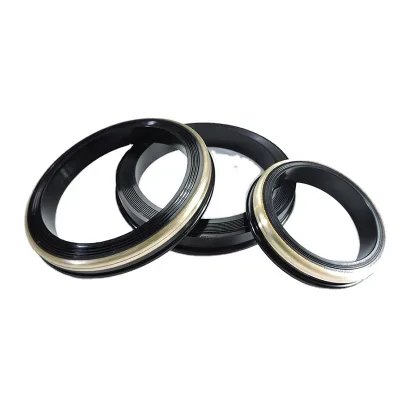
When sourcing oil and gas hammer union seals, buyers must first establish a precise understanding of the technical parameters that define product viability in high-pressure environments. The core product category encompasses seals designed for specific union types, often identified by model numbers such as FIG 602, 1002, 1502, 2002, and 2202. These seals are critical for maintaining integrity in flowline applications, particularly within plug valves and high-pressure pumping systems. The physical geometry of these components is non-negotiable; they are typically manufactured as O-rings or specialized seal rings with single-lip configurations to ensure effective sealing under dynamic conditions.
Material selection is the primary driver of performance in this sector. The supply chain offers a diverse range of elastomeric and composite materials, including Nitrile Butadiene Rubber (NBR), Hydrogenated Nitrile Butadiene Rubber (HNBR), Fluoroelastomer (FKM), Polytetrafluoroethylene (PTFE), and Polyurethane (PU). While NBR is a common baseline material, the specific application dictates the choice. For instance, applications requiring resistance to high temperatures or aggressive chemical exposure often necessitate HNBR or FKM. The product data indicates that these seals are available in pure rubber or composite constructions featuring rubber bonded with brass or stainless steel rings. This reinforcement is crucial for maintaining the seal's shape and preventing extrusion under extreme stress.
Pressure ratings represent another critical technical specification. The observed market data suggests a wide operational range, with specific products rated for pressures up to 15,000 psi, while broader categories may claim ranges extending from 1 psi to 150,000 psi. Buyers must exercise extreme caution when interpreting these figures, as the actual rated pressure for a specific unit depends heavily on the material grade, the lip design, and the specific union standard being utilized. The standard size specifications often align with inch-based measurements, ranging from 1 inch to 6 inches, with custom sizes available for specialized requirements. The dimensional standard is frequently defined by Inner Diameter (ID) and Cross-Section (CS) in millimeters, requiring precise verification against the equipment's mating surfaces.
Compliance, Certification, and Standard Verification
In the oil and gas sector, compliance is not merely a formality but a prerequisite for operational safety and liability protection. Buyers must verify that suppliers adhere to recognized quality management systems. A prominent certification observed in the market is ISO 9001:2015, which indicates that the manufacturer has a documented quality management system in place. However, the presence of this certification should be treated as a baseline indicator of process control rather than a guarantee of product-specific performance. Buyers should request valid, current certificates directly from the supplier and verify their authenticity through the issuing body.
Beyond general quality management, specific industry standards for seals must be confirmed. The products are described as adhering to "Standard" and "Nonstandard" classifications, which implies that while some items may conform to widely accepted industry norms, others are custom-engineered. The term "Standard" in this context often refers to established dimensional profiles, such as those found in FIG 602/1002/1502 series. However, buyers must not assume that "Standard" implies a universal global specification without verification. The specific standard governing the seal's dimensions and performance, such as API or ISO standards for wellhead equipment, must be explicitly requested and matched against the product datasheet.
It is also essential to distinguish between the manufacturer's internal standards and external regulatory requirements. The supply chain includes manufacturers based in regions like Shanghai and Hebei, China, which may operate under different national or regional regulatory frameworks. Buyers should ensure that the supplier's "Standard" designation aligns with the specific regulations of the jurisdiction where the seal will be deployed. For high-pressure applications, the verification of pressure ratings and temperature limits against the actual operating conditions of the oil and gas facility is mandatory. Relying solely on the supplier's claim of "High Temperature" or "Pressure Type" without a detailed test report or material data sheet is a significant procurement risk.
Cost Drivers and Pricing Dynamics
The pricing structure for oil and gas hammer union seals is influenced by a complex interplay of material costs, manufacturing complexity, and order volume. The observed market price range is broad, spanning from $0.10 to $60.00 USD per unit. This variance is not arbitrary but is directly correlated with the material composition and the level of customization required. A basic NBR O-ring will naturally command a lower price point compared to a composite seal featuring a stainless steel ring and FKM elastomer. Furthermore, the inclusion of specialized processing services, such as molding with tight tolerances, adds to the production cost.
Order volume is a decisive factor in the final unit price. The Minimum Order Quantity (MOQ) varies significantly across suppliers, with observed ranges from 1 to 1,000 pieces, though a specific high-confidence fact notes an MOQ of 500 pieces for certain product lines. Buyers should anticipate that purchasing below the standard MOQ may result in a premium price or the inability to secure the order at all. Conversely, larger orders often benefit from economies of scale, reducing the per-unit cost. However, the total cost of ownership should also consider the lead time. While some suppliers offer a rapid delivery window of 7 to 10 days, others may have longer production cycles depending on the complexity of the custom mold required.
Customization is a major cost driver. The market supports "Customized Accepted" options for both color and size. While the standard offerings might be available in black, brown, or blue, requesting specific colors or non-standard dimensions requires the creation of new molds or adjustments to the production line. This customization capability is a value-add for buyers with unique equipment but comes with a cost premium. Additionally, the availability of free samples, typically limited to 5 pieces, allows buyers to validate quality before committing to a larger order, but this should be factored into the overall procurement timeline and budget. The packaging requirements, whether standard cartons (404040 cm) or custom pallets, also contribute to the logistical costs and must be included in the total landed cost calculation.
Typical Applications and Operational Environments
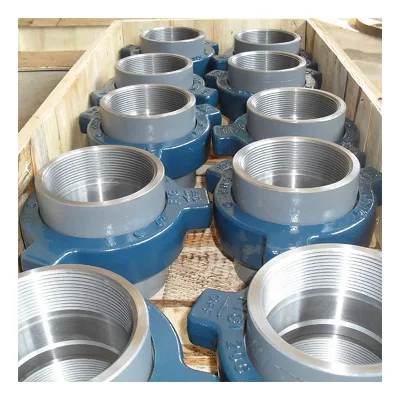
The primary application for hammer union seals is in the oil and gas industry, specifically within flowline systems and high-pressure pumping equipment. These seals are engineered to handle the rigorous demands of extracting, transporting, and processing hydrocarbons. The specific model numbers, such as FIG 602, 1002, and 1502, are frequently associated with plug valves and union connections in high-pressure environments. The ability to withstand pressures ranging from 6,000 psi to 15,000 psi makes these components suitable for deep-well operations and high-pressure testing scenarios.
Beyond pressure, the operational environment involves exposure to various chemicals, including crude oil, drilling fluids, and corrosive gases. The "Oil Resistant" attribute is a fundamental requirement, ensuring that the seal does not degrade or swell when in contact with hydrocarbons. The material choice plays a pivotal role here; NBR offers good oil resistance, while FKM provides superior chemical resistance for more aggressive environments. The seals are also designed to handle temperature fluctuations, with specific products rated for high-temperature applications. This thermal stability is crucial for preventing seal failure during operations where the fluid temperature may exceed standard ambient conditions.
The dynamic nature of the application cannot be overlooked. Hammer unions are subject to vibration and mechanical stress during operation and maintenance. The "Speed" attribute mentioned in the product data suggests that some seals are designed to accommodate movement or dynamic sealing conditions, although static sealing is more common in union applications. The single-lip design is optimized to maintain a tight seal while allowing for the necessary assembly and disassembly of the union components. Buyers should verify that the selected seal is compatible with the specific valve type and the operating speed of the system to prevent premature wear or extrusion.
Supplier Evaluation and Business Model Assessment
Evaluating potential suppliers requires a deep dive into their business model and operational capabilities. The market data identifies the primary business type as "Manufacturer," which is generally preferred over trading companies for specialized industrial components. A manufacturer typically offers greater control over the production process, material sourcing, and quality assurance. This direct relationship can facilitate better communication regarding technical specifications and customization requests. However, buyers must verify the manufacturer's actual capacity and location, as the data points to origins in Shanghai, China, and Hebei, China.
The supplier's ability to offer OEM (Original Equipment Manufacturer) and ODM (Original Design Manufacturer) services is a significant indicator of their flexibility and technical competence. This capability allows buyers to have seals produced with their specific branding or custom designs, which is essential for maintaining supply chain consistency and proprietary equipment standards. The acceptance of customized colors and sizes further demonstrates a supplier's willingness to adapt to specific buyer requirements. However, buyers should assess the lead time implications of such customizations. While a standard delivery time of 7 to 10 days is noted, custom orders may require extended production cycles.
Supplier reliability is also gauged by their response to quality inquiries and their willingness to provide samples. The availability of free samples (5 pieces) is a positive signal, allowing buyers to conduct preliminary quality checks. However, buyers should be wary of suppliers who cannot provide detailed technical documentation or who are vague about their material sourcing. The distinction between "Standard" and "Nonstandard" products should be clearly understood; a supplier offering nonstandard solutions must have the engineering expertise to ensure that these custom parts meet the necessary performance criteria.
Quality Control and Long-Term Procurement Considerations
Ensuring consistent quality is paramount in the procurement of high-pressure seals. The manufacturing process typically involves molding, which requires precise control over temperature, pressure, and curing times to achieve the desired material properties. Buyers should inquire about the supplier's quality control protocols, including in-process inspections and final testing procedures. While the ISO 9001:2015 certification provides a framework for quality management, specific test results for pressure resistance, temperature stability, and wear resistance should be requested for each batch of products.
Long-term procurement considerations extend beyond the initial purchase. The durability of the seal is critical for minimizing downtime and maintenance costs in oil and gas operations. The "Wear" performance attribute indicates that the material is selected for its resistance to degradation over time. Buyers should evaluate the supplier's track record for product longevity and their ability to provide consistent quality over multiple production runs. The availability of spare parts and the ease of replacement are also important factors. Since the seals are often custom-sized or specific to certain union models, maintaining a relationship with a reliable manufacturer ensures a steady supply of replacements when needed.
Packaging and logistics also play a role in long-term procurement success. The standard packaging, such as cartons or pallets, must protect the seals from damage during transit. For custom orders, the packaging requirements should be clearly defined to prevent contamination or physical deformation. The lead time of 7 to 10 days is a key metric for supply chain planning, but buyers should account for potential delays, especially for custom orders or during peak demand periods. Establishing a clear communication channel with the supplier regarding inventory levels and production schedules can help mitigate these risks and ensure a continuous supply of critical sealing components.
Comparative Analysis of Seal Options
To assist in decision-making, the following table summarizes key differentiators observed in the market for oil and gas hammer union seals. This comparison highlights the trade-offs between material types, pressure ratings, and customization capabilities.
| Feature | Standard NBR Seal | Composite (Rubber+Metal) Seal | High-Performance (FKM/PTFE) Seal |
|---|---|---|---|
| Primary Material | NBR (Nitrile Butadiene Rubber) | Rubber + Brass or Stainless Steel Ring | FKM (Fluoroelastomer) or PTFE |
| Pressure Rating | Up to 15,000 psi (Typical) | High (Reinforced for extrusion resistance) | High (Often >15,000 psi) |
| Temperature Resistance | Standard to Moderate | Moderate to High | High Temperature |
| Chemical Resistance | Good Oil Resistance | Good Oil Resistance | Excellent Chemical Resistance |
| Customization | Size and Color Available | Size and Color Available | Highly Customizable |
| Typical Application | General Flowline, Lower Pressure | High Pressure, Vibration | Aggressive Chemicals, Extreme Temp |
| MOQ | Typically 500 PCS | Typically 500 PCS | Varies, often higher |
This table illustrates that while standard NBR seals are suitable for many general applications, the choice of a composite or high-performance seal is driven by specific operational demands such as extreme pressure, vibration, or chemical exposure. Buyers must align their selection with the specific conditions of their equipment to ensure optimal performance and safety.
FAQs
What materials are available for oil gas hammer union seals?
Available materials include NBR, HNBR, FKM, PTFE, and PU. Buyers can choose pure rubber or composite options with brass or stainless steel rings for enhanced durability in high-pressure environments.
Can I request custom sizes for these seals?
Yes, custom sizes are accepted for these seals. The standard range covers 1 inch to 6 inches, but manufacturers accommodate specific dimensional requirements defined by inner diameter and cross-section measurements.
What is the typical lead time for delivery?
The typical delivery time is 7 to 10 days for standard orders. Customized requests or large volume orders may require additional processing time depending on the specific mold and production capacity required.
Which certifications do these manufacturers hold?
Manufacturers typically hold ISO 9001:2015 certification for quality management. This ensures documented processes are in place, though buyers should verify specific certificates for high-pressure safety compliance.
How much is the minimum order quantity required?
The minimum order quantity is often 500 pieces for specific product lines. However, some suppliers may accept orders starting from 1 piece, while others require up to 1000 pieces for bulk pricing.
What pressure ratings are supported by these seals?
Seals support pressure ratings ranging from 6000 psi to 15000 psi. Some specifications indicate a broader range up to 150000 psi, but actual capacity depends on the material grade and lip design used.
Do you offer free samples for testing?
Free samples are available, typically limited to 5 pieces. This allows buyers to verify material quality and dimensions before committing to a larger order or custom production run.