Source Oil Resistant Tubular Cable Conveyor for Grain, Mining, Chemical
Find 30 Oil Resistant Tubular Cable Conveyor options from verified Chinese manufacturers. Compare specifications including voltage, speed, and material features for grain transport, mining operations, and chemical industry applications.
Key considerations
Products List


Enclosed Material Handling Tubular Cable Conveyor Drag Chain Conveyor
$2750.00 - $8000.00
MOQ: 1 Pieces


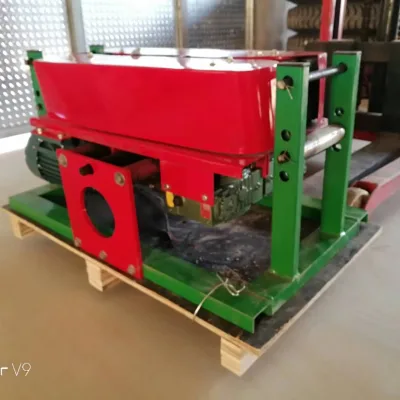
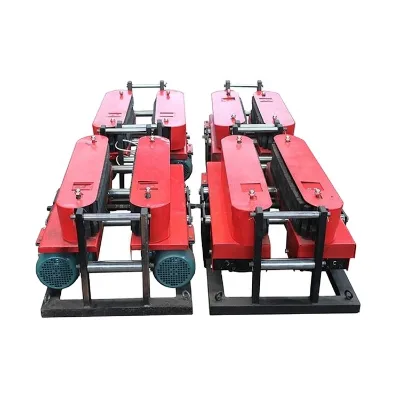
Multifunctional Wire Cable Conveyor with Crawler High Efficiency Cable Conveyor
$970.00 - $1190.00
MOQ: 1 Pieces


$1000.00 - $3000.00
MOQ: 1 Pieces

Belted Telescopic Conveyor Belt Conveyor for Loading and Unloading Telescopic Roller
$25000.00 - $95000.00
MOQ: 1 Pieces
Comprehensive Sourcing Guide
Strategic Sourcing Guide for Oil Resistant Tubular Cable Conveyors
Understanding the Technical Architecture of Tubular Cable Systems
When sourcing an Oil Resistant Tubular Cable Conveyor, buyers must first distinguish between the mechanical structure and the specific material composition that defines its operational capability. The core architecture of these systems typically relies on a chain conveyor structure, often described as a conveyor system where a continuous cable or chain drives the movement of the product. In the context of tubular cable conveyors, the design frequently incorporates a specific chain model, such as Ring, Wire, or Plate configurations, which dictates the flexibility and load-bearing capacity of the tube.
The material composition is paramount for applications involving oil. The supply data indicates that the primary structural material is Stainless Steel, which provides the necessary corrosion resistance and structural integrity for industrial environments. However, the critical "oil resistant" attribute is often derived from specific material features applied to the conveying elements. The observed product attributes explicitly list "Oil Resistant" and "Fire Resistant" as key material features. These features are frequently associated with disc materials made from PP (Polypropylene) or PTFE (Polytetrafluoroethylene), or potentially rubber and steel composites. The disc materials are described as "Various Materials Available," suggesting that buyers can select specific polymer grades that offer chemical resistance to oils and greases.
The conveying method is mechanical, utilizing a control method that can range from simple button operations to advanced PLC (Programmable Logic Controller) systems. For high-precision applications, the control method may include a control panel and remote control capabilities. The power source is consistently electric, with voltage specifications observed in the range of 220V to 660V, and specific configurations like 220V/380V. The speed of the conveyor is adjustable, with observed ranges extending from 0 to 2 meters per minute, allowing for fine-tuned processing speeds depending on the viscosity or flow rate of the material being transported.
Compliance, Certification, and Standard Verification
Navigating the compliance landscape for industrial machinery requires a rigorous verification of certifications and standards. In the observed product data, the certification field lists "ISOCE," which likely refers to ISO standards, though buyers must verify the specific ISO series (e.g., ISO 9001 for quality management) with the supplier, as the abbreviation alone does not define the scope of compliance. The absence of other specific certification names in the provided text means that buyers cannot assume the presence of CE, UL, or other regional safety marks without direct confirmation.
Standards play a crucial role in defining the product's baseline quality. The observed product standards include "Z TYPE" and a series of model-based standards such as "PC-80/PC-100/PC-150/PC-200." These alphanumeric codes often correspond to specific design specifications or capacity ratings. For instance, the model "PC-80" and "PC-100" suggest a modular design where the number may indicate a dimension or capacity parameter. Buyers should treat these as internal model identifiers and request the full technical datasheet that defines what "PC-80" or "Z TYPE" entails in terms of load limits, safety factors, and material thickness.
The origin of the products is listed as China. While this is a significant manufacturing hub, it necessitates a heightened focus on verifying that the exported goods meet the safety and quality standards of the buyer's destination country. The packing standards are also relevant to compliance; observed packing methods include "Wooden Boxes," "Non-Fumigated Wooden Box," and "Export Wooden Box." The mention of "Non-Fumigated" is particularly critical for international shipping, as many countries require ISPM 15 compliance (fumigation) for wooden packaging to prevent the spread of pests. Buyers must explicitly confirm if the "Non-Fumigated" label applies to the specific unit they are purchasing or if it is a generic listing, as shipping non-fumigated wood to certain regions can result in customs delays or rejection.
Cost Drivers and Pricing Variables
The pricing for oil resistant tubular cable conveyors is highly variable, driven by the complexity of the customization and the specific material features selected. The observed price range in the market is extensive, spanning from $8.97 to $95,000. This wide disparity indicates that the "core keyword" covers a spectrum of products, from small-scale, simple components to large, fully automated industrial systems.
Several factors drive these costs. First, the level of customization is a primary cost driver. The data confirms that "Customization" and "Customized" are available attributes. A standard, off-the-shelf unit will likely fall at the lower end of the price spectrum, while a system engineered with specific dimensions, custom control panels, or specialized oil-resistant polymers will command a premium. The "OEM Support" attribute further suggests that branding and specific engineering requirements will increase the unit cost.
Second, the material composition significantly impacts price. While Stainless Steel is a standard material, the choice between PP, PTFE, Rubber, or Steel for the disc and chain components varies in cost. PTFE, for instance, is generally more expensive than standard PP but offers superior chemical resistance. The "Maximum Tension" of 6000N observed in some listings indicates high-strength requirements, which necessitates heavier gauge materials and more robust engineering, thereby increasing the price.
Third, the power and control systems add to the cost. Systems with PLC control, remote control capabilities, and variable speed drives (0~2m/Min) are more expensive than those with simple button controls. The power rating, such as "1.5kw*2," also correlates with the motor size and energy efficiency, influencing the overall price. Finally, the packaging method, such as "Sea Worthy Packing" versus standard "Wooden Boxes," adds to the logistical cost, which is often reflected in the final FOB or CIF price.
Typical Applications and Operational Environments
The versatility of oil resistant tubular cable conveyors makes them suitable for a diverse range of industries. The observed application fields include Beverage, Dairy, Fruit, Vegetable, Ice Cream, Chocolate, and Pet Food. In these food processing sectors, the "Oil Resistant" feature is essential for cleaning processes involving lubricants or for conveying products that are naturally oily, such as chocolate or pet food with high fat content. The "Natural Ingredients," "Agronomic Products," and "Forest Products" material processing capabilities further support their use in agricultural and food supply chains.
Beyond food processing, the applications extend to heavy industry. The data lists Power Plant, Mining Transport, Grain Transport, and Chemical Industry as key application areas. In the chemical industry, the resistance to oils and potentially other corrosive substances is a safety requirement. In mining and grain transport, the "Fire Resistant" and "Oil Resistant" features protect against the risks associated with hydraulic fluids and combustible dusts. The "Enclosed" attribute is particularly valuable in these environments, as it prevents dust and spillage, maintaining a cleaner and safer workplace.
The conveying material is specified as "Powder/Granular," which aligns with the handling of grains, powders, and small agricultural products. The tubular design ensures that the material is contained within a sealed tube, minimizing waste and contamination. The "Conveying Method" of mechanical conveying ensures a consistent flow, which is critical for automated production lines in beverage and dairy processing where precise dosing and transfer are required.
Supplier Evaluation and Procurement Strategy
When evaluating suppliers for these specialized conveyors, buyers should adopt a multi-faceted approach that goes beyond price comparison. The "Customized" and "OEM Support" attributes indicate that many suppliers are capable of engineering solutions rather than just selling standard inventory. Buyers should assess the supplier's ability to provide technical drawings and engineering support to ensure the conveyor fits their specific facility layout.
The "Condition" of the products is listed as "New," which is a baseline expectation. However, buyers should verify the warranty terms and the availability of spare parts, especially for the "Disc Materials" and "Chain Model" components, which are subject to wear and tear. The "Automatic Grade" of "Automatic" suggests a high level of integration, so the supplier's experience with automation systems and PLC integration is a key evaluation criterion.
Location is a factor in logistics and lead times. With the origin listed as "China," buyers must consider the lead time for manufacturing and shipping. While specific lead times are not provided in the data, the "Sea Worthy Packing" and "Export Wooden Box" standards suggest an experience with international logistics. Buyers should inquire about the supplier's track record in shipping to their specific region and their ability to handle customs documentation, particularly regarding the wooden packaging standards.
The "MOQ" (Minimum Order Quantity) range of 1-100 units offers flexibility. For smaller projects or pilot programs, a supplier with an MOQ of 1 is advantageous. For large-scale deployments, buyers can negotiate better pricing for orders closer to the 100-unit range. The "Customized" nature of the product often means that the MOQ may be higher for bespoke designs compared to standard models.
Quality Control and Long-Term Procurement Considerations
Ensuring quality in the procurement of oil resistant tubular cable conveyors requires a proactive approach to quality control (QC). Buyers should request detailed inspection reports that verify the "Material Feature" claims of being "Oil Resistant" and "Fire Resistant." Since specific test results are not provided in the source data, buyers must ask for third-party test certificates or internal quality assurance logs that demonstrate the material's performance under stress and exposure to oils.
The "Dimensions" of the product, such as 1005753cm, and the "Cable Diameter" of 2~24cm are critical for integration. Buyers must verify that the actual delivered dimensions match the specifications, as tolerances can affect the fit within existing conveyor systems. The "Maximum Tension" of 6000N is a critical safety parameter; buyers should ensure that the supplier provides a safety factor calculation to guarantee the system can handle peak loads without failure.
Long-term procurement considerations include the lifecycle cost of the equipment. While the initial price may be low, the durability of the "Stainless Steel" and "PP/PTFE" components will determine the total cost of ownership. Buyers should evaluate the ease of maintenance and the availability of replacement parts. The "Control Method" being "Button / PLC" or "Control Panel, Remote Control" implies that the control system is a potential point of failure; therefore, the supplier's support for software updates and control panel repairs is essential.
Finally, the "Standard" of the product, whether "Z TYPE" or model-specific like "PC-80," should be consistent across the order. Inconsistent standards can lead to compatibility issues if the system needs to be expanded or modified in the future. Buyers should insist on a standardized approach to ensure that all components of the conveyor system, including the chain, discs, and control units, are compatible and meet the same quality benchmarks. By focusing on these technical and operational details, buyers can secure a reliable, efficient, and safe Oil Resistant Tubular Cable Conveyor system that meets their specific industrial needs.
FAQs
What certifications do oil resistant tubular cable conveyors have?
Products listed with ISOCE certification are available for these conveyors. Buyers should verify the specific ISO series with the supplier, as the abbreviation alone does not define the full scope of compliance or safety standards.
Which materials are used for the disc components?
Disc materials are available in PP or PTFE, with various other materials also offered. These polymers provide the necessary oil and fire resistance required for industrial applications involving chemical or food processing environments.
Can the conveyor speed be adjusted for different materials?
Yes, the conveyor speed is adjustable, typically ranging from 0 to 2 meters per minute. This feature allows operators to fine-tune the flow rate based on the viscosity or type of powder and granular material being transported.
What is the standard voltage for these electric conveyors?
The voltage specifications observed range from 220V to 660V, with common configurations at 220V or 380V. Buyers must ensure their facility power supply matches these electrical requirements before installation.
How are these conveyors packaged for international shipping?
Packaging options include wooden boxes, non-fumigated wooden boxes, and export wooden boxes. Buyers must explicitly confirm if the wooden packaging meets ISPM 15 fumigation standards to avoid customs delays in destination countries.
What customization options are available for these systems?
Customization is available, including OEM support and specific model variations like PC-80 or PC-100. Buyers can request tailored dimensions, control methods, or material features to fit their specific production line requirements.
Which industries commonly use these tubular cable conveyors?
These conveyors serve industries including beverage, dairy, mining, and chemical processing. They are designed to handle natural ingredients, powders, and granular materials while maintaining safety through enclosed and fire-resistant designs.