Source Waterproof Anodized Aluminum Luggage Tag for Travel Hotels Airports
Compare 30 listings for waterproof anodized aluminum luggage tags suitable for travel, hotels, and airports. Options include custom printing, eco-friendly features, and various sizes from suppliers in Guangdong and Fujian.
Key considerations
Products List

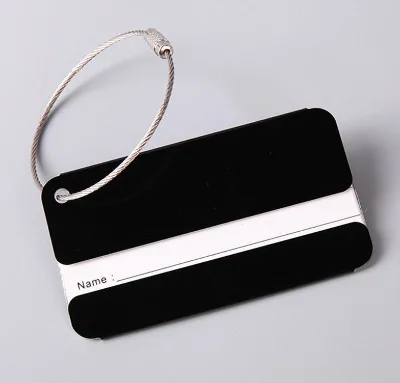


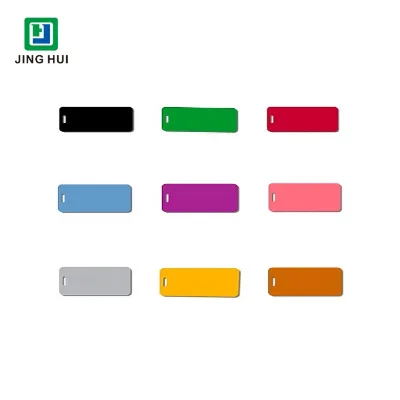


Colored Metal Luggage Tags Holders for Travel Luggage Baggage Identifier
$0.20 - $0.22
MOQ: 10000 Pieces


Alloy Bulk Blank Name Tags Airplane Metal Travel ID Anodized Aluminum Luggage Tags
$0.15 - $0.35
MOQ: 100 Pieces

2025 Wholesale Travel Accessories Aluminum Tag ID Name Luggage Tag for Travel Bags
$0.32 - $0.56
MOQ: 200 pieces


Comprehensive Sourcing Guide
Strategic Sourcing Guide for Waterproof Anodized Aluminum Luggage Tags
Understanding Material Composition and Surface Engineering
When sourcing waterproof anodized aluminum luggage tags, the primary distinction lies in the material selection and the specific surface treatments applied to ensure durability. The core keyword implies a product constructed from aluminum, yet the available market data reveals a complex landscape where materials such as stainless steel, metal alloys, and even leather are frequently categorized under similar functional tags. For a buyer specifically seeking anodized aluminum, it is critical to verify that the supplier explicitly lists "Aluminum" or "Metal" as the base material, distinguishing it from stainless steel or leather alternatives that may appear in the same search results. The anodizing process is essential for the "waterproof" claim, creating a non-conductive, corrosion-resistant oxide layer that protects the metal from moisture and wear.
The supplied context indicates that surface processing techniques like electroplating are common in this category, often paired with metal spinning or cold stamping processes. While electroplating provides a decorative finish, anodizing is the specific chemical treatment required for aluminum to achieve the desired waterproof and scratch-resistant properties. Buyers must scrutinize the "Surface Processing" attribute to confirm the presence of anodization rather than just generic plating. Furthermore, the "Fine Blanking" and "Forming Process" attributes suggest that high-precision manufacturing is involved. The tolerance levels, such as the observed 0.02mm, indicate that precision is a key factor in the fit and finish of the tag, ensuring that the attachment mechanisms align correctly with luggage zippers or handles.
Technical Specifications and Dimensional Requirements
Technical specifications for luggage tags must be precise to ensure compatibility with various luggage types. The observed data points to a standard size of 9cm by 5.4cm, which serves as a baseline for many metal luggage tags. However, the "Shape" attribute is noted as "Other Special Shape," indicating that while rectangular forms are common, custom geometric designs are also available. The "Imprint Size" is described as "Big," suggesting that these tags offer substantial surface area for branding, which is a critical requirement for corporate gifting or airline identification.
The "Type" of the product is consistently listed as "Hang," confirming that the design relies on a hanging mechanism, likely a loop or a rivet system, rather than a strap or adhesive backing. The "Model Number" variations, such as CY2026010401 or MAX--0121, highlight the need for buyers to request specific technical drawings or CAD files to ensure the physical dimensions match their inventory requirements. Additionally, the "Standard" attribute mentions a weight range of 1-20g, which is a vital specification for logistics. A tag that is too heavy may damage delicate luggage, while one that is too light may feel flimsy. Buyers should verify the exact weight of the anodized aluminum tag against this range to ensure it meets the aesthetic and functional expectations of the end-user.
Compliance, Certification, and Regulatory Standards
Navigating the regulatory landscape for luggage tags requires a careful examination of the certifications provided by the supplier. The supplied facts list "CE" as a product standard, which is a mandatory conformity marking for products sold within the European Economic Area. This certification indicates that the product meets EU safety, health, and environmental protection requirements. However, the data also references "EN71" and "REACH" in a low-confidence section, meaning buyers cannot assume these certifications are present without explicit verification.
For anodized aluminum products, the chemical composition of the anodizing bath and the surface coatings must comply with REACH regulations to ensure they do not contain restricted substances. The "Eco-Friendly" characteristic listed in the attributes suggests that some suppliers may be using environmentally benign processes, but this should not be taken as a blanket certification. Buyers must request valid test reports or certificates of compliance for both CE and REACH before placing large orders. The "Quality" attribute is listed as "Fine," which implies a higher standard of manufacturing, but this is a subjective term. Objective verification through third-party testing is necessary to confirm that the product does not leach harmful chemicals, especially if the tags are intended for use in hotels or airports where hygiene and safety are paramount.
Cost Drivers and Minimum Order Quantity Dynamics
The cost structure for waterproof anodized aluminum luggage tags is influenced by several variables, including material grade, surface finishing complexity, and order volume. The observed price range in the market spans from $0.01 to $7.00 USD, a wide variance that reflects differences in material quality, customization levels, and order quantities. The "MOQ" (Minimum Order Quantity) presents a significant barrier to entry for small buyers, with observed ranges from 50 to 10,000 units. Specific product listings indicate an MOQ of 1,000 pieces, while others accept small orders of 100 pieces.
The "Customization" attribute is a major cost driver. Options such as "Silk Screen Printing," "Custom Printing," and "Logo" application add to the unit cost. The "Printing" process, specifically silk screen, requires the creation of screens and setup time, which is amortized over the order quantity. For anodized aluminum, the cost is also driven by the "Surface Processing" steps; electroplating and anodizing are additional chemical processes that increase the per-unit price compared to raw metal tags. Buyers should be aware that the "Selling Units" are often listed as "Single item," but the actual transaction is governed by the MOQ. Negotiating a lower MOQ may result in a higher per-unit price, while increasing the order volume can significantly reduce the cost, potentially bringing the price closer to the lower end of the observed range.
Typical Applications and Functional Versatility
The functional versatility of waterproof anodized aluminum luggage tags makes them suitable for a diverse range of industries. The "Usage" attributes explicitly mention "Bags," "Luggage," "Gift," and "Travel," indicating their primary role in the travel and hospitality sectors. The "Appliance" attribute expands this to include "Exhibition," "Hotel," "Travel," and "Airport," highlighting their utility in high-traffic environments where durability and visibility are essential.
In the hotel industry, these tags serve as a premium branding tool, often used for guest luggage identification or as part of a welcome package. The "Eco-Friendly" and "Washable" features make them particularly suitable for sustainable travel initiatives, where reusable tags are preferred over disposable plastic alternatives. The "Disposable" attribute is listed as "Non-Disposable," reinforcing the long-term nature of the product. The "Color" availability, described as "many colors," allows for extensive customization to match corporate branding or event themes. The "Printed" pattern and "Silk Screen Printing" capabilities ensure that logos and text remain legible even after exposure to water and rough handling, a critical requirement for airport and travel applications.
Supplier Evaluation and Quality Control Protocols
Evaluating suppliers for anodized aluminum luggage tags requires a rigorous assessment of their manufacturing capabilities and quality control measures. The "Place of Origin" data points to regions such as Guangdong, Fujian, and Dongguan in China, which are known hubs for metal stamping and processing. The "Industry" is identified as "Metal Stamping Parts," suggesting that suppliers have experience with precision metalwork. Buyers should verify the "Mould" capabilities, specifically looking for "Simple Single Process Dies" or more complex setups depending on the tag design.
Quality control should focus on the "Tolerances" and "Process" attributes. The observed tolerance of 0.02mm indicates a high level of precision, which is crucial for the attachment mechanisms. Buyers must request samples to test the "Waterproof" claim, ensuring that the anodizing layer does not peel or degrade when exposed to moisture. The "Packing" specifications, such as "1PC/OPP Bag" or "100PCS/CTN," are also important for logistics and inventory management. Suppliers should provide clear documentation on their "Production Process," including the "Forming Process" and "Cold Stamping" techniques used. Additionally, the "Brand Name" attribute shows that some suppliers operate as OEM manufacturers with no brand, while others have established names like "MAXPROMO." Buyers should ensure that the supplier's quality assurance protocols align with their own standards, particularly regarding the "Fine" quality attribute and the "Eco-Friendly" claims.
Long-Term Procurement and Supply Chain Considerations
Long-term procurement of waterproof anodized aluminum luggage tags involves considerations beyond the initial purchase price. The "Lead Time" and "Production Capacity" are critical factors, especially for seasonal demand spikes in the travel industry. While specific lead times are not provided in the data, the "MOQ" of 1,000 pieces suggests that suppliers may require significant production runs, which could impact delivery schedules. Buyers should establish a relationship with suppliers who can offer flexible production schedules to accommodate fluctuating demand.
The "Customization" aspect also plays a role in long-term strategy. As branding needs evolve, the ability to update designs or logos without changing the core product structure is valuable. The "Small Orders: Accepted" attribute indicates that some suppliers are willing to work with smaller volumes, which can be beneficial for testing new designs or fulfilling urgent, low-volume requests. However, for consistent supply, buyers should aim to consolidate orders to meet the higher MOQs for better pricing. The "Origin" of the product, specifically from China, requires attention to international shipping logistics and potential tariffs. Buyers should also consider the "Standard" compliance, ensuring that the product remains compliant with evolving regulations in target markets. Finally, the "Quality" assurance must be maintained over time, with regular audits or sample checks to ensure that the "Waterproof" and "Eco-Friendly" attributes do not degrade as production scales.
FAQs
What materials are used for waterproof anodized aluminum luggage tags?
The primary materials include metal, stainless steel, and leather options. While aluminum is the core material for anodized tags, listings also show stainless steel and leather variations. Buyers must verify the specific material composition to ensure it matches the waterproof anodized requirement.
Which certifications are available for these metal luggage tags?
CE certification is explicitly listed as a product standard for these items. Although EN71 and REACH are mentioned in low-confidence background data, they cannot be assumed present. Buyers should request valid test reports to confirm compliance with specific regional safety and environmental regulations.
Can I order small quantities of waterproof anodized aluminum luggage tags?
Yes, some suppliers accept small orders starting from 100 pieces. However, other listings specify a minimum order quantity of 1000 pieces. The actual MOQ depends on the specific supplier and their production capacity, so verifying this before ordering is essential.
How are the tags customized with logos and patterns?
Customization is available through silk screen printing and custom printing methods. The imprint size is described as big, allowing for substantial branding space. The pattern is typically printed, and the surface processing may include electroplating for a durable finish.
What are the standard dimensions and weight specifications?
A common size observed is 9cm by 5.4cm with a weight range of 1 to 20 grams. The shape can be a special form, and tolerances are as precise as 0.02mm. These specifications ensure compatibility with various luggage types while maintaining a lightweight profile.
Where are these metal luggage tags manufactured?
Products originate from manufacturing hubs in Guangdong, Fujian, and Dongguan, China. The specific location varies by supplier, with some listing Guangdong and others Fujian as the place of origin. Buyers should confirm the exact factory location for logistics planning.
What are the typical packaging methods for these tags?
Tags are typically packed individually in OPP bags or 100 pieces per carton. Some listings specify 1 piece per OPP bag with 100 pieces per carton. This packaging ensures protection during shipping and simplifies inventory management for the buyer.