Source Oil Seal O-Ring for Valves, Rotary Seals, and Flanges
Find 30 oil seal o-ring options from suppliers in China. Buyers can compare customization, material types like NBR and SIL, and lead times for valves, rotary seals, and flange applications.
Key considerations
Products List


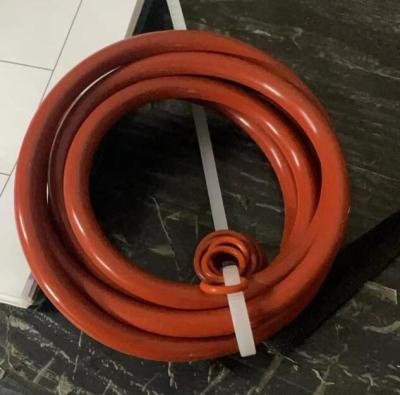

Comprehensive Sourcing Guide
Strategic Sourcing Guide for Oil Seal O-Rings
Understanding Technical Specifications and Material Variability
When sourcing oil seal o-rings, buyers must navigate a complex landscape where material composition and dimensional precision dictate performance. The core product category encompasses items identified by specific attributes such as "O-Ring" shape and "Oil Seal" type, yet the underlying material properties vary significantly across different listings. A critical observation in the current market is the divergence between synthetic rubber compounds and other materials. For instance, specific product entries explicitly list NBR (Nitrile Butadiene Rubber) as the primary material, which is a standard choice for petroleum-based fluids. However, other entries within the same search results identify Rubber as a generic material, while distinct listings point to SIL (Silicone) or even Steel components, suggesting a broader category that includes metal-reinforced seals or entirely different sealing mechanisms that share the "o-ring" nomenclature.
Buyers must verify the exact compound material before placing an order, as the chemical resistance of NBR differs vastly from SIL. The hardness of these seals is another critical technical parameter, with observed ranges spanning from 20 to 90 Shore A. This wide spectrum indicates that the market offers seals for both soft, low-pressure gasketing applications and rigid, high-pressure sealing scenarios. Furthermore, the physical dimensions are rarely off-the-shelf; the majority of available products support Customize Size or Custom model numbers, requiring buyers to provide precise cross-sectional diameters and inner/outer diameters. While some listings mention standard dimensions like 40x55x8, the prevailing trend is toward bespoke manufacturing where the Model No. is often listed as Oring or Custom, reinforcing the need for detailed engineering drawings.
Compliance, Certification, and Regulatory Verification
Navigating the compliance landscape for industrial sealing components requires rigorous verification of supplier claims against known standards. The provided data indicates that some manufacturers claim their Compound Material meets ASTM D2000, a standard classification system for rubber materials. Additionally, references to RoHS and Reach Compliance appear in the context of material safety, which is essential for electronics and automotive applications where heavy metal restrictions are enforced. However, buyers must treat these as observations of specific supplier capabilities rather than universal guarantees for all o-rings in the category.
Quality management systems are frequently cited as a differentiator. Several product entries list SGS and ISO9001 as part of their prod_standard, indicating that the manufacturing facility adheres to international quality management protocols. It is important to distinguish between the product standard and the facility certification; a product may be manufactured in a facility with ISO9001 certification, but the specific batch of o-rings must still undergo quality checks. Some listings also mention EN 9100 and UL 157 in background contexts, which are critical for aerospace and electrical safety, respectively. Buyers should explicitly request valid, current certificates for these standards rather than assuming compliance based on general category tags. The absence of a specific certification claim in a product listing does not necessarily imply non-compliance, but it does require the buyer to initiate a formal audit or request documentation before proceeding with high-stakes procurement.
Cost Drivers and Pricing Dynamics
The pricing structure for oil seal o-rings is highly variable, influenced by material costs, customization levels, and order volume. The observed price range in the market spans from 0 to 38,888 USD, a disparity that reflects the difference between single-unit samples and large-scale industrial contracts. A single item with a gross weight of 0.02 Kg may be listed at a nominal price, whereas a custom run of high-performance SIL or specialized NBR seals in large quantities will command a significantly higher price point. The MOQ (Minimum Order Quantity) is another primary cost driver, with observed ranges extending from 1 to 5000 units.
Buyers should anticipate that lower MOQs, such as 1 unit, often come with a higher per-unit cost due to the setup time required for molding and the handling of small batches. Conversely, orders approaching the upper limit of the MOQ range may benefit from economies of scale. The Lead Time also impacts the total cost of ownership; standard production runs may take 12 to 18 days, while sample production can be completed in 8 days. Rush orders or complex customizations that require specific tooling modifications will inevitably increase costs. Additionally, packaging requirements, such as Plastic Bag+Carton versus Unit, Then to Wooden Case, add to the logistical expenses. Buyers must evaluate the total landed cost, including freight options like Ocean Freight, rather than focusing solely on the unit price.
Typical Applications and Performance Requirements
The application scope for oil seal o-rings is vast, ranging from general industrial machinery to specialized valve systems. The data highlights specific use cases, such as Valve applications where Airproof seals are required. In these scenarios, the seal must maintain integrity under pressure to prevent leakage of gases or liquids. The Performance attributes listed include Temperature resistance and High Pressure capabilities, indicating that these seals are designed for demanding environments. The Type of seal is further categorized as Rotary Seal in some contexts, suggesting suitability for dynamic applications where the seal moves relative to the mating surface, as opposed to static sealing.
The Advantage of a Smooth Surface with Small Parting Line is a critical feature for preventing leakage paths and reducing friction in moving assemblies. This surface finish is particularly important for rotary seals where even minor imperfections can lead to premature wear or fluid escape. The Storage Life of these components is noted as 10 years in some specifications, which is a vital metric for supply chain planning and inventory management. However, this lifespan is contingent on proper storage conditions and the specific chemical environment in which the seal operates. Buyers should match the seal's performance characteristics to the specific operational parameters of their machinery, ensuring that the Hardness and Material are compatible with the operating temperature and fluid type.
Supplier Evaluation and Geographic Considerations
Evaluating suppliers requires a careful analysis of their geographic origin and manufacturing capabilities. The supply chain for these components is concentrated in specific regions of China, with Hebei, Fujian, and Jiangsu Province (specifically Liyang Hengyu Machining Factory) identified as key production hubs. The location of the factory can influence logistics, lead times, and communication efficiency. For instance, a factory in Jiangsu Province may offer specialized machining services, as indicated by the Processing Service: Moulding and specific model numbers like WG9231320001 or machining 2018-0911.
When assessing a supplier, buyers should look for evidence of Customization capabilities, as the market is dominated by made-to-order products. The ability to provide Color options as Per Request or specific Hardness levels demonstrates flexibility. It is also essential to verify the Brand Name and reputation of the manufacturer, with BS appearing as a notable brand in the dataset. Buyers should request samples to verify the Smooth Surface quality and check the Single Gross Weight to ensure consistency with their specifications. The Place of Origin should be clearly stated on the invoice and shipping documents to comply with customs regulations and trade agreements.
Quality Control and Long-Term Procurement Strategy
Implementing a robust quality control strategy is essential for mitigating the risks associated with custom-seal procurement. Given the wide range of MOQ values and the potential for Custom dimensions, buyers must establish clear acceptance criteria before production begins. The Standard of the product should be verified against the ASTM D2000 or other relevant industry standards mentioned in the supplier's documentation. Quality checks should include visual inspection for surface defects, measurement of dimensions to ensure they match the Customize Size requirements, and testing of hardness to confirm the 20 ~ 90 Shore A range.
For long-term procurement, buyers should consider the Lead Time variability. While 8 days is standard for samples, mass production may require 12 to 18 days, and some orders may take 15 days or longer depending on complexity. Establishing a relationship with a supplier who can consistently meet these timelines is crucial for maintaining production schedules. The Package specifications, such as PE Bag, Carton or Carton Box, should be agreed upon to prevent damage during transit. Additionally, the Single Package Size of 5X5X5 Cm provides a baseline for logistics planning, though custom orders may require different packaging solutions. By focusing on these operational details, buyers can build a resilient supply chain that ensures the consistent delivery of high-quality oil seal o-rings tailored to their specific engineering needs.
Comparative Analysis of Product Attributes
To facilitate decision-making, the following table summarizes the key attributes observed in the market, highlighting the variability that buyers must account for during the sourcing process.
| Attribute Category | Observed Variability | Key Considerations for Buyers |
|---|---|---|
| Material | NBR, Rubber, SIL, Steel | Verify chemical compatibility with the target fluid; NBR for oil, SIL for high temp. |
| Hardness | 20 ~ 90 Shore A | Select based on pressure requirements; lower Shore A for flexibility, higher for rigidity. |
| Dimensions | Standard (e.g., 40x55x8), Custom | Most products require custom sizing; provide precise drawings for non-standard requests. |
| Certifications | ASTM D2000, RoHS, Reach, ISO9001, SGS | Request valid certificates; do not assume compliance based on category tags. |
| Lead Time | 8 Days (Sample), 12-18 Days (Mass) | Plan production schedules around these windows; factor in potential delays for custom tooling. |
| Packaging | Plastic Bag+Carton, Wooden Case | Ensure packaging meets shipping requirements and prevents damage during transit. |
| Origin | Hebei, Fujian, Jiangsu, China | Consider logistics and potential tariffs based on the specific province of origin. |
This comparative overview underscores the necessity of detailed specification reviews. The market offers a diverse array of options, but the lack of uniformity means that buyers cannot rely on generic assumptions. Success in sourcing oil seal o-rings depends on the ability to navigate these variations, verify technical claims, and establish clear communication channels with suppliers who can deliver products that meet the rigorous demands of modern industrial applications.
FAQs
What materials are used for oil seal o-rings?
Common materials include NBR, Rubber, SIL, and Steel. Buyers must verify the specific compound, as NBR suits petroleum fluids while SIL handles higher temperatures.
Can I customize the size of the o-ring?
Yes, most products support custom sizes and model numbers. Buyers should provide precise drawings for non-standard requests since standard dimensions like 40x55x8 are less common.
What is the typical lead time for production?
Sample production takes 8 days, while mass production requires 12 to 18 days. Some orders may take 15 days depending on complexity and customization requirements.
Which certifications should I look for in suppliers?
Look for ASTM D2000, RoHS, Reach, ISO9001, and SGS. Buyers should request valid certificates rather than assuming compliance based on general category tags or background information.
How does hardness affect the seal performance?
Hardness ranges from 20 to 90 Shore A to suit different pressures. Lower Shore A offers flexibility for gasketing, while higher values provide rigidity for high-pressure sealing.
Where are these oil seal o-rings manufactured?
Key production hubs include Hebei, Fujian, and Jiangsu Province in China. The specific location influences logistics and lead times, with some factories specializing in machining services.
What is the minimum order quantity for samples?
The minimum order quantity can be as low as 1 unit for samples. However, lower MOQs often incur higher per-unit costs due to setup time and handling small batches.