Source Olive Sinker for Boat Fishing, River Casting, and Lake Angling
Explore 20 Olive Sinker options including cast iron and iron alloy models with zinc plating for corrosion resistance. Buyers can compare specifications, weights, and customization features for marine and freshwater applications.
Key considerations
Products List




Comprehensive Sourcing Guide
Strategic Sourcing Guide for Olive Shape Fishing Sinkers
Understanding the Technical Architecture of Olive Sinkers
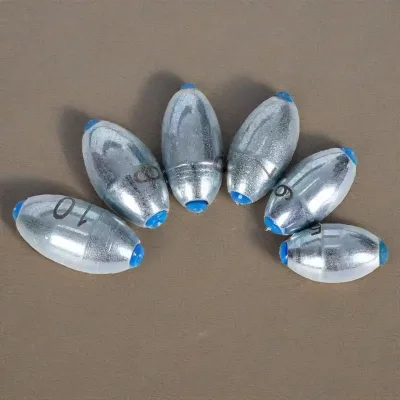
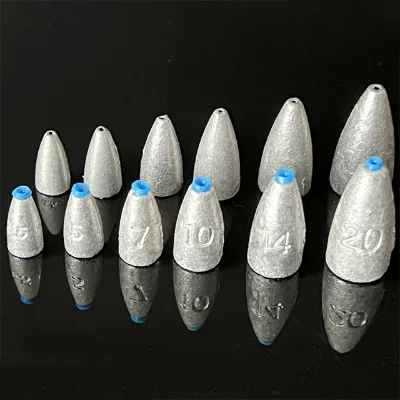
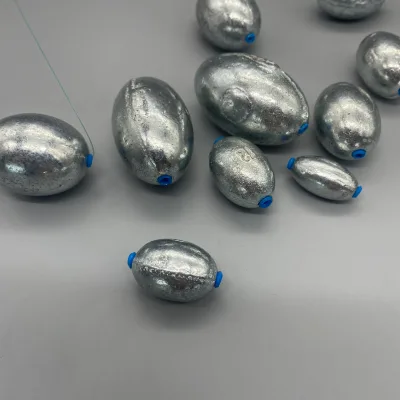
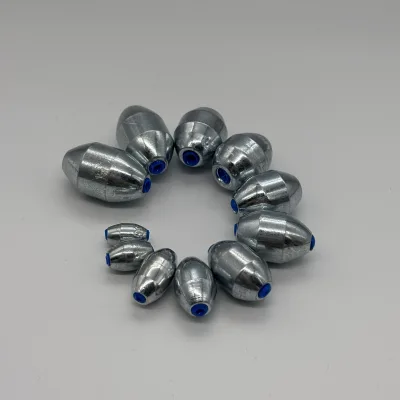
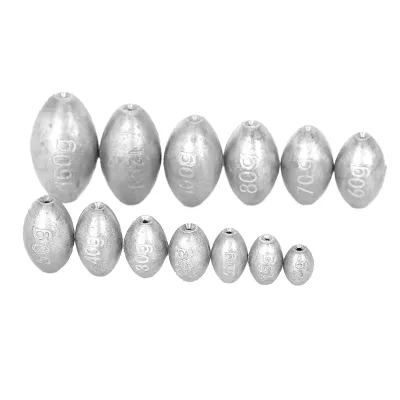
The Olive Sinker represents a specialized category within fishing tackle, distinguished by its aerodynamic profile and functional design. Based on the observed product data, these items are primarily engineered as "Sea Pole" type weights, specifically designed to minimize line twist while providing necessary ballast. The core technical specification for this product line centers on an "Olive" shape, which facilitates smooth casting and rapid sinking capabilities. This geometry is critical for anglers utilizing specific rigs such as the Carolina Rig, Texas Rig, and Inline Rig, where the sinker must slide freely along the line to maintain bait presentation.
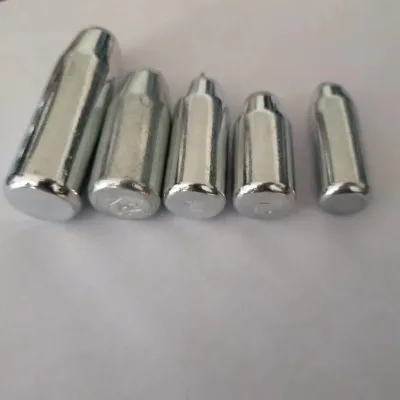
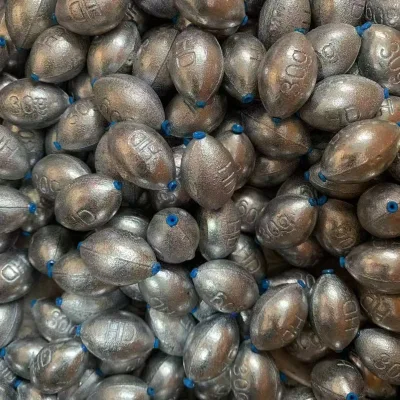
The material composition varies across the market, though the dominant configurations observed include cast iron with zinc plating and iron alloy formulations. A notable variation involves the use of iron alloy as a tungsten alternative, often paired with soft silicone components. This combination suggests a dual-purpose design where the metal provides density while the silicone offers line protection. The manufacturing process is consistently identified as "Precision Casting," a method that ensures dimensional accuracy and weight consistency. This is further reinforced by the presence of a "Through Hole with Plastic Core" in many models, a feature designed to reduce friction against the fishing line and prevent abrasion. The surface treatment is frequently zinc-plated, contributing to the "Metallic Gray" or "Silver" coloration observed in the product listings, which also serves a functional role in corrosion resistance.
Compliance, Certification, and Material Verification
When sourcing olive sinkers, buyers must navigate a landscape where specific certification claims are often implied rather than explicitly detailed in standard product descriptions. The supplied data indicates that these products are "Rustproof" and "Corrosion Resistant," with specific mentions of "Wear Resist" and "Water Resistance" for both freshwater and saltwater environments. However, buyers should not assume these attributes are guaranteed without verification. The term "Marine Grade" is used in the context of applicable scenarios, yet the specific chemical standards or plating thicknesses required to meet marine-grade durability are not provided in the source text.
Verification of material safety and environmental compliance is essential. The product features list "Eco-Friendly" attributes, but the specific standards (such as REACH or RoHS) that validate these claims are not listed. Buyers must request documentation confirming that the zinc plating and iron alloys used do not contain prohibited heavy metals or hazardous substances. Furthermore, while the data mentions "Iron Alloy (Tungsten Alternative)," this implies a specific density profile. Buyers should verify the exact density of the alloy against the claimed weight ranges to ensure the sinker performs as expected in deep-water applications. The "3g-40g" and "3g-100g" standard ranges observed suggest a broad spectrum of weights, but the specific tolerance levels for these weights are not defined. Procurement teams should mandate that suppliers provide batch-specific test reports confirming weight accuracy within acceptable tolerances, typically ±5% for fishing tackle, to ensure rig consistency.
Cost Drivers and Pricing Dynamics
The pricing structure for olive sinkers is influenced by several distinct factors, including material density, surface treatment complexity, and order volume. The observed price range of $0.02 to $3.50 USD per unit reflects a significant variance driven by the weight and material composition of the sinker. Lighter units, such as those in the 2g to 6g range, naturally command lower prices due to reduced material usage, while heavier units approaching 40g or 100g incur higher costs. The "Precision Casting" process adds a layer of manufacturing cost compared to simpler stamping methods, justifying the premium for models that claim "Smooth Casting" and "Long Casting" performance.
Material selection is a primary cost driver. Cast iron with zinc plating is generally more cost-effective than iron alloy formulations or tungsten alternatives, which are denser and more expensive to source. The inclusion of "Soft Silicone" cores or plastic inserts also increases the unit cost but adds value through line protection. Packaging requirements further influence the final landed cost. The data indicates a standard packing of "25kg/Bag/Carton" or "Custom Bag," with options for "pp bag or jute bag." Custom packaging solutions, while offering branding opportunities, will incur additional tooling and labor costs.
The Minimum Order Quantity (MOQ) acts as a significant lever in cost management. The observed MOQ range spans from 100 to 1000 units, with a specific data point noting an MOQ of 100kg. This weight-based MOQ suggests that buyers purchasing smaller quantities may face higher per-unit costs or be forced to meet a minimum weight threshold rather than a unit count. Buyers should negotiate based on their volume needs, understanding that larger orders often unlock better pricing tiers and more favorable shipping terms. The "Support OEM" capability mentioned in the product features indicates that customization is available, but this service typically comes with a higher price point due to the setup costs for custom molds and branding.
Typical Applications and Operational Scenarios
Olive sinkers are versatile tools designed for a wide array of fishing environments, as indicated by the "Applicable Scenarios" data. These include Marine Grade, Freshwater, and Coastal settings. The specific positions listed—Ocean Boat Fishing, River, Lake, Ocean Beach Fishing, Reservoir Pond, Ocean Rock Fishing, and Stream—demonstrate the sinker's adaptability to both static and dynamic water conditions. The "Anti-Line Twist" function is particularly valuable in scenarios involving moving water or when using live bait, where line rotation can lead to tangles and reduced catch rates.
The "Casting Performance" attributes, such as "Quick Sinking" and "Smooth Casting," make these sinkers ideal for situations requiring rapid deployment of bait to the bottom, such as in deep lakes or ocean drop-offs. The "Through Hole with Plastic Core" design is specifically beneficial for rigs that require the sinker to slide freely, such as the Carolina and Texas rigs, which are popular for bottom fishing. The "Corrosion Resistant" and "Rustproof" features are critical for saltwater applications, where exposure to saline environments can rapidly degrade standard iron products. Buyers should match the sinker's weight and material to the specific water depth and current strength of their target fishing location. For example, heavier sinkers (40g-100g) are better suited for strong currents or deep ocean fishing, while lighter options (3g-20g) are preferable for calm freshwater lakes or river streams.
Supplier Evaluation and Capability Assessment
Evaluating suppliers for olive sinkers requires a focus on manufacturing capabilities, customization support, and logistical reliability. The data highlights that suppliers offer "Customization" and "Support OEM," indicating a capacity for private labeling and custom mold creation. Buyers should verify the supplier's ability to handle the "Precision Casting" process consistently, as this is central to the product's performance. The "Place of Origin" is listed as China, with a specific mention of Hebei as a production hub. While this provides a geographical context, buyers must assess the specific factory's quality control infrastructure rather than relying solely on regional reputation.
Key evaluation criteria should include the supplier's history of delivering on "Eco-Friendly" claims and their ability to provide documentation for material safety. The "Number of Products" listed as 50,000,000 suggests a high-volume production capacity, which is a positive indicator for supply stability. However, buyers must ensure that this volume does not come at the expense of quality control. The "Single gross weight" of 1.100 kg and "Single package size" of 20x2x30 cm provide concrete data for logistics planning, allowing buyers to calculate shipping costs and container utilization accurately.
Suppliers should be assessed on their flexibility regarding "prod_packing" options. The ability to switch between "25kg/Bag/Carton" and "Custom Bag" or "jute bag" is a valuable service for buyers targeting specific retail markets. Additionally, the "Advantage" of supporting OEM implies that the supplier can accommodate branding requirements, but buyers must confirm the lead times and minimums associated with these custom services. A robust supplier will provide clear communication channels and demonstrate a track record of meeting delivery schedules, especially given the potential for lead time variations in international shipping.
Quality Control and Long-Term Procurement Strategy
Implementing a rigorous quality control (QC) protocol is essential for maintaining the integrity of the Olive Sinker supply chain. Buyers should establish clear acceptance criteria based on the observed specifications, including weight accuracy, surface finish, and structural integrity. The "Through Hole with Plastic Core" should be inspected for proper installation and durability, ensuring it does not degrade during casting or use. Visual inspections for "Metallic Gray Blue Core" or "Silver" coloration should be standardized to detect inconsistencies in zinc plating or surface treatment.
Long-term procurement considerations involve building a relationship with suppliers who can scale with demand. The "Customization" and "OEM" capabilities suggest that suppliers are willing to adapt to changing market needs, but buyers must formalize these agreements with clear contracts. Regular audits of the supplier's production line can help ensure that the "Precision Casting" process remains consistent over time. Buyers should also monitor the supply chain for potential disruptions, particularly given the reliance on raw materials like iron and zinc. Diversifying the supplier base, even within the same region, can mitigate risks associated with production delays or quality fluctuations.
Finally, buyers should maintain a focus on the "Feature" set of "High Quality," "Corrosion-Resistant," and "Durable function" as ongoing performance metrics. Regular feedback loops with end-users can provide valuable insights into the real-world performance of the sinkers, allowing for continuous improvement in product specifications. By adhering to these quality and strategic guidelines, buyers can secure a reliable supply of high-performance olive sinkers that meet the demanding requirements of modern fishing tackle markets.
FAQs
What materials are used for olive sinkers?
Olive sinkers are primarily made from cast iron with zinc plating or iron alloy with soft silicone. Some models use tungsten alternatives to increase density while maintaining line protection features for various fishing applications.
Which fishing rigs support Olive Sinker usage?
These sinkers are designed for Carolina Rig, Texas Rig, and Inline Rig configurations. Their through-hole design with plastic cores allows smooth sliding to prevent line twist during casting and retrieval operations.
Can olive sinkers be customized for branding?
Yes, customization and OEM services are available for these products. Buyers can request specific packaging options like custom bags or cartons, though minimum order quantities may apply for custom mold creation and branding.
How does the olive shape improve casting?
The aerodynamic olive shape facilitates smooth casting and quick sinking capabilities. This geometry minimizes air resistance and allows the sinker to slide freely along the line for better bait presentation in deep water.
What is the weight range for these sinkers?
Standard weight ranges span from 3g to 40g or up to 100g depending on the model. Specific units include sizes like 5g, 10g, 15g, and 20g to suit different freshwater and saltwater fishing scenarios.
Are these sinkers suitable for saltwater environments?
Yes, they are rated for marine grade, freshwater, and coastal applications. The zinc plating and rustproof features ensure corrosion resistance and durability when used in saltwater conditions like ocean boat or beach fishing.