Source omnidirectional four-wheel drive agv robot for Warehousing, Assembly, and Logistics
Explore 30 listings of omnidirectional four-wheel drive agv robot designed for automated material handling and cargo transport. Buyers can compare load capacities, navigation methods, and safety features to find suitable units for warehouse, assembly, and logistics applications.
Key considerations
Products List


Agv Chassis Robot for Customized Autonomous Mobile Robot Integration
$5000.00 - $15000.00
MOQ: 1 Pieces

Heavy Load Agv Robot Designed for Continuous Industrial Material Handling
$5000.00 - $15000.00
MOQ: 1 Pieces


Autonomous Robotics Agv Transporter for Intelligent Equipment and Safe Material Handling
$8000.00 - $15000.00
MOQ: 1 Pieces


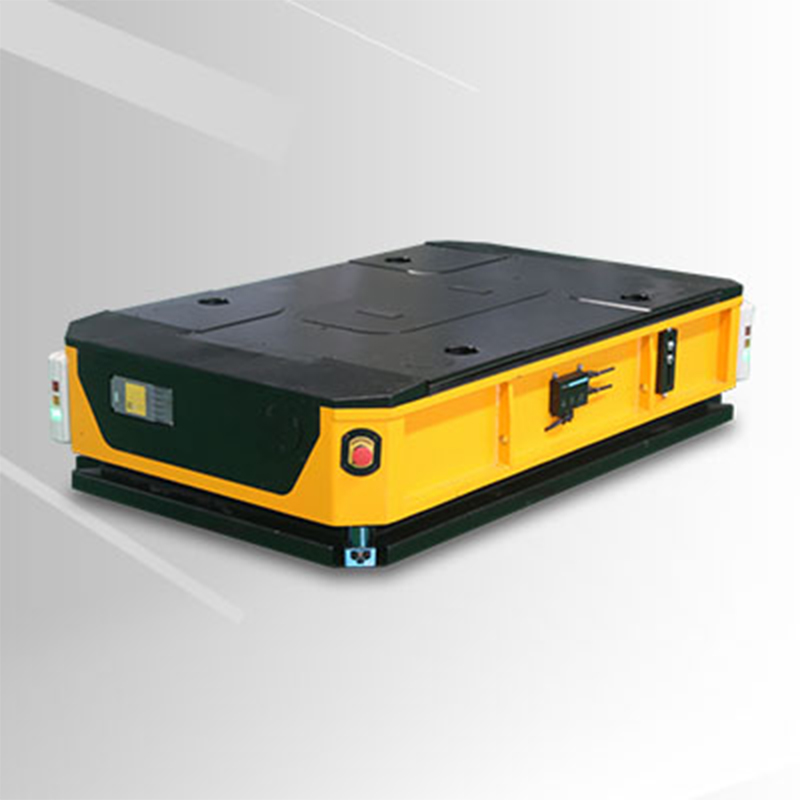
High-performance Intelligent Smart Automated Guided Vehicle Wireless agv Robot
$7000.00 - $7555.00
MOQ: 1 sets


Small-Sized Following Transport Robot Intelligent Agv Following Robot
$2189.00 - $2279.00
MOQ: 1 Pieces


Industry Logistics Robot Agv Unmanned Vehicle Agv Car Transportation Agv
$25000.00 - $60050.00
MOQ: 1 Sets


Customized Solutions Underride Mobile Robot Agv Series 400kg with Laser Slam Navigation
$20000.00 - $22000.00
MOQ: 1 Pieces
Comprehensive Sourcing Guide
Strategic Sourcing Guide for Omnidirectional Four-Wheel Drive AGV Robots
The procurement of omnidirectional four-wheel drive Automated Guided Vehicles (AGVs) represents a significant investment in modernizing material handling and logistics operations. These robotic platforms, often categorized under the broader umbrella of Automated Mobile Robots (AMRs), offer superior maneuverability compared to traditional guided vehicles. Buyers entering this market must navigate a complex landscape of technical specifications, safety standards, and supplier capabilities. This guide provides a structured approach to sourcing these advanced systems, grounded in observed market data and essential verification protocols.
Technical Architecture and Operational Capabilities
Understanding the core technical architecture is the first step in defining procurement requirements. The market data indicates a diversity in control modes, ranging from Point to Point Control to Continuous Path Control. This distinction is critical for application matching. Point to Point Control is typically suitable for repetitive tasks where the vehicle travels between fixed waypoints, whereas Continuous Path Control is essential for complex workflows requiring smooth, uninterrupted movement along a defined trajectory.
The propulsion system for these units is predominantly electric, utilizing Lithium or Lithium Iron Phosphate batteries. This choice impacts both the initial capital expenditure and the long-term operational efficiency. Buyers should verify the specific battery chemistry and capacity, as these directly influence the vehicle's runtime and charging frequency. The observed market includes models with a moving speed range of 0-2.0m/s, which provides a baseline for throughput calculations. However, specific speed requirements must be validated against the intended floor conditions and safety zones.
Navigation methods are another pivotal technical differentiator. Current offerings frequently employ Hybrid Navigation strategies, combining Dual-Laser SLAM (Simultaneous Localization and Mapping) with QR Code guidance. This hybrid approach offers redundancy; the laser system provides flexibility for dynamic environments, while QR codes ensure high-precision positioning in critical zones. Some units also feature Safety Laser Scanners and Obstacle Detection Sensors, which are integral to the vehicle's ability to operate safely alongside human workers. The "Omnidirectional" capability, often achieved through Mecanum wheels, allows for lateral movement, enabling the robot to navigate tight aisles and complex layouts without turning.
Safety Systems and Regulatory Compliance
Safety is the paramount concern in any AGV deployment. The observed product attributes highlight a robust suite of safety features, including Emergency Stop Buttons, Collision Avoidance Systems, and Safety Mats. Advanced models are equipped with Safety Light Curtains and dual-laser obstacle avoidance systems providing 360° full coverage. These features are not merely optional add-ons but are essential components for achieving regulatory compliance in industrial settings.
When evaluating suppliers, buyers must verify that the safety systems align with international standards. While specific certification statuses vary by manufacturer, the presence of ISO and CE certifications is a strong indicator of adherence to quality and safety norms. Buyers should explicitly request documentation proving that the safety sensors and emergency stop mechanisms have been tested according to relevant machinery directives. The "Laser Obstacle Avoidance" feature, specifically noted as "Front and Rear Dual Lasers," suggests a comprehensive approach to hazard detection, but the buyer must confirm the sensor range and reaction time to ensure it meets the specific risk assessment of their facility.
Furthermore, the "Audio-Visual Alarm" systems, comprising light indicators and voice prompts, are vital for situational awareness in shared workspaces. These systems must be clearly visible and audible even in noisy industrial environments. Procurement teams should not rely solely on the supplier's marketing claims but should request test reports or video demonstrations of these safety features in action.
Cost Drivers and Total Cost of Ownership
The pricing for omnidirectional AGVs in the current market exhibits a wide range, observed between $620 and $500,000. This vast disparity is driven by several key factors, including load capacity, navigation complexity, and customization levels. Load capacity is a primary cost driver; observed models range from 100 kg to 1,500 kg. A vehicle capable of handling 1,500 kg will inherently cost more than a 100 kg unit due to the heavier-duty motors, chassis, and battery requirements.
Beyond the unit price, buyers must consider the Total Cost of Ownership (TCO). This includes the cost of the charging infrastructure, which can be either manual or automatic. Automatic charging systems reduce labor costs but increase the initial hardware expense. The "Customization" attribute is frequently available, allowing for tailored solutions, but this often incurs additional engineering and tooling costs.
Other cost variables include the packaging and shipping requirements. Products are shipped in Wooden Boxes, Wooden Crates, or Cartons, depending on the model and size. For heavy-duty units, a Wooden Crate is standard, which adds to the shipping weight and cost. Buyers should also factor in the "Delivery Time," which is observed to be around 15 working days for standard configurations. Custom orders or complex integrations may extend this timeline, impacting project schedules and inventory planning.
Application Scenarios and Load Specifications
The versatility of omnidirectional AGVs makes them suitable for a wide array of application scenarios, primarily focused on the automated handling of goods and material transport. The observed "Application Scenario" data points to Automated Handling of Goods, while other entries specify "Material Handling" and "Cargo Transport." This flexibility allows these robots to be deployed in manufacturing lines, warehousing, and distribution centers.
Load capacity specifications vary significantly across the market. Buyers must match the robot's rated capacity to their heaviest anticipated load. Observed data includes capacities of 300 kg, 400-1500 kg, and 1000 kg. It is crucial to select a unit with a safety margin above the maximum expected load to prevent motor strain and battery drain. The physical dimensions of the robot, such as the standard size of 150cm120cm50cm or the custom dimensions of 775540260mm, must also be compatible with the facility's aisle widths and door clearances.
The "Color" of the unit, often available in White/Black or Blue (Customizable), is less of a functional specification and more of a branding or safety visibility choice. However, the "Main Components" such as the Controller, Radar, and Motors must be robust enough to handle the specific environmental conditions of the application, whether it involves dust, moisture, or temperature fluctuations.
Supplier Evaluation and Quality Assurance
Selecting the right supplier is as critical as selecting the right robot. The supply chain for these advanced robotics units is concentrated in specific regions, with "China" identified as a primary origin point. While this offers competitive pricing, it necessitates rigorous supplier vetting. Buyers should evaluate the supplier's "After-Sales Service" capabilities, looking for "Factory Supplied" support which often implies direct access to technical expertise and spare parts.
The "Warranty" period is another key metric, with one year being a common standard. Buyers should negotiate for extended warranty terms or service level agreements (SLAs) that guarantee response times for technical support. The "Condition" of the product is typically listed as "New," but buyers must ensure that the supply chain guarantees the integrity of the components, particularly the batteries and sensors, which are sensitive to storage conditions.
Quality control should be a collaborative effort. Buyers should request a Factory Acceptance Test (FAT) to verify that the robot meets the agreed-upon specifications before shipment. This test should cover the navigation accuracy, load handling stability, and safety system functionality. The "Standard" attributes, such as "92kg" or "custom," should be treated as specific product configurations rather than universal benchmarks, requiring verification against the specific order requirements.
Long-Term Procurement and Integration Considerations
Procuring an omnidirectional AGV is not a one-time transaction but the beginning of a long-term operational relationship. The "Delivery Time" of 15 working days is a baseline; buyers must account for potential delays in custom manufacturing or logistics. The "prod_packing" method, whether Wooden Box or Carton, affects the ease of unpacking and the risk of damage during transit.
Integration with existing Warehouse Management Systems (WMS) or Enterprise Resource Planning (ERP) systems is a critical long-term consideration. The "Control System," often an "Agv Controller," must be compatible with the facility's software architecture. Buyers should inquire about the availability of APIs or middleware that facilitate seamless data exchange.
Finally, the "Charging Method" and battery lifecycle management are essential for operational continuity. Lithium Iron Phosphate batteries generally offer a longer lifespan and better safety profile than other chemistries, but this must be confirmed. Buyers should also plan for the eventual replacement of batteries and the disposal of old units in compliance with environmental regulations. The "Customization" option allows for future-proofing, but it requires a clear understanding of the upgrade path and compatibility with future hardware versions.
Comparative Analysis of Key Specifications
To assist in the decision-making process, the following table summarizes the key technical and operational attributes observed in the market for omnidirectional four-wheel drive AGV robots. This comparison highlights the variability in specifications that buyers must address during the sourcing phase.
| Attribute Category | Observed Variations | Procurement Verification Point |
|---|---|---|
| Load Capacity | 100 kg, 300 kg, 400-1500 kg, 1000 kg | Verify maximum static and dynamic load limits. |
| Navigation | Laser SLAM, QR Code, Hybrid (Dual-Laser + QR) | Confirm sensor range and map update frequency. |
| Control Mode | Point to Point, Continuous Path | Match to workflow complexity (fixed vs. fluid). |
| Safety Features | Laser Scanner, Safety Mat, Light Curtain, E-Stop | Request safety certification and test reports. |
| Battery Type | Lithium, Lithium Iron Phosphate | Check cycle life and charging infrastructure needs. |
| Dimensions | 775540260mm, 150cm120cm50cm, Custom | Ensure fit within facility aisles and doorways. |
| Delivery Time | 15 Working Days (Standard) | Confirm lead time for custom configurations. |
| Warranty | 1 Year (Standard) | Negotiate terms for extended coverage. |
In conclusion, sourcing omnidirectional four-wheel drive AGV robots requires a meticulous approach that balances technical performance with safety and cost considerations. By rigorously verifying specifications against the observed market data and maintaining a focus on long-term operational viability, buyers can secure a solution that enhances efficiency while mitigating risk. The diversity in models, from the CW-B300 to the RMR-FR3400L, underscores the importance of aligning the specific robot capabilities with the unique demands of the application environment.
FAQs
What load capacities are available for omnidirectional four-wheel drive agv robot models?
Available load capacities range from 100 kg to 1500 kg depending on the specific model configuration. Buyers should verify the maximum static and dynamic load limits to ensure the selected unit matches their heaviest anticipated cargo requirements.
How long is the standard delivery time for these automated guided vehicles?
The standard delivery time is typically 15 working days for standard configurations. Custom orders or complex integrations may extend this timeline, so project schedules should account for potential delays in manufacturing and logistics.
Which safety features are included in the omnidirectional four-wheel drive agv robot systems?
Systems include safety laser scanners, obstacle detection sensors, emergency stop buttons, and collision avoidance systems. Advanced models also feature safety mats, light curtains, and dual-laser obstacle avoidance for comprehensive hazard detection in shared workspaces.
Can buyers customize the specifications of the omnidirectional four-wheel drive agv robot?
Yes, customization is available for various product attributes and dimensions. Buyers can request tailored solutions, though this often incurs additional engineering costs and may impact the standard delivery timeline.
What navigation methods do these automated mobile robots utilize for guidance?
Units frequently employ hybrid navigation combining dual-laser SLAM with QR code guidance. This approach offers flexibility for dynamic environments while ensuring high-precision positioning in critical zones through redundant systems.
What battery types are used to power the omnidirectional four-wheel drive agv robot?
The vehicles predominantly utilize Lithium or Lithium Iron Phosphate batteries for propulsion. This choice impacts runtime and charging frequency, with automatic charging systems available to reduce labor costs.